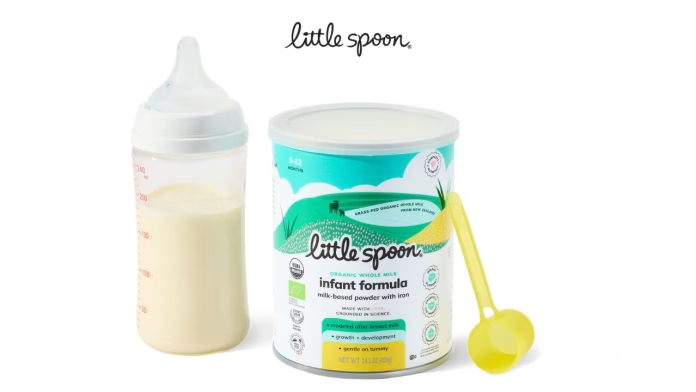
D2C baby nutrition brand Little Spoon has officially entered the $4 billion U.S. infant formula market, launching its Organic Grass-Fed Whole Milk Infant Formula on March 17, 2026. The move marks a major expansion for the company, which is positioning itself as a trust-first, transparency-led alternative in a category still recovering from safety concerns and recalls.
At the core of the launch is what Little Spoon calls a “new gold standard” for safety and disclosure. The brand is the first in the U.S. to provide batch-level testing data, allowing parents to verify the safety of the exact product they purchase. Each batch is independently tested for over 500 contaminants, including heavy metals and pesticide residues, while also exceeding global benchmarks with stricter voluntary testing for pathogens linked to infant health risks.
The formula itself is built around grass-fed whole milk sourced from New Zealand, with dual certification under USDA Organic and EU Organic standards. Designed to mimic the nutritional profile of breast milk, it features a 60:40 whey-to-casein ratio for easier digestion and excludes common additives such as corn syrup, palm oil, soy, and GMOs. Functional additions like plant-based DHA, ARA, and prebiotics further align the product with evolving parental preferences around clean-label nutrition.
The launch comes at a pivotal time for the infant formula industry, where consumer trust remains fragile following supply shortages and safety controversies. By emphasizing full transparency, third-party validation, and cleaner formulations, Little Spoon is aiming to redefine how parents evaluate infant nutrition brands.
Strategically, the rollout also aligns with the company’s broader omnichannel ambitions. After crossing $150 million in revenue as a digital-first brand, Little Spoon is expanding into physical retail through curated partnerships, including a planned rollout into select stores later this year.
With this move, Little Spoon is not just entering a new category—it is attempting to reshape industry norms around safety, sourcing, and accountability, betting that transparency will become the defining differentiator in the next phase of infant nutrition.