


Alpino Health Foods has officially crossed the ₹100 crore revenue milestone in FY26, marking a breakout moment for one of India’s fastest-scaling D2C nutrition brands. What makes this growth particularly notable is the velocity—2.5x year-on-year expansion and a 5x jump in just two years, from ₹20 crore in FY24. The company is now setting its sights on an ambitious ₹500 crore revenue target within the next two years, positioning itself as a serious contender in India’s rapidly premiumizing health food market.
At the core of Alpino’s rise is a strong alignment with changing consumer behavior. The Indian breakfast and snacking category is shifting from carb-heavy, traditional options toward protein-rich, functional foods, especially among urban millennials and Gen Z consumers. Alpino capitalized early on this trend with its peanut butter range, turning what was once a niche gym product into a mainstream pantry staple.
A major catalyst in this journey has been the brand’s omnichannel expansion. While it initially scaled through Amazon and D2C, Alpino has aggressively moved into quick commerce platforms like Blinkit, Zepto, and Swiggy Instamart, where it benefits from impulse-driven purchases and repeat consumption. Products such as high-protein peanut butter and muesli have become top-up essentials, particularly for morning routines—an ideal use case for 10–15 minute delivery.
Simultaneously, the brand has built strong offline depth, now present in 6,000+ retail outlets, including chains like Reliance Retail and Nature’s Basket. This dual-channel strategy ensures Alpino captures both planned purchases (modern trade) and instant demand (quick commerce)—a critical advantage in today’s fragmented retail landscape.
Another key growth lever has been brand trust and positioning, amplified by Shilpa Shetty joining as both investor and brand ambassador. Unlike traditional celebrity endorsements, this “co-owner” model has given Alpino stronger credibility in the wellness space, helping it compete with established players like Dr. Oetker and Pintola. In categories like health food—where trust is paramount—this alignment has significantly reduced consumer acquisition friction.
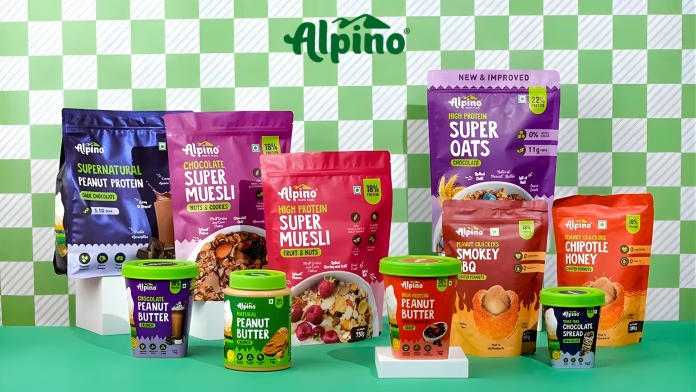
Looking ahead, Alpino is evolving from a single-category peanut butter brand into a full-stack nutrition platform. Its expansion into protein isolates, oats, and muesli signals an attempt to capture the entire “daypart” consumption cycle—from breakfast to snacks to fitness nutrition. Importantly, the brand continues to emphasize its clean-label promise—no hydrogenated oils, no refined sugar, and no stabilizers—which resonates strongly with ingredient-conscious consumers.
From a financial perspective, Alpino’s biggest challenge as it scales toward ₹500 crore will be balancing margins with accessibility. Clean-label products inherently carry higher input costs, and expanding into Tier-2 and Tier-3 markets—where price sensitivity is higher—will require careful pricing and supply chain optimization. However, its growing scale, distribution efficiency, and strong repeat consumption could help offset these pressures.
Strategically, Alpino represents a broader shift in India’s FMCG ecosystem: the rise of functional, premium, and digitally native food brands that are redefining everyday consumption habits. By combining product innovation, omnichannel distribution, and celebrity-backed trust, Alpino Health Foods is positioning itself not just as a peanut butter company, but as a category leader in India’s protein-first lifestyle movement.