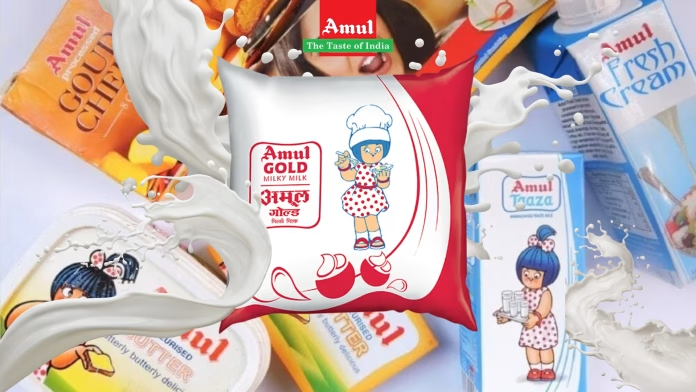
Amul has achieved a historic milestone by becoming the first fast-moving consumer goods brand in India to surpass ₹1 lakh crore in annual turnover, marking a defining moment for the country’s consumer industry. The achievement, confirmed by Gujarat Cooperative Milk Marketing Federation, reflects an 11 percent year-on-year growth in FY26, pushing the brand past its previous ₹90,000 crore base and firmly establishing it as the largest FMCG player in the country by revenue.
What makes this milestone particularly noteworthy is the unique structure behind Amul’s financials. Unlike traditional corporations, Amul operates as a cooperative network, and the ₹1 lakh crore figure represents the total unduplicated brand turnover across all its constituent units. While GCMMF itself reported a turnover of ₹73,450 crore, the remaining value comes from direct sales by multiple district cooperative unions and related businesses such as cattle feed. Together, these elements form the broader Amul ecosystem, highlighting how the brand’s scale is built on a decentralized yet highly integrated model.
The growth has been driven by a combination of deep distribution expansion and a strong push into higher-value product categories. Amul has continued to strengthen its presence in smaller towns and rural markets, ensuring that its wide portfolio of over 1,000 product packs is accessible even in locations with populations as low as 5,000. This extensive reach has allowed the brand to tap into a vast and often underserved consumer base, reinforcing its leadership position in both urban and semi-urban India.
At the same time, the company has successfully shifted its focus beyond liquid milk, which remains its core category, toward value-added dairy products such as cheese, paneer, buttermilk, and yogurt. These segments have seen robust demand growth, driven by changing consumption patterns and rising incomes, and have contributed significantly to overall revenue expansion. In parallel, Amul has been diversifying its portfolio into adjacent categories including organic foods, protein-based products, and probiotics, aligning itself with evolving consumer preferences centered on health and nutrition.
Another key driver of growth has been the brand’s increasing global footprint. In a notable strategic move, Amul has begun offering fresh milk in international markets such as the United States and parts of Europe, transitioning from a traditional export-focused approach to a more localized presence. By targeting the large Indian diaspora and leveraging its brand equity, the company is positioning itself as a global dairy player while maintaining its roots in India.
The scale of Amul’s operations is underpinned by its cooperative model, which remains one of the largest in the world. The network includes over 3.6 million farmer members and handles daily milk procurement of approximately 31 million litres. This structure ensures that value is distributed across the supply chain, from producers to consumers, while also providing stability and resilience to the business. The milestone is therefore not just a corporate achievement but a reflection of the collective effort of millions of farmers who form the backbone of the brand.
Crossing the ₹1 lakh crore mark also signals a broader shift in India’s FMCG landscape. While many large consumer companies have grown through aggressive branding and premium positioning, Amul’s success underscores the enduring importance of trust, affordability, and distribution strength. Its ability to balance scale with value has allowed it to remain relevant across diverse consumer segments, from price-sensitive rural households to urban consumers seeking quality and convenience.
Looking ahead, the focus for Gujarat Cooperative Milk Marketing Federation is expected to shift toward expanding its presence in new international markets, particularly in Africa and Southeast Asia, while also strengthening its position as a “total food company.” The company is likely to invest further in categories such as frozen foods and packaged nutrition, aiming to replicate its dairy success across a broader product spectrum.
Overall, Amul’s entry into the ₹1 trillion club represents more than just a numerical milestone. It highlights the power of a cooperative-led model in scaling a consumer brand, demonstrates the potential of distribution-driven growth in India, and sets a benchmark for the next phase of evolution in the country’s FMCG sector.