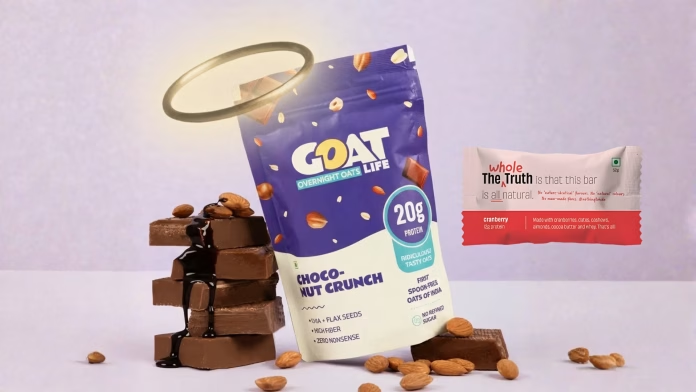
The rapid rise of India’s direct-to-consumer (D2C) health snack industry has been powered by a powerful narrative: “clean labels.” Brands like The Whole Truth and GOAT Life have successfully positioned themselves as better alternatives to traditional processed snacks by eliminating artificial additives, preservatives, and refined sugar. However, a growing wave of nutritional analysis is challenging this perception, highlighting what experts call the “health halo” effect—where products appear healthier than they actually are due to selective messaging. In reality, “clean” does not always translate to “low calorie,” “weight-loss friendly,” or even metabolically efficient.
One of the most debated aspects of this trend is the use of jaggery as a substitute for refined sugar. While jaggery is often marketed as a more natural and nutrient-rich sweetener, its metabolic impact tells a more nuanced story. Chemically, both jaggery and refined sugar are largely processed by the body as glucose. Although jaggery contains trace minerals like iron and potassium, its glycemic index (GI) is significantly higher—around 84 compared to approximately 65 for table sugar. This means it can trigger faster spikes in blood sugar levels, particularly for individuals with sedentary lifestyles or insulin sensitivity. Furthermore, according to updated guidelines by the Indian Council of Medical Research (ICMR), sweeteners such as jaggery, honey, and fruit concentrates still count toward the recommended daily added sugar intake of 25–30 grams. This effectively challenges the notion that “natural sugar” is metabolically harmless.
Another critical concept gaining attention in 2026 is CFP—Calories From Protein—a metric that evaluates how much of a product’s total calorie content is actually derived from protein. Many consumers are drawn to labels highlighting “10g” or “12g protein,” assuming these are high-protein foods. However, when viewed through the CFP lens, the reality often differs. For instance, a typical protein bar from brands like The Whole Truth or GOAT Life may contain around 250–320 calories with 12–15 grams of protein, translating to a CFP of roughly 18–21%. In contrast, a standard whey protein scoop delivers about 25 grams of protein for just 139 calories, resulting in a CFP of over 70%. The implication is clear: most “protein snacks” are not truly protein-dense but are instead balanced energy bars containing significant amounts of fats and carbohydrates.
This distinction becomes crucial depending on consumption context. When used as meal replacements, these bars can be nutritionally beneficial, offering a mix of macronutrients along with fiber and micronutrients from ingredients like dates, nuts, and cocoa. In fact, brands like The Whole Truth have built their positioning around this very idea—promoting their products as real food rather than supplements. However, when consumed as an additional snack alongside regular meals, these bars can inadvertently contribute to excess calorie intake, potentially leading to weight gain rather than supporting fitness goals.
The broader industry is beginning to respond to this growing awareness. Influencers and consumer advocates, including figures like FoodPharmer, are driving a “back-of-the-pack” movement, encouraging consumers to look beyond front-label claims and examine nutritional breakdowns more critically. This shift is also influencing regulatory discussions. The Food Safety and Standards Authority of India (FSSAI) is currently evaluating front-of-pack labeling norms that may require warning labels such as “high in sugar,” “high in fat,” or “high in salt,” bringing greater transparency to packaged foods.
Simultaneously, innovation within the food ecosystem is evolving to address these gaps. New-age offerings, such as protein-first meal solutions and cloud kitchen concepts like Ritual by Zomato, are focusing on maximizing protein density while minimizing unnecessary calories. These products aim to align more closely with specific fitness goals, particularly for consumers seeking muscle recovery, satiety, or weight management.
Ultimately, navigating this landscape requires a more informed and goal-oriented approach. For individuals prioritizing muscle recovery or high protein intake with minimal caloric load, traditional protein powders remain the most efficient option. On the other hand, for those seeking convenient, on-the-go meal replacements, protein bars with moderate CFP can still be a better alternative to conventional snacks like fried foods or sweets—provided they are consumed mindfully.
As the Indian health food market matures, the conversation is clearly shifting from “clean labels” to “nutritional clarity.” The next phase of growth will likely be defined not just by what products exclude, but by how effectively they deliver on functional health outcomes.