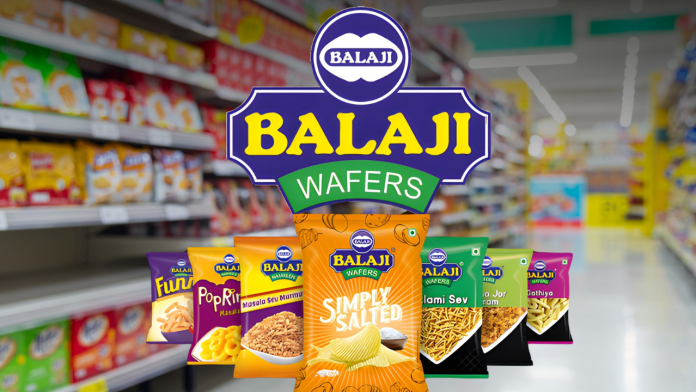
Regional FMCG companies are shaking up India’s consumer goods market, forcing legacy giants to rethink strategy. One of the biggest names at the center of this shift is Rajkot-based Balaji Wafers, which has attracted fresh takeover interest from ITC, PepsiCo and global private equity firms including TPG and Temasek. According to people familiar with the matter, discussions are underway for a 10 percent stake that could value Balaji at nearly Rs 40,000 crore.
Founded in 1982 by Chandubhai Virani and his brothers Bhikubhai and Kanubhai, Balaji has grown from a small theatre snack supplier to a regional powerhouse. The company operates four factories, keeps advertising spends negligible and competes by pricing products 20–30 percent lower than national rivals. Its strategy has paid off. Annual revenue crossed Rs 5,453.7 crore in FY24, up 11 percent from the previous year, while profit after tax jumped 41 percent to Rs 578.8 crore.
This is not PepsiCo’s first attempt to enter Balaji. In 2013, then-CEO Indra Nooyi explored a larger stake, but the Virani family resisted ceding control. Today, global majors see even a minority partnership as a way to tap into Balaji’s stronghold across western and central India and to strengthen supply chain capabilities.
Balaji’s success mirrors a broader trend. From noodles and tea to spices and soft drinks, smaller regional brands are winning consumers by tailoring products to local preferences and undercutting national labels on price. Quick commerce platforms like Blinkit and e-commerce players such as Amazon and BigBasket have accelerated their reach, while investors are pouring money into upcoming brands like Iscon Balaji, Zoff Spices, and Lahori Zeera.
As demand growth slows in metros, regional challengers are becoming the new battleground for India’s FMCG industry.
Running a restaurant in India today isn’t just about food and service — it’s about compliance too. With GST (Goods and Services Tax) streamlining indirect taxation, restaurant owners must understand when and how to register, what tax rates apply, and how non-compliance can dent profits. Whether you own a small café, a family-run dhaba, or a growing cloud kitchen tied to Swiggy and Zomato, GST registration is more than a formality — it’s a business essential.
Who Needs GST Registration for Restaurants?
Not every food outlet is required to register for GST. The rule is simple:
Mandatory GST registration if your restaurant’s annual turnover exceeds ₹20 lakh (₹10 lakh in special category states like the North East).
Even if turnover is below the threshold, registration is compulsory for restaurants supplying through online aggregators like Zomato, Swiggy, or Uber Eats.
Franchise outlets (like Domino’s, KFC, or Subway) typically come under compulsory GST due to their national-scale operations.
👉 Example: A local biryani shop in Hyderabad earning ₹15 lakh a year might avoid GST registration if serving only dine-in customers. But the same shop delivering via Swiggy must register regardless of turnover.
GST Rates for Restaurants
One of the most searched queries is — What GST rate applies to restaurants? Here’s the breakdown:
5% GST (without ITC) → Standalone restaurants (non-AC, AC, or takeaway). Input Tax Credit (ITC) cannot be claimed.
5% GST → Cloud kitchens and online food delivery services.
This means a thali at your neighbourhood mess or a pizza from Domino’s attracts 5% GST, while luxury hotel dining could see higher taxes.
Documents Required for GST Registration
Restaurant owners need to keep these documents ready for GST registration:
PAN card of the business owner
Aadhaar card
Proof of business registration (Partnership deed, ROC certificate, etc.)
Address proof of restaurant premises (electricity bill, rent agreement)
Bank account details (cancelled cheque or bank statement)
Photographs of owners/partners
How to Register for GST Online
The GST registration process is now fully online via the GST portal (www.gst.gov.in). Steps include:
Visit the GST portal and click “New Registration.”
Fill in details (PAN, mobile number, email).
Upload documents and verify via OTP.
Submit application and receive Application Reference Number (ARN).
On approval, GSTIN (GST Identification Number) is issued.
👉 Pro Tip: Many restaurants opt for professional help (CAs, GST practitioners) since errors in initial filing can delay business listings on delivery platforms.
Benefits of GST Registration for Restaurants
While some see GST as red tape, it offers clear benefits:
Legitimacy: Customers and delivery apps trust registered businesses.
Wider reach: Mandatory for Swiggy/Zomato onboarding.
Smooth compliance: Avoid penalties or legal hassles.
Business growth: Easier to scale or seek franchise opportunities.
Penalties for Non-Compliance
Avoiding GST when eligible can be costly. Restaurants caught without registration face:
10% penalty of the tax due (minimum ₹10,000).
Higher penalties for repeated or intentional evasion.
Removal from Swiggy/Zomato platforms, cutting off digital customers.
Conclusion: GST Is the New Normal for Restaurants
In India’s fast-growing F&B industry, GST compliance is no longer optional — it’s the backbone of smooth operations. From Amul parlours in small towns to five-star hotel restaurants in Mumbai, GST rules apply across the board. For small eateries and cloud kitchens, registration not only keeps authorities happy but also opens doors to online food delivery, brand partnerships, and faster growth.
If you’re planning to run a restaurant — big or small — make GST registration your first recipe for success.
When India rolled out the Goods and Services Tax (GST) in 2017, the most immediate question for households and food businesses alike was: How will this affect our daily meals and dining out bills? From grocery staples to weekend dinners at restaurants, GST has reshaped pricing, compliance, and consumer behavior.
GST on Food Items: Essentials vs Processed Foods
One of the biggest distinctions in GST lies between essential food items and processed or packaged foods.
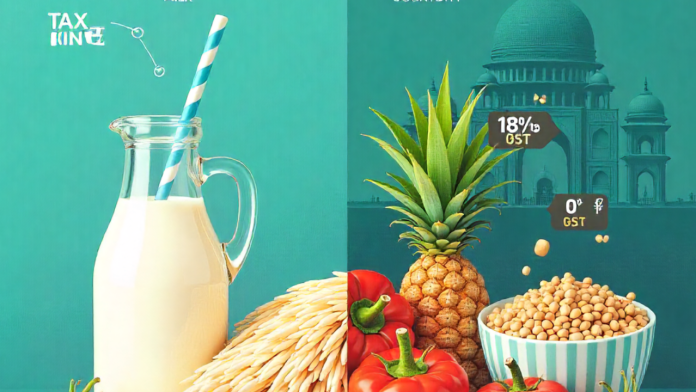
0% GST: Unpackaged essentials like fresh milk, curd, rice, wheat, flour, pulses, fruits, and vegetables. These remain tax-free to protect household budgets.
18% GST: Processed foods like chocolates, biscuits, soft drinks, ice cream, and ready-to-eat meals.
This structure ensures daily essentials remain affordable while luxury and processed foods contribute higher tax revenue.
GST on Restaurants: Dining Out Costs Explained
Eating out has also seen a shift under GST. Initially, different tax slabs for AC and non-AC restaurants caused confusion, but reforms have simplified the system.
5% GST (No Input Tax Credit): All standalone restaurants, whether AC or non-AC, levy a flat 5%. However, they cannot claim input tax credit (ITC) on supplies.
18% GST (With Input Tax Credit): Restaurants inside hotels charging ₹7,500 or more per night fall under this category. These can claim ITC.
Takeaway & Delivery: Apps like Swiggy and Zomato are also taxed at 5%, keeping parity with dine-in orders.
Impact on Businesses and Consumers
For consumers, GST has simplified billing—no more service tax, VAT, or confusing cess add-ons. A restaurant bill is now easier to understand, though the lack of ITC has pushed some eateries to increase base prices.
For businesses, especially small restaurants and food brands, classification is key. Misapplying GST—say, charging 5% on items that should be taxed at 18%—can invite penalties. Many food entrepreneurs now rely on consultants or billing software to stay compliant.
The Bigger Picture
The GST system for food and restaurants reflects India’s policy balance: shield essentials from price inflation while taxing processed and luxury consumption more heavily. For diners, it explains why milk remains tax-free but an ice cream sundae attracts an 18% levy. For businesses, mastering GST isn’t optional—it’s essential for survival in a competitive, compliance-driven food market.
Bottom Line
GST on food and restaurants has streamlined India’s tax structure, but it has also redefined margins, pricing strategies, and even dining habits. For consumers, awareness helps in making smarter choices. For businesses, compliance is non-negotiable—and getting it right could be the difference between thriving or shutting shop.
Since the rollout of the Goods and Services Tax (GST) in India in 2017, few areas have drawn as much discussion as its impact on food. From everyday essentials like rice and milk to dining out at restaurants, GST has reshaped how food businesses operate and how much consumers pay. But the rules aren’t uniform—different categories of food items and restaurant services fall under different slabs.
GST on Food Items: Essentials vs Processed Goods
Not all food items attract GST. In fact, many staples continue to remain tax-free.
Exempt (0% GST): Fresh fruits, vegetables, milk, curd, eggs, rice, wheat, flour, and pulses are outside the GST net. This keeps everyday consumption affordable.
5% GST: Branded cereals, packaged food grains, edible oils, and some frozen vegetables fall into this category.
12% GST: Items like butter, cheese, ghee, packaged dry fruits, and frozen meat products.
This tiered approach means a packet of branded rice attracts 5% GST, while loose rice from the local kirana is exempt—something many consumers don’t realize.
GST on Restaurants: Dining Out Costs Explained
Restaurants were among the most debated sectors under GST. Initially, a higher rate applied, but it was later rationalized to encourage dining out and boost the industry.
5% GST (No Input Tax Credit): All standalone restaurants, whether air-conditioned or not, charge a flat 5% GST. However, they cannot claim input tax credit (ITC) on raw materials or supplies.
18% GST (With Input Tax Credit): Restaurants located inside hotels with room tariffs above ₹7,500 per night fall under this slab. These outlets can claim ITC.
Takeaway and Delivery: Treated at par with dine-in, with 5% GST charged on food orders through delivery apps like Swiggy and Zomato.
This structure has simplified billing for consumers but has also forced restaurants to rethink pricing strategies, especially since ITC benefits are restricted.
Why GST Matters for Food Businesses
For small grocery stores, packaged food sellers, or restaurant owners, understanding GST rates is crucial to price products correctly and stay compliant. Misclassification—say, billing frozen parathas at 5% instead of 18%—can lead to penalties.
The Consumer Perspective
While GST has made dining out more transparent, it has also highlighted the difference between essentials and “luxury” consumption. A thali at a local restaurant attracts 5% GST, while a chocolate bar or a fizzy drink might cost significantly more in tax terms.
The Bottom Line
GST on food items and restaurants reflects India’s balancing act: protecting essentials from inflation while taxing processed and luxury consumption at higher rates. For businesses, clarity in classification and compliance is key. For consumers, it pays to know which items are taxed—and which remain tax-free.
Mars Cosmetics, best known for its fast-growing presence in colour cosmetics, is preparing to widen its portfolio into skincare, haircare and wellness, with a revenue target of Rs 1,000 crore within three years.
Rishabh Sethia, director of Mars Cosmetics, confirmed that the company will launch a new skincare-focused brand in the next six months. The brand will debut online, via e-commerce and quick commerce platforms, before expanding into offline retail once it establishes traction. “Our colour cosmetics portfolio has grown strongly, but the opportunity in skincare and haircare is far larger. That is the direction we are heading,” Sethia said.
The company has earmarked Rs 10–15 crore for this expansion, which includes the launch of its new brand and the establishment of an in-house R&D laboratory, expected to go live around the same time. The lab will enable Mars to develop proprietary formulations and strengthen product innovation across categories.
Mars currently offers 650–700 SKUs across eyes, lips, face, nails and accessories. In offline kiosks, its range has grown from 10 SKUs last year to over 40 today, with a target of 70 by year-end. The company plans to increase its kiosk network from 40 to 70 during this fiscal, with an additional investment of Rs 2–2.5 crore.
On the distribution front, Mars reaches 10,000–13,000 general trade outlets every month, with Kerala alone contributing Rs 60–65 lakh in sales monthly. Online and offline channels contribute almost equally, with online accounting for 55 per cent of sales and quick commerce driving 25–30 per cent of that share.
Mars closed FY25 with revenue of Rs 280–300 crore and is projecting Rs 425–440 crore in FY26. The bootstrapped company, which operates at an EBITDA margin of 8–10 per cent, has no plans to raise external capital.
India’s grocery baskets are being reshaped by a mix of rising food costs, health consciousness, and sustainability concerns, according to PwC India’s Voice of the Consumer 2025 survey.
Nearly 63 percent of respondents admitted they are anxious about climbing food bills and are adjusting their shopping behaviour to cope. Bulk buying, hopping between neighbourhood stores, and aggressively seeking discounts have become common strategies for stretching household budgets.
Yet affordability is only part of the story. Food safety remains a dominant priority for 84 percent of consumers, with clean labels, credible certifications and transparent sourcing emerging as key triggers for brand trust. Health is another major influence: almost 30 percent of respondents said they would switch brands if offered a healthier option, even in the face of price pressures.
Technology is also shaping consumption. The survey found that 8 in 10 Indians are now using healthcare apps or wearable devices to track diet and fitness. Many expressed openness to AI-driven personalised nutrition plans, signalling a gradual but significant shift towards tech-enabled wellness.
At the same time, tradition continues to anchor food choices. Nearly 74 percent of consumers said their eating habits are tied to cultural practices and long-standing culinary heritage, reflecting a balance between modern wellness tools and ancestral diets.
Sustainability is steadily gaining ground in decision-making. Close to half of consumers prefer eco-friendly packaging, while 73 percent are willing to pay more if it directly supports healthier land use and farming practices.
PwC India partner Ravi Kapoor said the findings highlight a “dual challenge” for the industry. “Consumers are under pressure from inflation, but they are equally demanding when it comes to nutrition, safety and sustainability. Brands that align with these priorities will be the ones to capture future growth.”
Swiggy founder and group CEO Sriharsha Majety has pushed back against the perception that Instamart’s rise in quick commerce is merely a result of rivals slowing down. Speaking to ET, Majety said the platform’s improved market position comes from its sharper consumer insights, wider assortment, and stronger festive preparation, not just weaker competition.
“Capital is not the reason we will win,” Majety said. “It comes down to who understands the consumer better and who has the right assortment.”
Instamart is preparing for its first festive season sale, scheduled for September 19–28, where it will roll out discounts of 50–90 percent across 50,000 non-grocery products. The move comes after a year of rapid category expansion, adding everything from beauty and skincare to home and kitchen essentials alongside its grocery backbone. Revised GST rates are also expected to give the platform an added boost.
Swiggy has guided that Instamart will reach contribution margin breakeven between Q3 FY26 and Q1 FY27. The firm reported a loss of Rs 1,197 crore in April–June, double the figure from a year earlier, as heavy spending in the space continues. Instamart added only 41 new dark stores in the June quarter compared with 316 in the previous quarter, signaling a shift from aggressive expansion to operational efficiency.
Instamart CEO Amitesh Jha, who joined from Flipkart last year, said brands and sellers are seeing “growth they haven’t seen in a decade” on the quick commerce channel. He added that the company has already built capacity to manage festive demand without inflating supply chain costs.
With rivals Blinkit and Zepto also jostling for festive share, Swiggy is betting that Instamart’s consumer-first strategy and broader catalog will help it stand out in India’s most competitive shopping season.
The finance ministry, along with the Department of Consumer Affairs, is reviewing how companies should implement price changes following the sweeping GST rate cuts announced under GST 2.0. Industry bodies have warned that immediate repricing of all products, particularly unsold stocks, poses significant operational and financial challenges.
According to a Business Standard report, the government is considering allowing companies to factor in higher input costs already paid on inventory before mandating revised MRPs. This relief, if cleared, could be available until December 31, giving manufacturers and distributors breathing space to adjust. Officials are also studying how the directive should apply to sachet-based products like shampoos or sauces priced at Re 1 or Rs 5, where repackaging and repricing are virtually impossible. Goods already sold below the post-cut levels due to heavy discounts may also be exempt from further price corrections.
Tax experts point out that while consumers must benefit from lower rates, businesses are facing what they call a “double challenge.” Vivek Jalan, partner at Tax Connect Advisory Services, told the paper: “On one side, input tax credit on unsold stock has gone up, while refunds under the inverted duty structure are not permitted. Some flexibility in repricing will ease the transition burden.”
Separately, the ministry is examining the distortions created by moving several goods from the 12 percent slab to 5 percent without realigning duties on raw materials. This has triggered fresh inverted duty issues in FMCG and packaging sectors.
While the new structure of 5 percent and 18 percent slabs has been welcomed as a simplification, policymakers are now balancing consumer expectations of immediate price cuts with industry concerns over losses on existing stock.
Hyderabad-based home construction startup WeHouse, formerly known as Hocomoco, has secured Rs 25 crore in Series A funding, a mix of debt and equity. The round saw participation from Anthill Ventures alongside prominent investors such as Pinnupreddy Jaya Aditya Reddy, film producer Suresh Babu Daggubati, Mohnish Yerra of Leaders for India, and Gaurav Marya of Franchise India Holdings.
The company said the fresh capital will be channelled into scaling operations, strengthening its technology stack, and entering new markets. Launches in Coimbatore and Ahmedabad are scheduled this month, adding to its existing footprint in four cities.
Founded in 2017 by Sripad Nandiraj and Rohan Reddy, WeHouse positions itself as a full-stack construction partner, integrating everything from government approvals and architectural design to project execution, interiors, and remote monitoring. According to the company, it has already delivered over 400 projects and currently holds an order book worth Rs 150 crore.
Speaking on the fundraise, CEO Sripad Nandiraj highlighted inefficiencies in India’s homebuilding sector, which is still plagued by delays, cost escalations, and fragmented vendors. “Our model is built on transparency, milestone-linked execution, and real-time visibility for homeowners. This investment gives us the firepower to deepen our technology and reinforce on-ground quality systems as we scale to new cities,” he said.
COO Rohan Reddy added that the company plans to use the funding to expand its workforce, strengthen process efficiencies, and maintain consistent delivery standards across geographies.
With the Indian real estate and home construction sector projected to reach USD 1 trillion by 2030, tech-driven platforms like WeHouse are aiming to formalize and digitize one of the country’s most unorganized markets, promising homeowners more accountability and control in building their dream homes.
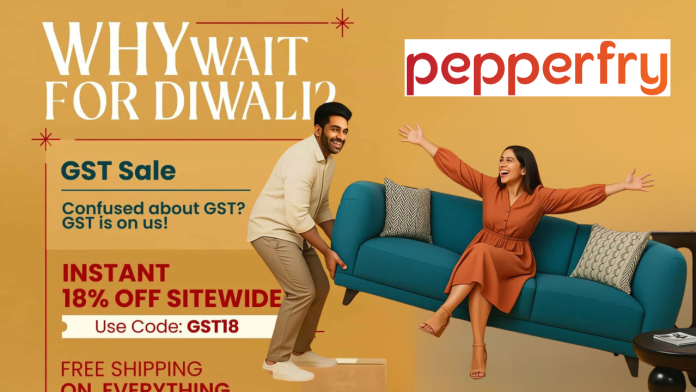
Furniture and home décor marketplace Pepperfry has rolled out a nationwide campaign urging Indian households to break the habit of delaying purchases until the Diwali season. The initiative, titled “Why Wait for Diwali”, is designed to spread out the festive shopping rush while giving customers early access to deep discounts and special rewards.
Under the campaign, Pepperfry is offering discounts of up to 70 percent across its furniture and décor categories, including sofas, beds, dining sets, and accessories. Shoppers can also claim 25 percent cashback, free shipping across India, and an additional Rs 20,000 cashback for purchases made through Pepperfry Studios, the company’s offline experience centers.
The campaign leans on humorous and relatable advertising films that capture the frenzy of last-minute Diwali shopping. By portraying the stock-outs, crowded stores, and stressful decision-making associated with festival week buying, Pepperfry positions early shopping as the smarter alternative.
Archana K., head of brand marketing at Pepperfry, said the campaign reflects an effort to shift consumer behaviour. “In India, families have grown up with the idea of waiting for Diwali to upgrade their homes. But waiting also means missing out on choice, dealing with delivery delays, and shopping in a rush. With these offers already live, we want customers to enjoy the celebrations stress-free while giving their homes a head start.”
With over 200 Pepperfry Studios across the country and a strong e-commerce presence, the brand is betting that a mix of digital and offline promotions will help drive early demand. The company expects the campaign to not only reduce peak-season logistical pressure but also reinforce its positioning as a value-driven and customer-first platform for home makeovers.
We use cookies to ensure that we give you the best experience on our website. If you continue to use this site we will assume that you are happy with it.