Wednesday, February 4, 2026
Home Blog Page 552

Ferns Estates acquires 75-room luxury hotel in Goa for INR 175 Crore; plans expansion with additional 75 suites

SAMHI hotel
(Representative Image)

Ferns Estates, a Bengaluru-based hospitality company, has acquired a 75-room luxury hotel located in the tourism hotspot of Goa from a local developer for INR 175 crore. As part of the deal, they have also obtained a 2-acre adjacent plot with plans to develop an additional 75 suite rooms.

Errol Fernandes, Chairman & Managing Director of Rosetta Resorts and Holiday Homes, said, “The organisation received a project loan of INR 150 crore from Bajaj Finance with a 10-year term to fund their acquisition.” “We want to construct opulent luxury suites next to the hotel in order to capitalise on the robust market demand for such high-end lodging. It is expected that in the long run, this strategic decision would increase the company’s profitability.”

Continue Exploring: Accor bullish on India, plans to launch 30 new luxury hotels with 5,500 rooms over next 3-5 years

“The concentration of hotels in Goa, a renowned vacation hotspot in India, is larger than in almost every other part of the country due to the large number of visitors the state attracts throughout the year,” he said.

Ferns Estates, the company behind the Rosetta Resorts and Holiday Homes brand, intends to grow its resort portfolio by adding approximately 1,000 rooms over the next 3-5 years. The company has pinpointed potential properties in various locations for this expansion.

“This strategic decision will not only increase its capacity to serve a broad spectrum of travellers, but also strengthen its market position through a combination of lease and company-owned properties acquired to enrich its portfolio of assets,” Fernandes stated.

According to a JLL analysis, hotel investments in India reached $401 million in 2023, nearly quadrupling the data from 2022. In 2023, financial institutions and high net worth individuals (HNIs) accounted for the highest proportion of hotel investment activities, at 31%.

Continue Exploring: Hotel investments in India surged to $401 Million in 2023, reveals JLL Report

Advertisement

Vegetarian thali prices surge 7% in March on onion, tomato, potato costs; non-veg thalis drop 7%: Crisil Report

0
Thali
Thali

In March, the price of a vegetarian thali increased by 7 percent, mainly driven by the surge in onion, tomato, and potato prices, as reported by a division of the domestic rating agency Crisil. Conversely, a decrease in poultry prices resulted in a 7 percent reduction in the cost of non-vegetarian thalis, according to Crisil Market Intelligence and Analysis in its monthly “Roti Rice Rate” report.

According to the report, the price of a vegetable thali, which includes roti, onions, tomatoes, potatoes, rice, dal, curd, and salad, rose to INR 27.3 per serving in March from INR 25.5 in the same period last year. However, it was lower than the price of INR 27.4 in February 2024.

Continue Exploring: Govt extends ban on onion exports indefinitely

The report stated that the price hike in the vegetable thali was attributed to significant increases of 40 percent, 36 percent, and 22 percent in the prices of onions, tomatoes, and potatoes, respectively, compared to the previous year. This surge was influenced by reduced arrivals of onions and potatoes and a low base from the last fiscal year for tomatoes.

Additionally, the report highlighted that lower arrivals resulted in a 14 percent increase in rice prices and a 22 percent increase in pulses compared to the same period last year.

For the non-vegetarian thali, where only dal is replaced by chicken, the price dropped to INR 54.9 from INR 59.2 in the previous year, but it was higher than the INR 54 per thali recorded in February.

Continue Exploring: Vegetarian thali prices dip in February, non-veg thali costs rise: Crisil Report

The main reason for the year-on-year decline in the cost of non-vegetarian thali was a 16 percent decrease in broiler prices, which carry a 50 percent weight in the overall price, according to the report.

The report mentioned that compared to February, broiler prices increased by 5 percent due to the onset of the holy month of Ramadan and heightened demand.

Advertisement

Swiggy and Gurugram Traffic Police team up for road safety workshop

0
Swiggy
Swiggy

Swiggy has collaborated with the Gurugram Traffic Police to organize a road safety and traffic awareness workshop for its delivery partners in Gurugram as part of its “Delivering Safely” road safety initiative.

Continue Exploring: Swiggy launches ‘Delivering Safely’ campaign to ensure safety of delivery partners across India

The program was led by SH Virendra Vij, IPS, Deputy Commissioner of Traffic Police, with the aim to educate and empower over 100 delivery partners in the NCR about road safety and accident prevention. Additionally, SH Sukhbir Singh, HPS-ACP Traffic Police, and ASI Rajesh provided training on key topics such as traffic rules, helmet usage, case studies, the consequences of reckless driving, and proper parking etiquette.

This was followed by a session where helmets were distributed, along with a lively roadshow by Swiggy’s delivery partner fleet, demonstrating Swiggy’s dedication to promoting responsible driving practices.

“In India, road accidents are a major problem that have a severe impact on both the economy and human life. They also result in injuries and fatalities. Between 4 and 5% of the nation’s GDP is lost to these mishaps annually. Most of the individuals impacted are those who are in the productive working age group, such as motorcyclists, cyclists, and pedestrians. Swiggy is actively involved in raising awareness of road safety among our delivery partners in cooperation with law enforcement agencies, in keeping with our commitment to safety under the Delivering Safely programme. According to a Swiggy representative, “Our goal is to raise delivery staff members’ knowledge of traffic laws and ultimately improve their safety.”

Over time, Swiggy has organized campaigns in various cities throughout India, demonstrating its dedication to fostering a secure working atmosphere for its delivery team. Every Swiggy delivery partner is equipped with insurance coverage, ensuring their protection while navigating the roads.

Last year, Swiggy initiated an industry-first collaboration with Dial 4242, introducing on-demand, free, and expedited ambulance services for its delivery partners. Alongside this, Swiggy implemented Emergency Support Services (ESS), designed to address the needs of delivery partners during road emergencies or mishaps. The ESS package includes round-the-clock hotline numbers, specialized emergency cards for delivery partners, and direct access to local police and ambulance services via an SOS button integrated into the delivery partner app.

Swiggy places a high priority on the security and welfare of its delivery partners as well as the general public. Upon onboarding, each delivery partner completes a road safety guidance module. Additionally, the site runs safety campaigns all year long, providing help and direction.

Continue Exploring: IPO-bound Swiggy appoints Titan’s Suparna Mitra as independent director

Advertisement

HUL mulls independent ice-cream unit amid Unilever’s global spin-off, sale prospects loom large

0
Unilever
Unilever

Hindustan Unilever Ltd (HUL) is considering the possibility of separating its ice-cream business into an independent unit, potentially as a step towards a future sale, according to sources familiar with the situation.

This comes after Unilever‘s recent decision to spin off its ice-cream division to focus on segments with a similar operating model and supply chain.

Continue Exploring: Unilever announces spin-off of ice cream business, 7,500 job cuts planned in cost-cutting effort

The ice-cream business demands a unique approach to both manufacturing and distribution.

For India’s largest consumer goods company, the ice-cream segment contributes approximately INR 2,000 crore, or about 3% of its total sales, featuring brands like Magnum and Kwality Wall’s. While HUL leads in the home and personal care categories, it lags behind Amul in the Indian ice-cream market.

In the market, HUL has faces off against a range of domestic and foreign brands, such as Baskin Robbins, Mother Dairy, Vadilal, CreamBell, Naturals, and Havmor.

“Given that ice-cream can be expanded in both mass and premium segments, it presents an appealing opportunity in India,” commented one of the executives mentioned earlier. “If HUL receives a high valuation, it may consider a potential sale. Otherwise, the current internal strategy is to rapidly grow the business as a distinct entity for 12-15 months before determining the next steps.”

Unilever is the world’s largest ice-cream producer, boasting brands like Ben & Jerry’s and Magnum. The €7.9 billion ice-cream business represents 16% of its global revenue and holds a leading market position in numerous countries.

Industry insiders suggest that an existing player in India is unlikely to acquire HUL’s ice-cream business, and a potential sale could be to a multinational company or private equity firms. Additionally, they mentioned that the strategy will be entirely influenced by Unilever’s decisions regarding its ice-cream business.

After Unilever’s announcement, the India unit stated that it is evaluating the next steps.

Continue Exploring: Hindustan Unilever evaluates options for ice cream business future amid global restructuring by parent company

“We are assessing the different options for the Indian ice-cream business following this announcement,” said an HUL spokesperson. “We plan to consult with the HUL board and Unilever management in the upcoming months. Once a decision is reached, we will provide further updates.”

The ice-cream business has unique characteristics compared to other products, including a cold-chain requirement, a specific go-to-market operating model, seasonality, and its own innovation cycle.

HUL expanded its ice-cream business through acquisitions, including Kwality in 1994 and Adityaa Milk in 2018.

In India, HUL integrated Kwality’s branding with its global label Wall’s, which was originally introduced in 1922 and is marketed in over 50 countries under various local names. The brand is known as Algida in Italy and Turkey, Langnese in Germany, Kibon in Brazil, Streets in Australia, and Ola in the Netherlands. Consequently, all these brand names, including Kwality Wall’s, are owned by Unilever.

“If an offer to acquire HUL’s ice-cream business arises, we will definitely consider it. The ice-cream category in India is appealing and offers substantial potential. However, the valuations must be realistic,” commented a senior executive from a major packaged foods company.

Continue Exploring: Unilever stays tight-lipped amidst private-equity interest in ice-cream business

In October of last year, Unilever revealed its plans to concentrate on 30 key brands responsible for 70% of its sales and to enhance gross margins.

A report from retail consulting firm Wazir Advisors projects that the Indian ice-cream market will surpass $5 billion in sales by FY25, rising from the current $3.4 billion.

Continue Exploring: From scoops to sundaes: Ice cream sales set to soar 15-20% this summer

Advertisement

United Spirits acquires 15% stake in alcohol beverage brand Pistola

0
Pistola
Pistola

United Spirits, a leading player in the spirits industry, has acquired a 15% stake in Inspired Hospitality, the parent company of the alcohol beverage brand Pistola, for INR 5.65 crore, as announced in a BSE filing on Thursday.

As per the filing, “The Company plans to subscribe for 10 equity shares and 3,494 compulsory convertible preference shares (CCPS) of Pistola, which together account for approximately 15.0% of the company’s paid-up share capital (on a fully diluted basis).”

Pistola, an alcohol beverage company, specializes in the development, marketing, and sale of agave spirits. Unlike owning a bottling unit facility, Pistola has outsourced this operation to a third party.

With this investment, United Spirits aims to bolster its position in the premium craft segment.

Continue Exploring: United Spirits reports 63% YoY growth in Q3 net profit, reaches INR 350 Crore

The company also mentioned that if Pistola meets specific pre-agreed milestones within a set timeframe, United Spirits has the option to purchase the remaining shares held by other shareholders.

Established in 2010 by Rakshay Dhariwal and Radhika Dhariwal, Pistola has solidified its position as one of the burgeoning premium agave brands in India. The brand commenced its commercial operations in the agave spirits sector in December 2021.

Apart from India, Pistola distributes its products throughout the USA, Singapore, and Thailand.

Continue Exploring: Indian single malt whiskies outshine global brands in sales, achieving a landmark 53% market share in 2023

Advertisement

Delight Restaurant Group acquires 65 Wendy’s outlets across US

0
Wendy's
Wendy's (Representative Image)

The Delight Restaurant Group has substantially grown its portfolio by purchasing 65 Wendy’s restaurants in Pennsylvania, Ohio, and West Virginia, USA, from Primary Aim.

The agreement’s financial conditions remained undisclosed.

This strategic move establishes the Delight Restaurant Group as a prominent franchisee within the Wendy’s system.

Andrew Krumholz, the managing partner at Delight, said, “The Thompsons [owners of Primary Aim] have established a stellar reputation and business. We are enthusiastic about continuing to enhance their strong legacy and performance.”

Continue Exploring: Wendy’s reports strong Q4 2023 with nearly 14% rise in net income, reaching $46.9 Million

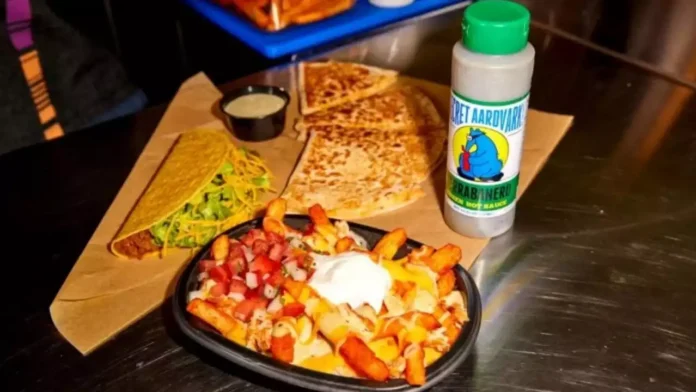
With this latest acquisition, the firm now oversees and runs 226 eateries, which includes Taco Bell, with $500 million in revenues spread over eight states.

The company plans to sustain its growth momentum through additional acquisitions and the establishment of new units.

The Delight Restaurant Group was founded by managing partners Andrew and Richard Krumholz in 2016.

“We are excited to bring in and integrate this exceptional team and portfolio of Wendy’s outlets to Delight,” said Krumholz.

“We have held the Thompson brothers in high regard since becoming part of the Wendy’s system seven years ago.”

In May 2021, the Delight Restaurant Group purchased 44 Wendy’s restaurants in Long Island and New York, USA, from The Wendy’s Company.

Continue Exploring: Wendy’s partners with PAR Technology to boost customer engagement through AI-powered loyalty program

The company intends to open several new Wendy’s locations in the region.

As part of the brand’s Image Activation initiative, the company also intends to renovate some of the acquired restaurants. The 44 restaurants included in the deal employ over 1,200 team members.

Prior to the 2021 acquisition in New York, NPC International’s bankruptcy sale procedure resulted in the purchase of 54 Wendy’s locations in Raleigh, North Carolina.

Advertisement

Dabur reports sluggish demand trends in March quarter, notable uptick in rural growth

0
Dabur
Dabur

Dabur, a leading FMCG company, stated that demand trends during the March quarter were subdued, but there was a noticeable uptick in rural growth. The company anticipates an improvement in consumption in the upcoming months, buoyed by a favorable rabi crop harvest and predictions of a regular monsoon. The surge in rural growth is attributed to price reductions in staple food items, which have contributed to narrowing the gap between rural and urban areas, according to the company’s quarterly updates.

“Taken into account the bright outlook for the rabi crop harvest and the forecast of a normal monsoon, we anticipate consumption to pick up in the coming months,” Dabur stated.

It additionally stated, “Although the previous year posed challenges in terms of consumer demand, we anticipate an enhancement in consumption moving forward, given the robust nature of macro-economic indicators.”

The company, which owns brands like Dabur Chyawanprash, Dabur Honey, Dabur Pudin Hara, Dabur Lal Tail, Dabur Amla, Dabur Red Paste, Real, and Vatika, is anticipated to achieve mid-single digit growth in consolidated revenue during Q4 FY24.

Continue Exploring: Dabur announces INR 135 Crore investment for new greenfield facility in South India

The growth in revenue is also supported by its spice brand, Badshah, acquired by the Burman family-led company in October 2022.

Additionally, Dabur’s gross margins are expected to “continue to expand” due to lower input costs and cost-saving measures.

In the domestic market, Dabur’s HPC (home & personal care) segment is projected to grow by high-single digits, whereas the healthcare and F&B segments are anticipated to achieve low single-digit growth.

“F&B faced a challenging comparison with a high base from last year, and the healthcare portfolio was affected by a delayed winter. However, Badshah Masala maintained strong performance and is anticipated to achieve robust volume-driven growth in the high teens. We consistently increased our market share across all categories due to effective market execution,” the statement read.

Continue Exploring: Dabur India’s Q3 profit rises 6.2% to INR 506.44 Cr, records 7% revenue growth at INR 3,255.06 Cr

Dabur’s international business is projected to see double-digit growth in constant currency terms, driven by solid momentum in the MENA region (Middle East and North Africa), as well as in Egypt and Turkey.

“However, due to currency depreciation in Turkey and Egypt, the translated revenue in INR terms is expected to show growth in the mid-single digits,” the statement read.

Dabur stated that with the expansion in margins, the company plans to increase its investment in branding and marketing.

“We anticipate larger A&P spending, which are in line with our brand investment approach. The operational profit is expected to expand somewhat faster than revenue, resulting in higher year-on-year operating margins,” the statement added.

Continue Exploring: Rural FMCG sales outpace urban growth for first time in three years, signaling demand recovery

Advertisement

Amazon takes U-turn, decides to discontinue Just Walk Out tech at Fresh stores

0
Amazon Fresh
Amazon Fresh

Amazon, the e-commerce behemoth, has decided to discontinue the use of cashierless Just Walk Out technology at its Fresh grocery stores.

Bloomberg’s report indicates that the decision is in line with the company’s strategy to revamp its current Fresh stores and expand with new locations throughout 2024.

The Just Walk Out system was initially launched by Amazon in 2018 at the 10,400 square feet Amazon Go Grocery store located near its Seattle headquarters.

The idea offered a frictionless shopping experience. Amazon Prime members could simply enter the store using a QR code, select their items, and exit without the need for conventional checkout procedures.

Cameras and sensors recorded their purchases, and customers were subsequently billed through their Amazon account.

Continue Exploring: Amazon Fresh expands customer base: Non-Prime members can now order groceries

However, despite its futuristic allure, the technology has encountered notable challenges.

The high installation and maintenance expenses are believed to be among the reasons why the technology was only partially adopted. According to a report by the New York Post, out of the 40 large-scale Amazon Fresh stores in the country, only 27 utilize it.

Privacy concerns, mishandled orders, and delays in sending receipts after purchase have also contributed to the issues faced.

The cameras and sensors have the capability to gather biometric data, leading to a class action lawsuit filed in New York, alleging Amazon’s improper collection of such information from consumers.

Allegedly, around 1,000 human operatives based in India have been reported to be scanning the camera feeds to ensure precise checkouts.

Amazon plans to discontinue the Just Walk Out system in larger Fresh stores; however, it will remain a feature in Amazon Go outlets and smaller-format Fresh shops in the UK.

Furthermore, the company plans to continue licensing the technology to other retailers.

The Information was the first to break the news about the discontinuation of the Just Walk Out technology in Amazon Fresh US stores.

Amazon recently introduced a new application for its Amazon One service—a contactless palm recognition system that enables customers to hover their palm over the device to make payments.

Continue Exploring: Amazon Fresh expands presence in India, now serving 60 cities with fresh food delivery

Advertisement

IHCL and Merlin Group join forces to unveil new IBIZA resort in Kolkata, set to open in October 2025

IHCL and Merlin Group

The Indian Hotels Company (IHCL) has collaborated with Merlin Group to launch a new resort located near Joka on Diamond Harbour Road in Kolkata.

IBIZA, a part of IHCL SeleQtions, will feature 130 rooms, including eight suites, set across 11 acres in Kriparampur, a sought-after tourist spot. Additionally, the property will offer a 5,400 sq. ft. ballroom, conference halls, pre-function spaces, meeting rooms, and picturesque outdoor venues.

“The current resort will undergo renovation and expansion under a new brand, with an anticipated opening in October 2025. A total investment of INR 60 crore will be allocated for this expansion,” stated Sushil Mohta, Chairman of Merlin Group, suggesting that the company might explore further opportunities with IHCL.

With the addition of this resort, IHCL will have seven hotels in Kolkata under various brands like Taj, SeleQtions, Vivanta, and Ginger, with two more currently in development.

Continue Exploring: IHCL triples hotel signings in FY24, surpassing expansion targets ahead of schedule

“This agreement marks another stride for IHCL in broadening its presence in Kolkata, a bustling state capital. It will cater to the demand for nearby getaway destinations from the city, capturing the growing interest in both leisure and MICE,” commented Suma Venkatesh, Executive Vice President – Real Estate & Development at IHCL.

Kolkata, the capital of West Bengal, stands as a significant commercial hub for East India. Recognized as an artistic and cultural epicenter, the city has attracted numerous luxury hotel brands to establish their properties.

As per JLL, the hotel industry has experienced a remarkable upswing since the previous calendar year (2023). In 2023, a record-breaking number of hotel signings and openings occurred, with 25,176 keys signed and 12,647 keys launched. Notably, there is a growing interest in hotel development activities in Tier-2 cities, accounting for 54% of the total signings in these areas.

Although management contracts remain prevalent, constituting 78% of the total number of keys signed, there has been a significant rise in lease and revenue share models across various tiers, encompassing 4% of the total keys signed.

“The strong performance of the commercial sector has directly impacted major urban areas, with Tier 1 cities witnessing the highest number of keys signed since 2020, marking a significant increase of 31% compared to 2022,” the report stated.

Continue Exploring: Hotel giants bet big on India: Radisson, Marriott, Hilton, IHG, and Wyndham compete in intense race for expansion

Advertisement

Amazon India’s largest seller Appario acquired by Clicktech as ecommerce giant reduces seller ownership

0
Amazon
Amazon

Clicktech, a major seller on Amazon India, is set to acquire its counterpart Appario as Amazon aims to reduce its ownership in sellers on its platform.

VCCircle was the first to break the news of the development.

After the closure of Cloudtail, Appario has become the largest seller on Amazon India, handling a substantial volume of orders for the platform.

This marks the second instance of Amazon reducing its stake in a seller entity to adhere to local ecommerce regulations.

Continue Exploring: Amazon India adjusts seller fees, impacts various categories starting April 7

Amazon will take full control of Frontizo Business Services, the holding company of Appario, from its joint venture partner, Patni Group.

As a result, Appario will become the exclusive property of Clicktech, while Frontizo will become a fully-owned subsidiary of Amazon.

“Clicktech plans to grow by expanding its range of goods in the market. As a result, the board chose to acquire Appario’s firm in order to broaden their product offerings,” according to Raj Jain, the company’s executive director.

Backed by the Vinod Poddar group, Clicktech is recognized for its involvement in steel and coal processing, real estate, and plastics.

Appario was the last major seller in which Amazon had an ownership stake.

In October 2022, Amazon announced plans to delist Appario from the platform, facing opposition from smaller sellers and regulatory pressures. In November of the same year, Amazon and Patni Group were exploring different avenues for Appario Retail to continue its presence on the marketplace.

Continue Exploring: Amazon rolls out enhanced generative AI for effortless product listing creation

As a seller on the ecommerce platform, Appario generates most of its revenue from the sale of traded goods, which includes damaged items.

Several companies, including Clicktech and Cocoblu Retail, purchased Cloudtail’s inventory. Additionally, many of Cloudtail’s employees and management transitioned to these new entities, which later became prominent sellers on Amazon.

Advertisement