As the summer season dawns, Levi’s has unveiled a diverse selection of new fits, presenting nearly 15 options for customers in India. From retro-inspired flares to laid-back loose styles and timeless classic straight cuts, Levi’s caters to all preferences, ensuring there’s a pair for every mood, style, and occasion. The brand’s campaign, “New Fits, Infinite Possibilities,” stars Deepika Padukone, the brand ambassador and fashion icon, showcasing the latest fits.
Levi’s has also introduced “Loose Fits,” emphasising ease of wear and carefree design with a nod to the ’90s. Both low-waist and high-waist inclinations are catered to with this collection’s Low Loose & High Loose designs. For a double dose of ’90s nostalgia, the ’94 Baggy along with ’94 Baggy Wide Leg choices both have an easy baggy silhouette.
“Straight Jeans” continue to be a classic option, featuring choices such as the vintage-inspired Wedgie Straight and the Ribcage Straight Ankle, which boast a high rise and a summer-ready ankle crop. The 80’s Mom jeans blend a high waist, relaxed silhouette, and tapered leg to create a nostalgic yet fashionable appearance.
The brand has also debuted a selection of “Flared Jeans,” featuring options like The Ribcage Cropped Boot, Ribcage Wide Leg, and the latest addition, the Ribcage Bell. This newest style boasts a super exaggerated bell leg, perfect for achieving an elongated look.
“Levi’s has consistently been a trailblazer in the women’s denim industry, fusing fashion with quality. Our customer views fashion as a means of self-expression and an extension of who they are, and our assortment of sizes looks provides women with the options they want, for any situation. Our brand spokesperson, Deepika Padukone, truly exemplifies how one can express oneself in denim. We hope that this campaign will help women discover a new favourite pair that truly captures their style, according to Amisha Jain, MD and SVP at LS & Co. South Asia, Middle East, Africa.
The “New Fits. Infinite Possibilities” campaign encourages women to delve into the world of Levi’s, offering endless options for every style preference. The collection, starting at INR 2799, is accessible online through the website and at Levi’s stores across India.
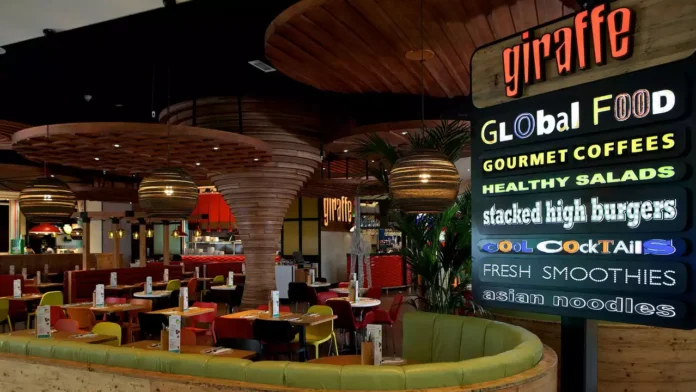
Giraffe, a well-known UK-based casual dining chain, has announced its expansion plan to enter into the Indian market.
This strategic maneuver involves a collaboration with Franglobal, a prominent company specializing in international franchising solutions. This partnership aims to ease the entry and expansion of global brands into India and beyond, guaranteeing both success and profitability.
Giraffe has become a beloved destination for food enthusiasts across the United Kingdom, presenting a variety of burgers, salads, tantalizing curries, and desserts.
Giraffe recognizes an exciting chance to bring its unique fusion of global flavors to discerning Indian diners. Leveraging its success in the UK, Giraffe aims to mirror its accomplishments by presenting a diverse menu specifically crafted to appeal to Indian palates.
With a blend of inventive fusion dishes and timeless classics, Giraffe’s menu is poised to captivate the diverse palates of Indian consumers.
Giraffe has cultivated an atmosphere where flavors, cultures, and people blend seamlessly in a space free from judgment, discrimination, or exclusion.
In its expansion plan, Giraffe will focus on establishing a robust presence in major Indian cities, leveraging strategic partnerships and local knowledge to guarantee smooth operations and customer satisfaction.
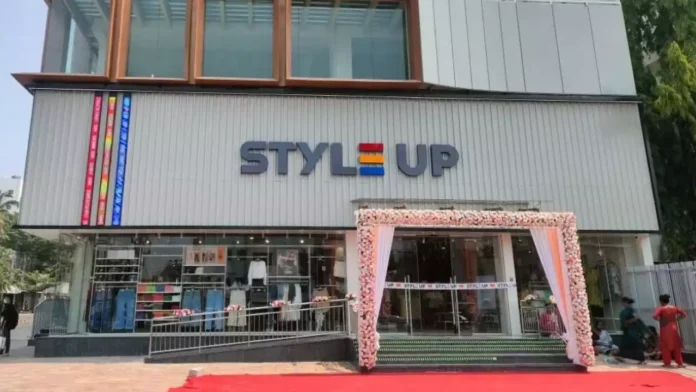
ABFRL‘s fashion retail brand, Style Up, has unveiled its third store in Bengaluru, as per a company announcement on social media. The latest standalone outlet is situated in Jayaprakash Nagar.
“Our third store in Bengaluru marks another milestone for us,” expressed Ekta Saran, Senior Vice President at Style Up, in a LinkedIn post. She continued, “Grateful to all our teams, colleagues, developers, and vendor partners for all the love, great work, and support as always.”
The store presents a diverse selection of retail brands from ABFRL, featuring names like Louis Philippe, Allen Solly, Peter England, and Van Heusen, designed to meet the needs of men, women, and children alike.
Style Up, a fashion store chain with large-format outlets, was founded in 2019. Presently, the brand boasts a network of 29 stores spanning 20 cities across India.
ABFRL stands as a fashion retail enterprise under the ownership of the Indian multinational conglomerate, Aditya Birla Group.
The company possesses a portfolio of brands, including Louis Philippe, Van Heusen, Allen Solly, and Peter England. Additionally, it maintains enduring exclusive alliances with renowned international brands like Ralph Lauren, Hackett London, Ted Baker, Fred Perry, Forever 21, American Eagle, Reebok, and Galeries Lafayette.
As of March 2023, ABFRL boasts a widespread network comprising 3,977 stores, spanning around 33,535 multi-brand outlets, and encompassing 6,723 points-of-sales within department stores across India.
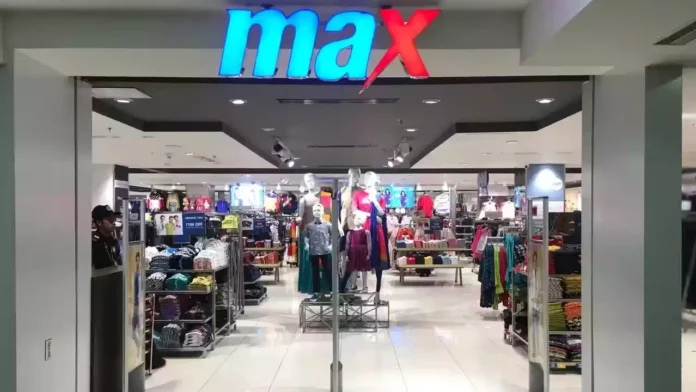
Max Fashion, the value fashion brand under Landmark Group, has unveiled its latest youth-oriented brand, Max Urban.
Additionally, Max Urban has launched a brand campaign titled Love Labels, centered on the themes of self-love and body positivity. It reimagined the traditional size abbreviations of XS, S, M, L, XL, and 2XL as labels like Xtra Special, Stunning, Magical, Lit, Xtra Lit,and Xtra Xtra Lit.
“At Max Urban, we’ve endeavored to provide a more inclusive array of sizes and adopt empowering language. Our ‘Love Labels’ campaign at Max Urban turns size tags into expressions of self-love, aiming to empower you to embrace confidence in your attire,” expressed Sumit Chandna, President of Max Urban.
The first Max Urban collection will be available both in the brand’s retail outlets and on its recently unveiled e-commerce platform, with prices starting at INR 199.
Love Labels will be accessible at 50 select stores located in cities such as Delhi, Mumbai, Bengaluru, Kolkata, Hyderabad, Chennai, Lucknow, Trivandrum, Calicut, Guwahati, and Bhubaneswar.
The brand intends to broaden the reach of Love Labels by scaling up the number of stores throughout the year.
The omnichannel brand Max Fashion was introduced in May 2004 under the umbrella of the UAE-based Landmark Group. Expanding its footprint, the retailer entered the Indian market in 2006 with its inaugural store in Indore, Madhya Pradesh. Presently, the company boasts a network of over 500 stores spanning 200 cities in India and more than 850 stores worldwide, establishing its presence in over 19 countries.
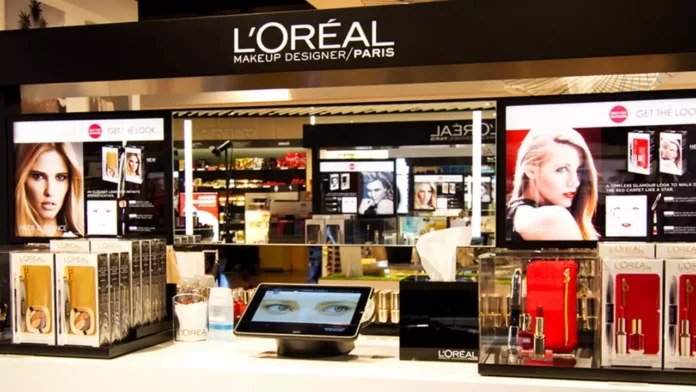
L’Oreal announced on Thursday a 9.4% rise in first quarter sales on a like-for-like basis, surpassing expectations and easing concerns about a slowdown in the two biggest beauty markets, the United States and China.
The French cosmetics powerhouse, parent to renowned brands like Maybelline and Lancome, disclosed sales of 11.24 billion euros ($11.98 billion) for the initial three months ending in March.
The sales growth surpassed the analyst consensus of a 6.1% increase projected by Jefferies. Sales grew by 8.3% on a reported basis.
L’Oreal, the largest beauty company globally, reported sales growth of over 12% in both North America and Europe, driven by strong performance in its mass market and dermatological product lines, which offset declines in the luxury segment.
Jefferies analysts remarked that the West “continues to thrive,” noting that North America had defied weakening scanner data and negative commentary from retailers.
Earlier this month, U.S. retailer Ulta Beauty unsettled the market with comments about a faster-than-anticipated slowdown in the United States, causing shares across the sector to decline.
After Thursday’s results, L’Oreal’s American depositary receipts (ADRs) surged by up to 6.5% in New York trading, with shares of U.S. competitors Estee Lauder and Coty also experiencing gains.
L’Oreal reported that its consumer products division, encompassing its L’Oreal Paris line of mascaras and Elseve hair gloss, and contributing over a third of its revenues, grew by 11.1% on a like-for-like basis.
The company saw increased volumes and value within the unit, driven by robust demand in both Europe and emerging markets.
The company experienced heightened volumes and value within the division, propelled by strong demand in both European and emerging markets.
Sales in the luxury division, which includes fragrances like YSL’s Libre and Aesop products acquired last year, rose by 1.8%, surpassing expectations for a decline. Strong growth in Europe and North America mitigated the weakness in North Asia.
The company noted that North Asia faced challenges due to an unfavorable comparison base in Travel Retail and sluggish market growth in mainland China.
Jefferies analysts mentioned that travel retail sales were also impacted by a Chinese government crackdown on “daigou,” which refers to resellers of foreign consumer products.
During a call with analysts, Chief Executive Nicolas Hieronimus stated that L’Oreal holds the largest share of China’s luxury beauty market, accounting for approximately 34%.
“We are disappointed that the market isn’t rebounding as we anticipated,” he stated, though he emphasized that the company continues to outperform the market.
He noted that the company achieved a growth rate of 6.2% in China, significantly surpassing the broader market’s growth of less than 1%.
L’Oreal, ranked as Europe’s 6th most valuable listed company with a market capitalization of approximately 220 billion euros ($234.26 billion), has experienced a 6% decline in shares year-to-date. This contrasts with a 5% decrease in shares at its U.S. counterpart, Estee Lauder.
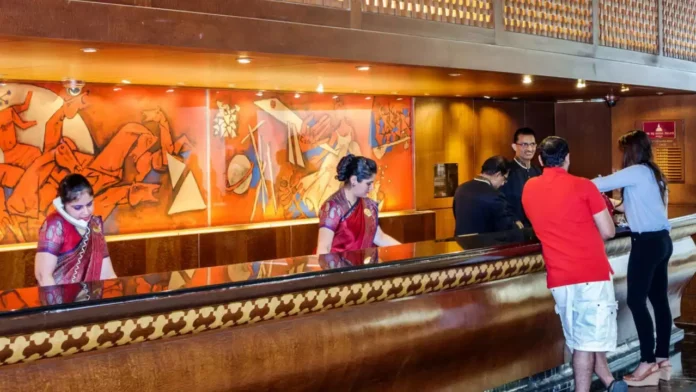
Seeking refuge from the sweltering plains will come at a cost this year, as hotel rates in hill stations throughout India are on the rise.
The JW Marriott Mussoorie Walnut Grove Resort & Spa in Uttarakhand is fully booked for this weekend, and securing a reservation for next week could cost around INR 40,000 per night.
Securing a fair price for a private suite at The Khyber Himalayan Resort & Spa in Gulmarg might prove to be a challenging endeavor, as tariffs are approximately INR 1.17 lakh per night for next week on the Booking.com travel portal.
As the weather department predicts heatwave conditions in multiple states, travel and hospitality companies anticipate a surge in hotel bookings for cooler destinations in April and the following two months.
Nakul Khullar, proprietor of the Baragarh Resort & Spa in Manali, an IHCL SeleQtions establishment, reported that bookings for May have already surged by 40% compared to last year.
“As temperatures soar across much of peninsular India, travelers are increasingly searching for cooler destinations to evade the summer heat,” stated Santosh Kumar, Booking.com’s country manager for India, Sri Lanka, Maldives, and Indonesia.
“As per Booking.com Travel Predictions 2024, it’s observed that 74% of Indian travelers have emphasized climate change as a significant determinant in shaping their vacation plans. This inclination is steering them towards cooler destinations, with 76% expressing a strong inclination to seek refuge from the scorching heat during their holidays,” he stated.
“Ooty leads the rankings, followed by Manali, Kodaikanal, Rishikesh, Munnar, Lonavala, Darjeeling, and Mahabaleshwar as the other sought-after destinations this summer,” he added.
Shahzad Aslam, head of sales at Leisure Hotels Group, mentioned that despite the upcoming general elections, there is expected to be a minimum 10% increase in demand during the summer months compared to last year.
Rajeev Kale, president and country head for holidays, MICE, and Visa at Thomas Cook (India), noted that as temperatures climb, weekend getaways to cooler destinations like Coorg, Ooty, Munnar, Wayanad, Kodaikanal, Matheran-Lonavala, Mahabaleshwar, and Mussoorie are already experiencing a 15-20% year-on-year increase in bookings for the summer vacations beginning in May.
“We are seeing an increase in advance bookings for cities like Kashmir. Reservations for Uttarakhand are up 15% year on year, while bookings for Northeast hill stations have increased 18% year on year. He added that reservations in Ooty, Munnar, Wayanad and Mahabaleshwar are up about 10-15% year on year.
Amit Damani, co-founder of the villa and bungalow rental company StayVista, reported that bookings for May’s upcoming dates are 15% higher than those of last year.
“The majority of our customers make their reservations 20 days or more in advance. However, we have noticed that customers are making reservations roughly 40 days in advance this month. In addition, visits are becoming longer, averaging five nights now instead of the customary three,” he said.
Daniel D’souza, president and country head for holidays at SOTC Travel, noted that as temperatures soar in various regions, Indians are opting for brief getaways to cooler destinations.
“Our data suggests that due to the rise in airfares to favored domestic destinations, Indians are favoring drivecations to nearby hill stations, leading to a surge in demand of around 20% compared to last year,” he stated.
“Premium getaways are practically sold out, particularly during weekends, and the inventory of hotels for well-liked summer hotspots such as Kashmir continues to operate at high occupancy,” he continued.
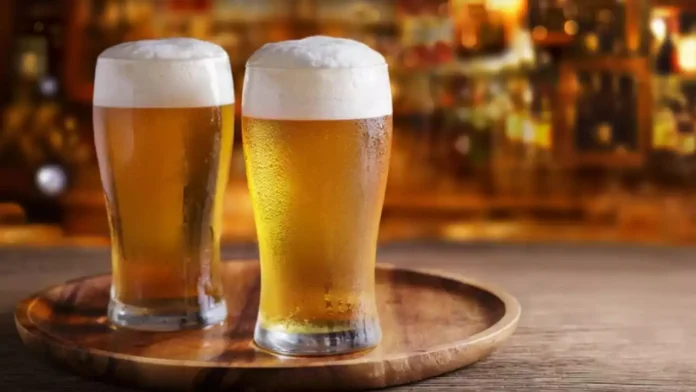
In the midst of a water crisis and with temperatures reaching near-record highs in Karnataka, beer sales are skyrocketing to levels never seen before. Bengaluru, the state capital and famously dubbed the Silicon Valley of India, emerges as the hub of beer consumption in the entire southern region.
A high-ranking official from the excise department attributed the surge in sales to the escalating temperatures in Karnataka. In just the last 15 days, an astonishing 23.5 lakh carton boxes of beer were reportedly sold statewide.
The spike in beer sales aligns with the recent forecast by the Indian Meteorological Department (IMD), which anticipates extended heat waves across different areas of central, northern plains, and southern India during the forthcoming summer months.
Data obtained from the excise department indicates that Karnataka has already achieved 61% of the total sales reported for the entire month of April 2023.
However, upon closer examination of the data, it becomes apparent that beer sales have been skyrocketing since the beginning of 2024, as noted in the report.
In both February and March, beer sales surpassed the records set in the previous year, reflecting a consistent trend seen throughout 2024. This summer, the excise department noted a remarkable 30% increase in sales compared to previous years, signaling a significant surge in demand.
Reassuring consumers, the excise department affirmed that it has an ample stock to fulfill the increasing demand for beer.
Another official stressed that during the summer season, beer becomes the preferred beverage for many individuals, both in urban and rural areas. As temperatures rise, so does the consumption of beer.
Consumers reportedly prefer chilled beer, with many believing it helps in battling the sweltering heat.
Walmart, the multinational retailer, has introduced a dedicated page for Indian sellers to join and sell on its marketplace platform. The company initiated a global seller summit in Jaipur on Tuesday, inaugurating a sequence of local events aimed at guiding potential sellers with valuable information on consumer behavior, market trends, and providing assistance with onboarding support and catalog setup, as stated in a press release.
“Investment in India holds a prime position in Walmart’s agenda, and the exclusive landing page reinforces our dedication to Indian sellers. Walmart Marketplace aims to unleash the potential of Indian enterprises by providing sellers with access to a global customer base,” remarked Michelle Mi, Vice President of Emerging Markets and Business Development for Walmart.
The release further added, “By offering specialized onboarding assistance and leveraging our expertise in navigating international supply chains, we are equipping sellers with the necessary tools to flourish not only in the US marketplace but also beyond.”
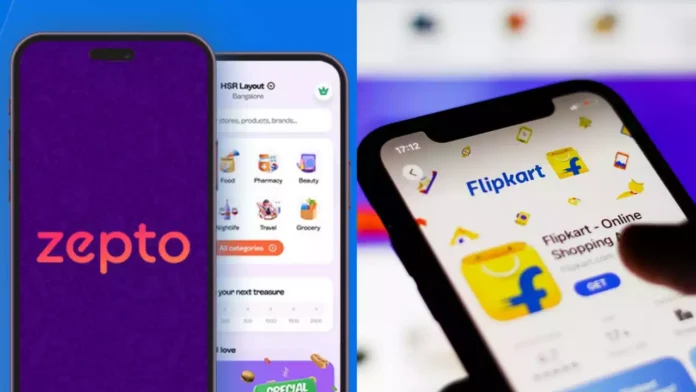
Flipkart, a leading player in e-commerce, engaged in discussions with Zepto regarding a potential deal. However, as reported by ET, these discussions have come to a halt and are unlikely to be revived, according to sources familiar with the matter. Zepto, a prominent player in the fast-growing quick-commerce segment, reportedly decided to pursue a financial round instead of a strategic sale, as disclosed by individuals speaking on the condition of anonymity due to the private nature of the talks.
According to individuals familiar with the matter, the startup is presently negotiating with a group of private equity funds as well as current investors to finalize a new round of funding. Zepto is anticipated to secure a valuation of nearly $2.5 billion, nearly doubling that of its previous round, driven by the momentum in the quick commerce sector over the past few months.
Insiders familiar with the matter revealed that Flipkart, owned by Walmart, expressed interest in acquiring a majority stake in Zepto at a valuation below $2 billion, with the founders retaining control of the company.
One of the individuals cited mentioned, “The companies convened, and Flipkart extended a verbal offer to acquire a majority stake in Zepto… but the discussions for the deal didn’t progress further.”
Snackfax had previously reported on April 2nd that Zepto was re-entering the market to raise $250-300 million in capital, just six months after concluding a financing round that valued the company at $1.4 billion.
Insiders familiar with the matter revealed that Zepto has been in discussions with private equity firms like General Atlantic and sovereign funds such as the Abu Dhabi Investment Authority (ADIA), among others, regarding a potential investment.
Flipkart and General Atlantic refrained from providing comments. ADIA did not respond to inquiries.
Aadit Palicha, the CEO of Zepto, stated that the company is currently not considering strategic investors. He further mentioned that he wouldn’t comment on market rumors regarding external parties and investors.
Nearly all of the funds from the previous fundraising campaign are still in the bank, and the business is practically ebitda positive. Given that, Palicha stated, “We would not need to raise $500 million in any future fundraise or intention.”
He mentioned that any future fundraising efforts would primarily focus on strengthening the balance sheet in preparation for an initial public offering (IPO).
Sources familiar with the matter disclosed that Zepto has secured commitments from existing backers like Glade Brook Capital and Nexus Venture Partners among others.
These individuals further mentioned that the company is actively seeking an external investor to spearhead the financing round. Anu Hariharan, formerly leading Silicon Valley’s Y Combinator’s growth fund, YC Continuity Fund, may potentially invest in Zepto through her newly established firm, Avra. She currently serves as an independent director on Zepto’s board. Following the discontinuation of Y Combinator’s growth fund, in which Zepto was an investor, Hariharan departed from the renowned accelerator.
Queries directed towards Hariharan remained unanswered.
A person familiar with the matter stated, “Zepto has informed potential investors that it might increase the size of the round to approximately $500 million… Internal commitments from existing backers stand at $200 million.”
Another individual familiar with the developments suggested that Zepto might consider a combination of primary and secondary transactions. Aadit Palicha and Kaivalya Vohra, the founders, collectively own over 20% of the company, initially launched as Kiranakart in 2020. The Mumbai-based company recently conducted a minor secondary round, during which some of its angel investors divested their shares.
Flipkart’s pursuit of a strategic deal highlights the sector’s significance for the Walmart-owned e-tailer, particularly in the instant-delivery segment where it has trailed. According to individuals familiar with the plans, Flipkart intends to introduce its own rapid delivery service by July and is currently establishing dark stores to facilitate deliveries within 30 minutes.
The Bengaluru-based company had previously engaged in discussions with Dunzo, a cash-strapped quick-commerce player in which Reliance Retail holds the largest stake, for a substantial investment. However, these discussions did not advance.
PhonePe, backed by Walmart, also approached Dunzo for its ONDC-led e-commerce venture of Pincode. However, the transaction fell through as the company’s board vetoed the proposal. The Open Network for Digital Commerce (ONDC) is an Indian government-backed marketplace aimed at empowering sellers and offline businesses to mitigate the dominance of Amazon and Flipkart.
Flipkart’s efforts to invest in or acquire a standalone player in the quick commerce industry are directed towards securing strategic control in a sector that is becoming progressively competitive within e-commerce. Snackfax has been covering Swiggy Instamart, Zepto, and Zomato’s Blinkit as they rapidly expand into new categories beyond groceries and staples, encroaching on the domain of horizontal e-tailers like Flipkart, Amazon India, and Meesho.
In the last month, numerous brokerage reports have highlighted the increasing significance of quick commerce for brands and the potential pressure it may exert on major e-commerce players. A recent report by UBS stated that quick commerce has transitioned from being a “good to have” to an “indispensable” aspect. According to the report, this emerging sector is projected to reach a Gross Merchandise Value (GMV) of approximately $34 billion by FY29, with a Total Addressable Market (TAM) potential of $520 billion.
The report stated, “We reckon that the three major quick commerce platforms presently hold a favorable edge in the essential infrastructure required—such as the deployment of dark stores and logistics infrastructure—though the possibility of a more fragmented market structure over the medium term cannot be discounted.”
By the end of FY24, the market is projected to have reached a size of $5 billion. “This would suggest a Compound Annual Growth Rate (CAGR) of 45% over FY24-29,” it further stated.
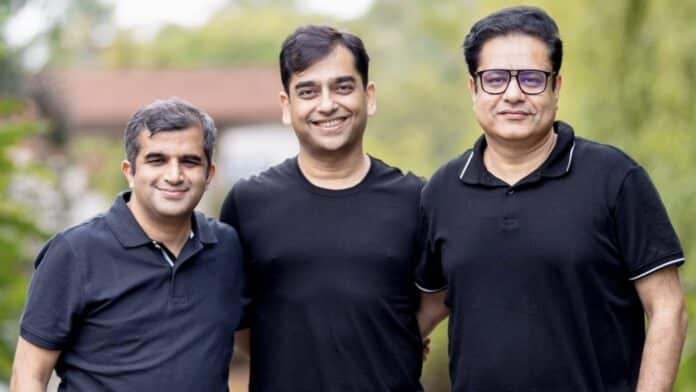
Abhishek Ganguly, Atul Bajaj, and Amit Prabhu, Co-Founders, Agilitas Sports
Agilitas Sports, a budding sportswear startup, has stepped into the consumer market by acquiring the brand license for the renowned Italian sports brand, Lotto.
The startup has secured exclusive rights to design, manufacture, and distribute the brand in India, South Asia, and Australia under a 40-year-long license agreement.
“Agilitas plans to introduce a diverse range of products in footwear, apparel, accessories, and sports equipment,” stated the startup.
Abhishek Ganguly, cofounder and CEO of Agilitas, announced that the startup will produce Lotto shoes at Mochiko’s Noida factory, which they recently acquired. He anticipates that the shoes will be available for purchase by early 2025.
“In order to expand the Lotto brand through product development, innovative design, supply chain management, branding, marketing, and distribution channels, Agilitas will invest in a dedicated management team. Our goal is to create a vertically integrated, agile supply chain and product creation cycle that spans from manufacturing to retail. This would allow us to respond swiftly and nimbly to customer insights and the newest trends,” Ganguly said.
The startup has secured rights from Lotto’s parent company, WHP Global. Agilitas also announced plans for substantial investments in manufacturing, design, research and development, supply chain, marketing, and distribution in the coming months.
Agilitas will implement an omnichannel approach, distributing Lotto products through its website, online marketplaces, exclusive brand outlets (EBOs), and various other channels right from the launch’s inception.
Senior vice-president of WHP Global’s sports vertical Margaret Kivett commented on the partnership, saying, “Partnering with Agilitas Sports marks an exciting chapter for Lotto.” We are excited to work with their vibrant team to strengthen Lotto’s position in important international markets, especially in football & racket sports hotspots like Australia and India.
Ganguly stated that Agilitas intends to capitalize on factors including Lotto’s brand recognition, diverse distribution channels, high-quality products, customer experience, and the startup’s vertically integrated manufacturing setup to carve out a distinct position in the Indian sportswear market.
He mentioned that the startup intends to unveil additional brand acquisitions in the coming months, with plans to introduce new brands throughout 2025 as well.
Established in 2023 by former Puma India executives Ganguly, Atul Bajaj, and Amit Prabhu, Agilitas operates within India’s burgeoning sportswear sector. Its goal is to operate as a comprehensive footwear company, overseeing the entire process from design to retail.
Since May last year, it has raised INR 530 crore in funding from investors such as Convergent Finance and Nexus Venture Partners. Although it has not yet entered the consumer market, the sportswear company made strides in the B2B sector last year with the acquisition of India’s largest sports footwear manufacturer, Mochiko Shoes, for an undisclosed sum.
Mochiko produces footwear for various brands including Adidas, Puma, New Balance, Skechers, Reebok, Asics, Crocs, Decathlon, Clarks, and US Polo in India.
Regarding the acquisition, Ganguly mentioned that Mochiko is expected to reach a turnover of INR 1,000 crore by the financial year 2024-25 (FY25) based on current order book projections. He anticipates this figure to double over the next four years.
Discussing the consumer aspect of the business, the CEO of Agilitas expressed the startup’s intention to establish three to four brands under its umbrella through long-term partnerships or acquisitions. However, he clarified that Agilitas would refrain from creating a brand from scratch at this stage.
“This year, we are strengthening the retail identity, the marketing proposition, and the product on the front of consumer brand. Additionally, it takes time since we have to start from zero when designing and producing the products, coming up with layouts for retail stores, and developing the app and online store,” Ganguly added.
Central to Agilitas’ extensive expansion strategy is the burgeoning Indian footwear and athleisure wear market, driven by increasing disposable incomes and a burgeoning middle class. According to a report, the indigenous footwear sector is anticipated to grow to a market worth INR 1.91 Lakh Cr by FY28.
We use cookies to ensure that we give you the best experience on our website. If you continue to use this site we will assume that you are happy with it.