Industry Buzz: Jeyandran Venugopal, Former Flipkart Tech Chief, Poised to Helm Reliance Retail
Mumbai: There’s strong chatter in the industry that Jeyandran Venugopal is in talks to take over as CEO of Reliance Retail (RRVL). While nothing has been made official yet, sources say the announcement could be around the corner.
Venugopal stepped down from his role as Chief Product and Technology Officer at Flipkart earlier this year in February, citing personal reasons. He had joined Flipkart as Senior VP of Product & Engineering and spent nearly eight years helping shape its tech and product roadmap.
Before Flipkart, he held a similar leadership position at Myntra Jabong, where he was SVP and CPTO. He also tried his hand at entrepreneurship — co-founding the health-tech platform Eclinic 247, which was later acquired by MedLife in a strategic deal.
His earlier stints include key roles at Snapdeal, Yahoo, and Amazon Web Services. He has also served as Chairperson of the Nasscom Deeptech Council and sat on the board of HealthCare Global Enterprises.
Influencers Aren’t Founders”: Bombay Shaving Company CEO Takes a Swipe at Social Media-Driven Startups
Shantanu Deshpande, founder and CEO of Bombay Shaving Company, didn’t hold back in a recent LinkedIn post that’s now stirring up conversation across India’s startup and content creator circles. His message? Just because someone has followers doesn’t mean they’re ready to build a real business.
“Influencers make lousy founders,” Deshpande wrote bluntly. “They chase likes, retweets, views—whatever’s trending. That need for instant validation gets in the way of actual company-building.”
According to him, founders need more than social clout; they need stamina. “Real businesses are built over years, not reels. You need to have the patience to sit through the boring parts and build something people actually need. Not just something that goes viral.”
He also didn’t shy away from calling out global stars-turned-brand-builders like Kylie Jenner, Logan Paul, and MrBeast. Deshpande called their ventures “exceptions,” suggesting they’ve been handed exaggerated valuations and media-fueled hype rather than true entrepreneurial grit. He referenced a quote by Adheet Gogate, warning that influencer-backed brands often burn investor money on packaging and perception instead of actual product development or operations.
“The Chinese will wipe these models out,” he added, hinting at the inevitable reckoning for businesses built on smoke and mirrors rather than solid supply chains and product-market fit.
And in classic Deshpande style, he wrapped up with a sharp punchline: “Doing goofy dances or one-minute gyaan videos doesn’t make you a founder. It just gives you a false sense of competence.”
His post has ignited plenty of debate—with some agreeing that digital fame isn’t the same as entrepreneurial depth, while others argue that creators bring community, storytelling, and agility to the table.
BluSmart Faces Major Shake-Up: Eversource Capital Eyes Acquisition as Founders Anmol & Puneet Jaggi Face SEBI Heat Over Gensol Scandal
Eversource Capital is looking to take control of BluSmart, the electric cab-hailing startup currently reeling from a corporate meltdown tied to its founders’ alleged financial misconduct. While no formal word has come from Eversource, insiders say the investment firm has made a serious offer and is likely to insist that co-founders Anmol and Puneet Singh Jaggi step down from the board if the deal moves forward.
BluSmart, once seen as a bright spark in India’s EV ecosystem, has found itself in stormy weather after regulators began circling Gensol Engineering Ltd.—a listed company promoted by the Jaggi brothers. The Securities and Exchange Board of India (SEBI) has accused them of siphoning funds meant for corporate use and rerouting them to personal ventures, including shady stock trades and luxury real estate purchases. One of the shell firms allegedly involved is named Wellray, which SEBI claims was used to manipulate Gensol’s own stock.
The trouble doesn’t stop there. SEBI’s action triggered a separate investigation by the Ministry of Corporate Affairs into Gensol Electric’s financial conduct and regulatory filings. Depending on the ministry’s findings, BluSmart could face more fallout.
Founded in 2018, BluSmart has been operating a fleet of nearly 8,700 electric vehicles, about 5,500 of which came directly from Gensol. The rest are leased from various partners. The company carved out a niche for itself in India’s crowded mobility space by betting early on electric vehicles—but the ongoing governance issues have cast a shadow over its future.
If the acquisition by Eversource goes through—and that’s still a big “if” pending due diligence and board-level approvals—it could represent a reset moment for BluSmart. Whether that’s enough to restore investor confidence and public trust remains to be seen.
25 Million Sq. Ft. of Retail Coming to India’s Tier 2 and 3 Cities: DLF, Texvalley, Rohan, and More Lead the Next Wave of Mall Mania
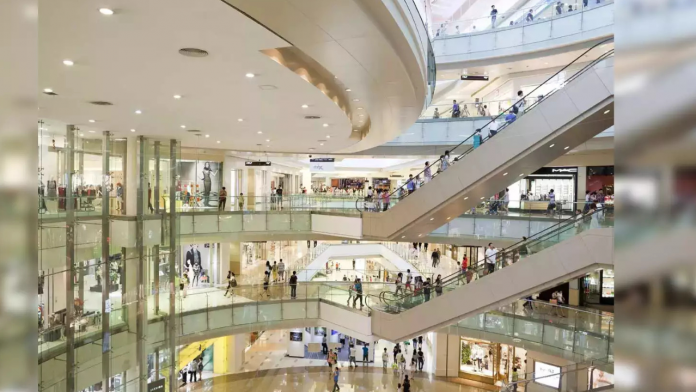
As shoppers across India lean harder into experience-first retail, real estate developers are racing to keep up—especially in the fast-growing tier 2 and 3 cities. The new playbook? Think smaller, smarter malls, mostly under 500,000 sq. ft., built right into local neighborhoods and offering what developers are calling “premium convenience.”
Big names like Lulu Group, DLF Ltd., and Aparna Constructions are leading the charge, planting stylish shopping centers across India’s emerging cities and towns. The idea is simple but powerful: bring metro-level shopping, dining, and social spaces to people’s doorsteps, no matter where they live.
Fresh data from JLL India predicts that over the next five years, nearly 25 million sq. ft. of new retail space will come up in India’s tier 2 and 3 cities alone. Meanwhile, the country’s eight largest metro cities are gearing up for nearly 20 new premium malls by 2026, adding around 12.3 million sq. ft. of retail supply, according to Cushman & Wakefield.
Here’s a quick look at some of the major retail projects set to reshape India’s shopping scene between 2025 and 2026:
DLF Midtown Plaza, New Delhi
Real estate powerhouse DLF Ltd. is putting the finishing touches on DLF Midtown Plaza in Moti Nagar, New Delhi. Covering more than 200,000 sq. ft., the plaza will bring a fresh mix of retail stores, cafés, food courts, and theme restaurants to one of Delhi’s fastest-growing neighborhoods. Tucked inside the larger DLF One Midtown township, this development is designed to cater to about 15,000 families living nearby. Expect a cozy, convenience-first vibe rather than a mega-mall experience.
Texvalley is making big waves down south with Value Mall, South India’s first true outlet shopping destination. Opening June 2025 in Erode, it will spread over 500,000 sq. ft. and house over 100 domestic and international brands. Along with a sprawling 600-seat food court (home to names like McDonald’s, KFC, Wow Momos, and Chicking), the mall will also feature a six-screen multiplex with cutting-edge EPIQ tech, a 25,000 sq. ft. hypermarket, an 18,000 sq. ft. indoor entertainment zone, and an outdoor arena for turf sports and pickleball. With a catchment area of 6 million people within 60 km, Value Mall expects to generate over 2,500 jobs, blending retail therapy with cultural events and community experiences.
DLF Summit Plaza, Gurugram
In Gurugram’s plush Sector 54, DLF Ltd. is readying DLF Summit Plaza, a mixed-use marvel that will dedicate over 400,000 sq. ft. to retail and 80,000 sq. ft. to coworking spaces. Opening within the current financial year, the plaza will serve a lively community of 30,000+ residents, offering boutique cinemas (with intimate two- or three-screen setups for 300 patrons), artisanal cafés, fine dining options, and a lineup of premium global and Indian brands. Think upscale, urban, and very curated.
Meanwhile, Mangaluru will get its first large-format mall with Rohan Mall, a landmark project by Rohan Corporation. Built on a 6.25-acre site in Kulashekara, the development will offer 300,000 sq. ft. of built-up space, featuring everything from factory outlets and a hypermarket to a four-screen multiplex and two separate family entertainment centers. To top it off, Rohan Mall will also house 250,000 sq. ft. of IT office space and a 100-key three-star business hotel, complete with banquet facilities—a true mixed-use hub catering to both retail therapy and business needs.
Biryani Blues Moves HQ to Premium Sohna Road Office in Gurugram, Eyes Aggressive Expansion with 68 Outlets and 2.5 Million Annual Customers
Biryani Blues, a homegrown quick service restaurant brand, has moved its headquarters to a new, upscale office on Gurugram’s Sohna Road—marking a big milestone in the company’s growth path as it gears up for broader expansion across North India.
“This move represents more than just a change of address—it’s a statement of intent,” said Aparna Andrews, Co-Founder of Biryani Blues. “We’re building a space that not only fosters creativity and collaboration for our team but also mirrors our ambitions for the brand. As India’s only consistently profitable biryani chain, we’re in a strong position to enter new cities without compromising on the taste and experience our customers love.”
The new workspace is strategically placed for easy access and high visibility, with modern amenities designed to support the brand’s dynamic work culture and future plans.
XRE Consultants handled the entire transition—from scouting the location and handling lease negotiations to designing the interiors and ensuring the space was ready for operations.
“It was an exciting project to work on,” said Zafeer Ahmed, Managing Director of XRE Consultants. “We worked closely with Biryani Blues to create a workspace that’s a true extension of their brand personality and business goals.”
Launched in 2013 by husband-wife duo Aparna and Raymond Andrews, Biryani Blues now runs more than 68 outlets across North and South India, serving over 2.5 million customers each year.
Leadership Overhaul and Fleet Restructuring: How BluSmart’s ₹315 Crore Deal and Key Executive Exits Shape its Future
BluSmart Mobility is in the midst of a significant overhaul to stabilize its finances, which has resulted in several key executive departures. CEO Anirudh Arun, Chief Business Officer Tushar Garg, Chief Technology Officer Rishabh Sood, and Vice-President of Experience Priya Chakravarthy have all resigned from their positions, as reported by The Morning Context.
In light of these changes, Nandan Sharma, who was previously Vice-President of Business and Operations, has stepped in as the new CEO.
This restructuring comes as BluSmart’s parent company, Gensol Engineering, is unwinding its existing fleet leasing contracts. As part of this strategy, Gensol has agreed to sell 2,997 electric vehicles, which account for 34% of BluSmart’s total fleet, to Refex Green Mobility, a Chennai-based company. These vehicles will then be leased back to BluSmart. Additionally, Refex will assume a ₹315 crore loan from Gensol. However, this deal is still awaiting approval from the relevant regulatory bodies.
Despite these structural adjustments, BluSmart has assured its customers that the company’s ride-hailing services will not be impacted.
Operational Hurdles
These leadership changes come at a time when Gensol Engineering is facing financial difficulties. Two major credit rating agencies have downgraded the company’s borrowing status, which has intensified pressure on the ongoing restructuring process.
BluSmart’s operations span Delhi-NCR, Bengaluru, and more recently, Mumbai. The company claims that its fleet of electric vehicles completes an average of seven trips daily, supported by a robust infrastructure that includes 50 charging hubs with over 6,300 charging points.
Fleet Expansion and Financial Update
In an effort to expand its fleet, BluSmart launched the ‘BluSmart Assured’ leasing program, which allows investors and high-net-worth individuals to lease electric vehicles directly to the company. This initiative has contributed nearly 1,000 vehicles worth ₹150 crore to BluSmart’s fleet.
Currently, BluSmart generates ₹70 crore in monthly revenue, translating to an annual run rate of ₹840 crore. As of March 2025, the company’s total debt stands at ₹980 crore, with a net outstanding debt of ₹280 crore, according to Anmol Jaggi, founder of Gensol Group and BluSmart co-founder, in an exclusive interview with Business Standard.
Aman Gupta of boAt Calls Out BluSmart’s Fraud Scandal, Warns Founders to Prioritize Ethics Over Rapid Growth
Aman Gupta, co-founder of boAt and a familiar face from Shark Tank India, has weighed in on the BluSmart controversy, calling it a cautionary tale for startups chasing growth at any cost.
Taking to X (formerly Twitter), Gupta didn’t hold back. He spoke candidly about the fallout from BluSmart’s financial irregularities, pointing out how such lapses don’t just affect founders—they ripple out to investors, employees, and customers too.
“Investors lost their money, founders lost precious years, employees lost stability, and customers lost a service they truly relied on,” he wrote. The impact, he added, goes beyond one company’s collapse. Scandals like this shake faith in India’s startup ecosystem, making it harder for everyone to raise funds or build trust with users.
Gupta also touched on values that seem to be getting lost in the race for scale. Quoting a lesson from his childhood, he said, “Bachpan mein jo parents ne sikhaya tha, woh kabhi na bhulo—jo bhi karo, dil se karo. Par galat na karo.” (Never forget what your parents taught you—whatever you do, do it with heart, but never do wrong.)
His message was clear: ethics and accountability aren’t optional add-ons—they’re the foundation. From clean books and timely audits to honest communication, he urged fellow founders to treat governance as seriously as product-market fit or growth metrics.
Good Monk Raises $2M Pre-Series A Led by RPSG Capital Ventures to Revolutionize Daily Nutrition in India
Good Monk, a young Bengaluru-based nutrition startup, has raised $2 million in pre-Series A funding, with RPSG Capital Ventures leading the round. Existing investors Multiply Ventures, Sharrp Ventures, and ThinKuvate also doubled down on their support in this latest infusion of capital.
Launched in 2022 by Amarpreet Singh Anand and Sahiba Kaur, Good Monk has carved a niche for itself by developing nutrition products that are easy to use, science-backed, and—perhaps most importantly—don’t mess with the taste of everyday food. Their range includes multivitamins, fiber blends, and probiotics tailored for all age groups—from kids to seniors.
What sets them apart? Their mixes are designed to be added directly into meals, no pills or bitter aftertastes involved. The idea is to make healthy living as effortless and routine as, say, stirring sugar into tea.
Speaking about the fresh round of funding, cofounder Amarpreet Singh Anand said, “We’re on a mission to help Indian families take charge of their health—without turning mealtime into a chore. Nutrition should be simple, clean, and something you don’t have to think twice about.”
RPSG Capital Ventures, which has previously backed health-forward brands like Nutrabay, Plix, and True Elements, sees this as a strong continuation of its focus on the wellness space.
“There’s a clear shift happening—consumers are fed up with complicated formats. They want supplements that actually fit into real life,” said Abhishek Goenka, Managing Partner at RPSG Capital Ventures. “Good Monk nails that.”
The new funding will help the startup expand its reach, build out its R&D, and bring more fuss-free nutrition products to market in a category that’s finally getting the attention it deserves.
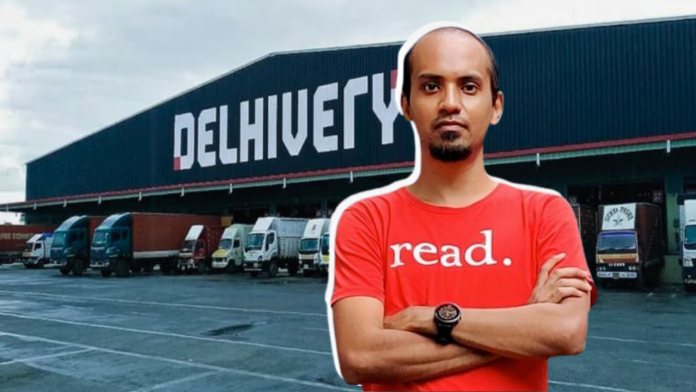
Delhivery’s Bold ₹1,407 Cr Power Move: Snapping Up Ecom Express at an 80% Discount, Now Awaits CCI Nod
A few weeks after Delhivery made headlines with its plan to acquire nearly all of Ecom Express for ₹1,407 crore, the two logistics players have now knocked on the doors of India’s antitrust watchdog, the Competition Commission of India (CCI), to get the green light.
In their joint filing, the companies argued that the deal isn’t likely to shake up the market or distort competition in any meaningful way. They’ve suggested that defining specific product categories or geographical markets isn’t necessary, since the acquisition won’t tilt the scales in favor of either party or hurt any existing competitors.
That said, both companies did acknowledge that they operate in overlapping segments—namely logistics services, express parcel delivery, warehousing, and supply chain solutions. They also highlighted a “vertical link” between them, especially in areas like intralogistics automation and downstream logistics functions.
Defending the move, Delhivery and Ecom Express framed the deal as a step toward better efficiency, faster deliveries, and broader service reach—benefits they say align with the ongoing push to upgrade India’s logistics backbone. They cited Section 5(a) of the Competition Act, 2002, which outlines thresholds based on asset size or turnover for deals requiring CCI approval.
The transaction drew attention earlier this month not just for its scale, but for its price. Delhivery is picking up a 99.4% stake in Ecom Express for a sum that’s 80% below the company’s last reported valuation of ₹7,300 crore in June 2024—a markdown that sparked talk of a fire sale in the industry.
From the Brink of Collapse to $200M ARR: How Aadit Palicha Steered Zepto’s Ad Business Through Chaos
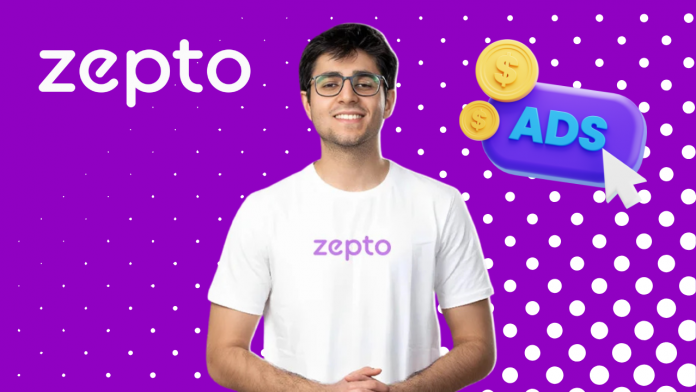
Zepto’s cofounder and CEO Aadit Palicha recently shared that the company’s advertising division has seen an explosive rise, scaling its annualised revenue run-rate (ARR) from $40 million to over $200 million in just a year. He revealed this during a conversation with Y Combinator’s CEO, Garry Tan. While Palicha didn’t specify the exact timeline, he made it clear that this jump reflects serious momentum.
“Our ad platform has gone through a serious evolution,” he explained. “We’ve built a top-tier system here in India – from real-time bidding to campaign tools, attribution, and even AI-powered keyword suggestions. It’s not just functional; it performs.”
The company is also expanding beyond groceries, exploring categories like electronics, fashion, beauty, and general merchandise to fuel its next phase of growth.
But things haven’t always been smooth sailing.
Palicha opened up about a particularly difficult stretch between 2022 and 2023 when Zepto was on the edge of collapse. A harsh funding climate, the unexpected Silicon Valley Bank meltdown, and a series of misfires in hiring almost took the company down.
“Looking back, we definitely made the wrong calls when it came to hiring in critical areas – finance, marketing, operations, category leadership. If we’d had the right people in place back then, we could’ve avoided some big setbacks,” he admitted. “That phase was brutal… our runway was tight, and the SVB incident came close to taking us out.”
He also reflected on Zepto’s earliest days, before its well-known pivot to the 10-minute delivery model. Investor confidence was low, user retention was weak, and the general sentiment around grocery delivery in India was bleak.
“There was a time when it felt like the whole thing was going to crash and burn,” Palicha said. “The feedback we were getting made us seriously question whether it was worth continuing. That was probably the moment when the company was closest to dying.”
What got them through? Discipline. According to Palicha, it was a combination of financial restraint and pushing through tough decisions that helped Zepto survive and come out stronger.
We use cookies to ensure that we give you the best experience on our website. If you continue to use this site we will assume that you are happy with it.