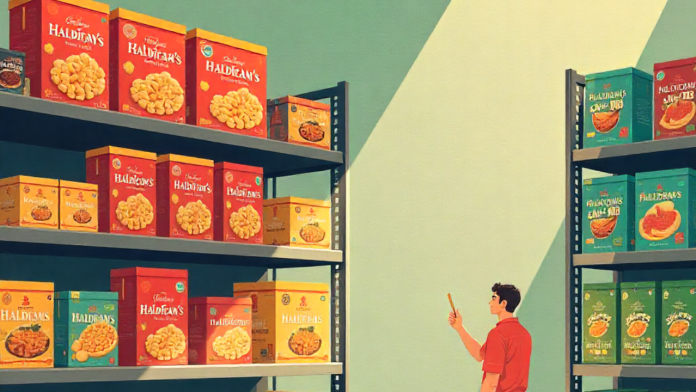
For any new FMCG or food brand in India, cracking modern retail chains like Reliance Smart or D-Mart is a long road. The real entry point for most startups is the humble kirana or small grocery store. These shops are the backbone of India’s $800 billion retail market, and if your packaged product finds space there, you’ve won your first—and most loyal—customers.
So, how do you convince a grocery store owner to stock your product?
Start with Trust, Not Just a Sales Pitch
Small store owners are risk-averse. They already stock products that sell daily—biscuits, chips, soaps—so convincing them to replace or add something new requires trust. Approach the shopkeeper directly, introduce your product, and offer free samples so both he and his customers can try it.
Offer Margins That Make Sense
Retailers survive on margins. If a packet of biscuits from Parle gives them 10–12%, your product should ideally offer equal or better margins to make it attractive. For new brands, 15–25% retailer margin is common to ensure owners are motivated to push your product.
Support with Visibility
Don’t just drop off cartons and hope for sales. Provide free point-of-sale materials like posters, wobblers, or branded racks. Some startups even supply small display units so their product stands out instead of getting lost in a pile of FMCG giants.
Build Demand Locally
Retailers will only reorder if the product moves off their shelves. To ensure this, create local buzz:
- Offer free sampling near the store.
- Run buy-one-get-one offers in the first few weeks.
- Encourage customers to ask for your brand by name—this makes the retailer more confident about stocking it again.
Be Flexible on Credit and Supply
Many kiranas work on short credit cycles with distributors. Be prepared to offer flexible payment terms (say, a week’s credit) and ensure timely replenishment. If your product is always available, store owners are more likely to rely on you.
Scale Through Distributors
Once you’ve cracked 10–20 shops on your own, partner with a local distributor. Distributors already supply dozens of kiranas daily. Getting your product into their basket is the fastest way to expand reach without handling every retailer yourself.
The Bottom Line
Getting a small grocery store to sell your packaged product isn’t about big marketing—it’s about building relationships, trust, and local demand. If you can offer good margins, strong visibility, and consistent supply, shopkeepers will welcome you. Remember, kiranas thrive on customer loyalty. If their customers start asking for your product, the retailer will stock it without hesitation.
The path to becoming the next Parle-G or Haldiram doesn’t start in a boardroom—it starts with one grocer agreeing to put your product on his shelf.