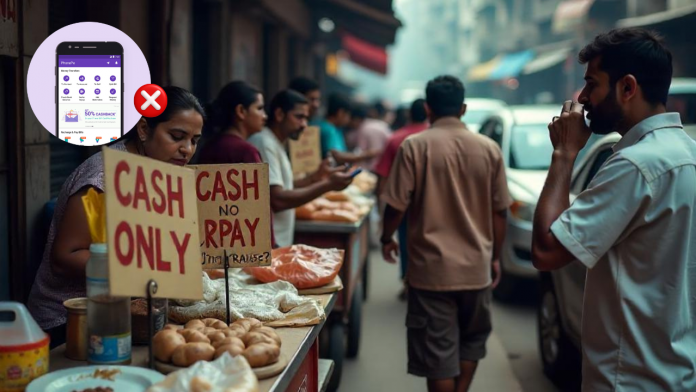
Once hailed as the poster city for India’s digital payments revolution, Bengaluru is witnessing an unexpected turn—small vendors are ditching UPI and going back to cash. The reason? A growing wave of GST notices and fears of tax scrutiny linked to digital transactions according to a report by TOI.
In local markets and bustling neighborhoods, handwritten signs that read “No UPI, only cash” are becoming more common. Small shopkeepers, food vendors, and kirana store owners are urging customers to pay in physical currency rather than through QR codes and apps. Many say they are doing this to avoid drawing attention from tax authorities, especially after receiving GST-related notices that cite discrepancies or question transaction volumes.
Continue Exploring: Lahori Beverages Nears ₹450 Crore Fundraise as Valuation Soars to ₹2,500 Crore – A New Challenger in India’s Booming Drinks Market
While UPI brought convenience and speed to everyday purchases, it also left a clear digital trail. For micro businesses that have traditionally operated in the informal economy, this transparency has proven to be a double-edged sword. “We embraced UPI because it was fast and easy for customers. But now we’re being penalised for it,” said one shopkeeper in Jayanagar.
Experts believe this move could signal a troubling trend, undermining the government’s push towards a cashless economy. The fear of compliance burdens and perceived harassment is driving honest vendors away from platforms that once empowered them.
This shift also raises concerns about how taxation frameworks are being applied to small businesses, many of whom may not fully understand GST protocols.
With Bengaluru leading the retreat from digital, this moment could serve as a wake-up call for policymakers to balance tax enforcement with handholding and clarity for small enterprises.
If not addressed soon, India’s digital success story could face a serious credibility crisis—starting with the very city that once symbolised its future.