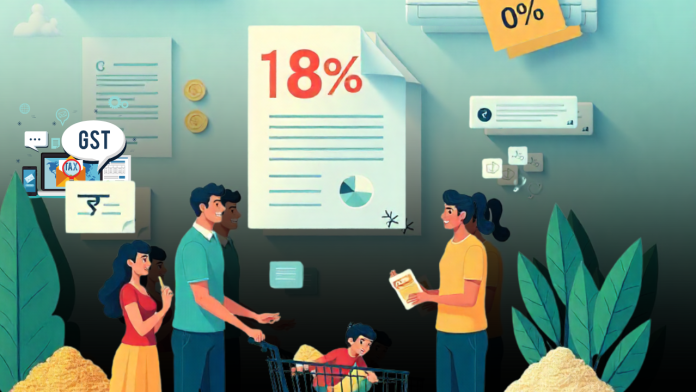
This Diwali, the government has rolled out a sweeping reform in the Goods and Services Tax (GST) system, calling it a “Next-Gen GST” move that promises to make life easier for households, farmers, students, and businesses alike. By cutting down GST rates across a wide spectrum of items, from daily groceries to tractors, the reform is designed to reduce the burden on families while also giving a fresh push to the economy.
Lower Costs for Daily Essentials
For most households, the biggest relief will come in the form of reduced GST on common necessities. Items like hair oil, toothpaste, soap, toothbrushes, and shaving cream, which earlier attracted 18 percent tax, will now only carry a 5 percent rate. Everyday food products such as butter, ghee, cheese, pre-packaged namkeens, and ready-to-eat mixtures have also been reduced from 12 percent to 5 percent. Utensils, sewing machines, and even essentials for babies like feeding bottles and clinical diapers will now be cheaper as well.
Relief for Farmers and Agriculture
Agriculture has always been the backbone of the Indian economy, and this reform makes a clear effort to support it. Tractors, their tyres, and related parts, which were earlier taxed at 12–18 percent, are now uniformly at 5 percent. Tools that aid modern farming, such as drip irrigation systems and sprinklers, as well as bio-pesticides and micro-nutrients, have also seen their tax burden slashed. This move is expected to directly benefit farmers by reducing the cost of cultivation, preparation, and harvesting.
Healthcare Made More Affordable
The healthcare sector is another big winner. Health and life insurance, previously taxed at 18 percent, has been made completely tax-free. Diagnostic kits, reagents, glucometers, test strips, and corrective spectacles will now fall under a much lower 5 percent rate. Thermometers and medical-grade oxygen, crucial for healthcare, have also been exempted or drastically reduced. The changes are designed to make essential healthcare products and services more accessible to people across the country.
Education Without Added Costs
Students and parents will also notice a difference. Learning tools such as maps, globes, pencils, sharpeners, crayons, pastels, notebooks, and erasers will now be tax-free. By removing GST on these items, the government has taken a small but significant step toward reducing the financial pressure on families investing in education.
Automobiles and Appliances See Price Cuts
The new GST reform also makes a direct impact on consumer choices. Hybrid cars, motorcycles below 350 cc, and even vehicles for transporting goods have all received tax reductions, bringing them within easier reach of buyers. Similarly, electronic appliances like air conditioners, televisions above 32 inches, monitors, projectors, and dishwashers have seen their tax rates drop from 28 percent to 18 percent.
Simplifying the Process
Along with rate cuts, the government has promised process reforms to make GST simpler. These include automatic registration within three working days, provisional refunds through a system-based process, and relief for SMEs dealing with zero-rated supplies and inverted duty structures.
A Step Towards Self-Reliance
Described as a “Diwali gift” for citizens, these changes are not just about lowering prices but also about creating a more business-friendly environment. By making essentials, education, farming tools, and healthcare affordable, the government hopes to boost consumption and strengthen India’s path toward becoming more self-reliant.