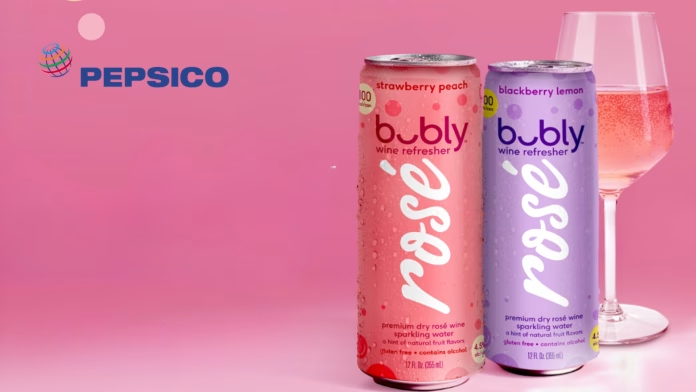
PepsiCo is expanding beyond its traditional non-alcoholic portfolio with the launch of Bubly Wine Refresher, a rosé-based canned spritzer now rolling out across 34 U.S. states. Built on the strong brand equity of its popular Bubly sparkling water line, this move marks a calculated entry into the fast-growing “crossover alcohol” category—where soda, seltzer, and wine increasingly intersect.
The product is produced and distributed by FIFCO USA under a licensing agreement, highlighting PepsiCo’s evolving approach to alcohol. Rather than building its own distribution infrastructure, the company is leaning into a brand-led, asset-light model, allowing established alcohol players to handle production and logistics while it focuses on brand power and consumer reach.
At a product level, Bubly Wine Refresher is positioned as a lighter, more modern take on the traditional wine spritzer. Each 12 oz can contains 4.5% ABV, 100 calories, and zero added sugar—aligning closely with the “better-for-you” positioning that made Bubly successful in the non-alcoholic space. The base combines dry rosé wine with sparkling water, creating a profile that is crisp and refreshing rather than overly sweet or heavy.
The initial launch includes two dual-fruit flavor combinations: Strawberry Peach, offering a smooth, fruit-forward finish, and Blackberry Lemon, designed to deliver a sharper, citrus-led profile. Both variants are available in 4-packs and variety 8-packs, targeting consumers looking for convenient, sessionable drinking options.
Strategically, this launch reflects a deeper shift within PepsiCo’s alcohol playbook. Its distribution arm, Blue Cloud, has transitioned into a “Blue Cloud National” model—focused on licensing intellectual property rather than managing physical distribution. This allows PepsiCo to scale its beverage brands into alcohol much faster by partnering with experienced manufacturers and leveraging existing wholesale networks. It’s a capital-efficient strategy that mirrors how brands like The Boston Beer Company have collaborated with major consumer brands in similar crossover categories.
The move also places Bubly Wine Refresher directly into competition with established wine-based RTDs and premium spritzers, while offering a key advantage: familiarity. Unlike new alcohol brands that must build awareness from scratch, Bubly already enjoys strong recognition among consumers, particularly millennials and Gen Z. This built-in trust lowers the barrier to trial, especially in a category where consumers are increasingly experimenting with lighter, low-calorie alternatives.
Marketing for the product is centered around “everyday indulgence” moments—positioning it as a drink for relaxed occasions like casual evenings, social gatherings, and seasonal events such as Mother’s Day. This aligns with a broader industry trend where alcohol is being reframed not as a high-intensity experience, but as part of a balanced lifestyle.
Zooming out, Bubly Wine Refresher is part of a larger convergence happening in the beverage industry. The lines between soda, sparkling water, and alcohol are blurring, giving rise to hybrid categories that prioritize flavor, functionality, and moderation. Consumers are moving away from high-sugar, high-alcohol options toward drinks that feel lighter, cleaner, and more versatile.
For PepsiCo, this launch is less about entering alcohol for the first time and more about scaling intelligently within it. By combining brand strength with strategic partnerships, the company is positioning itself to compete in a category that continues to evolve rapidly.
If successful, Bubly Wine Refresher could become a blueprint for how legacy beverage giants extend their portfolios into alcohol—without the complexity of building entirely new systems from scratch.