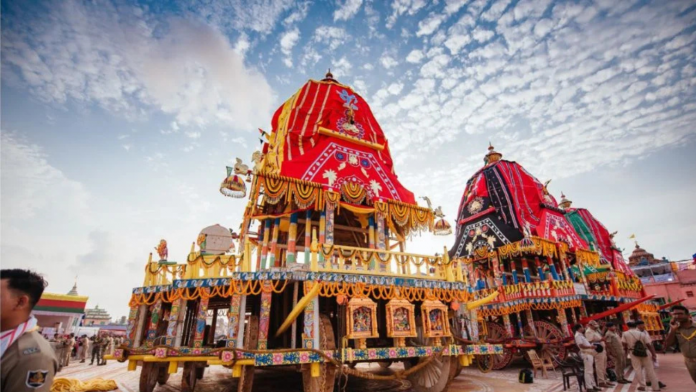
The revered Jagannath Rath Yatra commences today, June 27, 2025, in Puri, Odisha. This sacred chariot procession is taken out from Jagannath Temple to Gundicha Temple. The Rath Yatra of 12 days will end on July 8, 2025, with Niladri Vijay when the Lord returns to his original home. The planning starts months ahead, smearing over rituals, ceremonies, and cultural programs. The Jagannath Puri Rath Yatra 2025 is expected to host more than 15 million pilgrims which exceeds the early estimates of 10 million. Live national TV coverage is amplifying its footprint even further. The Odisha government and the Puri district administration are in sync, with tight logistics and a massive scale. Even Maha Kumbh comparisons don’t feel stretched with its ₹4,500 crore marketing footprint as a benchmark.
These are the reasons why brands also participate enthusiastically in such mega-events.
But let’s pause here. Because the point isn’t just about how brands use mega-events for marketing. It is also about what they are giving back physically and honorably. This year brands are not only arriving, they are stepping in. They are also employing the use of immersive strategies in order to meet pilgrims and deliver service to them. All these are not for self-gain but to make their journey joyful and memorable.
FMCG and healthcare brands like Dabur and Patanjali have gone boots-on-ground. They are contributing with shaded rest areas, hydration kiosks, and health check-up camps. Then there’s utility branding giving co-branded water bottles, towels, and safety gear featuring religious motifs. Coca-Cola’s hydration stations are great examples. QR codes on banners, cashback offers, and seamless payment options are also available. Paytm is enabling instant temple donations. Food giants like the Adani Group have stepped in, too supporting prasadam distribution with 4 million meals.
No isn’t only a marketing strategy, it’s seva. An honest, devotional effort to uplift the pilgrimage experience. These moments, these gestures ripple across social media. Unlike static ads, these are moving acts aligned with the Yatra’s sacred rhythm. The brands are balancing social service and promotion. Brands are working with temple authorities, NGOs, and ground teams. Chaipaani’s collaboration with Puri’s administration shows how cultural alignment is being done right.
The Jagannath Rath Yatra is where spiritual devotion meets strategic branding. This shows that if activities are done with sensitivity it will build emotional capital. This is no longer just a chariot festival, but a cultural case study for marketers.