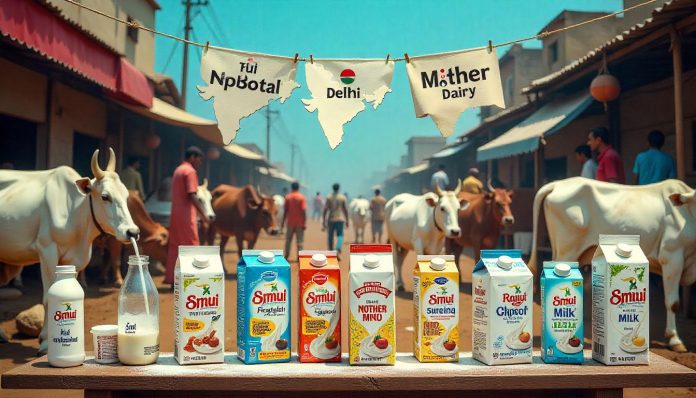
When it comes to quality milk in India, brands like Amul, Mother Dairy, and Sanchi come to mind effortlessly. But look closer, you’ll see that’s just the surface. India’s dairy landscape isn’t shaped by a few giants. It’s powered by a hyperlocal network of regional brands that hold fierce loyalty within their states. Quietly, they rule over volumes, faith, and kitchens.
Why One Brand Can’t Dominate
Milk doesn’t travel well. It’s perishable. Which leads to local logistics, local taste, and local trust. That’s why the cooperative model has flourished. It’s efficient. It’s farmer-first. And above all, it knows the people.
That is where state brands are shining. Nandini in Karnataka. Aavin in Tamil Nadu. Verka in Punjab. Saras in Rajasthan. Sudha in Bihar. These aren’t just brand names. These are household habits of localities.
Regional Brands That Run the Show
Across India, local players are the real backbone of daily milk supply.
South India is on the front in brand legacy brands such as Nandini, Aavin, Heritage (Telangana/AP), and Milma (Kerala). They provide consistency and value to millions with the support of good cooperatives.
North & Central markets have faith in Verka, Sanchi, Saras, and Sudha. They have strong rural purchasing platforms: farmers are paid, and the consumer receives good quality. Their loyalty is deep-rooted.
West & East India does not make an exception. Gokul, Warana, and Mahanand exist in the state of Maharashtra. In the east, Benmilk (West Bengal) and Parag (UP) are key performers. They have developed infrastructure at the grassroots level and this is evident.
It’s a Voice for the Locals
Sure, Amul and Mother Dairy enjoy pan-India visibility. Their reach is huge. Their ads are everywhere. But when it comes to that daily glass of milk, most Indians pick local. Out of habit. Out of trust. Out of tradition.
India’s milk story is one of regional resilience. It’s decentralized, owned cooperatively, and community-based. And that’s what keeps the country with diversity going.