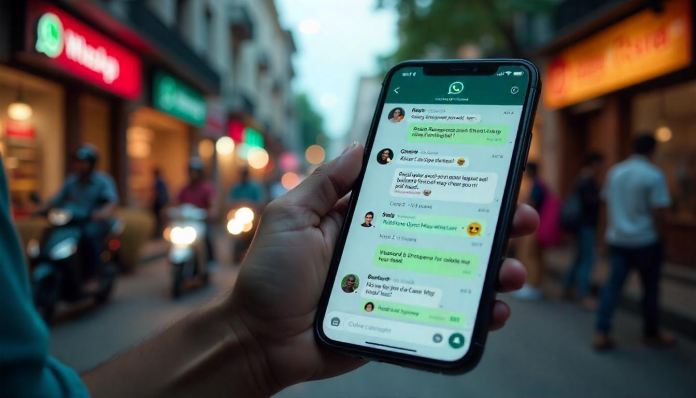
Until now, businesses have had a few choices for WhatsApp marketing. They would use personal WhatsApp accounts to message individual customers or create groups, and broadcast lists. These are simple and direct strategies, but things are shifting now. Recently, Meta has declared that it will introduce advertising to WhatsApp. Yes, you heard it right, “ads”. They are not going to appear out of nowhere when you are talking to your cousin. Rather they will be displayed on the Updates tab, via WhatsApp, Status, which is the section wherein folks post photos, writings, or videos, that exist only for 24 hours. The transition is both predictable and surprising.
Why’s it big? Especially for India?
Because WhatsApp here isn’t just a social media platform, it’s utility, mandatory almost. People may or may not log in to Instagram or Facebook, but WhatsApp, they’ll open it ten times before breakfast.
Now, marketers need to adjust, rethink, and reshuffle budgets beyond just the impression-heavy ones.
Because no one opens WhatsApp to “browse.” It’s not that kind of app. There’s no feed and no explore tab. This means the creative approach is most important. Ads need to feel familiar, not forced.
And the big question floating around boardrooms is—who benefits the most?
Experts say that despite big brands being in line, WhatsApp’s monetization levels the playing field, especially for D2C brands, Quick commerce apps, and Local retailers.
Imagine this: instead of burning through ad spends for an All India Instagram reach, your nearby restaurant runs a WhatsApp Channel ad. Straight to the phones of people a kilometer away. That’s the power.
With over 90% penetration in Tier-II and Tier-III cities, WhatsApp has become this hyperlocal goldmine. And for trust-based marketing, It’s unmatched.
So how can businesses, smart ones, maximize this?
A Hyperlocal, Trust-Driven, Straightforward Marketing
D2C Brands: They can run short-form videos or tappable stories. Think, of ads that look like native Status updates, products with a niche story in local languages. These should be designed not for views, but for conversions. Especially where WhatsApp’s stickiness crushes Instagram.
Quick Commerce: Blinkit, Zepto, or others who rely on 10-minute grocery offers. These brands can use visual CTAs that feel less like an ad, and more like a personal note. A promo that doesn’t shout, just nudges. That’s how you win in WhatsApp’s intimate setting.
Local Retailers: The neighborhood mithai shop can run ads on WhatsApp Channels. Like Hyper-targeted “Diwali sweets near you”, right where it matters. Not Delhi or Mumbai, Just your block. It has low cost, but high relatability.
So, how should businesses form their WhatsApp campaign?
The message is clear. Don’t treat WhatsApp like a billboard, treat it like a CRM.
- Track conversations, not just impressions. A D2C brand should look at chats that end in cart additions. Quick commerce should count the ad clicks that turn into orders.
- Don’t break the space. Ads should blend into Status updates that behave naturally. Don’t push too hard, or too loud. You’ll lose them because WhatsApp is still seen as personal, not commercial.
- Start with a small budget. Experts say, to test with 5-10% of Meta ad budgets. Pilot, learn, then scale. For a D2C brand run parallel formats, measure engagement, and refine what clicks.
Because, unlike Instagram or Facebook, WhatsApp gives you access to audiences who were, until now, digitally quiet.
Experts predict that 8-10% of digital budgets could shift to WhatsApp in the next 12 months. But it’s still just the beginning. How this pans out for both businesses and WhatsApp depends on execution. What matters are consent-led ads, hyper-relevant targeting, and frequency capping. Because if done right this platform could become the most cost-efficient, high-impact channel in Meta’s playbook. Especially for D2C brands, quick commerce players, and corner stores looking to punch above their weight.