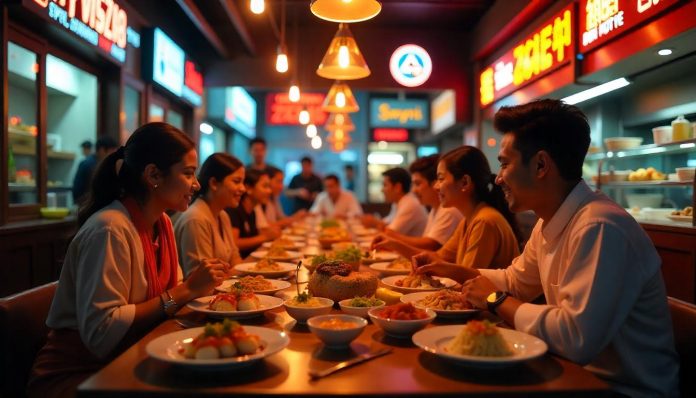
Swiggy Food and Marketplace CEO Rohit Kapoor, in a recent interview, highlighted a fascinating culinary split in India: while Biryani holds strong as a national favorite, Japanese cuisine is quietly and rapidly rising as a new contender. And that brings up a compelling question: how do global cuisines catch on so quickly here? More importantly, what’s next? What flavors are waiting in the wings, ready to charm Indian taste buds the way Chinese and Italian once did?
For businesses in food, this is not just trivia, it’s a strategy. Understanding shifts in consumer taste is critical. It is important to be aware of consumer taste changes. Forecasting future cooking in the minds of eaters will enable brands to respond to market trends, menu planning, and source streamlining. Marketing becomes more precise, more efficient, waste-free, and innovative. This is what it takes to be relevant and profitable in a growing market.
The Dynamics of India’s Food Revolution
The Indian food service sector is growing at a CAGR of 8.1%, poised to touch INR 7.76 trillion by 2028. On average, Indians now order from over three different cuisines each year. That’s a serious openness to experimentation.
The trendsetters are millennials and Gen Zs chasing risky tastes, clean food, and adrenaline to authentic global cuisine.
Yes, the traditional Indian food is still on top and there is a good reason for that. But international flavors are pushing in, especially in cities, and especially with the young.
The OG Continentals: Still in the Game
Chinese Cuisine: Indian-Chinese. Yes, we continue to be obsessed with Manchurian, chili chicken, and Schezwan. It is everywhere ranging from the street stalls to the classy lounges. The strength of this lies in its affordability. It is not so premium anymore. To the next generation, it is not a groundbreaking experience, but comfort food.
Italian Food: A culinary standard of the world. The share of restaurants that serve Italian food is approximately 8.5%. Pizza and pasta are household names. Domino’s and Pizza Hut have made it mainstream, while brands like Café Noir are elevating the fine-dining game. Scale, simplicity, and most importantly vegetarian options keep it going. It dominates the fast-casual and QSR categories. But when it comes to bold, exotic, and new, it may not lead.
American Cuisine: McDonald’s, KFC, and Burger King are deeply entrenched in India. But there’s a “junk food” tag. Health-conscious consumers are starting to swipe left. Dominance in QSR is one thing, but overall culinary leadership is declining.
The Rising Stars
Japanese Cuisine: Big things are happening here. Urban youth and health-focused diners love it. Pop culture, anime, and J-pop are doing their job. Sushi, ramen, and tempura are no longer exotic, they’re aspirational.
Japan’s increased investment in India and bilateral agreements are fueling the food engine. Globally, Japanese cuisine ranks third in popularity. It’s clean, minimalist, fresh, beautiful, and healthy.
Korean Food: K-pop and K-dramas aren’t just “girly things” anymore, boys are connecting too. And K-food is no exception. Bibimbap, Korean BBQ, and spicy fried chicken are making waves.
But it’s still niche, mostly found in bigger cities. Gen Z is into it, no doubt. The problem isn’t demand, it’s supply. Infrastructure needs to catch up before Korean food can go truly mainstream in India.
What is Coming Next?
For now, Italians and Americans might continue to rule QSR. Indo-Chinese will stay our comfort fusion. However, Japanese and Korean cuisines will soon be riding the anime and K-pop waves. Japanese food is ideally situated to explode, particularly in urban areas. Yes, expenses and unfamiliarity are obstacles, but they can be overcome. Korean and Thai food will grow too, but will likely stay niche for now. As always, the youth will decide what they hype, eat, and repeat.