Wednesday, December 31, 2025
Home Blog

Start following Kiara Advani’s simple yet powerful morning ritual for glowing skin

Have you ever stopped to marvel at Kiara Advani’s radiant and flawless skin? In the exquisite glamour that is Bollywood, Kiara Advani stands out not just for her acting genius but also for her luminous and healthy skin. Amidst the overwhelming myriad of options surfaced by the beauty industry, this simple yet transformative ritual is not only a fad, but the cornerstone of her radiance.


The secret might be simpler than you think. It’s not a gruelling workout or a 10-step skincare routine; it’s a simple cup of warm water, with a slice of lemon in it. Kiara’s morning habit of indulging in warm water infused with the zest of fresh lemons has become a conscious choice rooted in her approach to holistic well-being. The actress recommends this refreshing elixir not only for its skin-enhancing benefits but also for the multiple benefits it has in improving your overall health and vitality.  

 

Hansa Yogendra, Director of The Yoga Institute in one of her videos on the health benefits of lemons mentioned, “Drinking one glass of lemon water every day in the morning will benefit you for a lifetime”.  Her claim can further be supported by a research published in the Journal of Science and Technology which reveals that “It is a healthy appetiser and helps to treat diseases with digestive aids. Lemon does not disclose any adverse effects, according to literature, but it is used all over the world as a traditional medicine”. Vitamin C, which is abundantly present in lemons, fights toxins and increases collagen production in the body, both of which help in treating acne as well as tightening the skin and reducing fine lines and wrinkles. While lemons are famously known for their Vitamin C component, not many people are aware of their Potassium-rich skin, which is an important mineral for nervous stimulation as well as maintaining blood pressure. Here are a few more benefits of adding lemon water to your everyday diet:- 

  • Immediately soothes muscle cramps
  • Peptin in lemons makes us feel fuller, thereby, helping in weight loss
  • Boosts immunity by stimulating the production of White Blood Cells in the body
  • Removal of kidney stones 
  • The lemon peel when infused in water for 30 minutes, activates its bioactive compounds which boost immunity and prevent our bodies from cellular damage
  • It also helps in the release of digestive enzymes which help in better absorption of nutrients

 

This simple kitchen hack has proudly made its way into the celebrity wellness circuit. Not only Kiara Advani but also Alia Bhatt, Deepika Padukone, Kriti Sanon, and Malaika Arora have this one drink in common at the break of dawn.

Here are 3 ways, you can incorporate the lemon water glow into your morning routine:- 

  1. Warm ginger lemon tea- Boil a glass of water with crushed ginger. When its done, squeeze a lemon into your glass and have it warm. To enjoy it in place of your morning tea, you may add a teaspoon of honey to it.

2. Ginger lemon shot – Take an inch of ginger root, and one squeezed lemon. Add enough water to blend it (3-4 tablespoons) in a blender, and have it as a morning shot.

3. Lemon-infused detox water- Cut up slices of one lemon and add it to your water bottle. Have 1-2 glasses of lemon water in the morning, and keep having the rest throughout the day. 

While lemon water offers a myriad of health benefits, it’s crucial to exercise moderation. One lemon a day is a healthy limit, and people with gastroesophageal reflux disease should be cautious about excessive lemon juice intake. As with any dietary rituals, balance is key to ensuring you enjoy the advantages without overdoing it. 

Blinkit CFO Vipin Kapooria Resigns After 18 Months, Set to Rejoin Flipkart Ahead of IPO

0

Blinkit’s chief financial officer Vipin Kapooria has stepped down from his role, less than two years after joining the quick commerce firm, according to people familiar with the matter. Kapooria is set to return to Flipkart, where he will take up a senior finance leadership position, marking his third stint at the Walmart-owned ecommerce major.

Kapooria had joined Gurugram-based Blinkit in September 2024 from Flipkart, where he served as vice president of finance. His exit comes at a time when Blinkit, owned by Eternal, is navigating an intensely competitive phase in India’s fast-growing quick commerce sector. The company is locked in a high-stakes battle with rivals including Zepto, Swiggy Instamart, Flipkart Minutes and Amazon Now, as platforms race to expand scale, improve unit economics and secure investor confidence.

For Blinkit, Kapooria’s appointment had been significant. He was the first full-time CFO after the position remained vacant for nearly two years following the departure of Amit Sachdeva in 2022, soon after Zomato acquired the company. Kapooria worked closely with Blinkit founder and CEO Albinder Dhindsa and Eternal CFO Akshant Goyal, particularly during the parent company’s Rs 8,500 crore qualified institutional placement completed last year.

His move back to Flipkart coincides with the ecommerce giant’s preparations for a public listing in 2026. Flipkart is currently completing its redomiciling process, shifting its headquarters from Singapore to India, and has also stepped up its push into ultra-fast deliveries through its Minutes service.

The leadership change reflects the churn at the top as India’s quick commerce market attracts heavy capital and sharp competition. Over the past year, the sector has seen aggressive fundraising, with Swiggy raising Rs 14,500 crore through an IPO and a subsequent QIP, while Zepto has confidentially filed for a proposed Rs 11,000 crore public issue.

Neither Blinkit nor Flipkart commented on the development. Eternal’s shares were trading lower on Tuesday, reflecting broader market caution amid heightened competition in the segment.

Advertisement

New Year Delivery Disruption Fears Drive Brands to Stock Kiranas and Supermarkets

0

As delivery executives across major food delivery and quick commerce platforms prepare for a nationwide walkout on New Year’s Eve, consumer brands and restaurant operators are racing to protect one of the busiest sales days of the year by shifting inventory and reworking last mile plans.

Manufacturers of packaged snacks, beverages, ice creams and confectionery have stepped up supplies to kirana stores, supermarkets and large-format retailers in anticipation of possible delivery disruptions on December 31. Companies including PepsiCo, Coca-Cola, Parle, Nestlé and Britannia have increased stock placement in neighbourhood stores, housing societies and modern trade outlets such as DMart and Modern Bazaar, industry executives said. New Year’s Eve consistently ranks among the highest demand periods for impulse consumption, making availability critical.

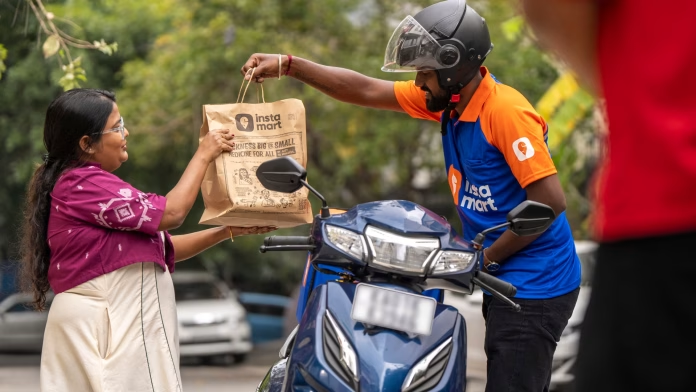
Delivery partners associated with platforms such as Zomato, Swiggy, Blinkit, Zepto and Amazon have announced strike action citing concerns over earnings, safety and job security. A similar protest on Christmas Day had already affected deliveries in several cities, prompting brands to prepare for a larger impact during the year end peak. Worker unions estimate that more than 100,000 riders could either stop work or significantly reduce deliveries.

Quick commerce platforms have attempted to limit disruption by offering temporary incentives, with some firms pitching additional earnings and per order bonuses during the holiday window. Despite this, companies are unwilling to rely solely on app based delivery.

Restaurant chains are also activating contingency plans. Several brands are promoting orders through their own apps, while others are tying up with logistics providers that are not part of the strike. According to industry representatives, some restaurants are partnering with third party fleets to ensure continuity, while also pushing dine in offers to capture festive footfall.

Packaged food makers say consumer buying has already picked up since the weekend, as shoppers stock essentials ahead of New Year celebrations. Brands in snacking, confectionery and beverages report high demand across offline retail even before the holiday rush.

The situation highlights the growing dependence of festive consumption on delivery networks and the vulnerability of supply chains during labour disruptions. With demand expected to peak through December 31, brands are betting that strong offline availability will help bridge any last mile gaps.

Advertisement

Dhampur Green Accelerates Growth as Demand for Natural Sweeteners Drives 60% YoY Expansion

0

Dhampur Specialty Sugars is scaling up its consumer-facing brand Dhampur Green as rising preference for natural and unrefined sweeteners fuels strong momentum across domestic and international markets. The company has recorded close to 60 percent year-on-year growth over the past few years, driven largely by products such as jaggery, khandsari and unrefined cane sugar, according to company leadership.

Shrey Gupta, Director at Dhampur Specialty Sugars, said demand has strengthened across channels including general trade, modern retail, quick commerce and exports. What was once a negligible channel has become a meaningful contributor, with quick commerce now accounting for around 15 to 20 percent of overall revenue. The company’s sales are currently spread almost evenly between general trade, modern trade and quick commerce, reflecting a diversified go-to-market strategy.

Urban, health-aware consumers seeking cleaner labels and convenience have emerged as the core audience for Dhampur Green. The brand has steadily expanded its presence across major cities and is deepening partnerships with quick commerce platforms to improve visibility and reach. Exports, though still a smaller part of the business, are gaining traction in markets such as the United States, Canada and Australia, supported by growing demand from the Indian diaspora for traditional sweeteners.

The company’s product mix has evolved significantly. While specialty sugars for bakeries and beverages once dominated the portfolio, natural sweeteners now lead growth. Value-added formats including spiced jaggery powders and infused honey blends are seeing increased acceptance. Tier one cities remain the largest contributors, but pilot launches in tier two markets have delivered encouraging results despite premium pricing.

To support expansion, Dhampur Green is reviewing regional distribution and packaging hubs to address logistics challenges linked to its North India-centric manufacturing base. The brand is also entering adjacent pantry categories such as salts and alternative grains, positioning itself around quality, traceability and sourcing rather than price competition. Capacity expansion is being funded through internal accruals, with the company open to evaluating external capital if growth continues at its current pace.

Advertisement

YumYum Launches SNACKiT High-Protein Snacks with Millets and Pulses for Everyday Nutrition

0

India’s packaged snack market continues to see a steady shift toward nutrition-led products as consumer preferences evolve beyond indulgence. Riding this trend, YumYum has expanded its portfolio with the launch of SNACKiT, a protein-rich snack positioned for everyday consumption rather than niche fitness use.

The brand has been introduced by SKB Food Products Private Limited, with Director Naman S Gupta stating that the objective is to make protein intake more accessible to a wider audience. Each pack of SNACKiT delivers 18.8 grams of protein, targeting consumers seeking convenient nutrition during workdays, travel, or between meals.

Unlike traditional protein snacks that rely heavily on dairy or soy, SNACKiT draws its formulation from millets, pulses, and seeds, aligning with the growing demand for plant-forward and grain-based nutrition. The product is also free from palm oil, a factor increasingly influencing purchase decisions among urban consumers.

Beyond protein, the snack is designed to provide high dietary fibre, aimed at promoting satiety and sustained energy release. Industry analysts note that fibre-enriched snacks are gaining traction as consumers become more aware of blood sugar management and digestive health.

Taste remains a key differentiator in the crowded snack segment. SNACKiT has been launched with flavours tailored to Indian palates, including Indian Tadka, Millet Hot and Sweet Chilli, and Millet Hing Jeera. These variants reflect a broader industry move toward regional and familiar flavour profiles rather than globalised tastes.

The launch comes at a time when India’s better-for-you snacks category is witnessing strong growth, driven by rising health awareness, busier lifestyles, and increased experimentation with functional foods. According to industry estimates, the protein snack segment is expected to grow at a double-digit rate over the next few years.

With SNACKiT, YumYum is positioning itself within this expanding space by combining nutrition, clean-label ingredients, and mass-market appeal. The company aims to tap into consumers looking for practical energy solutions that fit seamlessly into daily routines, without compromising on taste.

Advertisement

Radico Khaitan Focuses on Premiumisation to Fuel Growth in India’s Spirits Market

0

India’s spirits market is entering a new phase of growth, led by a decisive shift toward premium and high-value products, with companies like Radico Khaitan sharpening their focus on consumers willing to trade up. Industry executives say rising aspirations, expanding disposable incomes and changing consumption habits beyond metro cities are reshaping demand patterns across the country.

Radico Khaitan, which owns brands such as 8PM whisky, Rampur Indian Single Malt, Magic Moments vodka and Jaisalmer gin, is increasingly concentrating on the prestige and above category, a segment that already accounts for a significant share of its revenues by value. According to the company, this premium portfolio now contributes close to two thirds of overall sales, underlining how higher priced products are becoming central to growth strategies in the spirits sector.

Management believes the strongest momentum is emerging from tier two cities, where younger consumers are showing greater willingness to experiment with global styles, craft offerings and better quality spirits. This trend is not limited to urban elites. Improved retail access, wider brand awareness and aspirational lifestyles are steadily pushing premium consumption deeper into smaller markets.

Radico Khaitan expects its prestige and above portfolio to grow at a healthy pace over the next few years, driven by both volume expansion and improved pricing. The company has also identified the super premium category as a key profit driver, an area where it had limited presence earlier but now sees substantial headroom for expansion. New launches and brand building investments are aimed at capturing a larger share of this high margin segment.

Industry analysts note that premiumisation is becoming one of the most reliable growth levers in India’s otherwise tightly regulated alcohol market. While overall volume growth remains moderate, value growth is accelerating as consumers shift to more expensive brands. For companies with strong portfolios and distribution reach, this shift offers an opportunity to improve margins and generate operating leverage as scale increases.

With consumer demand expected to remain resilient and aspirations continuing to rise, premium spirits are likely to play a defining role in shaping the next phase of India’s alcohol industry.

Advertisement

Cigarette Prices Set to Increase in India as New Excise Duty Law Takes Effect

0

India’s cigarette market is bracing for a sharp reset after Parliament cleared amendments to the Central Excise Act, altering the way cigarettes are taxed and potentially pushing up retail prices nationwide. While viral claims suggest that a cigarette priced at ₹18 today could soon cost as much as ₹72, government officials have not issued any notification confirming specific retail prices.

What is clear, however, is that the revised excise framework substantially raises the duty burden on cigarettes across categories. Under the new structure, excise is calculated at a higher rate per 1,000 sticks, with slabs linked to length and filter type. Compared with the earlier regime, taxes now form a significantly larger share of the final cost, especially for low-priced cigarettes.

Industry sources say manufacturers are assessing how much of the increased duty can be absorbed internally and how much will need to be passed on to consumers. Any final price revision will also factor in GST, state-level levies and trade margins, making uniform pricing unlikely across markets.

The widely circulated ₹18-to-₹72 figure appears to be based on back-of-the-envelope calculations using the revised duty rates rather than an official price list. Analysts caution that while steep hikes are possible, the actual increase will depend on brand positioning and company strategy. Historically, cigarette makers have opted for staggered price rises rather than sudden jumps to protect volumes.

The government’s move is rooted in a long-standing public health approach that uses taxation to curb tobacco consumption. Higher prices have consistently been shown to discourage initiation among younger users while encouraging existing smokers to cut back. At the same time, tobacco taxes remain a key source of revenue for both the Centre and states.

For consumers, the impact is expected to become visible once manufacturers update their rate cards, which could happen in the coming weeks. Budget brands are likely to feel the pressure first, though premium segments may also see revisions.

While speculation continues online, the final word on cigarette prices will only emerge after companies respond to the new excise regime. Until then, the market remains in wait-and-watch mode, with higher prices all but inevitable, even if the exact numbers are yet to be known.

Advertisement

Zomato, Swiggy, Zepto Delivery Partners Announce Nationwide Strike on December 31

0

Food and grocery deliveries across India could face renewed disruption on December 31 as delivery partners working with major app-based platforms announce another nationwide strike, escalating pressure on companies operating in the gig economy. The protest involves workers associated with Zomato, Swiggy, Zepto, Blinkit, Amazon and Flipkart, according to labour unions coordinating the action.

The call for a year-end shutdown follows a similar mobilisation on December 25, when unions estimate that close to 40,000 delivery workers stayed off the roads. That protest affected operations in multiple cities, with delivery volumes reportedly dropping by 50 to 60 percent in some urban markets. Worker groups say the fresh action is intended to intensify negotiations after their demands remained unaddressed following the Christmas strike.

The December 31 protest has been announced by the Telangana Gig and Platform Workers Union, working alongside the Indian Federation of App-Based Transport Workers. In public statements, union leaders described the earlier strike as only an initial step, signalling that broader collective action is planned if conditions do not improve.

According to the unions, delivery partners continue to face shrinking per-order earnings despite rising order volumes, along with unpredictable work hours and growing dependence on algorithm-led allocation systems. Core demands include transparent and fair pay structures, protection from sudden account deactivations, safer working conditions and access to social security benefits such as insurance and pension coverage. Worker representatives have also reiterated their opposition to ultra-fast delivery timelines, arguing that such models increase road risk without proportionate compensation.

Unions further alleged that during the Christmas protest, platforms attempted to soften the impact by onboarding third-party delivery agents, activating dormant accounts and offering short-term incentives, rather than engaging with structural issues raised by workers.

Public sentiment online has largely favoured the delivery partners, with many users questioning the need for 10-minute deliveries and calling for safer, more humane work practices. With New Year’s Eve typically among the busiest periods for food and grocery apps, the proposed strike could test both platform preparedness and the willingness of companies to engage with worker groups before demand peaks.

Advertisement

FSSAI Drops BIS Mandate, Introduces Stricter Testing Norms for Packaged Drinking Water from January 1

0

India’s packaged drinking water industry is set for a regulatory reset from January 1, as the Food Safety and Standards Authority of India rolls out a revised quality control framework that replaces mandatory Bureau of Indian Standards certification with a more rigorous, testing-led compliance regime.

Under the new rules, manufacturers of packaged drinking water and mineral water will be regulated entirely through FSSAI licensing and periodic laboratory testing. The change removes the earlier requirement of holding a separate BIS certification, a move that is expected to simplify approvals but significantly raise the bar on quality monitoring. Companies will now be required to conduct frequent microbiological and chemical tests through approved laboratories, with stricter reporting and enforcement timelines.

The impact is expected to be particularly visible in Tamil Nadu, one of the country’s largest packaged water markets. The state has close to 1,600 licensed units, and industry estimates suggest that nearly 40 percent had already stopped renewing BIS certificates in anticipation of the new framework. Chennai alone accounts for nearly three crore litres of the state’s estimated daily consumption of five crore litres, underlining the scale of oversight required.

While manufacturers welcome the removal of dual certification, many acknowledge that compliance costs are likely to rise. Regular testing, documentation and third party audits are expected to increase operating expenses, particularly for small and mid-sized players. Failure to meet standards could invite penalties, suspension of licences or prosecution under food safety laws.

Consumer organisations have broadly supported the move, calling it a step toward stronger public health safeguards. However, they have flagged capacity constraints, urging the government to expand the number of accredited laboratories and ensure timely inspections to prevent delays and curb unlicensed operations.

Although BIS certification is no longer compulsory, officials say manufacturers can continue to seek it voluntarily for brand credibility. The bureau will also continue surveillance to prevent misuse of the ISI mark.

With packaged drinking water classified as a high-risk food category, regulators say intensive testing will remain central to enforcement. The revised rules signal a shift from paperwork-driven approvals to outcome-based monitoring, a transition that is expected to reshape compliance practices across the sector in the months ahead.

Advertisement

Arvind Fashions Acquires Flipkart’s 31.25% Stake in Flying Machine for ₹135 Crore

0

Arvind Fashions has moved to consolidate its hold over one of India’s best-known denim labels by acquiring Flipkart India’s entire stake in the Flying Machine business for ₹135 crore, bringing the brand fully under its control.

In a regulatory filing on Monday, the apparel major said it will purchase Flipkart’s 31.25 percent holding in Arvind Youth Brands Private Limited, the entity that owns and operates Flying Machine. The transaction involves the acquisition of one equity share with a face value of ₹10 along with approximately 5.9 million compulsorily convertible preference shares priced at ₹100 each. Once the deal is completed, Arvind Fashions and its wholly owned subsidiary, Arvind Lifestyle Brands Limited, will together own 100 percent of the business.

Flying Machine has been a core part of Arvind’s youth and casualwear portfolio, with a presence across company-owned stores, franchise outlets, multi-brand retail and wholesale channels. For the financial year ended March, the brand reported a turnover of ₹432.16 crore, reflecting its continued relevance in India’s competitive denim and casualwear market.

Flipkart, owned by US retail giant Walmart, had invested ₹260 crore in Arvind Youth Brands in July 2020 as part of a broader push into fashion and lifestyle categories. Its exit now is aligned with a wider effort to streamline investments and focus capital on its primary e-commerce, marketplace and logistics operations in India, especially as the company works toward improving capital efficiency ahead of a potential public listing.

For Arvind Fashions, the buyout is expected to simplify governance and speed up decision-making for the Flying Machine brand. Full ownership gives the company greater flexibility to sharpen brand positioning, optimise costs and align long-term growth plans without minority shareholder considerations.

Industry observers view the transaction as part of a broader trend where large consumer-facing groups are tightening control over key brands, while strategic investors such as Flipkart reassess non-core holdings. The deal underscores Flying Machine’s strategic importance within Arvind’s portfolio and signals the company’s intent to deepen its focus on owned brands as it navigates a changing fashion retail landscape.

Advertisement

New Year Delivery Disruptions Likely as Swiggy, Zomato, Blinkit and Zepto Gig Workers Announce Strike

0

Food and grocery deliveries across major Indian cities could face disruptions during the New Year period as gig workers associated with leading platforms announce coordinated strike action. Delivery partners linked to Swiggy, Zomato, Zepto and Blinkit have called for a work stoppage from December 31, raising concerns over delays at a time when demand typically peaks.

The protest follows a series of demonstrations seen earlier this month and is being backed by worker collectives including the Telangana Gig and Platform Workers Union and the Indian Federation of App Based Transport Workers. Union representatives say the strike reflects growing dissatisfaction among delivery executives over pay structures, safety conditions and the absence of formal social security.

Workers claim that earnings have not kept pace with rising order volumes or operational costs, while algorithm driven incentives and penalties have made incomes unpredictable. Many delivery partners say they are required to work long hours in adverse weather and high traffic conditions without guaranteed rest breaks, insurance cover or protective equipment. The introduction of ultra fast delivery timelines has also drawn criticism, with workers arguing that such models increase road risk without corresponding compensation.

According to union leaders, delivery executives are also facing account suspensions and penalties without transparent grievance redressal mechanisms. Random ID blocks, delayed payments and limited technical support are among the issues cited in representations submitted to authorities.

The list of demands includes a revision of payout rates, withdrawal of extreme delivery deadlines, mandatory safety gear, fair task allocation, fixed working hours, health and accident insurance, pension benefits and clearer government oversight of platform based work.

If the strike holds through the festive period, consumers may see longer wait times for food orders, grocery deliveries and essential supplies, particularly on New Year’s Eve. Industry watchers note that the disruption underscores deeper structural challenges within India’s gig economy, which employs millions but continues to operate largely outside traditional labour protections.

With order volumes expected to surge at year end, pressure is likely to build on platforms and regulators to open dialogue with worker groups and seek an interim resolution.

Advertisement