Home Blog

Start following Kiara Advani’s simple yet powerful morning ritual for glowing skin

Have you ever stopped to marvel at Kiara Advani’s radiant and flawless skin? In the exquisite glamour that is Bollywood, Kiara Advani stands out not just for her acting genius but also for her luminous and healthy skin. Amidst the overwhelming myriad of options surfaced by the beauty industry, this simple yet transformative ritual is not only a fad, but the cornerstone of her radiance.


The secret might be simpler than you think. It’s not a gruelling workout or a 10-step skincare routine; it’s a simple cup of warm water, with a slice of lemon in it. Kiara’s morning habit of indulging in warm water infused with the zest of fresh lemons has become a conscious choice rooted in her approach to holistic well-being. The actress recommends this refreshing elixir not only for its skin-enhancing benefits but also for the multiple benefits it has in improving your overall health and vitality.  

 

Hansa Yogendra, Director of The Yoga Institute in one of her videos on the health benefits of lemons mentioned, “Drinking one glass of lemon water every day in the morning will benefit you for a lifetime”.  Her claim can further be supported by a research published in the Journal of Science and Technology which reveals that “It is a healthy appetiser and helps to treat diseases with digestive aids. Lemon does not disclose any adverse effects, according to literature, but it is used all over the world as a traditional medicine”. Vitamin C, which is abundantly present in lemons, fights toxins and increases collagen production in the body, both of which help in treating acne as well as tightening the skin and reducing fine lines and wrinkles. While lemons are famously known for their Vitamin C component, not many people are aware of their Potassium-rich skin, which is an important mineral for nervous stimulation as well as maintaining blood pressure. Here are a few more benefits of adding lemon water to your everyday diet:- 

  • Immediately soothes muscle cramps
  • Peptin in lemons makes us feel fuller, thereby, helping in weight loss
  • Boosts immunity by stimulating the production of White Blood Cells in the body
  • Removal of kidney stones 
  • The lemon peel when infused in water for 30 minutes, activates its bioactive compounds which boost immunity and prevent our bodies from cellular damage
  • It also helps in the release of digestive enzymes which help in better absorption of nutrients

 

This simple kitchen hack has proudly made its way into the celebrity wellness circuit. Not only Kiara Advani but also Alia Bhatt, Deepika Padukone, Kriti Sanon, and Malaika Arora have this one drink in common at the break of dawn.

Here are 3 ways, you can incorporate the lemon water glow into your morning routine:- 

  1. Warm ginger lemon tea- Boil a glass of water with crushed ginger. When its done, squeeze a lemon into your glass and have it warm. To enjoy it in place of your morning tea, you may add a teaspoon of honey to it.

2. Ginger lemon shot – Take an inch of ginger root, and one squeezed lemon. Add enough water to blend it (3-4 tablespoons) in a blender, and have it as a morning shot.

3. Lemon-infused detox water- Cut up slices of one lemon and add it to your water bottle. Have 1-2 glasses of lemon water in the morning, and keep having the rest throughout the day. 

While lemon water offers a myriad of health benefits, it’s crucial to exercise moderation. One lemon a day is a healthy limit, and people with gastroesophageal reflux disease should be cautious about excessive lemon juice intake. As with any dietary rituals, balance is key to ensuring you enjoy the advantages without overdoing it. 
Danone Doubles Down on Bottled Water as Health Trends Reshape Beverage Choices

0

French consumer goods giant Danone is strengthening its focus on bottled water as shifting consumer preferences toward healthier lifestyles continue to reshape the global beverage market. With growing awareness around sugar intake and overall wellness, consumers in key markets like the UK and France are increasingly moving away from sugary drinks in favor of hydration-focused alternatives, boosting demand for premium water brands such as Evian.

This shift is part of a broader, decade-long transformation across the FMCG sector, where major players like Nestlé and Unilever have been adapting portfolios to align with “better-for-you” consumption trends. The momentum has further accelerated with the rising popularity of GLP-1 weight loss drugs in Europe and the United States, which are indirectly influencing dietary habits by encouraging reduced sugar consumption and healthier beverage choices.

The European bottled water market—valued at approximately €18 billion—has seen its fastest growth in recent years, expanding 5% in value and 3% in volume. Notably, markets like France and the UK are leading this surge, with value growth of 7% and 9% respectively. According to Danone Waters Europe leadership, this growth is being driven by a structural shift toward “healthy hydration,” a trend the company believes will sustain over the long term.

Danone’s own water business reflects this momentum. While still contributing less than a fifth of its total revenue, the segment generated around €4.85 billion in sales last year, growing 1.9% globally and 3.3% in Europe. Beyond health consciousness, changing lifestyles are also playing a key role. Increasingly busy consumers are opting for on-the-go consumption, making portable hydration solutions like bottled water a daily essential rather than an occasional purchase.

To capitalize on this demand, Danone is ramping up investments in its water portfolio. The company has committed €20 million to upgrade its Evian bottling facility and an additional €8 million to maintain and enhance production sites for brands like Volvic, Badoit, and La Salvetat. These investments are aimed at improving efficiency, sustainability, and long-term capacity to meet rising demand.

Interestingly, Danone’s bullish stance contrasts with moves by competitors such as Nestlé, which is reportedly exploring the sale of a 50% stake in its water business, including premium brands like Perrier and San Pellegrino. This divergence highlights differing strategic priorities within the industry—while some players are doubling down on water as a growth engine, others are reassessing capital allocation across categories.

Overall, Danone’s renewed push into bottled water underscores a clear industry direction: hydration is no longer just a basic need but a fast-evolving category shaped by health, convenience, and lifestyle shifts. As consumers continue to prioritize wellness and portability, bottled water is emerging as one of the most resilient and scalable segments within the global beverage landscape.

Advertisement

Lahori Zeera Targets ₹1,300 Cr by FY27, Expands Capacity and Eyes South India Push

0

Chandigarh-based beverage brand Lahori Zeera is accelerating its growth strategy with a sharp focus on manufacturing scale and geographic expansion, aiming to reach ₹1,200–1,300 crore in revenue by FY27 after closing FY26 at around ₹770–780 crore. Backed by its parent Archian Foods, the brand is doubling down on capacity creation, which it identifies as the primary constraint to growth rather than demand.

To address this bottleneck, Lahori Zeera is expanding its production footprint through a hybrid model of owned facilities and third-party co-packers. The company is setting up five new bottling units across Bihar, Bengaluru, Muzaffarnagar, Agra, and Bhopal, complementing its existing plants in Lucknow, Mohali, and Vapi. Its Lucknow facility—currently operating at about 70% capacity—is expected to become fully operational in its second phase by next summer, significantly boosting output. Going forward, the brand plans to lean heavily on co-bottling, aligning with industry norms where scale is achieved through distributed manufacturing networks.

Despite these expansions, the company’s distribution backbone remains firmly rooted in general trade, which contributes nearly 97–98% of its volumes and spans 8–10 lakh retail outlets. This GT-led approach has enabled rapid penetration, especially in North India, where the brand already commands double-digit market share across key states like Punjab, Haryana, Delhi, and Himachal Pradesh. However, with supply constraints easing, Lahori Zeera is now opening up newer channels such as modern trade, institutional sales, and quick commerce—expected to contribute 8–9% of revenues in the coming fiscal. Notably, quick commerce is emerging as a high-growth lever, with projections of 3–4x year-on-year expansion.

Geographically, South India represents the next major growth frontier. The upcoming Bengaluru co-packing unit will act as a strategic hub for entering markets like Hyderabad, Bengaluru, and parts of Andhra Pradesh and Telangana. The company plans to replicate its proven playbook—starting with metro cities (population above 10 lakh) before expanding into smaller towns—ensuring both brand visibility and distribution efficiency.

On the product front, Lahori Zeera is broadening its portfolio beyond carbonated beverages. Larger pack sizes, ranging from ₹20 300 ml bottles to 2-litre formats, already contribute 16–17% of revenues, indicating strong consumer acceptance. The company is also preparing to launch a new non-carbonated offering, Lahori Aamras, in spout and PET bottle formats. After an initial general trade pilot in North India, the product will be rolled out across modern trade and quick commerce channels, marking a strategic diversification into adjacent beverage categories.

However, margin pressures remain a concern. Plastic—particularly PET resin—accounts for 40–45% of raw material costs, and recent crude-linked price increases have impacted input economics. While the company has implemented a modest price hike from April 1, it has absorbed part of the cost inflation to maintain competitive pricing in a highly price-sensitive category.

Operationally, the company is investing in technology and workforce expansion to support its scale ambitions. It runs on SAP as its ERP backbone and has deployed IoT systems across manufacturing units for real-time monitoring and efficiency optimization. Its workforce has grown to over 3,500 employees, with 400 new hires added in just the past two months.

Looking ahead, Lahori Zeera has set an ambitious internal target of ₹2,000 crore in revenue and is also exploring international expansion. Plans are underway to establish a co-bottling unit in the UAE to cater to Indian diaspora demand across GCC markets, signaling its intent to evolve from a regional success story into a global ethnic beverage brand.

Advertisement

Curefit Strengthens Governance with Four Independent Director Appointments

0

Fitness and wellness platform Curefit has expanded its board by appointing four independent directors, signaling a sharper focus on governance as it scales operations across India. The Bengaluru-based company has brought in Kalpana Morparia, Arun M. Kumar, Indu Bhushan, and Pragya Misra—a mix of leaders spanning finance, consulting, public health, and global technology policy.

The move reflects Curefit’s intent to build a more robust governance framework while navigating its next phase of growth in India’s rapidly evolving fitness and wellness market. According to founder Mukesh Bansal, the addition of seasoned independent voices will help the company strengthen oversight and strategic decision-making. CEO Naresh Krishnaswamy emphasized that the diverse expertise of the new board members will bring global perspectives across business, public systems, and technology.

Each of the new appointees brings significant domain experience. Morparia, former chairman of JPMorgan for South and Southeast Asia and a veteran of ICICI Bank, strengthens financial oversight and institutional governance. Kumar, managing partner at Celesta Capital and former chairman and CEO of KPMG India, adds deep expertise in advisory and enterprise scaling. Bhushan, the founding CEO of Ayushman Bharat-Pradhan Mantri Jan Arogya Yojana, brings a strong public health and policy lens, while Misra, who leads strategy and global affairs for India at OpenAI, contributes insights into emerging technologies and regulatory landscapes.

Founded in 2016, Curefit has grown into a major player in India’s wellness ecosystem, operating its flagship fitness brand cult across more than 60 cities. As the company continues to expand its omnichannel offerings—spanning gyms, digital fitness, and wellness services—strong governance is becoming increasingly critical, especially amid rising investor scrutiny and competitive intensity in the sector.

The board expansion also aligns with a broader trend among late-stage startups in India to institutionalize governance structures, particularly as many prepare for potential public listings or large-scale capital raises. By onboarding leaders with cross-sector experience, Curefit is positioning itself to balance rapid growth with accountability, compliance, and long-term strategic clarity.

Advertisement

Anurag Dwivedi Takes Charge as Head of Supply Chain & Procurement at Nestlé Philippines

0

Anurag Dwivedi has been appointed as the Head of Supply Chain & Procurement at Nestlé Philippines, effective April 1, 2026, marking a key leadership transition as the company strengthens its operational backbone in Southeast Asia. The move comes at a time when global FMCG supply chains are undergoing rapid transformation, driven by digitalization, sustainability mandates, and increasingly complex distribution networks.

Before this appointment, Dwivedi served as Executive Director of Supply Chain at Nestlé Malaysia, where he played a critical role in modernizing operations across the Malaysia-Singapore hub. His tenure was defined by three major contributions: scaling e-commerce fulfillment infrastructure, ensuring supply chain resilience during global disruptions, and advancing ESG-led sourcing initiatives. Under his leadership, Nestlé Malaysia made notable progress toward plastic neutrality and reducing its carbon footprint—capabilities that are now expected to be replicated and expanded in the Philippines.

In his new role, Dwivedi will oversee one of Nestlé’s most operationally challenging markets. The Philippines’ archipelagic geography presents unique logistics complexities, requiring a highly efficient and adaptive supply chain model. His mandate will focus heavily on digital transformation, including the implementation of advanced analytics and automation across the “order-to-cash” cycle. This is expected to enhance forecasting accuracy, reduce lead times, and improve service levels across both urban centers and remote island markets.

Sustainability will also be a central pillar of his leadership. Nestlé Philippines is accelerating its “Net Zero” ambitions, and Dwivedi is expected to drive initiatives around sustainable packaging, responsible sourcing, and localized supply networks. These efforts will directly impact key brands such as Milo, Nescafé, and Bear Brand, ensuring that growth aligns with environmental and regulatory expectations in the region.

Another critical focus area will be strengthening last-mile connectivity and retail integration. In a market where traditional sari-sari stores coexist with modern trade and quick-commerce platforms, ensuring consistent product availability is both a logistical and strategic challenge. Dwivedi’s experience in balancing large-scale distribution with localized execution will be key to improving customer service levels and maintaining Nestlé’s market leadership.

With over two decades of experience in operations and supply chain management, including earlier leadership roles at ITC Limited, Dwivedi brings a strong blend of operational discipline and strategic foresight. His academic background from Indian Institute of Management Ahmedabad further complements his leadership profile.

Overall, this appointment signals Nestlé’s continued investment in supply chain excellence as a competitive advantage. As consumer demand patterns evolve and sustainability expectations intensify, Dwivedi’s role will be pivotal in shaping a more agile, resilient, and future-ready supply chain for the Philippine market.

Advertisement

Hot Ones Expands into BBQ Sauces, Bringing YouTube Heat to the Grill

0

Hot Ones, created by First We Feast in partnership with HEATONIST, has entered the barbecue sauce category with a new lineup of spicy BBQ sauces, marking a significant expansion beyond its core hot sauce portfolio. The launch, announced on April 6, 2026, brings the show’s signature “mild-to-wild” heat experience into everyday cooking, targeting the mainstream grilling season rather than niche extreme spice enthusiasts.

The new range focuses on medium heat profiles, making it more accessible for regular consumption while still delivering the layered flavor complexity that the brand is known for. The lineup includes four variants—Original Hot BBQ, Smoky Serrano BBQ, Hot Honey BBQ, and Caribbean BBQ—each designed to balance sweetness, tanginess, and spice. By moving away from ultra-high heat levels associated with products like “The Last Dab,” the brand is positioning these sauces for frequent use across home cooking occasions, from backyard grilling to casual meals.

Strategically, this launch represents a shift from a specialty, fan-driven product line to a mass-market condiment play. The sauces are being rolled out across major retail chains including Walmart, Kroger, H-E-B, and others, significantly expanding accessibility compared to earlier Hot Ones products that were primarily sold through niche online platforms. In addition, the brand is offering curated sampler packs online, allowing consumers to experience multiple flavors in a single purchase, further enhancing trial and engagement.

The move places Hot Ones directly into the highly competitive barbecue sauce market, where it will compete with established legacy brands. However, its differentiation lies in its strong digital-first identity and built-in audience base. With millions of subscribers and billions of views, the brand has a unique advantage in converting entertainment-driven engagement into product demand. This ability to translate cultural relevance into retail presence highlights a broader trend where media properties evolve into full-fledged consumer brands.

The expansion is also notable in the context of First We Feast’s transition to independence following its separation from BuzzFeed. Operating as a standalone entity, the company is now actively leveraging the Hot Ones intellectual property to build a diversified consumer packaged goods portfolio. The BBQ sauce launch is a clear step in that direction, demonstrating how digital-native brands can scale into traditional retail categories with the right product-market fit.

Overall, the entry of Hot Ones into the barbecue segment reflects a growing convergence between content and commerce, where brands built on storytelling and audience engagement are increasingly moving into everyday consumer products. By combining recognizable branding with accessible flavor profiles and wide distribution, Hot Ones is positioning itself as more than just a show—it is evolving into a mainstream food brand with the potential to compete across multiple condiment categories.

Advertisement

Kylie Jenner Expands Sprinter into Wellness with k2o Skin Hydration Line

0

Kylie Jenner is extending her beverage brand Sprinter beyond alcohol with the launch of k2o, a new functional hydration line positioned at the intersection of skincare and wellness. Set to debut on April 8, 2026, the move marks Sprinter’s entry into the rapidly growing “beauty-from-within” category, reflecting a broader shift where beverage brands are expanding into adjacent health and lifestyle segments.

The k2o range is built around single-serve stick-pack drink mixes designed to deliver both hydration and skin-focused benefits. Unlike traditional electrolyte powders, the formulation combines hydration with beauty supplementation through a blend of collagen peptides, hyaluronic acid, and essential electrolytes. This combination is intended to support skin elasticity, moisture retention, and overall hydration, aligning with consumer demand for multifunctional wellness products. The formulation also follows a clean-label approach, offering zero sugar, low calories, and no artificial additives, which has become a key expectation in the premium hydration space.

From a positioning standpoint, k2o represents a strategic extension of the Sprinter brand into a full lifestyle ecosystem. While Sprinter’s original vodka soda line caters to social and recreational occasions, k2o targets daily routines such as post-workout recovery, morning hydration, and skincare support. This “day-to-night” strategy allows the brand to remain relevant across multiple consumption moments, effectively increasing consumer engagement and lifetime value.

The initial product lineup includes three flavors—Strawberry Lychee, Peach, and Watermelon Lime—each designed to mirror the light, refreshing profile associated with Sprinter’s core offerings. By maintaining flavor continuity, the brand aims to create familiarity for existing consumers while attracting a new audience interested in wellness and beauty supplements.

The launch also highlights a growing trend where celebrity-led brands are evolving into broader lifestyle platforms rather than remaining confined to a single category. Instead of relying solely on brand recognition, these ventures are increasingly focusing on product innovation, functional benefits, and recurring consumption formats such as daily supplements. In this context, k2o positions itself not just as a hydration product but as part of a daily wellness regimen.

Distribution for the new line will initially be direct-to-consumer through the brand’s website and digital platforms, including TikTok Shop, reflecting a digital-first strategy aimed at capturing younger, engagement-driven audiences. This approach allows for tighter control over brand storytelling and customer experience while enabling rapid feedback and iteration.

Overall, the launch of k2o signals a calculated expansion by Sprinter into a high-growth category where hydration, beauty, and wellness increasingly overlap. By combining functional ingredients with strong brand positioning and a lifestyle-driven narrative, the company is aiming to build a more holistic consumer ecosystem that extends beyond its origins in the alcohol segment.

Advertisement

The Better For You Co. Acquires Kombucha Town, Expands Gut Health Portfolio

0

The Better For You Company has acquired the assets of Kombucha Town and its extension brand Live Seltzer out of Chapter 11 bankruptcy, marking a strategic move to strengthen its position in the functional beverage space. The deal, finalized on April 6, 2026, brings together Kombucha Town’s established presence in the Pacific Northwest with BFYC’s science-driven wellness platform, led by industry veteran Rich Funk.

The acquisition follows a challenging period for Kombucha Town, which had filed for bankruptcy in late 2025 after struggling with operational and financial pressures. By stepping in, BFYC aims to stabilize the brand’s core business while preserving its strong regional identity across Washington and Oregon, where it has built loyal consumer traction over the years. The company has also acquired key manufacturing assets, intellectual property, and the Live Seltzer product line, enabling a more integrated and scalable operating structure going forward.

Strategically, the move represents a convergence of two complementary approaches within the wellness beverage category. Kombucha Town brings a heritage rooted in traditional fermentation and probiotic gut health, while BFYC’s flagship brand Boom Chaga focuses on mushroom-based functional drinks centered around immunity and anti-inflammatory benefits. By combining these strengths, the company is positioning itself as a broader gut-health and functional nutrition platform that can cater to multiple consumer needs, from digestive health to overall wellness.

The addition of Live Seltzer further expands this portfolio by introducing a lighter, low-calorie probiotic beverage option that appeals to consumers seeking everyday hydration with functional benefits. Together, the three brands create a diversified offering spanning kombucha, mushroom-based drinks, and probiotic seltzers, allowing BFYC to compete across multiple segments within the rapidly growing functional beverage market.

Looking ahead, BFYC plans to maintain Kombucha Town’s local authenticity while exploring opportunities to modernize its branding and align it more closely with the minimalist, performance-oriented aesthetic of Boom Chaga. This could include a phased rebranding strategy, although the company has indicated that the Kombucha Town name will remain in the near term to retain its existing customer base.

The acquisition also reflects a broader trend in the consumer packaged goods industry, where experienced operators are acquiring distressed but culturally strong brands and integrating them into larger, more disciplined platforms. With Rich Funk’s background at major global companies, the focus is expected to be on improving operational efficiency, strengthening distribution, and building a sustainable growth model.

Overall, the deal positions The Better For You Company to capitalize on rising demand for gut health and functional beverages, while giving Kombucha Town a second life under a more structured and scalable framework.

Advertisement

Amul Becomes India’s First FMCG Brand to Cross ₹1 Lakh Crore Turnover

0

Amul has achieved a historic milestone by becoming the first fast-moving consumer goods brand in India to surpass ₹1 lakh crore in annual turnover, marking a defining moment for the country’s consumer industry. The achievement, confirmed by Gujarat Cooperative Milk Marketing Federation, reflects an 11 percent year-on-year growth in FY26, pushing the brand past its previous ₹90,000 crore base and firmly establishing it as the largest FMCG player in the country by revenue.

What makes this milestone particularly noteworthy is the unique structure behind Amul’s financials. Unlike traditional corporations, Amul operates as a cooperative network, and the ₹1 lakh crore figure represents the total unduplicated brand turnover across all its constituent units. While GCMMF itself reported a turnover of ₹73,450 crore, the remaining value comes from direct sales by multiple district cooperative unions and related businesses such as cattle feed. Together, these elements form the broader Amul ecosystem, highlighting how the brand’s scale is built on a decentralized yet highly integrated model.

The growth has been driven by a combination of deep distribution expansion and a strong push into higher-value product categories. Amul has continued to strengthen its presence in smaller towns and rural markets, ensuring that its wide portfolio of over 1,000 product packs is accessible even in locations with populations as low as 5,000. This extensive reach has allowed the brand to tap into a vast and often underserved consumer base, reinforcing its leadership position in both urban and semi-urban India.

At the same time, the company has successfully shifted its focus beyond liquid milk, which remains its core category, toward value-added dairy products such as cheese, paneer, buttermilk, and yogurt. These segments have seen robust demand growth, driven by changing consumption patterns and rising incomes, and have contributed significantly to overall revenue expansion. In parallel, Amul has been diversifying its portfolio into adjacent categories including organic foods, protein-based products, and probiotics, aligning itself with evolving consumer preferences centered on health and nutrition.

Another key driver of growth has been the brand’s increasing global footprint. In a notable strategic move, Amul has begun offering fresh milk in international markets such as the United States and parts of Europe, transitioning from a traditional export-focused approach to a more localized presence. By targeting the large Indian diaspora and leveraging its brand equity, the company is positioning itself as a global dairy player while maintaining its roots in India.

The scale of Amul’s operations is underpinned by its cooperative model, which remains one of the largest in the world. The network includes over 3.6 million farmer members and handles daily milk procurement of approximately 31 million litres. This structure ensures that value is distributed across the supply chain, from producers to consumers, while also providing stability and resilience to the business. The milestone is therefore not just a corporate achievement but a reflection of the collective effort of millions of farmers who form the backbone of the brand.

Crossing the ₹1 lakh crore mark also signals a broader shift in India’s FMCG landscape. While many large consumer companies have grown through aggressive branding and premium positioning, Amul’s success underscores the enduring importance of trust, affordability, and distribution strength. Its ability to balance scale with value has allowed it to remain relevant across diverse consumer segments, from price-sensitive rural households to urban consumers seeking quality and convenience.

Looking ahead, the focus for Gujarat Cooperative Milk Marketing Federation is expected to shift toward expanding its presence in new international markets, particularly in Africa and Southeast Asia, while also strengthening its position as a “total food company.” The company is likely to invest further in categories such as frozen foods and packaged nutrition, aiming to replicate its dairy success across a broader product spectrum.

Overall, Amul’s entry into the ₹1 trillion club represents more than just a numerical milestone. It highlights the power of a cooperative-led model in scaling a consumer brand, demonstrates the potential of distribution-driven growth in India, and sets a benchmark for the next phase of evolution in the country’s FMCG sector.

Advertisement

UBS Flags Intensifying Quick Commerce Battle, Cuts Targets but Sees Upside

0

Brokerage firm UBS has lowered target prices for Eternal and Swiggy, citing rising competitive pressures in India’s quick commerce space. However, it has retained a “Buy” rating on both stocks, pointing to attractive valuations and long-term growth potential despite near-term headwinds.

Competition Heating Up Across Quick Commerce

UBS highlighted that large horizontal players such as Amazon, Flipkart, and JioMart are now fully committing to quick commerce. These companies are expected to scale aggressively, potentially expanding their dark store networks to 1,200–1,500 locations over the next 12 to 18 months.

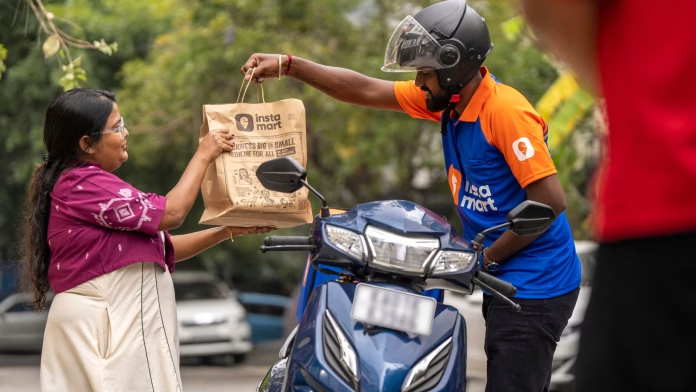
This increased participation is likely to intensify competition, putting pressure on growth rates and margins for existing leaders like Blinkit and Instamart. UBS has accordingly reduced its projections for quick commerce performance, cutting Blinkit’s net order value estimates by 7–11 percent and Instamart’s gross order value forecasts by 17–22 percent for FY27–29.


Growth Moderation but Structural Opportunity Intact

Despite the competitive intensity, UBS noted that the situation has not deteriorated further since late 2025. Platforms have already begun adjusting strategies by raising free delivery thresholds and rationalising discounting, which is expected to support margins in the near term.

Growth moderation is being attributed to both seasonality and a deliberate shift by platforms toward balancing profitability with expansion. UBS expects a temporary slowdown in quick commerce growth in early FY27, followed by recovery in the second half of the year as supply-side constraints ease.

At the same time, the brokerage remains constructive on the long-term opportunity, noting that increased competition will likely expand the total addressable market by introducing new categories, use cases, and customer segments.


Food Delivery Remains Stable

UBS maintained that the core food delivery businesses of both companies remain stable. However, it flagged risks from LPG supply constraints and pricing volatility, which could impact restaurant operations and delivery economics in the short term.

Higher delivery costs are also expected, potentially rising by 1.5–2 percent in FY27 due to expanded delivery radii. These costs may be partially offset by recent platform fee increases implemented by both Zomato and Swiggy.


Valuation Reset but Upside Intact

UBS has revised its target prices while maintaining a positive outlook:

  • Eternal: Target price cut to ₹310, implying ~32% upside
  • Swiggy: Target price maintained at ₹390, implying ~42% upside

The brokerage noted that Eternal trades at a premium compared to the broader consumer sector but justifies it through significantly higher projected EBITDA growth. Meanwhile, Swiggy’s valuation is seen as conservative, with much of its quick commerce business not fully reflected in current pricing.


The Bigger Picture

The quick commerce sector is entering a new phase where capital intensity, scale, and execution will define winners. While increased competition may compress margins in the short term, it is also accelerating category development and consumer adoption.

In essence, the market is shifting from a “land grab” phase to a more disciplined growth cycle, where profitability, operational efficiency, and ecosystem strength will become the key differentiators.

Advertisement

Proda Launches Protein Soda, Blends Functionality with Everyday Consumption

0

Proda has officially entered the functional beverage market with a differentiated proposition: a protein-infused soda designed for everyday lifestyle consumption rather than gym-focused use cases. The brand, co-founded by Matthew Postlethwaite and Jeff Church, debuted nationally on April 1, 2026, through an exclusive retail partnership with Sprouts Farmers Market.


A New Format: Protein Meets Soda Culture

https://www.newsobserver.com/public/press-releases/57thjh/picture315084604/alternates/LANDSCAPE_1140/shot23prodaamazon1548orangemisthero-1_15557
https://cleansimpleeats.com/cdn/shop/files/Macro_Cap_Clear_Protein_Soda_Classic_Grape_3312GRP1_Main.png?v=1757347039
https://media-dynamic.okendo.io/images/1da0a7a8-5338-44e9-958e-3aa9fd34c328/beba1bbd-5077-41f3-a6a2-1fc5b5d9d9c7.jpg?crop=center&d=600x600

4

Proda’s core innovation lies in repositioning protein from a fitness-centric supplement to a daily consumption habit. Instead of shakes or powders, the brand delivers protein in a carbonated, soda-like format that fits into routine occasions like meals, work breaks, or casual refreshment.

The formulation is built on clear whey protein isolate, allowing the drink to remain light, transparent, and free from the heavy texture typically associated with protein beverages. Each 12 oz can delivers 10 grams of protein and 3 grams of prebiotic fiber, with zero sugar and approximately 45 calories, targeting consumers who want functional benefits without compromising taste or convenience.


Product Strategy: Clean Label with Mass Appeal

Proda’s nutritional positioning reflects a broader shift toward “better-for-you indulgence”:

  • 10g clear whey protein for daily intake rather than muscle-building extremes
  • 3g prebiotic fiber supporting gut health
  • Zero sugar, zero lactose, and gluten-free formulation
  • Naturally sweetened and caffeine-free, widening its appeal across demographics

This combination allows the brand to compete not just with protein drinks, but also with modern soda alternatives and functional beverages.


Flavor Innovation: Nostalgia as a Growth Lever

https://m.media-amazon.com/images/I/7145qZXR11L.jpg
https://www.bevindustry.com/ext/resources/2025/12/12/Root-Beer-Slice.webp?t=1765571335&width=696
https://images-cdn.ubuy.co.in/65fc1b00805ab31781173fa8-sunkist-caffeine-free-strawberry.jpg

4

A key differentiator is Proda’s flavor strategy, which leans heavily into nostalgic soda profiles. The launch lineup includes Classic Orange, Shirley Temple, Cherry Lime, Strawberry Lemonade, Lemon Lime, Golden Apple, and Root Beer.

By recreating familiar “soda fountain” experiences, Proda bridges the gap between taste-driven indulgence and functional nutrition, making it easier for consumers to adopt protein as part of their daily routine.


Distribution & Go-To-Market

The brand has opted for a focused launch strategy:

  • Exclusive retail debut at Sprouts Farmers Market
  • Direct-to-consumer availability via its website and digital platforms
  • Expansion through marketplaces like Amazon and TikTok Shop

This omnichannel approach combines premium retail positioning with digital-first discovery, particularly targeting younger, health-conscious consumers.


What This Means for the Category

Proda reflects a larger transformation in the functional beverage space:

  • Protein is moving mainstream: No longer limited to athletes, it is becoming part of everyday nutrition
  • Format innovation is key: Soda-style delivery lowers the barrier to entry for new consumers
  • Taste is non-negotiable: Brands are investing heavily in R&D to eliminate traditional drawbacks like chalkiness
  • Lifestyle positioning is winning: The focus is shifting from performance to convenience and enjoyment

By reframing protein as something that fits seamlessly into daily life, Proda is not just launching a product but attempting to redefine how consumers interact with functional nutrition.


Overall, Proda’s entry signals a new phase where functional beverages compete directly with traditional sodas, offering both enjoyment and nutritional value in a single format.

Advertisement