


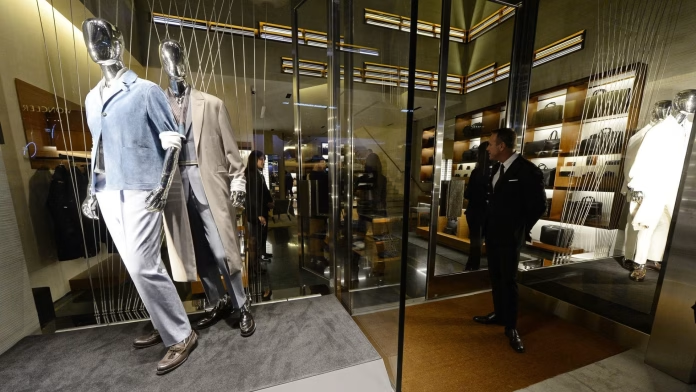
Escalating geopolitical tensions in the Middle East are creating fresh challenges for global luxury brands, adding pressure to an industry already grappling with weak demand recovery. Airspace closures and travel disruptions following military action involving Israel, the United States, and Iran have affected major regional hubs, including Dubai and Doha, forcing temporary airport shutdowns and disrupting tourism and business travel.
A Small but Important Luxury Market
Although the Middle East accounts for roughly 5–6% of global luxury sales, it remains a strategically significant region for the industry. According to estimates by financial institutions, a large share of purchases in the region is driven by international tourists, particularly from Russia, Saudi Arabia, China, and India.
The United Arab Emirates alone generates about half of the region’s luxury revenues, with Dubai serving as the primary shopping hub. Amid the current tensions, several luxury stores across Dubai and other regional retail centres have reportedly operated with limited staff or remained temporarily closed.
Why the Situation Matters
Luxury companies had been looking to the Middle East as a growth driver while sales in China remain sluggish and macroeconomic uncertainty continues in the United States and Europe.
The latest conflict also threatens the seasonal boost typically associated with Ramadan, when affluent Gulf consumers often travel to Europe and other global shopping destinations. Any disruption to travel patterns during this period could weigh further on luxury sales.
Brands Most Exposed
Some luxury houses have deeper exposure to the region than others. Switzerland-based Richemont, owner of Cartier, and Italian fashion group Zegna derive around 9% of their total revenues from the Middle East, making them among the most vulnerable to regional disruption.
By contrast, brands such as Burberry have comparatively lower exposure to the market.
Impact on Market Sentiment
Investor sentiment has already reflected the heightened risk. The STOXX Europe Luxury 10 Index has fallen about 9% since the beginning of the week, marking its steepest two-day drop since the tariff-related market shock in April.
As geopolitical uncertainty persists, luxury companies may face a renewed test of resilience—particularly in regions that have recently served as rare pockets of growth for the sector.