


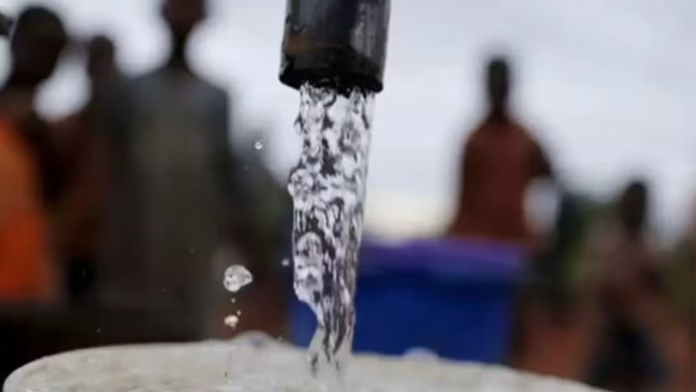
Global beverage makers operating in India are confronting an intensifying challenge that goes well beyond regulatory complexity or taxation. In water-stressed Rajasthan, companies such as Heineken, Carlsberg and Diageo are being forced to rethink how they produce and operate amid shrinking groundwater reserves, tighter government oversight and growing unease among nearby communities.
Nearly two thirds of Rajasthan lies within the Thar Desert, making water availability a constant concern for its 85 million residents. Government data shows groundwater extraction in several districts far exceeds natural recharge rates, largely due to irrigation demands and rising urban consumption. Yet liquor laws that restrict interstate movement of alcohol compel beverage firms to maintain production units in each state, including some of the most water-scarce regions.
Rajasthan’s industrial hub of Alwar illustrates the strain. While industry accounts for just about two percent of the state’s total water use, companies extracting groundwater are required to install rainwater harvesting and recharge systems. In zones classified as over exploited, firms must also adopt advanced water-saving technologies. Brewers say they are complying. Heineken, Carlsberg and Diageo report efforts to reduce water intensity, recycle wastewater and replenish every litre drawn from the ground through recharge projects.
At Diageo’s Alwar facility, the company says it is targeting a 40 percent reduction in water consumption by switching to techniques such as air-based bottle rinsing and recycling all wastewater. Collectively, global brewers have permits allowing them to draw up to 4.6 million litres of groundwater daily in the district, with multinational firms accounting for roughly two thirds of that volume.
For nearby villages like Salpur, where piped water may arrive only once a week, these numbers fuel frustration. Residents describe long waits, rising costs and falling water tables. Although court-appointed inspections have found factories compliant, environmental authorities have been directed to strictly monitor groundwater extraction and halt new permits in over exploited areas.
The situation reflects a broader national issue. India supports 17 percent of the world’s population with only 4 percent of its freshwater. As industrial activity expands, competition for water is intensifying. Sustainability experts acknowledge that corporate initiatives have helped improve local water tables in pockets of Rajasthan, but argue that larger, coordinated infrastructure solutions are essential. For India’s beverage industry, managing growth without deepening the water crisis is becoming a defining test.