McDonald’s India (West & South) has introduced a thrilling addition to its Cheesy Burgers selection by unveiling the Cheesy Italian Burgers, available in both vegetarian and chicken variations. These exclusive menu items, complemented by the inventive McCheese burgers, aim to redefine the burger experience, showcasing McDonald’s dedication to menu innovation.
For the very first time, patrons of McDonald’s India will delight in the recently introduced Italian Herb Bun, providing an authentic taste of Italy. Enhanced by a carefully curated Tomato Herb Cheese Sauce, succulent tomatoes, and a Piri-Piri Cheese Slice, these burgers are a delectable blend of cheesiness, juiciness, and satiating satisfaction.
“We are delighted to introduce the Cheesy Italian burgers for our fans with an aim to make their festive season even more special. These new indulgent offerings, apart from our flagship McCheese burgers, combine traditional Italian flavours with the most loved Cheesy burgers platform. We at McDonald’s India continue to push the boundaries of menu innovation delivering the epitome of cheesy indulgence,” said R. P., Chief Marketing Officer, McDonald’s India (W&S).
Aligning with McDonald’s dedication to ‘Real Food, Real Good’, the Italian Cheesy Veg Burger and Italian Cheesy Chicken Burger proudly refrain from using artificial colors and flavors. These fresh offerings also underline the brand’s unwavering commitment to utilizing locally sourced, natural ingredients across its menu.
The fresh Italian Cheesy Veg Burger and Italian Cheesy Chicken Burger can be enjoyed at McDonald’s establishments throughout West and South India. Additionally, they are conveniently accessible for ordering via the McDelivery® app, offering various choices such as home delivery, on-the-go pickup, and drive-thru service.
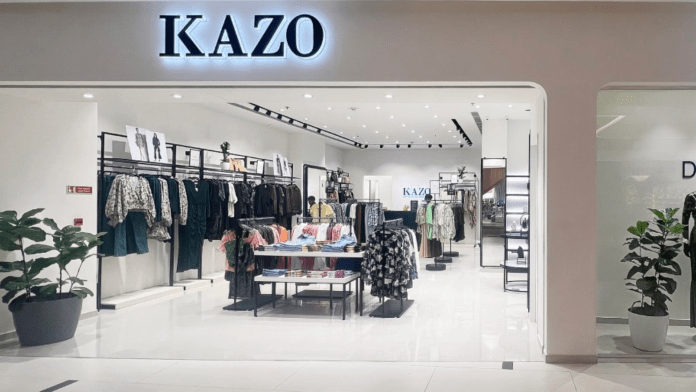
KAZO Fashion, the renowned fashion label recognized for its versatile creations and outstanding craftsmanship, has introduced its newest retail establishment, situated at 56, Connaught Circle, Block M, Connaught Place, New Delhi.
This carefully planned area covers about 1000 square feet across two levels, ensuring an exceptional shopping venture. Every detail, from the well-placed furniture displays to the meticulously chosen lighting and signage, has been finely calibrated to optimize both form and function. The recent store opening signifies a major achievement for KAZO, now proudly operating a network of over 65 Exclusive Brand Outlet (EBO) stores and more than 120 shop-in-shop experiences throughout the country, with additional retail expansion strategies in the pipeline.
Deepak Aggarwal, Founder and CEO of KAZO said, “The opening of our new retail store in Delhi reflects our unwavering commitment to offering our customers a fusion of sophisticated fashion and an exceptional shopping experience. With a total of 12 strategically located stores across Delhi NCR, we continue to provide trendsetting yet competitively priced fashion apparel. KAZO is poised to redefine fashion accessibility as we embark on an ambitious expansion journey, introducing new stores across India and heralding an exciting new chapter in our brand’s evolution.”
The Connaught Place establishment presents an extensive selection of women’s attire, spanning from glamorous ensembles suitable for festive gatherings to sophisticated, timeless outfits designed for office attire and formal functions. The assortment comprises a versatile array of dresses, tops, shirts, t-shirts, skirts, trousers, jumpsuits, co-ord sets, and a variety of other options. Additionally, customers can peruse a thoughtfully curated range of jewelry, handbags, and belts, intended to enhance their personal style.
With the recent selection of Bollywood star Janhvi Kapoor as the Brand Ambassador, KAZO envisions an exciting future for the upcoming season. The brand aims to take the helm in India’s fashion landscape and establish a substantial market presence in women’s clothing. In the forthcoming years, KAZO has outlined ambitious plans for growth, encompassing both online and offline domains, with expansion on digital platforms and in brick-and-mortar stores. This strategic move underscores the brand’s dedication to delivering chic and attainable fashion to a wider audience nationwide.
Chukde Spice, a prominent Indian spice manufacturer, has appointed Karisma Kapoor as its brand ambassador for an exclusive two-year partnership. Karisma Kapoor will represent the brand solely from August 2023 to August 2025.
Chukde Spices has been dedicated to upholding quality, authenticity, and food safety standards since its inception in 2006. The collaboration with Karisma Kapoor is set to enhance Chukde’s nationwide brand awareness efforts.
Over the course of almost two decades, Chukde has evolved into a well-recognized household brand, renowned for its diverse range of whole spices, blended spices, and superfood products.
“When everybody keeps talking about the quality of the product, we felt that we needed to give a commitment to our customers and not just talk about quality. We came out with the campaign Saaf Nahin to Paisa Nahi. Everyone kept telling us that it’s a suicidal campaign since people can make false claims for money but we felt we needed to put our neck on the line and in case we can’t deliver the proposition than we don’t deserve the money from our customers. We are the custodian of money that we charge from our customers and we deserve the money only if we deliver on our promises. We are the only brand with such a campaign in the spices category. We did fairly well in conveying our message to our customers which made us their favorite brand over the years,” Rajat Luthra, Director, Chukde, said.
Speaking about the association, Karisma Kapoor said, “Chukde Spices are an integral part of Indian cooking and have been serving us authentic Indian spices. I am very glad to be part of this exciting brand story.”
Chukde Spices, a brand under the umbrella of Lifestyle Foods, has earned the National Award for Outstanding Entrepreneurship in both 2015 and 2020. In addition to catering to domestic markets, the brand also exports its products to 29 countries worldwide.
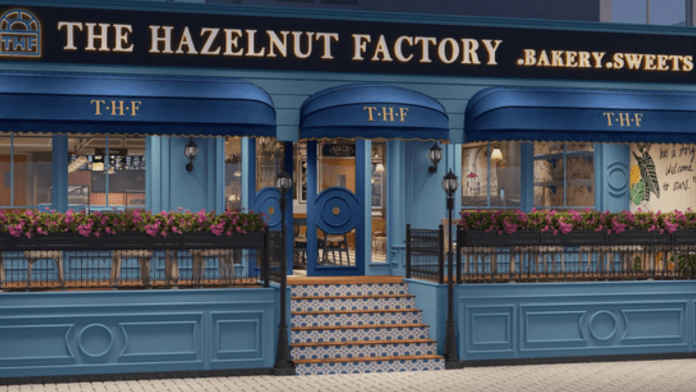
Lucknow-based cafe, The Hazelnut Factory, recently made an exciting announcement. In a press release issued on Monday, the company revealed the grand opening of its first outlet in Delhi, situated on Punjabi Bagh Club Road. Covering an impressive 2,500 square feet, this marks the eighth establishment in their chain across India.
Speaking on the announcement, Ankit Sahni, Founder, The Hazelnut Factory said, “ Whether it’s the on-the-go professionals seeking a quick but delicious meal or families looking for a memorable dining experience, The Hazelnut Factory seamlessly fits into Delhi’s diverse dining culture.”
The brand presents an array of culinary delights, ranging from artisanal sweets, cookies, and namkeens to specialty coffee and more.
Since its inception in 2019, The Hazelnut Factory has been actively exploring opportunities for expansion within the vast Delhi-NCR region. The brand adheres to global manufacturing standards and employs cutting-edge production equipment and techniques.
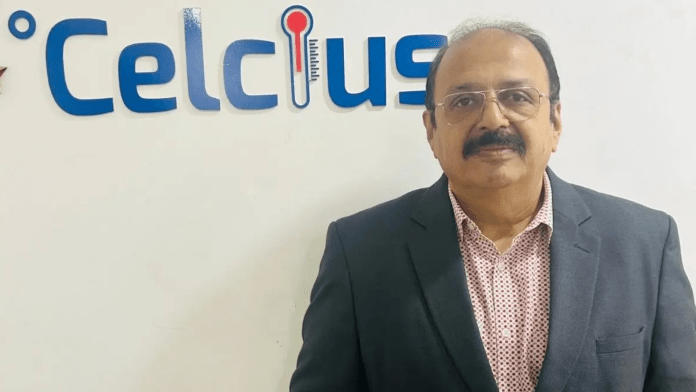
Celcius Logistics, India’s rapidly expanding cold chain marketplace startup, is delighted to announce the appointment of Mr. Tarun Goyal as the Business Head. With 26 years of profound experience in the logistics industry, Mr. Goyal’s appointment marks a significant step in Celcius’s journey towards revolutionizing India’s cold chain logistics sector.
India’s traditional cold chain infrastructure grapples with inefficiencies, resulting in staggering food losses totaling approximately $14 billion and causing as much as 29% of vaccines to lose their efficacy due to damages and temperature fluctuations during transportation. Celcius has developed a comprehensive platform from scratch, employing proprietary technological solutions tailored explicitly for the cold supply chain. This platform addresses the challenges faced by all stakeholders, ranging from manufacturers and small-scale transporters to end consumers.
As the exclusive aggregator platform in India, Celcius Logistics provides cutting-edge proprietary technology and operational solutions for reefer logistics and cold storage warehousing. It is revolutionizing the fragmented sector, working to establish a truly seamless cold chain network nationwide. Celcius Logistics boasts an impressive fleet of over 4,500 vehicles, operates 107 cold storage facilities, manages seven distribution centers, and is supported by a team of over 100 hyperlocal riders. In April 2023, the company successfully secured INR 100 crore in funding, positioning Celcius Logistics as the first startup in the cold supply chain sector to achieve rapid growth and carve out a distinctive niche in the cold chain industry.
In the coming years, Celcius Logistics has ambitious plans to roll out all-encompassing cold storage warehousing solutions, extend its reach to over 500 cities nationwide, and substantially augment its workforce. These endeavors are in perfect harmony with Celcius’s fundamental vision, which is to create a seamless and uninterrupted cold supply chain network by leveraging state-of-the-art technology to enhance efficiency and cost-effectiveness across diverse sectors.
The inclusion of Mr. Tarun Goyal on the Celcius team is poised to advance the company’s overarching vision. With a career spanning more than 26 years in the logistics industry, he has held pivotal roles in some of India’s top logistics firms. His illustrious career encompasses significant positions at renowned companies, including Gati, Safexpress, Radhakrishna Foodland, Transocean, V-Trans India Ltd, DP World, and Delhivery.
Speaking about the new addition to the team, Mr Swarup Bose, Founder and CEO of Celcius Logistics, said, “Mr Tarun Goyal has been a versatile Industry stalwart and has successfully managed express cargo, hard freight and cold chain logistics, making him an experienced business leader with deep domain insights in the world of logistics. We are delighted to welcome him to the Celcius family. His appointment strengthens the company’s position as a leader in the cold chain logistics industry and reinforces its commitment to transforming the logistics landscape in India. I am confident that his extensive experience, strong leadership, and business development acumen will play a pivotal role in furthering our vision of excellence in the cold chain logistics industry.”
Commenting on his new role at Celcius Logistics, Mr Tarun Goyal expressed, “I am excited to join Celcius Logistics, a company that has been redefining the cold chain logistics industry. It’s an honour to be part of a team that is setting new service benchmarks and supporting cold chain vendors in achieving their full potential. I am thrilled to be part of Celcius and look forward to working closely with Mr Swarup Bose and the entire team to take the company to new heights.”
Mr. Goyal boasts a strong educational foundation, having completed his primary education at St. Xavier’s Institute in Mumbai, followed by his undergraduate and postgraduate degrees in marketing from Dehradun. Furthermore, he is a certified ISO Auditor and has participated in workshops such as “Train The Trainer” and NLP.
The company’s progressive expansion strategy involves the implementation of advanced Warehouse Management Systems (WMS) and the enhancement of its existing Transportation Management Systems (TMS). Having achieved a remarkable growth of 20 times in the past year, Celcius has garnered an esteemed clientele, including Zepto, Zomato, Maersk, Prabhat Dairy, Baskin Robbins, Vadilal, Domino’s, Keventers, Godrej Agrovet, and Zydus Pharma. Celcius has successfully transported more than 125,000 tons of perishable goods across various sectors like dairy, fresh agricultural produce, pharmaceuticals, fruits, seafood, and vaccines, spanning over 350 cities in India.
The advent of the festive season has brought joy to cardamom farmers in Kerala’s Idukki district, with the price of the “queen of spices” surging by 20% month-on-month in October to reach INR 1,900 per kilogram at the farm gate level.
A year ago, cardamom was trading at around INR 1,100 per kilogram. This year, there has been a noticeable surge in prices, mainly due to a 30% reduction in cardamom production, with the total yield plummeting to 23,000 tonnes. This decline can be attributed to the scarce rainfall experienced during the crucial growing periods of June and August.
“The drop in production has been compensated by the high prices. But what is worrying us is the illegal influx of cardamom from Guatemala,” said Prabhakar SB, a cardamom grower in Idukki, whose family has been in this business for nearly 80 years.
Significantly, 95% of the country’s cardamom is produced in Idukki district.
Rainfall in the district has been deficient by 60% thus far. Cardamom harvesting typically commences towards the latter part of July. Although there was some rainfall towards the end of September, growers believe it is insufficient to rectify the damage incurred.
“Last year, cardamom farmers got a price of INR 1,000 per kg, even though the cost of production was INR 1,200 per kg,” said PC Punnoose, chief executive officer of Kerala Cardamom Processing & Marketing Company. “In September, the prices of cardamom went up by INR 1,500-1,600 per kg. In October, prices have further shot up to INR 1,900 per kg as the festive season demand for cardamom has picked up.”
On Monday, Oyo, a hospitality technology company, announced its plan to expand its platform by incorporating 750 hotels within the next three months. These new additions will be strategically located in over 35 leisure markets, aimed at capitalizing on the upcoming festive and winter tourism season. The majority of these fresh hotel listings will fall under Oyo’s premium brand categories, including Palette, Townhouse, Townhouse Oak, and Collection O, as detailed in the company’s official statement.
Oyo has identified Goa, Jaipur, Mussoorie, Rishikesh, Katra, Puri, Shimla, Nainital, Udaipur, and Mount Abu as its primary target markets for the upcoming addition of new hotels.
“Our expansion in these leisure markets also aligns with our mission to provide quality accommodations and memorable experiences to travellers. The influx of new hotels will not only boost tourism, but also provide employment opportunities for local communities,” Oyo chief merchant officer, Anuj Tejpal said.
Referring to a recent government report, Oyo stated that the influx of foreign tourists to India from January to June this year has increased by 106 percent compared to the same period in 2022.
“As we head towards one of the most important seasons for tourism, it is heartening to see the number of foreign travellers increase in India after the Covid lull,” Tejpal said.
The peak season, generally spanning from October to January, witnesses a surge in both domestic and international tourists, rendering it a pivotal period for the tourism and hospitality sector.
Oyo has also introduced a “Stay Now Pay Later” (SNPL) option, offering travelers enhanced flexibility when organizing their trips. SNPL grants customers a credit limit of INR 5,000, which can be settled after a 15-day stay.
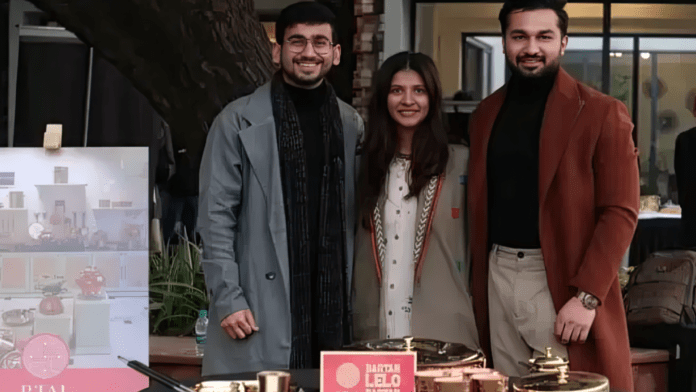
The kitchenware and home decor company, P-TAL, recently secured INR 4.33 crore in a Seed funding round. This funding round was spearheaded by Titan Capital and included contributions from other prominent investors such as Anicut Capital, Ghazal Alagh, a co-founder of Mamaearth, Vishesh Khurana, a co-founder of Shiprocket, Sandeep Aggarwal, Ashutosh Valani, Priyank Shah, Bala Sarda, Deep & Mohit Bajaj, Ashish Tulsian, and Arjun Vaidya.
According to a press release by P-TAL, the company intends to deploy the funds to expand its team in order to facilitate the scaling of its operations.
Established in 2019 by Aditya Agarwal and Kirti Goel, P-TAL is on a mission to rejuvenate age-old traditions in a modern context, emphasizing the utilization of traditional metals like brass, copper, and bronze. The company’s range of products is meticulously handcrafted by the skilled Thatheras of Jandial Guru, Punjab, a UNESCO-recognized craft. P-TAL distributes its artisanal creations through its own e-commerce platform, as well as via various marketplaces including Amazon, Tata Cliq, LBB, Etsy, Okhai, and others. Additionally, P-TAL maintains a physical presence in Delhi.
Based in Panchkula, the company asserts that it managed to elevate the monthly income of 55 artisan families by an astonishing 1,200%. Notably, its products have been chosen as gifts by esteemed clients, including the Reserve Bank of India, Pernod Ricard, the G-20 Summit 2023, and Engineers India Limited (EIL).
The company further asserts that its revenue has experienced a remarkable 300% year-on-year growth over the past three years.
Titan Capital, known for its support of unicorn ventures such as Ola, Urban Company, Mamaearth, OfBusiness, and Razorpay, has additionally realized either partial or complete exits from several startup investments, including Credgenics, Bewakoof, Unicommerce, ANS Commerce, and Netmeds.com.
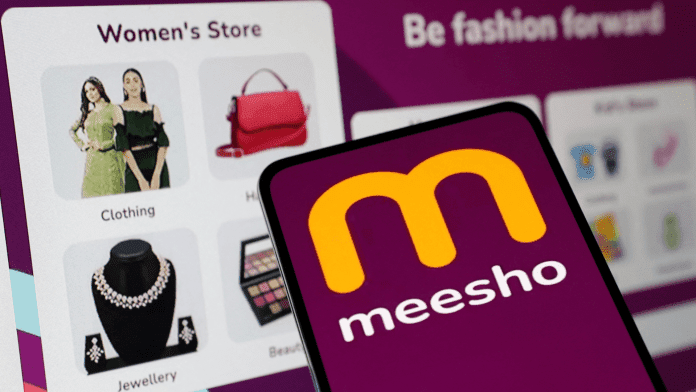
Taking advantage of the online festive season sale frenzy, the e-commerce giant Meesho achieved an impressive milestone with 1.6 crore app installations during its highly successful ‘Meesho Mega Blockbuster Sale.’
Over the course of the 10-day sale, the company reported a staggering 120 crore user visits spanning various categories, including home and kitchen, fashion, beauty, and personal care (BPC). Additionally, the e-commerce platform experienced an average of 72 orders per second across these three categories throughout the festive sale event.
During the sale, the BPC category saw remarkable growth, exceeding 80%, while sales in men’s fashion and home decor categories surged by 90% and 75%, respectively. Furthermore, purchases of kids’ wear on the platform soared by an impressive 114% during the festive sale.
In a significant announcement, the company declared its ongoing profitability and positive cash flow, which has been consistent since it initially reported profitability in July this year. Nevertheless, the company refrained from disclosing any additional details.
At the same time, Meesho Mall maintained its momentum, experiencing a threefold increase in orders when compared to its typical business days. According to the company, a significant 70% of the orders placed on its in-app branded store were from first-time users.
The unicorn further asserted that, within its loyalty program, users submitted nearly 1.4 crore orders throughout the ten-day festive sale period. Notably, cities like Amravati, Aurangabad, Dehradun, Nellore, Solapur, and Warangal accounted for the largest share of orders for Meesho during this timeframe.
“… We are overjoyed by the success of our sellers. The significant increase in their sales has made the Mega Blockbuster Sale a success and is a testament to our commitment towards fostering the growth of small businesses,” said chief experience officer (CX) for growth at Meesho Megha Agarwal.
Before the sale, the company had successfully brought onboard close to 200,000 new sellers, and according to their reports, approximately 30,000 sellers achieved the “lakhpati” status during the sale event. It’s worth noting that there is no clear indication of whether “lakhpati” status pertained to order volume or actual profits.
Earlier, the e-commerce unicorn reported that it had garnered close to 100 million orders from customers during the pre-festive season promotions encompassing Onam, Raksha Bandhan, and Ganesh Chaturthi. Interestingly, its competitor and e-commerce giant Flipkart recorded a whopping 1.4 billion customer visits during its Big Billion Days festive season sale from October 8 to 15 this year.
Before the festive sale, Meesho expanded its platform to include non-GST registered sellers, aiming to boost its seller network.
Established in 2015 by Vidit Aatrey and Sanjeev Barnwal, Meesho operates on a zero-commission model within its e-commerce platform. The company boasts a seller base of approximately 1.4 million and a product catalog featuring 120 million items.
Supported by prominent investors including SoftBank, Sequoia Capital, Prosus & Naspers, and Meta, the e-commerce platform has secured over $1 billion in funding thus far.
Just last week, a stake in Meesho was acquired by investment giant WestBridge Capital through a secondary transaction, purchasing it from the company’s early backer, Venture Highway. This move resulted in the early-stage venture fund reaping a return of more than 50 times their initial investment from the stake sale.
Despite the company’s assertion of achieving profitability in July 2023, Meesho had reported a net loss of INR 3,247.8 million in FY22, marking a substantial 550% year-over-year increase.
Understanding your consumers is a strategic need in the complex world of business. Profiling your ideal consumer extends beyond demographic information to include their desires, habits, and objectives.
Understanding your customers on a deep, personal level is the foundation of any successful marketing strategy. Profiling your ideal customer allows you to:
Targeted Marketing: Tailor your messaging and advertising to resonate with your ideal customers.
Product Development: Create products or services that align with the specific needs and preferences of your target audience.
Better Communication: Craft content and messaging that speaks directly to your customers, building a more personal and meaningful connection.
Increased Conversions: By delivering what your ideal customer wants, you increase the likelihood of conversions and long-term loyalty.
The Art of Customer Profiling
Demographics: Start with the basics, like age, gender, location, and income. This provides a broad understanding of your customer base.
Psychographics: Delve deeper into their personality traits, values, interests, and lifestyle. What drives them? What are their passions and hobbies?
Behavior: Analyze their buying behaviors. How often do they make purchases, and through which channels? Do they conduct thorough research before buying, or are they impulsive shoppers?
Challenges and Pain Points: Identify the problems they face and the obstacles they encounter in their lives or in relation to your product or service.
Goals and Aspirations: What do they aspire to achieve? Understanding their goals can help tailor your offerings.
Feedback and Reviews: Analyze customer feedback, reviews, and comments. These often contain valuable insights into customer experiences and expectations.
The Customer Profiling Process
Collect Data: Start by gathering data through surveys, interviews, social media insights, website analytics, and customer feedback.
Segmentation: Divide your customers into segments based on shared characteristics. This can help tailor your approach to each group.
Develop Personas: Create customer personas representing different segments. Give them names, pictures, and detailed profiles to humanize them.
Customer Journeys: Map out the typical journeys your customer personas go through when engaging with your brand.
Constant Refinement: Customer profiling is not a one-time task. Continuously update and refine your profiles as customer behaviors and preferences evolve.
Customer profiling is not just a data-gathering exercise; it’s an art that allows you to understand, empathize, and connect with your ideal customers on a profound level. By unveiling their demographics, psychographics, behaviors, challenges, and goals, you can tailor your marketing, product development, and communication strategies to speak directly to their hearts and minds. The art of profiling your ideal customer is the key to unlocking the insights that can transform your business into a customer-centric, successful venture.
We use cookies to ensure that we give you the best experience on our website. If you continue to use this site we will assume that you are happy with it.