Tuesday, January 20, 2026
Home Blog Page 855

Food Square redefines gourmet retail luxury with unveiling of Mumbai store

0
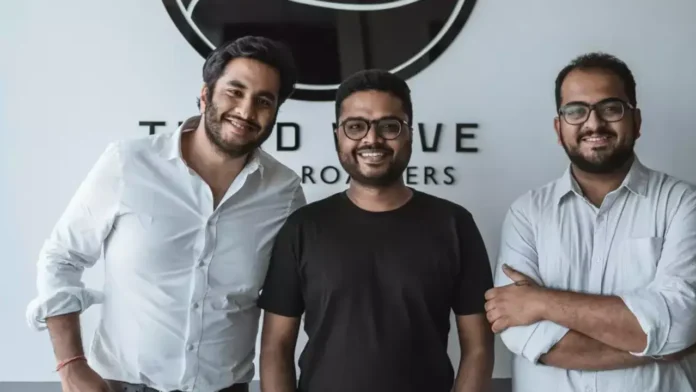
Mayank Gupta and Lalit Jhawar

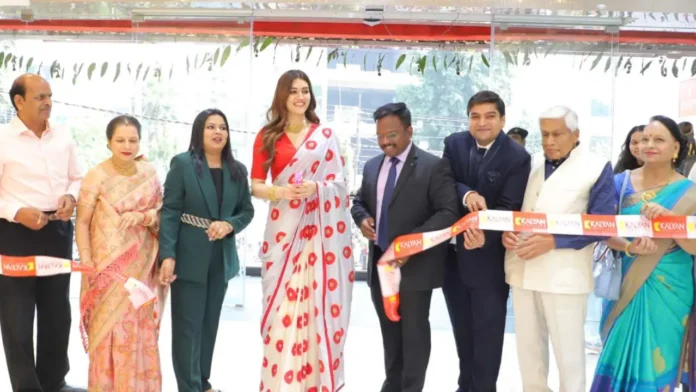
Mayank Gupta and Lalit Jhawar, two dynamic farmer-entrepreneurs, have set forth on a thrilling venture into the gourmet retail realm with the inauguration of Food Square. Situated in the vibrant heart of Bandra, Mumbai, this unparalleled premium emporium for gourmet culinary delights boasts an expansive 25,000 square feet. It presents an opulent selection of the most exquisite provisions and elusive flavors procured from worldwide sources, catering to a wide spectrum of gastronomic cravings, all while aspiring to revolutionize the gourmet retail experience.

With a combined expertise of over 5 years in cultivating and supplying fresh produce to more than 200 supermarkets in Western and Southern India, this dynamic pair possesses extensive industry experience and a thorough comprehension of consumer demands. In an impressive initial funding round, Food Square has effectively garnered a significant investment of $3.6 million. The multi-story venue, rented with support from Bollywood Actor Salman Khan and backed by prominent investors like Fashion Designer Masaba Gupta, Mukul Agrawal, Purple Style Labs, Sanket Parekh (from the Pidilite Family), Rahul Kalyan (SMIFS), Harminder Sahni, and others, envisions establishing stores across India, including cities like Mumbai, Bangalore, Hyderabad, Chennai, Delhi, Jaipur, and Pune. Their primary focus is on serving the High Net Worth Individual (HNI) and Ex-Pat Community.

Food Square presents an extensive selection from over 6,000 global brands. The establishment showcases a dynamic Live Kitchen, an enticing Cheese Cellar brimming with a collection of more than 350 cheese varieties ranging from INR 4,000 to INR 5 lakhs. They have cultivated partnerships with renowned brands such as Versace for an opulent cutlery range, Brijwasi for exclusive artisanal kulfi, air-fried farsans, Gelato for ice cream and cakes, live stations featuring Entisi Chocolate, and a diverse array of products encompassing dips, spreads, sauces, and a convenient Home Meal Replacement Service.

Food Square warmly welcomes connoisseurs to immerse themselves in a realm of indulgence, offering premium wines, fresh cuts from a distinguished meat market, Italian antipasti, olive oils, and truffles courtesy of Oliveology. Furthermore, they provide a diverse selection of eggs, a captivating fish cleaning theater, an extensive variety of fresh fruit jams, high-quality cold cuts, poultry, seafood, and an exclusive Indian sweet shop.

The opulent experience doesn’t stop at humans; it extends to pet owners as well, with a range of imported treats and tailor-made pet hampers. Food Square invites patrons to delve into a realm of freshness, highlighting exotic fruits, vegetables, and an extensive selection of water sourced from diverse corners of the world. In addition to retail, Food Square actively promotes artisanal brands, especially startups, allowing them to exhibit their forward-thinking product concepts and offering customers a varied range of products that align with current market trends.

Lalit Jhawar, CEO and Co-Founder of Food Square said, “Our aspirations reach for the sky as we strive to elevate the realms of experimentation, quality, accessibility, and convenience. Our primary goal is to deliver unparalleled freshness and top-notch quality, sourcing our food directly from the farms. We are committed to providing our customers with an experience that surpasses any they’ve encountered before.”

Mayank Gupta, MD and Co-Founder of Food Square said, “We are farmer-entrepreneurs-founders ourselves, running large-scale aquaponics and sustainable soil based farms in different parts of Maharashtra since more than 5 years. The current valuation of the Indian gourmet food market standing at $1.3 billion, a CAGR of 20 percent, makes it a promising arena. Our aim is to bring authentic flavours from around the world to our home turf, creating a space that resonates with every food enthusiast. A dynamic city like Mumbai truly deserves a top-tier gourmet experience, and we are delighted to fulfil that need.”

Advertisement

Swiggy increases platform fee to INR 3 per order to boost profitability ahead of IPO in 2024

0
swiggy
Swiggy (Representative Image)

Foodtech giant Swiggy has hiked its platform fee from INR 2 to INR 3 per order.

Back in April of this year, Swiggy implemented a flat platform fee of INR 2 per order, regardless of the order’s cart value.

Read More: Swiggy implements ‘platform fee’ on all orders, users to bear the cost

The platform fee, applied in addition to the delivery charge, continues to be applicable to all customers, including those enrolled in Swiggy’s loyalty program, Swiggy One. Even Swiggy One members, who receive benefits such as free food and grocery delivery, are not exempt from the platform fee.

The platform fee, applied alongside the delivery fee, continues to be applicable to all customers, including members of Swiggy’s loyalty program, Swiggy One. Even Swiggy One subscribers, who receive benefits such as free food and grocery delivery, are not exempt from the platform fee.

At present, the platform fee is solely associated with Swiggy’s food delivery service and has not been introduced for Instamart orders.

Interestingly, in August, Swiggy’s main rival, Zomato, also increased its platform fee from INR 2 to INR 3 per order. Zomato also extended the platform fee to Zomato Gold users, who were previously exempt from this charge.

Read More: Zomato extends platform fee to wider user base, implements INR 3 charge in select cities

This aligns with Swiggy’s pursuit of enhanced profitability, particularly as the company prepares for its initial public offering in 2024.

Earlier this year, Swiggy CEO said its food delivery business achieved profitability as of March 2023. “As of March 2023, Swiggy’s food delivery business has turned profitable (After factoring in ALL corporate costs; excluding employee stock option costs),” claimed Swiggy CEO Co-Founder and CEO Sriharsha Majety.

In the fiscal year 2022, the company reported a consolidated loss of INR 3,629 crore and generated revenue totaling INR 5,704.9 crore. Out of this revenue, INR 3,444.4 crore was attributed to the food delivery segment.

Conversely, Swiggy’s competitor, Zomato, achieved profitability in the first quarter of FY24, recording a consolidated profit after tax (PAT) of INR 2 crore compared to a consolidated net loss of INR 186 crore in the corresponding quarter of the previous fiscal year.

Read More: Zomato turns profitable in Q1 FY24, reports INR 2 Cr consolidated PAT

Advertisement

Basmati exporters hit pause on purchases to protest government pricing curbs

0

Rice exporters and millers dealing in Basmati rice from Haryana, Punjab, and western Uttar Pradesh have halted their purchases from 300 wholesale markets across these regions starting Saturday evening. This decision comes in response to the government’s choice to maintain the minimum export price (MEP) at $1,200 per tonne, a level deemed excessively prohibitive for India’s Basmati exporters to effectively participate in the global market, according to industry leaders.

“A number of exporters and millers have stopped purchase of paddy/rice as the government has not lowered the MEP. This is despite the government promising us at the last meeting held on September 25 that the MEP will be lowered to $900 per tonne,” said Vijay Setia, former president of the All India Rice Exporters Association. “The meeting, which happened virtually, was presided over by Union commerce and industry minister Piyush Goyal.”

Exporters have reported that, to date, only 20% of the latest crop, specifically the 1509 variety, has been acquired, while the remaining 80% remains either in the possession of farmers or stored in wholesale markets (mandis).

Farmers in the three states are facing a significant dilemma, uncertain about where to market their freshly harvested Basmati rice, primarily destined for export and with limited domestic consumption. On August 25, the government imposed a ban on Basmati rice exports below the price of $1,200 per tonne to prevent the potential occurrence of “illicit” trade involving standard white non-Basmati rice disguised as premium Basmati rice. Furthermore, it suspended contracts for rice priced below $1,200 per tonne and instructed the Agricultural and Processed Food Products Export Development Authority to establish a committee for reviewing these contracts.

Raghbir Singh, an agitated farmer from Karnal, said, “The government’s decision not to lower the MEP will result in agitation from the farmers and will have an impact on the upcoming state elections.” “It should be monitored fortnightly to curb inflation and the price bar should be raised as per need” he said.

Out of the entire 1.7 million hectares of land devoted to Basmati rice cultivation, the 1509 variety encompasses approximately 40% of this area. In the fiscal year 2022-23, Basmati rice exports amounted to 4.5 million tonnes, valued at INR 38,524.11 crore, with the primary purchasers being Gulf nations. Over 80% of India’s Basmati rice production is earmarked for export. Setia acknowledged the government’s concern for managing inflation, which underpins their actions.

The Food Corporation of India markets its rice in the open market for INR 31.

Advertisement

California eateries introduce “vomit fees” to curb customer intoxication

0
Beer
(Representative Image)

Restaurants in California, USA, have adopted an unusual approach to address issues related to customer intoxication, especially during bottomless brunches. To deter patrons from becoming excessively intoxicated and causing disturbances, some eateries are implementing what they refer to as “vomit fees.”

As per a CBS News report, a restaurant located in Oakland has prominently displayed a sign for the last two years to alert mimosa enthusiasts. This sign serves as a cautionary notice, informing patrons that a $50 cleaning fee will be applied to their bill in the event of any vomiting incidents within the restaurant’s public spaces. The sign reads, “Dear all mimosa lovers, Please drink responsibly and know your limits. A $50 cleaning fee will automatically include in your tab when you throw up in our public areas. Thank you so much for understanding.”

The owner of the establishment mentioned that while he hasn’t yet charged anyone the cleanup fee, the sign has proven to be an effective deterrent. He explained, “It was really tough cleaning. People were scared with COVID. And this was happening a lot. My workers don’t want to do that. It got better. Now [customers] know they have to pay. They understand.”

In a similar vein, a San Francisco restaurant, as reported by People Magazine, also warns brunch-goers that they could face a $50 fee for incidents resulting from intoxication. A message on the restaurant’s menu reads, “Please Drink Responsibly. $50 Cleaning fee per person for any incidents [that] incur as a result from intoxication… responsible for the whole group.”

Since implementing this warning, the restaurant has observed a reduction in indoor vomiting incidents. The owner noted, “It’s better, but every other week we get somebody throwing up or vomiting. Now they go outside.”

These efforts in California are not unique instances. Just recently, a restaurant in Singapore garnered online visibility when a viral video depicted a woman engaged in a dispute with restaurant personnel who were firm in their request for her to cover a $15 cleaning fee following her intoxicated friend’s episode of vomiting.

It’s important to highlight that the practice of implementing cleaning fees for messes isn’t limited to restaurants. Uber, a popular ride-sharing platform, permits its drivers in the United States to impose cleaning fees that can range from $20 to $150 when passengers leave a mess.

Advertisement

Speciality Brands strikes exclusive deal to elevate Chopin Vodka’s presence in the UK market

0
Chopin Vodka
Chopin Vodka

Speciality Brands has entered into an exclusive distribution agreement with Chopin Vodka, a super-premium Polish brand, for the UK market.

Chopin, a family-owned brand situated in eastern Poland, manages the entire production process, from the farm to the bottle, ensuring full control over every aspect.

The brand offers Wheat, Rye, and Potato varieties, all boasting a 40% ABV. Additionally, Speciality Brands will introduce Chopin’s exclusive Vera Wang bottle, blended editions, and Family Reserve to the UK market.

By joining forces, the distributor’s objective is to enhance Chopin’s footprint in both the on-trade and off-trade sectors.

“As a family-owned business focused on producing high-quality spirits, [the Chopin team] share many of our values and fit really well within our portfolio of premium drinks,” said Chris Seale, managing director at Speciality Brands. “We’ve got great plans for the brand, which include taking full advantage of the growing popularity of the martini in the UK.”

Tad Dorda, Chopin Vodka, Co-Founder and chief executive, added, “We were looking for a distributor that would bring passion, expertise, and a flair for building luxury brands in a market that needs nurturing in a very specific way. Speciality Brands has all the right credentials and we’re looking forward to taking Chopin on the next steps of its journey.”

Advertisement

Nestlé to cut 90 jobs at Swiss facility amid strategic realignment for iconic food brands

0

Nestlé is poised to reduce its workforce by 90 positions at a Swiss facility as part of its strategic realignment towards the production of two specific food brands.

The Swiss multinational is allocating a sum of SFr6.5 million ($7.2 million) for the revitalization of its Wangen facility, situated in the canton of Schwyz. This facility currently specializes in the production of fresh dough.

At the Swiss facility, Nestlé will exclusively manufacture two brands: Buitoni, renowned for its Italian pasta, and Leisi, a producer of pastries and dough.

In the upcoming year, nearly half of the workforce at the Wangen factory will be reduced. Nestlé conveyed this information to employees on the morning of October 13th, as confirmed by a spokesperson from the company.

“We constantly review our activities and market requirements. The market conditions have changed and volumes abroad have decreased. We have therefore decided to concentrate on our core business with our own brands in the future,” the spokesperson said.

“We have personally informed our employees this morning about our plans and a four-week consultation period with the personnel commission has now begun. Our plans foresee a two-phased approach and it is expected that the process will be finalised at the end of Q2.”

The spokesperson further mentioned that Wangen facility manufactures various brands, including products for foodservices, catering to both the Swiss market and international exports.

Nestlé maintains nine production facilities in Switzerland and markets a wide array of products under approximately 40 diverse brands catering to both consumers and their pets.

During the initial half of the current financial year, Nestlé recorded a 1.6% increase in sales, reaching SFr46.3 billion on a reported basis. The closely monitored underlying trading operating margin (UTOP) saw a 20 basis point increase, reaching 17.1%, and grew by 30 points in constant currency. In terms of trading operating profit, there was a 2.9% rise to SFr7.9 billion.

Net income experienced a 7.7% upturn, reaching SFr5.6 billion.

Advertisement

SunOpta exits frozen fruit business with $141 Million asset sale to Nature’s Touch

0
SunOpta
SunOpta

SunOpta has divested a collection of frozen fruit assets to Nature’s Touch, a Canada-based specialist in the industry.

In a $141 million agreement, Nature’s Touch has acquired specific assets of SunOpta’s Sunrise Growers business, with a focus on operations situated in Edwardsville, Kansas, and Jacona, Mexico.

Nature’s Touch identified the US market as a “significant growth prospect” and has recently made an investment in an additional facility located in Virginia.

SunOpta purchased Sunrise Growers in 2015 for approximately $450 million. The sale of these assets is part of the company’s strategy to prioritize “value-added” plant-based products and wholesome snacks.

Nature’s Touch CEO John Tentomas said, “This acquisition is more than just a business transaction – it marks a deliberate step towards a future that is more integrated, innovative, and impactful.

“This acquisition puts us in the unique position of providing North American consumers with the most expansive network of freezing and distribution on the continent.”

In April, SunOpta unveiled a long-term goal to double its revenue, with a primary focus on plant-based beverages to drive its aspirations.

The company lowered its sales forecast for the year two months ago due to a disappointing second quarter. They cited factors such as customer attrition in the frozen fruit segment, a slower expansion of new business, and a weak performance in the category.

The group noted reduced volumes of frozen fruit attributed to declining retail consumption patterns, constraints on specific fruit varieties affecting blends, and the loss of foodservice volumes.

Joe Ennen, SunOpta’s CEO, said the deal with Nature’s Touch was “a major milestone in our portfolio optimisation efforts”. The company, he explained, is on “a multi-year transformation to becoming a leading manufacturer of value-add products in plant-based and healthy snack categories”.

Ennen added, “This transaction is significantly accretive to margins, results in a more capital-efficient business model, strengthens our balance sheet and ensures we are singularly focused on the most attractive growth opportunities.”

In conjunction with the deal announcement, SunOpta released preliminary third-quarter results. The company anticipated that total revenue from continuing operations would increase by approximately 6%, reaching around $152 million. Adjusted EBITDA from continuing operations for the third quarter of 2023 is projected to range between approximately $18.5 million to $19 million.

In a communication to clients, John Baumgartner, the Managing Director of Mizuho Securities USA, described the sale of frozen fruit assets as having achieved a “strong valuation,” with a multiple of 0.5 times the last 12 months’ sales and 9.4 times the EBITDA.

Advertisement

Avenue Supermarts surpasses INR 12,624 Crore in Q2 total revenue, expands with 9 new DMart stores in Q2 FY24

0
DMart
DMart (Representative Image)

On Saturday, Avenue Supermarts, the operator of DMart, announced a notable 18.6% rise in consolidated total revenue, reaching INR 12,624.37 crore for the second quarter (Q2) concluded on September 30, 2023. This signifies an increase from the INR 10,638.33 crore revenue recorded during the equivalent period in the prior fiscal year, as stated in the company’s regulatory filing.

Nevertheless, the retail chain experienced a 9% decrease in its consolidated net profit, amounting to INR 623.35 crore during Q2 FY24, in contrast to INR 685.71 crore in the equivalent quarter of the prior year. Additionally, its PAT (Profit After Tax) margin was 4.9% in Q2FY24, a decline from the 6.4% seen in Q2FY23.

As per the BSE filing, the Earnings before Interest, Tax, Depreciation, and Amortization (EBITDA) for Q2 FY24 was reported at INR 1,005 crore, showing an increase from INR 892 crore in the corresponding quarter of the previous year. The EBITDA margin for Q2 FY24 was 8.0%, a slight decrease from 8.4% recorded in Q2 FY23.

Commenting on the company’s quarterly performance, Neville Noronha, CEO and managing director of Avenue Supermarts Limited, said, “Q2 FY 2024 saw revenue growth of 18.5% as compared to the corresponding quarter of last year. Our gross margins continue to be lower compared to the same period in the previous year due to lesser contribution from the higher margin General Merchandise and Apparel business.”

Moreover, the company disclosed that it inaugurated 9 additional stores in the quarter, bringing its total store tally to 336 as of September 30, 2023. The company specializes in an extensive array of products, with a particular emphasis on food, non-food items (FMCG), general merchandise, and apparel across various product categories.

At present, D-Mart adheres to an Everyday Low Cost – Everyday Low Price (EDLC-EDLP) strategy. This strategy is centered on acquiring goods at competitive prices, leveraging operational and distribution efficiency to ultimately offer customers value for their money by selling products at competitive prices.

Advertisement

India’s palm oil imports plunge 26% in September, hitting 3-month low, reflecting surplus stocks and reduced purchases

0
edible oil
(Representative Image)

According to a trade body’s statement on Friday, India saw a 26% decline in palm oil imports in September compared to the previous month, totaling 834,797 metric tons—the lowest in three months. This drop was attributed to increased inventories, leading refiners to reduce their purchases.

Reduced buying activity by the world’s largest vegetable oil importer may result in elevated palm oil inventories in major producer countries such as Indonesia and Malaysia, exerting downward pressure on benchmark futures prices.

According to a statement from the Mumbai-based Solvent Extractors’ Association of India (SEA), soyoil imports inched up by 0.1% to 358,557 tons, while imports of sunflower oil declined by approximately 17.8% to 300,732 tons.

Vegetable oil imports dropped by approximately 17%, declining to 1.55 million tons from the previous month’s high of 1.87 million tons, according to the report.

“India imported more than necessary during July and August, but retail demand in the country is weak. Refiners are now struggling to sell imported oil,” said a Mumbai-based edible oil trader.

India has become a leading choice for surplus oil supplies in recent months, largely because of its favorable 5.5% import duty on crude palm oil, crude soybean oil, and crude sunflower oil, as noted by B.V. Mehta, the executive director of the SEA.

The SEA reported that the domestic vegetable oil stocks increased to 3.7 million tons as of September 1, up from 2.4 million tons a year earlier.

According to a trader based in New Delhi, representing a global trade house, India’s vegetable oil imports for October may experience a further decline. This is attributed to subdued retail demand and the onset of soybean crop crushing for the new season.

India primarily sources palm oil from Indonesia, Malaysia, and Thailand, while it acquires soyoil and sunflower oil from Argentina, Brazil, Russia, and Ukraine.

Advertisement

PepsiCo unleashes new sting ad, aiming to repeat ’96 World Cup’s marketing coup against Coca-Cola

0
PepsiCo
Pepsi (Representative Image)

PepsiCo aims to recreate the magic of its legendary ‘Nothing Official About It’ campaign by unveiling a playful advertising campaign for its Sting energy drink on the same day as the high-stakes India-Pakistan clash during the World Cup.

The ‘Nothing Official About It’ campaign during the 1996 Cricket World Cup completely overshadowed the official sponsor, Coca-Cola, making it one of the most disruptive moments in ambush marketing history in the country.

According to industry executives, the new ‘Unofficial Sponsor of Blue Energy’ advertisement for Sting aims to achieve a similar level of impact, especially since Coca-Cola remains the official drinks sponsor for this year’s World Cup.

They said PepsiCo’s ad seeks to ambush Coca-Cola’s official sponsor status, and yet stays on the right side of the legal requirements of the International Cricket Council (ICC). “PepsiCo has recast two of its most iconic campaigns – ‘Nothing Official About It’ and ‘Men in Blue’ – in this ‘Unofficial Sponsor of Blue Energy’ Sting ad,” said Rohit Ohri, chairman of ad agency FCB Group India. “The two Pepsi campaigns redefined the game, players and fans,” he added. Ohri was involved with both these when he was with ad agency JWT. The new Sting ad has been created by ad agency Leo Burnett.

An email seeking comments from PepsiCo elicited no response till press time.

The ICC has released a series of stringent advisories for brands, sponsors and partners to safeguard interests of sponsors. “It is evident that many people are eager to use the ICC IPR (intellectual property rights) to boost their business activities by marketing their products in connection with the event. The ICC is aware of businesses seeking to gain an unauthorised association with the event,” it has posted on its website.

PepsiCo’s most rapidly expanding brand, Sting energy drink, has introduced its new blue variant in synchronization with the iconic blue color associated with the Indian team.

In July, George Kovoor, Senior VP-Beverages at PepsiCo India, highlighted Sting’s remarkable growth trajectory, surpassing any other soft drink brand introduced in India’s soft drink industry over the past thirty years. Referring to data from researcher NielsenIQ, executives mentioned that energy drinks are experiencing a robust growth rate of 50-55% annually. Particularly, the affordable segment, priced at INR 20-25 per bottle, is witnessing an impressive 150% annual growth rate. In contrast, carbonated soft drinks are growing at a rate of 8-10%, albeit on a much larger base. Sting is priced at INR 20 for a 250-ml bottle. Launched in India in 2017, the brand has expanded its distribution to encompass more than two million outlets.

Sting faces competition from Coca-Cola’s energizing drink, Charged by Thums Up, as well as premium-priced brands such as Red Bull, Monster, and Hell. Coca-Cola India recently announced that its brand investments for the second half of the year would be at an all-time high, anticipating a substantial increase in consumer demand during the World Cup and the festive season. For the World Cup, Coca-Cola is actively promoting its Thums Up, Sprite, and Limca Sportz brands, with the latter being the official sports drink of the tournament.

Reliance Consumer Products has also introduced a lemon-flavored sports-themed carbonated beverage named Campa Cricket, inspired by cricket.

Advertisement