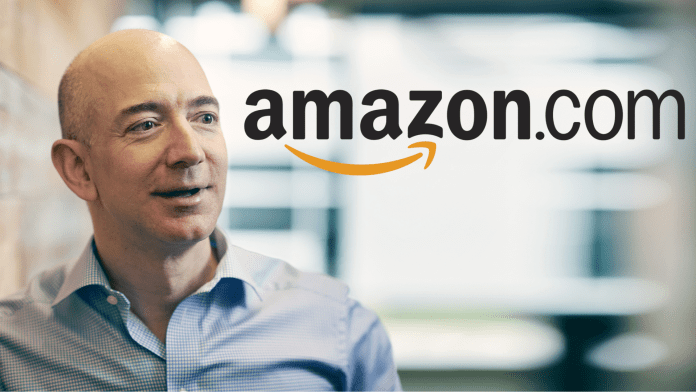
Jeff Bezos, the world’s third-richest person, founder, executive chairman, and former president and CEO of Amazon, is reportedly contemplating the sale of approximately $1 billion worth of the company’s shares, as per a CNBC report.
The report indicated that Bezos might consider selling a quantity ranging from 8 million to 10 million shares, equating to a sum exceeding $1 billion.
At present, neither Amazon nor representatives of Jeff Bezos have issued any statements regarding the aforementioned news report. Various media outlets have reported that Bezos, who stepped down as Amazon’s CEO in 2021, recently divested shares totaling $240 million, although this information remains unconfirmed.
Apart from his role at Amazon, Jeff Bezos is actively engaged in other enterprises, such as Blue Origin, an American aerospace company specializing in the production of rockets, spacecraft, and satellites. Blue Origin is currently exploring the potential of space tourism.
As per data from the Bloomberg Billionaires Index, Jeff Bezos possesses a cumulative net worth of $168 billion, ranking him as the third wealthiest individual globally, following Elon Musk and Bernard Arnault.
As of the current writing, the NASDAQ-listed share price of Amazon has experienced a 1.53% decline, settling at $143.9.
On Tuesday, Walmart, a key player in the retail industry, announced its plans to incorporate parcel stations into its online fulfillment centers. This strategic move aims to capitalize on the increasing demand for swift deliveries as the holiday shopping season approaches.
The move comes ahead of the pivotal Cyber Week shopping period, spanning Thanksgiving, Black Friday on Nov. 24, and Cyber Monday on Nov. 27. According to data from Adobe Analytics, online spending in the United States during this period is expected to reach $37.2 billion.
In a blog post, the company announced its goal to establish more than 40 parcel stations by the year’s end. Many of these stations are set to be operational in time for the holiday season, facilitating next-day deliveries for online shopping orders.
Walmart’s effort to accelerate deliveries reflects a substantial investment, mirroring e-commerce giant Amazon’s initiatives at its fulfillment centers. The aim is to offer faster and more cost-effective deliveries, encouraging increased frequency and larger orders from customers.
Nevertheless, consumers cautious about inflation and eager to make the most of their holiday budgets are hesitant about shelling out extra money for expedited shipping during this shopping season.
In a survey conducted by Adobe Analytics, 61% of respondents indicated a reluctance to pay for expedited shipping. Instead, they preferred the option of curbside pick-up, even for last-minute Christmas Eve purchases.
Walmart and Amazon both expressed caution regarding holiday spending this year, citing persistent inflation as a factor dampening consumer sentiment towards discretionary expenditures.
Kingdom of White, a distinguished premium menswear brand celebrated for its unwavering commitment to the profound philosophy of “For the Love of White,” proudly announces the inauguration of its latest retail outlet in Pune. This strategic expansion signifies a significant milestone in the brand’s journey, firmly establishing its presence in Pune, one of India’s culturally and commercially affluent cities. The decision to set roots in Pune reflects Kingdom of White’s recognition of the city’s distinctive amalgamation of tradition and modernity, perfectly aligning with the brand’s core values.
Located on the first floor of KOPA Mall in Koregaon Park, Pune, this store is positioned to offer a sophisticated shopping experience tailored for individuals who value the purity and sophistication of white apparel. More than just a retail space, the new outlet serves as a homage to Pune’s distinctive cultural tapestry. Kingdom of White proudly introduces its latest collection, a testament to the brand’s steadfast dedication to creating timeless, elegant, and premium-quality pieces in a color that surpasses transient fashion trends.
Entering Pune is more than a strategic business maneuver for Kingdom of White; it represents a deliberate stride towards solidifying the brand’s unique ethos within India’s retail scene. Situated in the heart of Koregaon Park, the store’s exclusive emphasis on white-themed menswear establishes it as a significant player in Pune’s dynamic retail landscape.
Vineet Haralalka, CEO said, “Kingdom of White looks forward to connecting with Pune’s diverse populace and becoming a part of its vibrant culture through our brand-new store. We believe that the brand’s timeless and elegant designs compliment the city’s unhurried pace beautifully. Our goal is to offer luxurious white apparel that the city will love.”
Mumbai-based ethnic wear brand Kalki has made its entry into Bengaluru with the opening of its first store in the city at Jayanagar, according to a press release on Tuesday. The 8,000 sq. ft. store was unveiled on November 20, with Bollywood actress Rakul Preet Singh doing the honors.
“Entering Bengaluru, where innovation thrives, we are thrilled to unveil our fourth flagship store. Nestled in the bustling heart of this dynamic city, we present a harmonious blend of ethnic grace and contemporary flair,” said Nishit Gupta, director of Kalki.
“With a reputation for curating remarkable fashion journeys, Kalki is poised to showcase the art of couture in the tech capital, inviting everyone to experience the essence of timeless fashion with us,” added Gupta.
The latest store will showcase the brand’s most exceptional collections to date, presenting the Zayra and Deme by Gabriella x Kalki ranges prominently.
Established in Mumbai in 2007, Kalki specializes in modern, ethnic Indian fashion and fusion-wear styles. Presently, the brand operates four stores across the country, located in Bengaluru, Mumbai, Delhi, and Ahmedabad.
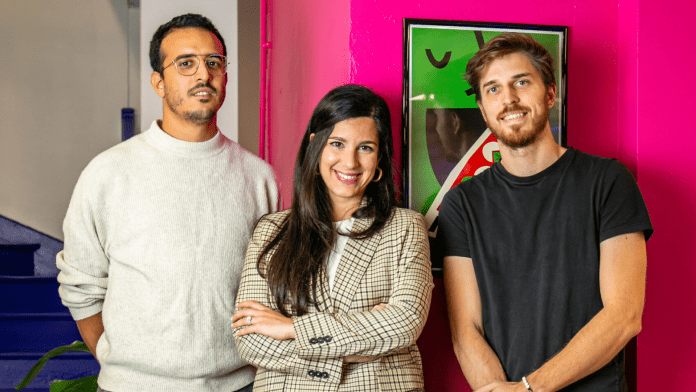
Malou co-founders Waad Toumi, Louiza Hacene and Victor Sage
Malou, a French restaurant technology firm, has secured over $10 million in a funding round to bolster its expansion efforts both domestically and internationally.
The funding round was spearheaded by investors, including henQ, Bleu Capital, Bertrand Jelensperger, Jim Texier, and several restaurant clients.
Utilizing the recent capital injection, Malou aims to accelerate its expansion within France, improve product functionality, and extend its reach internationally, targeting the Middle East, Europe, and the United States.
henQ partner Mick Mackaay said, “Malou’s team has been able to translate their deep understanding of marketing for restaurants into a ‘hyper-verticalised’ solution which optimises all aspects of a restaurant’s online presence automatically.
“This leads to more visitors without forcing owners to become marketing experts. The team has further impressed us with their ability to get this solution into the hands of many restaurants, a notoriously hard target group to sell to.”
Since 2021, Malou has been providing customized digital marketing solutions exclusively designed for the restaurant industry.
It consolidates the Google page, social media profiles, listings, and delivery platforms of restaurants into a centralized hub.
Leveraging artificial intelligence (AI) and automation, Malou analyzes and generates responses to customer reviews, creates social media posts, and ensures the maintenance of consistent information to elevate the online presence of restaurants.
Presently, the company has enlisted over 2,000 restaurants spanning 12 countries, encompassing independent establishments, food chains, renowned chefs, and high-profile restaurant groups.
Malou co-founder and CEO Louiza Hacene said, “Malou is dedicated to providing the tools to help restaurants connect with potential customers and maintain their relationships with their existing customers and this new funding will allow us to further improve our product, expand our team and increase our market reach, especially in the US.”
Zomato and Swiggy, the prominent players in the food delivery industry, are facing fresh tax challenges. According to reports, both companies have been served notices for a combined Goods and Services Tax (GST) amounting to INR 1,000 Cr. The tax authorities have revised their perspective, now considering the delivery charges collected by these platforms as part of their revenue.
Sources familiar with the situation have revealed that both food delivery platforms are required to remit INR 500 Cr each. This amount represents the 18% tax imposed on the entirety of the delivery fees they have amassed since the initiation of their food delivery services, as reported by the Economic Times.
It is noteworthy that in January 2022, the Central Government included ‘restaurant services’ and cloud kitchens within the scope of Section 9(5) of the CGST Act, 2017. Consequently, platforms such as Swiggy and Zomato became subject to a 5% Goods and Services Tax (GST) on the ‘restaurant services’ they provide.
Nevertheless, ambiguity persisted regarding whether the delivery services and the associated fees collected would also be subject to taxation.
“Ours is a platform that brings the rider and the customer close to each other. The delivery fee is not our revenue, instead, it goes directly to the rider. This is an interpretation of guidelines and we have a clear go-ahead from the tax consultants,” a senior executive at a food-delivery platform was quoted as saying by the publication.
In fact, the individual quoted further emphasized that the platform consistently asserts the status of riders as contractors, not employees. Nonetheless, the government contends that the delivery executives or riders, by collecting money on behalf of the platform, contribute to the company’s revenue.
An email sent to Swiggy and Zomato did not garner any response as of the article’s publication.
The collection of delivery fees by Swiggy and Zomato has consistently been a subject of intense debate, frequently giving rise to controversies from various viewpoints.
Swiggy introduced food delivery fees to its customers in 2016, two years after its inception. Subsequently, Zomato followed suit and initiated delivery charges as well.
Following the implementation of a standard delivery fee, Zomato introduced a loyalty program, now known as Zomato Gold. This program allows users to waive delivery fees by subscribing to a monthly membership, which also includes additional benefits.
Swiggy similarly introduced Swiggy One with a comparable concept.
As per the sources quoted by ET, Zomato and Swiggy charge an average of INR 40 to deliver an item to their customers. However, the disclosed information indicates that the actual cost borne by the food delivery platforms is INR 60, with the additional INR 20 being absorbed by the platforms, as reported.
It has been reported that Zomato and Swiggy collectively fulfill 1.8 million to 2 million orders daily nationwide. The introduction of the new GST is expected to impact their cash flow.
Nevertheless, it is crucial to acknowledge that both Zomato and Swiggy have recently implemented a platform fee, ranging from INR 2 to INR 5 per order. This fee is applicable to all customers, regardless of their subscription status.
In a recent research note, Kotak Institutional Equities stated that the introduction of the platform fee would enhance Zomato’s customer take rate and contribution margin.
In the latest development, Zomato achieved profitability in Q1 FY24 following several business restructurings and increased monetization efforts. Simultaneously, Swiggy, gearing up for its IPO, announced that it attained profitability in its food delivery business as of March 2023.
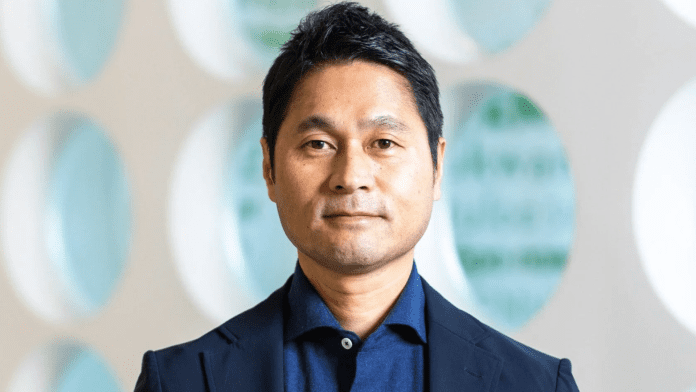
Daiya Foods, a Canadian plant-based food group under the ownership of Japan’s Otsuka Pharmaceuticals, has named Hajime Fujita as its new Chief Executive Officer.
Fujita will take over the position previously held by Michael Watt, who had served in that capacity since 2019.
Fujita brings over 17 years of expertise in business and financial planning within the food and beverage, pharmaceutical, and electronics sectors, with experience spanning the United States, Canada, Indonesia, China, and Japan.
In his most recent role, Fujita served as the Vice President of Business Planning at Otsuka Pharmaceuticals.
He has been assigned the responsibility of overseeing operations in North America and leading the ongoing international expansion of the brand.
Daiya’s product portfolio encompasses various plant-based offerings, such as cheese slices, dressings, spreads, yoghurts, and a selection of frozen dairy-free meals and desserts.
The company distributes its products through in-store sales and e-commerce partnerships, reaching 25,000 retailers in the United States and Canada. Additionally, it has a presence in Asia, Europe, and Latin America.
Fujita played a pivotal role in the pharmaceutical group’s acquisition of Daiya in 2017, as stated by the plant-based company.
In 2018, he transitioned to Daiya, assuming the position of Director for Financial Planning and Analysis, a role he held until 2021.
During that particular year, he joined the board of directors at the dairy-free group and assumed the role of Vice President at Otsuka’s American branch.
Commenting on his appointment, Fujita said, “There is enormous potential in the Daiya brand to push the highly competitive plant-based category to new heights, particularly through product innovation and bold marketing.”
While at Daiya, the company said Fujita had “a lead role” in establishing the company’s production site in Burnaby, British Columbia, which is said to be “the largest stand-alone plant-based food facility in North America.”
As per the official website of the government of British Columbia, Daiya’s production and office facility in Burnaby spans approximately 400,000 square feet.
Earlier this year, the company revealed plans to make a multi-million-dollar investment in fermentation technology, aiming to incorporate fermented plant-based cheeses into its product lineup. The fermentation site is slated to be established at the Burnaby facility, according to the group.
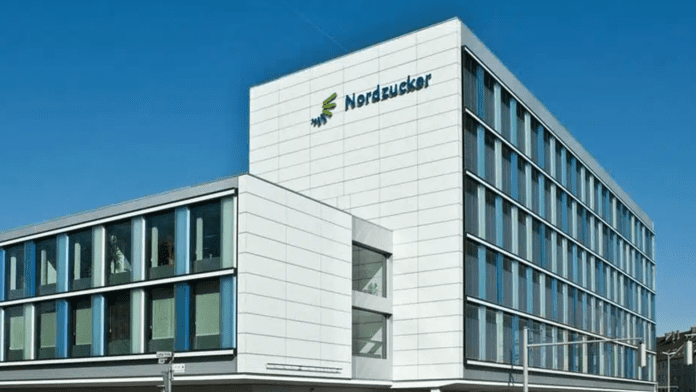
Nordzucker, a sugar manufacturer, is venturing into a fresh business domain by committing over €100 million to the development of plant-based proteins.
Based in Germany, Nordzucker has disclosed plans to inaugurate a new facility for its latest business venture at the Groß Munzel site in Lower Saxony by mid-2026.
The growth is anticipated to generate approximately 60 new positions, emphasizing the “increasingly vital role in the future” that plant-based nutrition is poised to assume, according to Nordzucker’s CEO, Lars Gorissen.
He commented, “We are supplementing our portfolio with a product that fits in well with our core competences and are thus consistently pursuing our growth strategy”.
The company will manufacture and market pea proteins intended for use as a protein source and texturizer in plant-based food. It will predominantly utilize yellow peas sourced from local cultivation, as highlighted by Gorissen, citing their ability to meet all criteria for cost-effective and sustainable production. Yellow peas are versatile in their growth across various regions and seamlessly integrate into the crop rotations of farms.
Nordzucker can maintain a year-round production of peas, thanks to their extended shelf life. These peas will be promoted as concentrates and dry texturates for subsequent utilization in the food and animal feed sectors.
The Chief Financial Officer of the company, Alexander Bott, indicated an anticipation of double-digit growth rates annually in the pea protein concentrates and texturates segment. As a result, the company is actively pursuing a rapid implementation strategy.
The commencement of construction for the new production facilities is slated for autumn 2024. Leveraging Nordzucker’s pre-existing infrastructure and transportation connections, the plant will enjoy favorable access to raw materials from numerous arable farming regions and convenient reach to sales markets.
The supervisory board of Nordzucker has supported the entry into the new business segment and expansion of production capacity at the Groß Munzel site.
Despite the increasing focus on health among Hong Kong consumers when it comes to food choices, the elevated prices of plant-based foods are dissuading them, as indicated in a report by Kantar.
High prices discourage 53% of consumers from opting for plant-based foods, while 32% express distaste for the taste and texture, and 23% find them challenging to locate in the market.
“To address these concerns, it is recommended that fast-food restaurants and Hong Kong-style cafes, known for their convenience and affordability, promote plant-based dishes,” Jeff Tsui, Managing Director of Kantar Profiles’ division, Greater China said.
According to Kantar’s research, there is a growing interest in vegan seafood, with 90% of consumers expressing a willingness to consider it in the future. However, despite this interest, only 10% have actually bought such products in the past few months.
Kantar reports that the heightened interest in vegan seafood is accentuated by recent anxieties regarding the safety of consuming seafood, stemming from Japan’s release of treated radioactive water. The report recommends that the industry leverage this trend by creating distinctive vegan seafood products and dishes. Additionally, in the government’s recent push to promote the night economy, street food assumes a pivotal role.
Nonetheless, the majority of street foods available in night markets tend to be calorie-dense and lacking in nutritional value, posing a risk of weight gain and health problems. Considering that prioritizing health is a key factor in opting for plant-based food, the industry might explore the option of providing healthy and low-calorie vegan alternatives during nighttime hours. The report indicates that 94% of consumers are open to trying vegan ready-made meals and snacks, including plant-based versions of popular street foods such as hamburgers, deep-fried spring rolls/prawn crackers, siu mai, fish balls, fried chicken nuggets, and more.
“Notably, Hong Kong’s dining culture is a blend of Chinese and Western influences, with cha chaan tengs or Hong Kong-style cafes having played a prominent role in shaping the food trend. Despite the rising popularity of cross-border consumption, there remains an opportunity for innovative plant-based dishes that incorporate local flavours to spearhead a fresh wave of healthy eating,” Tsui added.
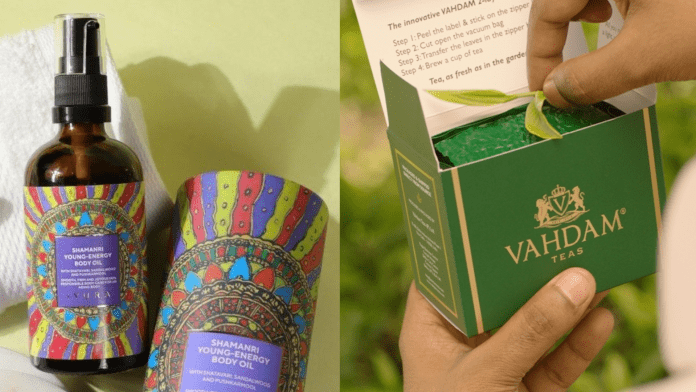
In July, Delhi-based tea brand Vahdam India expanded its presence to more than 4,000 CVS Health Stores in the United States. Founder Bala Sarda asserts that this retail expansion is a logical step forward, given Vahdam’s digital presence in the US since its establishment in 2015.
Mumbai-based Skillmatics, supported by PeakXV (formerly known as Sequoia Capital India), is experiencing a comparable journey. The company is marketing its educational games for children through online channels and in over 15,000 stores within US-based retail chains such as Walmart, Target, and Hobby Lobby.
The Ayurveda Experience, initially established in 2014 as a platform for Ayurveda content, has expanded its operations to include the sale of serums and cleansers in the US and Australia. Additionally, Skin Elements, specializing in men’s hygiene products, generates over 60 percent of its revenue through sales in the US.
In the past twenty years, India has earned recognition as a primary provider of backend technical support for numerous American multinational corporations. It has also established itself as one of the premier global providers of software services, with notable contributions from companies like Freshworks and Zoho, among other Software as a Service (SaaS) platforms.
However, Indian brands have not achieved the same level of dominance in the American consumer market as US brands have in India, spanning from food and clothing to personal care. Whether it’s Levi’s and McDonald’s or Cetaphil, every individual residing in India frequently engages with American brands.
“But it was only a matter of time before the trend of selling service from India to the world came for consumer brands,” says Vinay Singh, co-founder and partner, Fireside Ventures.
Certainly, brands such as Himalaya and Dabur have been active in international markets for several decades. Himalaya, for instance, established its initial international office in Houston, Texas, in 1996 and inaugurated its first brand store in the Cayman Islands in the same year.
“Indian papad and bhujiya companies have also been selling internationally through India food stores for many years now,” says Mohit Satyanand, an angel investor.
However, it took Himalaya nearly 66 years to expand internationally, whereas contemporary Indian consumer brands aspire to sell to American consumers right from the inception of their businesses.
Ayushi Gudwani, the founder of the clothing brand Fable Street, asserts that her company has been shipping products internationally since approximately the second month of its establishment in 2017.
This phenomenon can be attributed to technological advancements in the consumer shopping category and digital marketing, which can commence with an investment of approximately a thousand dollars.This phenomenon is a result of technological advancements in consumer shopping and digital marketing, which can start with an investment of approximately a thousand dollars.
“To start a brand, you need a place to sell, a distribution channel and someone who can take your products to the consumers,” says Dhvanil Sheth, founder, Skillmatics (Grasper Global Pvt Ltd).
E-commerce marketplaces and seller platforms like Etsy address these requirements. Channels such as social media platforms and one’s website can be utilized for brand-building and addressing advertising needs, while courier partners handle the delivery aspect.
In the past decade, many modern brands, including the recently listed Honasa Consumer Pvt Ltd, the parent company of Mamaearth, and Boat Lifestyle, began their journey on Amazon and other digital marketplaces.
But isn’t it still challenging to appeal to American consumers, who are not only enticed by domestic companies but also by firms from France, Britain, Israel, and China?
So far, Indian brands that have found success in the US have some form of differentiation.
“Any category or product, which is known to be India’s specialty, has a consumer base in international waters. India is known for silk, indigo, teas and handicraft, among many other things,” says Singh of Fireside Ventures. Just like South Korea is associated with electronics and Japan with matcha tea.
While The Ayurveda Experience introduces Ayurvedic products, Vahdam India’s offering revolves around locally sourced, high-quality tea from India.
However, companies could also venture into a category with potential for growth. Raghav Sood, the founder of Skin Elements, asserts that when he introduced his men’s intimate hygiene wash, the category did not exist on Amazon’s domestic and US websites.
Likewise, Jyoti Bharadwaj, the founder of TeaFit, identified a void in the unsweetened beverage segment in India and is currently exploring the international tea-drinking market in Singapore and New Zealand.
“There should be a real differentiation and not a perceived differentiation in your product,” explains Skillmatics’ Sheth. This means having a similar product as another brand and selling it for cheaper cost would not suffice in the American consumer market.
Pricing is a crucial aspect to take into account when selling in the US. Nevertheless, more than half a dozen founders of consumer brands assert that quality should always take precedence over everything else.
“People in the US are quality sensitive,” claims Sood. If the consumer is satisfied with the product, it can also be priced at a premium.
For example, Skillmatics’ game called Space Explorer is priced at INR 664 ($7.97) on Amazon India, whereas the same game is listed on the platform’s US website for $24.99 (INR 2,082). Similarly, Vahdam’s lemon ginger tea, comprising 50 tea bags, is available for INR 374 ($4.5) in India, while it is sold on the brand’s US website for $24.99 (INR 2,082) for 100 tea bags.
Production costs in India are lower, and the rupee is weaker in comparison to the dollar. As a result, the pricing may appear elevated when compared in rupees to the US dollar.
In India, the market is highly price-sensitive, with consumers being willing to switch brands even for a slight increase in pricing if the competitor’s product is slightly cheaper.
Furthermore, the products must align with American sensibilities. During the initial years, Sheth enlisted the services of US-based agencies to assist in developing the first few SKUs (stock keeping units). Vahdam India concurrently expanded its online distribution channel to gauge the reception of its tea among American consumers and determine what resonates.
Adopting a strategy of undercutting on price is not advisable solely based on the lower manufacturing costs in India.
“Your company is manufacturing in India. So, maybe your production cost is cheaper. But there is another company, which is manufacturing from China,” adds Sheth.
“When it comes to products, the US market is not driven by emotions but by facts,” says Sujata Biswas, co-founder of Suta, a sari brand.
Consumers prefer companies to be straightforward and highlight the functionality of the product rather than relying on sentimental slogans like ‘Desh ka namak,’ as seen in Tata Salt’s slogan. If Suta were to launch an advertising campaign in the US, it would focus on the convenience of wearing saris and the quality of the fabric, Biswas further explains.
The self-funded sari brand has established a presence in the US by selling through individual stockists. The company is actively seeking collaborations with US-based companies to navigate the nuances of the new market. Due to the unclear regulations, the founders are utilizing courier partners, including DHL Express, to facilitate the shipping of their products to the US.
“Courier partners get the paperwork sorted for sellers looking to export to the US or the UK,” says Muskaan Sancheti, founder, The State Plate. The four-year-old ethnic snack platform started selling products internationally two months ago and claims the largest number of orders as of now have come from the US.
To establish a reputable brand in the US, a company must comply with specific rules and regulations and obtain various licenses. For example, in the food and beverages category, acquiring a Food and Drug Administration (FDA) license is essential. Additionally, an import-export license is required, according to Chirag Gada, Vice President (New Businesses) at Think9 Consumer. Founded in 2022 by Ashni Biyani, Think9 Consumer Pvt Ltd has adopted a house of brands strategy, acquiring multiple brands to expand its presence beyond India.
According to at least four founders overseeing their brands in the US, it’s imperative for a company to have a few team members working locally. Presently, Vahdam India, Skillmatics, and The Ayurveda Experience have on-site teams in the US.
“If you are trying to build a brand for the American consumers, you would need to have a marketing team there to understand the market’s nuances,” says Sarda of Vahdam.
As an example, Vahdam might introduce a Halloween tea collection, considering it is a popular festival in the United States. The company could also release testimonials from well-known personalities like Ellen DeGeneres and Oprah Winfrey, who hold popularity in the country.
Similarly, Skillmatics advertises its products with American kids. “If you see our website and social media, no one would be able to say that this brand comes from India,” says Sheth. “We are currently doing Rs400 crore in revenue. At this stage, we have to expand in retail.”
Having a local logistics team can assist in determining the optimal retail route and deciding whether the products should be shipped by air or sea.
“A company’s cost can also inflate quickly if they do not get the air-to-sea export ratio right,” adds Gada.
According to Jatan Bawa, co-founder of Perfora, approximately one-tenth of the cost, when a product is sold for $100, is attributed to air shipping. The two-year-old oral care brand commenced selling in the US through Amazon international.
“It is too soon to talk about numbers. But we want to get better volumes so that we can start shipping by sea,” says Bawa.
The customer acquisition cost (CAC), a significant expense for digital-first brands in India, can also be a significant drain on cash in the US.
“The cash burn becomes even more expensive there because the spends are in dollars,” says Rishabh Chopra, founder, The Ayurveda Experience. Similarly, hiring a full-time US-based team is also an expensive affair as salaries are paid in dollars.
However, getting into brick-and-mortar stores is the only way to achieve the required volumes, potentially leading to improved unit economics.
“It is difficult to pinpoint how much a brand would earn and what volumes are required because every category has its own play. There is no formula or one-size-fits-all kind of approach,” says Think9’s Gada.
The sole logical progression for brand development in the US is to expand offline. A local operations team is essential for initiating offline expansion. Currently, Vahdam India has a presence in over 6,500 stores in the US, UK, Canada, and the UAE, and Skillmatics is available in over 15,000 stores in the US and the UK. However, Fireside Venture’s Singh asserts that these numbers are relatively small.
“Instead of thinking of store count, a brand should focus on figuring out how it can increase its presence across various retail chain formats,” he adds.
According to Singh, successfully expanding into retail stores means being present in over 4,000 stores, considering Walmart has a total of 4,623 stores in the US.
Over 50 percent of India’s retail market is unorganized, predominantly managed by kirana stores. In contrast, in the US, 90 percent of retail is overseen by organized chains such as Walmart, Target, Walgreens, Costco, and Macy’s.
Surviving in these retail stores presents another challenge.
“Getting into the US retail market is not easy. And once you do get in, your product needs to keep moving and you need to keep delivering growth in sales to the retail chain year after year. Or they will not stock your product anymore,” says Vahdam India’s Sarda.
India’s consumer expenditures have been on a consistent upward trajectory. In the quarter ending in June, consumer spending amounted to INR 23,126 billion, compared to INR 21,824 billion for the corresponding quarter in the previous financial year, as reported by the research firm Statista.
FableStreet, the fashion brand, has opted to concentrate on the Indian market, recognizing its potential for further growth. Similarly, for Skillmatics, nearly 15 percent of revenue is derived from India, making it the fastest-growing market for the children’s brand.
Nevertheless, founders of consumer brands still aspire to venture into international markets.
“As an Indian consumer brand founder, I can definitely say that we, as a country, have not yet produced a worldwide enduring brand like a Coke or a Red Bull,” says TeaFit’s Bharadwaj. But unlike two decades ago, Indian brands are also catering to and finding product acceptance from consumers outside of the India diaspora.
“If your brand is successful in the US, you have recognition in the world’s biggest consumer market,” says Gada. This is equivalent to having global recognition, he claims.
Establishing a brand in the US is not fundamentally distinct from the process in India. Shared factors, such as digital marketing, customer acquisition costs, and strategic retail expansion, apply to both countries. Notable distinctions arise in crafting a distinctive product with exceptional quality, efficiently managing the supply chain costs, grasping consumer nuances, and navigating retail distribution while sustaining a presence in those stores.
“To be able to build a made-in-India consumer brand and find acceptance the world over is a dream of every founder… it’s also a testament to the quality of products by the brand,” says Bharadwaj.
We use cookies to ensure that we give you the best experience on our website. If you continue to use this site we will assume that you are happy with it.