On Tuesday, Hindustan Media Ventures Ltd announced its intention to purchase a 3.54% stake in DSM Fresh Foods, the company behind the direct-to-consumer online meat delivery brand Zappfresh, for a sum of INR 11.99 crore.
On November 20, 2023, the company finalized an agreement to invest INR 11.99 crore by subscribing to 807 equity shares of DSM Fresh Foods Pvt Ltd. This investment corresponds to a 3.54% stake in the fully diluted share capital of the target entity, as disclosed in a regulatory filing by Hindustan Media Ventures Ltd (HMVL).
“Investment is being made into a growing company that is doing well in the space of online delivery of meat products (fresh and ready-to-cook/eat),” HMVL said.
It further mentioned that Zappfresh offers an extensive variety of meat products, including chicken, mutton, seafood, and specialty meats.
According to the filing, it reported a turnover of INR 56 28 crore in the fiscal year 2023.
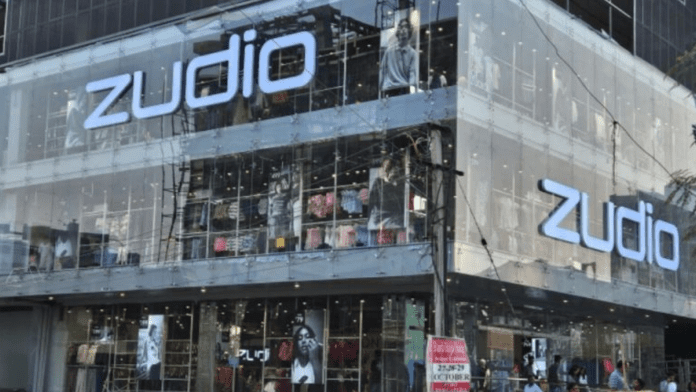
Zudio, the value retail fast fashion chain under the Tata Group, recently unveiled its largest store in North India. The expansive stand-alone store occupies 15,000 square feet of prime real estate and is conveniently located in Malviya Nagar, Jaipur, Rajasthan.
“Trent Ltd. to open one of the best selling mass driven brand Zudio at Malviya Nagar, Jaipur, Rajasthan on this Diwali2023. With more than 15,000 sq. ft. area this has been one of the biggest and largest store till now in Northern India including Rajasthan,” said Harshit Kochar, franchise consultant at Property Solution Realtors, in a LinkedIn post while sharing images of the new store.
The store offers a range of fashion, beauty, and lifestyle products for men, women, and children, with the majority of items priced below INR 1,000.
Zudio, a fashion brand owned by Trent Ltd, the retail arm of the Mumbai-based multinational conglomerate Tata Group, opened its first store in India in September 2016 at Commercial Street, Bengaluru. As of now, the company operates 422 stores across the country, according to its website.
In addition to Zudio, Tata Trent manages several other apparel brands, including Westside, Utsa, and Samoh. The company also oversees the beauty, accessories, and decor brand Misbu, as well as a hypermarket and supermarket store chain named Star.
Earlier this year, the apparel brand unveiled its plan to open about 130 stores in 2023, aiming to bring the total store count close to 500.
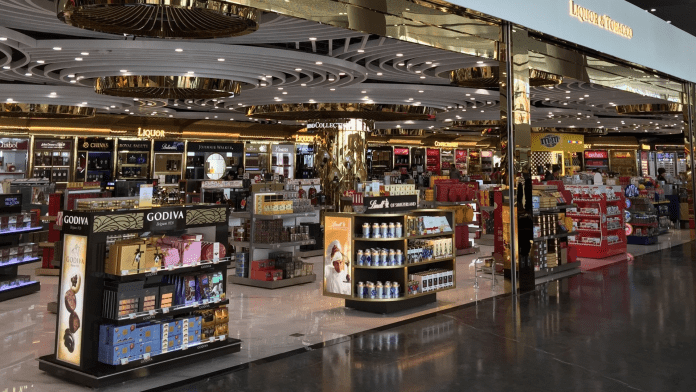
The Adani Group intends to submit a bid to establish duty-free shops at Macau International Airport, marking a move into the international arena for India’s largest airport operator.
In a filing with the stock exchange, Adani Enterprises, the leading company of the conglomerate headed by billionaire Gautam Adani, announced the successful incorporation of its wholly-owned subsidiary, MTRPL Macau Ltd, in Macau on November 20th.
The incorporation of the subsidiary is aimed at entering the duty-free industry.
“MML is incorporated for the purpose of bidding for duty-free liquor and tobacco shops at Macau International Airport,” it said.
In August, Macau International Airport (MFM) initiated an open tender for a sub-concession to provide duty-free liquor and tobacco services. The bidding period is set to conclude on November 29, as outlined in the tender document.
MFM is seeking an operator to manage duty-free liquor and tobacco services, with the option to include general merchandise retail services (excluding perfume and cosmetics) within the specified sub-concession areas at Macau International Airport.
The designed capacity of Macau International Airport enables it to accommodate up to 6 million passengers annually.
In recent years, Adani’s diversified group, spanning ports to edible oils, has expanded its portfolio to include emerging sectors such as data centers, cement, telecommunications, and media.
In 2019, the group entered the airport sector by securing operation and management contracts for six airports: Ahmedabad, Lucknow, Mangaluru, Jaipur, Guwahati, and Thiruvananthapuram.
Moreover, it possesses a 73% stake in Mumbai International Airport Ltd, which, in turn, holds a 74% stake in Navi Mumbai International Airport Ltd.
Adani Airport Holdings Ltd, a subsidiary of Adani Enterprises, stands as the largest airport infrastructure company in the country, overseeing eight airports in its management and development portfolio. As indicated on its website, it plays a pivotal role, accounting for 25% of passenger footfalls and 33% of India’s air cargo traffic.
Over the past few months, Adani Airport has acquired AirWorks, the country’s oldest air maintenance, repair, and operations (MRO) firm. Additionally, the company is exploring the possibility of acquiring AI Engineering Services (AIESL), the MRO unit of Air India.
The Solvent Extractors’ Association of India (SEA), representing the edible oil industry, has urged the government to raise the duty gap between crude and refined palm oil from 7.5 percent to 15 percent. This measure is proposed to restrain the influx of imported refined cooking oil and safeguard the interests of domestic players. In a communication addressed to its members, SEA President Ajay Jhunjhunwala highlighted the existing challenges faced by the Indian vegetable oil refining industry, encompassing both edible and non-edible oils.
“The Indian edible oil Industry, with a size of Rs 3 lakh crore (USD 35 billion), holds significant importance. Over the last 12 years, Indonesia and Malaysia have imposed higher export taxes on Crude Palm Oil (CPO) compared to refined Oil to protect their refining industry. This has made refined oil cheaper, rendering Indian capacity redundant and unutilized,” he said.
In India, the duty gap between Crude Palm Oil (CPO) and refined palm oil has been decreased to 7.5 percent, a move that, according to Jhunjhunwala, caters to the interests of the refining industry in Malaysia and Indonesia.
He emphasized that the reduced duty gap is adversely affecting the domestic vegetable oil refining sector.
“In light of this, SEA has once again appealed to the Government to raise the duty difference from 7.5 per cent to 15 per cent between crude and refined palm oil,” Jhunjhunwala said.
The President of SEA stated that India recorded an unprecedented import volume of 167.1 lakh tonnes of vegetable oils in the recently concluded oil year of 2022-23 (November-October), marking a historic peak in edible oil shipments at 164.7 lakh tonnes.
“The palm oil segment accounted for almost 60 per cent of imports. The landed prices of RBD palmolein lesser than CPO due to exporting countries imposing higher export tax-cess on raw material. This situation poses a significant threat to the profitability and viability of our refining industry, with many units now functioning solely as packers,” he said.
Jhunjhunwala expressed concern about this situation, deeming it undesirable due to its potential to elevate Non-Performing Assets (NPA) for supporting banks and shareholders. Additionally, he emphasized the risk of increased unemployment within the industry and the broader value chain.
The President also voiced apprehension regarding the prohibition of deoiled rice bran exports.
“The ban negatively affects solvent extraction, without serving its intended purpose of reducing dairy costs as deoiled ricebran price has least impact on milk and dairy prices,” he said.
Jhunjhunwala noted a significant decline in the price of deoiled rice bran, plummeting from INR 18,000 per tonne in August 2023 to nearly INR 13,500 per tonne.
“SEA strongly urges the concerned ministries not to extend the ban on DORB exports beyond end November 2023. We will also be meeting the concerned Ministers and senior officials in the coming days, hoping for a positive outcome,” he told the members of the associations.
Suma Venkatesh, Exec. Vice-President, IHCL with KM Abdul Latheef, MD, Hotel Pearl Dunes
IHCL, the leading hospitality company, has announced the signing of a new Vivanta hotel in Aluva.
Suma Venkatesh, Executive Vice President – Real Estate & Development, IHCL, said, “IHCL’s brand Vivanta debuts in Kochi with this signing. This will be our seventh hotel in the city – a testament to the city’s importance. We are delighted to further strengthen our association with KM Abdul Latheef with a second hotel.”
The 95-key hotel is strategically positioned in Aluva, offering convenient access to both the airport and leisure destinations by car. It will boast amenities such as an all-day diner and bar, a 4,500 sq ft banquet space, a swimming pool, a gym, and a spa.
KM Abdul Latheef, Managing Director, Hotel Pearl Dunes Pvt Ltd.said, “We are happy to work once again with IHCL, India’s hospitality leaders. This hotel will offer guests a flavor of the stylish.”
Kochi serves as the financial, commercial, and cultural hub of Kerala, holding the top position in both international and domestic tourist arrivals in the state. Additionally, it serves as the gateway to various popular leisure destinations.
This new hotel brings IHCL’s portfolio to a total of 18 establishments, encompassing Taj, SeleQtions, Vivanta, and Ginger brands throughout Kerala, with an additional 5 under development.
ITC Ltd, a prominent conglomerate, announced plans to increase its hospitality presence in West Bengal from five to nine hotels, according to Chairman and MD Sanjiv Puri on Tuesday. Additionally, Puri revealed that the company intends to establish its 18th manufacturing unit in the state soon, sharing this information during the seventh edition of the Bengal Global Business Summit (BGBS).
He refrained from providing details on the plans announced by ITC on Tuesday.
“We have 17 manufacturing units (in Bengal)… one more will be commissioned in the near future. We have five hospitality assets in the state, and over time, ITC is going to take this to nine,” Puri said.
The cigarettes-to-soap major has invested around INR 7,000 crore in West Bengal in the last few years, Puri said.
He also noted a remarkable and multi-faceted transformation in the state under the guidance of Chief Minister Mamata Banerjee.
“Capital goes to places where it can flourish, thrive and multiply… Because our investments were bearing fruit in West Bengal, that is why the journey has continued,” Puri added.
On Tuesday, the Supreme Court issued a warning to Patanjali Ayurved, a company co-founded by yoga guru Ramdev that specializes in herbal products. The caution pertained to the company’s advertising practices, emphasizing the need to refrain from making “false” and “misleading” claims regarding the efficacy of its medicines in treating various diseases.
“All such false and misleading advertisements of Patanjali Ayurved have to stop immediately. The court will take any such infraction very seriously…,” a bench comprising justices Ahsanuddin Amanullah and Prashant Kumar Mishra orally observed while hearing a plea of the Indian Medical Association (IMA).
On August 23, 2022, the highest court served notices to the Union health ministry, the Ministry of Ayush, and Patanjali Ayurved Ltd. This action was taken in response to a plea by the Indian Medical Association (IMA), which accused Ramdev of conducting a smear campaign against the vaccination drive and modern medicines.
In the concise court session, the bench directed Patanjali Ayurved to refrain from disseminating misleading claims and advertisements targeting modern systems of medicine.
The bench mentioned that it could contemplate levying a fine of INR 1 crore on each product in case any false claim is asserted, suggesting it can cure a specific ailment.
The Supreme Court urged the counsel representing the Centre to devise a solution to the problem of deceptive medical advertisements, particularly those making claims about medicines providing a complete cure for specific diseases.
The bench is scheduled to address the IMA’s plea during the hearing on February 5 of the upcoming year.
The Supreme Court, when issuing notices on the petition, strongly reprimanded Ramdev for his criticism of allopathy and allopathic practitioners. The court emphasized the necessity of restraining him from abusing doctors and other treatment systems.
“What happened to this Guru Swami Ramdev Baba?… Ultimately we respect him as he popularised yoga. We all go for this. But, he should not criticise the other system. What is the guarantee that Ayurveda whatever system he is following will work? You see the type of advertisements accusing all the doctors as if they are killers or something. Huge advertisements (have been given),” the bench headed by the then CJI N V Ramana, since retired, had said.
The IMA pointed to numerous advertisements that purportedly portrayed allopathy and doctors negatively. The association stated that companies involved in the production of ayurvedic medicines have also made “disparaging” statements with the intent of misleading the general public.
According to the IMA’s counsel, these advertisements assert that medical practitioners are succumbing to illness despite using modern medicines.
The IMA asserted that there was a coordinated attempt to undermine vaccination efforts, including the COVID-19 vaccination drive, and to discourage the use of allopathic medicines in the country.
The Competition Commission of India (CCI) has granted approval to Tata-backed Titan for its proposal to acquire an additional 27.18% stake in the jewellery startup CaratLane.
“CCI approves acquisition of additional shareholding in CaratLane by Titan. The proposed combination relates to the acquisition by Titan of 27.18% share capital of CaratLane, on a fully diluted basis, from Mithun Padam Sacheti, Siddhartha Padam Sacheti, and Padamchand Sacheti,” the competition watchdog said in a statement.
This paves the way for the deal that was announced earlier this year. In August, Titan disclosed the signing of a share purchase agreement, outlining its intention to acquire an additional shareholding in CaratLane for a total of INR 4,621 Cr.
The transaction valued the startup at an impressive INR 17,000 Cr ($2 Bn). At that time, Titan announced its intent to acquire 91.9 Lakh equity shares from a ‘founder’ of CaratLane, with the financing of the deal to be accomplished through a blend of cash balances, internal accruals, and debt.
In 2016, Titan initially acquired a controlling stake in the jewellery brand at a valuation close to $69 million.
Now that the deal has been approved, employees are anticipating a significant windfall, with expectations of receiving between INR 340 Cr to INR 380 Cr through an ESOP buyback by Titan, which is set to secure a 100% stake in the startup.
Established in 2008 by Sacheti and Srinivasa Gopalan, CaratLane is an omnichannel startup specializing in the production and sale of jewellery items in both India and the US. In the financial year 2022-23 (FY23), it recorded a total income of INR 2,177 Cr, marking a 71% increase from INR 1,267 Cr in FY22.
After the deal was disclosed, CaratLane underwent a significant leadership transition, with co-founder and Chief Operating Officer (COO) Avnish Anand being promoted to the position of CEO of the ecommerce platform in August. This change occurred shortly after co-founder Sacheti, Anand’s former boss, departed from CaratLane.
Nevertheless, the deal has encountered its share of difficulties. Immediately after the transaction was announced, the startup contested a prior show-cause notice (SCN) issued by the Enforcement Directorate (ED). The notice alleged that between 2011 and 2014, CaratLane breached FEMA rules by accepting foreign direct investment (FDI).
The show-cause notice (SCN), delivered in March 2022, revolved around the contention that foreign direct investment (FDI) was restricted in multi-brand retail companies until 2011. Nevertheless, it is reported that Tiger Global invested in the startup in 2011 and continued to participate in subsequent funding rounds over the following three years.
Following that, foreign direct investment (FDI) was permitted for multi-brand retail companies in September 2012. However, it came with the stipulation that such investments required prior approval from the former Foreign Investment Promotion Board (FIPB) and were subject to certain conditions.
As the case remains unresolved before an adjudicating authority, CaratLane has reportedly enlisted legal assistance from a former Chief Justice of India (CJI). According to reports, the former CJI has expressed the opinion that CaratLane is not in violation of FEMA, asserting that the regulation is applicable to the B2B sector and not retail trade.
In the meantime, CaratLane is poised to join the list of startups under almost complete control of the Tata Group. The group’s portfolio also includes startups such as 1mg and BigBasket.
Herby Angel, the Ayurvedic and organic personal care brand, has successfully raised $2.5 million in its first round of funding from JCBL Group. The company has disclosed that this investment will play a crucial role in accelerating growth across distribution, technology, portfolio expansion, research, and marketing initiatives.
Launched earlier this year, the brand is now available for purchase online and in offline retail outlets across 13 states and at over 1,300 retail points of sale, as stated in a media release. The company has expressed its goal to further expand its reach to more than 2,000 retail stores by March next year.
Sherry Jairath, chief experience officer of Herby Angel said, “With the new investments, we are better positioned to drive innovation and expand the product portfolio.”
According to a statement from JCBL, this investment represents its first foray into the ayurvedic and organic health and wellness products space. The decision is motivated by the notable increase in demand for ayurvedic and organic products within this category.
According to a study by market researcher TechSci Research, the organic personal care products market in India reached a valuation of US$ 570 million in the financial year 2020-21. The market is projected to experience a compound annual growth rate of 15%, aiming to reach US$ 1,239.04 million by the financial year 2026.
The increasing demand for sustainable products and a growing emphasis on ethical consumption among younger consumers are being leveraged by marketers, leading to a surge in demand.
In the ever-evolving landscape of business, where consumer preferences and market dynamics are in constant flux, adopting a customer-centric strategy has become imperative for sustained success. At the heart of this approach lies the ability to identify and understand your core target market. This strategic process not only sharpens your focus but also enables you to tailor products and services to meet the specific needs of your most valuable customers. Here are the essential steps businesses can take to pinpoint their core target market and foster a customer-centric culture.
1. Conduct Thorough Market Research:
The foundation of any successful customer-centric strategy is built on a solid understanding of the market. Conducting comprehensive market research is the first crucial step. This involves gathering data on industry trends, competitor activities, and, most importantly, the needs and preferences of your potential customers.
Leveraging both quantitative and qualitative research methods, such as surveys, focus groups, and data analytics, can provide a nuanced understanding of the market landscape. This data-driven approach enables businesses to identify patterns, anticipate market shifts, and, ultimately, tailor their strategies to align with customer expectations.
2. Define Your Ideal Customer Profile:
Once armed with insightful market research, businesses should move on to defining their ideal customer profile. This involves creating a detailed and comprehensive description of the characteristics that define their most valuable customers. Consider demographic factors, such as age, gender, income, and location, as well as psychographic elements like interests, values, and lifestyle.
By crafting a clear and vivid picture of the ideal customer, businesses can more effectively target their marketing efforts and allocate resources where they will yield the highest returns. This process goes beyond broad categorizations and aims to create a persona that resonates with the core values and aspirations of the target audience.
3. Segment Your Market:
Market segmentation is a critical strategy in customer-centricity. Not all customers are the same, and understanding the unique needs of different segments allows businesses to tailor their offerings more precisely. Segmentation can be based on various factors, including demographics, behaviors, and psychographics.
By dividing the market into distinct segments, businesses can develop targeted marketing campaigns and deliver personalized experiences that resonate with specific customer groups. This not only enhances customer satisfaction but also increases the likelihood of customer loyalty and advocacy.
4. Analyze Customer Feedback:
In the age of social media and online reviews, customer feedback has become an invaluable source of information for businesses. Actively soliciting and analyzing customer feedback provides real-time insights into customer satisfaction, pain points, and expectations. This feedback loop allows businesses to adapt and refine their strategies based on the evolving needs of their customers.
Additionally, sentiment analysis tools can help businesses extract meaningful information from customer reviews and social media mentions. By understanding the sentiment behind customer feedback, businesses can identify areas for improvement and take proactive measures to enhance the customer experience.
5. Monitor Customer Behavior:
Observing and analyzing customer behavior is another essential step in identifying your core target market. With the increasing digitization of business processes, tracking customer interactions across online platforms has become more accessible than ever. From website analytics to purchase history, businesses can gather valuable data on customer behavior.
This data-driven approach enables businesses to identify patterns, such as popular products, preferred communication channels, and the customer journey. By understanding how customers interact with their brand, businesses can optimize their marketing strategies and tailor their offerings to align with customer preferences.
6. Embrace Technology and Data Analytics:
In the digital age, leveraging technology and data analytics is not just an option; it’s a necessity. Advanced analytics tools can provide businesses with actionable insights, enabling them to make informed decisions and refine their customer-centric strategies.
Machine learning algorithms can analyze vast amounts of data to uncover hidden patterns and predict future trends. By harnessing the power of artificial intelligence, businesses can automate processes, personalize customer interactions, and stay ahead of the competition.
7. Foster a Customer-Centric Culture:
Identifying your core target market is not a one-time exercise; it’s an ongoing process that requires a cultural shift within the organization. Fostering a customer-centric culture involves aligning the entire organization, from leadership to frontline employees, with a shared commitment to putting the customer first.
This cultural shift involves regular training and communication to ensure that every team member understands the importance of customer satisfaction. By embedding a customer-centric mindset into the organizational DNA, businesses can create lasting relationships with their core target market and adapt quickly to changing market dynamics.
Final Thoughts:
Adopting a customer-centric strategy begins with the meticulous identification of your core target market. By conducting thorough market research, defining an ideal customer profile, segmenting the market, analyzing customer feedback and behavior, embracing technology, and fostering a customer-centric culture, businesses can position themselves for sustained success in an ever-changing business landscape. The ability to adapt and evolve in response to customer needs is not just a strategy; it’s a commitment to building enduring relationships and delivering value that stands the test of time.
We use cookies to ensure that we give you the best experience on our website. If you continue to use this site we will assume that you are happy with it.