Food delivery platform Zomato has modified its loyalty program, Gold, by discontinuing the ‘on-time guarantee’ benefits for memberships purchased or renewed from November 25, 2023.
According to sources, existing Gold members will still receive the benefits until renewal.
The Gurugram-based company implemented the ‘on-time guarantee’ feature in 2019, exclusively for members of the Gold program at selected restaurants. In instances where the food failed to be delivered within the specified time, the company offered customers a discount coupon for their next order. This service was later extended to include Gold members when the program underwent a relaunch in January 2023.
Swiggy, Zomato’s primary competitor in the food-delivery sector, offers its own subscription service called Swiggy One. This service extends benefits across various domains, including food delivery, quick commerce, and parcel deliveries, offering perks such as discounts and free delivery.
Queries directed to Zomato yielded no response.
Zomato prices the Gold membership at INR 999 for three months but extends discounted rates of INR 149 or INR 99 for the same duration to users. Similarly, Swiggy prices its One loyalty program at INR 1,299 for three months but also offers it at a discounted rate.
In October last year, Swiggy introduced a more economical version of its loyalty program named Swiggy One Lite. It was launched at an introductory price of INR 99 for three months, featuring limited benefits compared to the main program.
Over the course of its relaunch in January last year, the Gold membership has evolved into a crucial component of Zomato’s service offerings, playing a substantial role in boosting the company’s sales.
Nevertheless, it needed some adjustments to minimize its impact on the overall profitability of the company, as reported earlier.
Around 40% of the gross order value in the quarter ending in September 2023 was generated by users with Gold subscriptions. During this period, the membership base for Gold witnessed a notable increase, rising from 2 million in the previous quarter to 3.8 million.
Despite the growth, the expansion of the Gold subscription program impacted margins, as stated in the company’s quarterly letter to shareholders. This was attributed to factors like the minimal delivery charges paid by Gold members.
The company has been scaling down some of its earlier initiatives, like Zomato Legends, which initially involved intercity food delivery. In specific cities, the program has been reduced, and the company has shifted its focus towards providing a delivery service for pre-stocked food items within a 60-minute timeframe.
Restaurant Brands Asia, the company managing the Burger King restaurant chain, recorded a net loss of INR 39.93 crore in the fourth quarter of the fiscal year 2024. This marks an improvement compared to the INR 55.89 crore loss reported in the same quarter of the preceding financial year.
The company disclosed in a regulatory filing that its total revenue amounted to INR 604.22 crore, reflecting a 14.7 percent increase from INR 526.33 crore in the corresponding quarter of the previous year. The company attributed its Q3 FY24 same-store sales growth (SSSG) of 2.6 percent to an increase in traffic.
In the quarter, Earnings Before Interest, Tax, Depreciation, and Amortization (EBIDTA) reached INR 68 crore, a significant increase from INR 30 crore. The EBIDTA margin also rose to 11.3 percent, compared to the 5.6 percent recorded in the same period last year.
Additionally, the Board of Directors has approved the appointment of Mr. Yash Gupta as an additional non-executive and independent director on the Company’s Board, effective from January 29.
In the third quarter of FY24, the company unveiled 38 new restaurants and closed one, with the majority of openings taking place in the latter half of December 2023. As of December 31, 2023, there were 441 operational restaurants, and at present, the count stands at 452 operational restaurants. Additionally, as of December 31, 2023, the company had 334 BK Café locations.
Moreover, the company has introduced “King’s Journey” digital experience restaurants, incorporating Self-Ordering Kiosks, App Ordering, and Table Service. Currently, there are 68 King’s restaurants, with a targeted 100 percent rollout by FY25.
On January 29, the closing share price of Restaurant Brands Asia on BSE experienced a 2.85 percent decline, reaching INR 114.20.
With the increasing affluence of wider strata in Indian society, retailers are channeling significant investments into tier-2 cities. This is driven by the rapid growth of infrastructure and an expanding working population, resulting in the emergence of new consumption hubs.
According to a study by CBRE, renowned global brands like Zara, H&M, Adidas, Nike, Starbucks, Uniqlo, and Marks & Spencer, alongside local brands, are seizing opportunities in cities such as Jaipur, Chandigarh, Patna, Lucknow, Kochi, Goa, and Coimbatore. As of September 2023, Jaipur, Lucknow, and Chandigarh each boasted retail stock ranging between 3-7 million square feet.
This trend reflects the shift towards untapped markets and recognizes the rising economic significance of tier-2 cities.
“Most of these non-metros are established trade and business hubs, and are also witnessing a healthy traction in commercial office space take-up… retail supply has matured, moving away from vanilla stores on high streets to the entry of investment-grade developers who are setting up quality retail spaces, which serve as both entertainment and shopping destinations,” analysts at CBRE said.
CaratLane, a Tata Group-owned company, is placing significant emphasis on tier-2 markets. Over the past year, it has doubled its store presence in locations like Lucknow and Indore.
“To give a sense, CaratLane started FY23 with 22 stores in tier-2 cities and now has 39 stores in these cities. There are a host of other smaller towns like Kochi, Guwahati, Ludhiana, and Mysore where we have seen strong demand and have increased our store footprint in the last one year,” chief operating officer Atul Sinha said.
The rise and growing acceptance of e-commerce have impacted the retail scenario in smaller cities. The increased use of digital platforms in these areas during the Covid-19 pandemic has empowered consumers to explore and try out new brands. Retailers are keen on leveraging opportunities arising from these developments. About 50 percent of online shoppers in urban India originated from tier-2 and 3 cities, a figure projected to climb to 60 percent by 2030.
“These e-commerce dynamics point towards the presence of a high aspiration consumer base, thereby propelling the influx of quality retail supply,” analysts at CBRE added.
Manyavar has recently opened a 17,000-square-foot store in Ranchi and is set to launch another 20,000-square-foot store in Gorakhpur. This highlights the growing attraction of retailers towards smaller cities.
“Tier-2 and -3 markets are becoming what we call mini metros. As more and more small medium businesses grow in these markets, that gives a lot of opportunities for people to grow in the corporate ladder, giving them higher levels of income, and leading to higher discretionary spending,” said chief revenue officer Vedant Modi, Manyavar.
Modi mentioned that approximately 40-50 percent of the company’s current business originates from tier-2 and 3 cities.
The Organic World, a grocery store specializing in organic and natural products, has enhanced its lineup with a notable expansion in its vegan product category. Introducing four innovative offerings—peanut curd, butter, ice cream, and protein powder—this strategic move aligns seamlessly with TOW’s dedication to providing diverse, personalized, and responsible choices for its customers. Addressing both daily and monthly consumption needs, the initiative reflects the company’s commitment to staying attuned to changing consumer trends, particularly amidst the rising popularity of Veganuary.
Over the past 3-4 months, TOW has undergone a significant expansion in its vegan range, transforming it from 10-20 products to an extensive collection of over 200 diverse offerings. From essential items like non-dairy milk and tofu to indulgent treats such as ice cream, bread, chocolates, and even beauty products, TOW seeks to comprehensively cater to the discerning preferences of its customers. This expansion is a direct response to the escalating consumer demand for vegan options, aligning with the dynamic landscape of the vegan market.
As per a study conducted by IMARC, the vegan food market in India achieved a value of $1,324 million in 2022, and it is anticipated to reach $2,463 million by 2028, indicating a compound annual growth rate (CAGR) of 10.9 percent from 2023 to 2028. Recognizing this promising market, The Organic World aims to capture the potential by aiming for 10 percent of its overall sales to come from the expanding vegan category.
Gaurav Manchanda, Founder and MD, The Organic World said, “The decision to broaden TOW’s vegan product line was inspired by a growing interest among our customers. Initially, we expanded with fundamental products like tofu and chocolates and later delved into extending our range to include more diverse offerings such as ice cream, bread, and beauty products. The rising popularity of the growing vegan market has led to the need for trusted vegan brands which has significantly influenced and reinforced our commitment to this expansion so that we can serve our customers at every point in this journey.”
“What sets TOW’s vegan products apart is our unwavering commitment to being free of harmful chemicals, in line with our Not in Our Aisle List. Our vegan products adhere to higher standards than industry-established ones, ensuring a truly responsible retail experience. Furthermore, our commitment to cruelty-free practices, prominently highlighted in our beauty products, resonates with the ethical choices of our environmentally conscious customers,” he added.
With a clear strategic focus on becoming the leading force in the vegan market, TOW aims to leverage the growing demand for plant-based products and seamlessly integrate them into its core offerings. Beyond mere sales objectives, the brand envisions itself as a holistic destination for all things vegan, accommodating the diverse preferences and values of its customers. Navigating the rising tide of veganism comprehensively, TOW aspires to ensure that customers find everything they need while staying true to their ethical and dietary choices.
In a development that may be seen as a setback for over 50 leading companies in India, the Delhi HC on Monday upheld the constitutional validity of several provisions within the Goods and Services Tax (GST) framework related to anti-profiteering.
More than 50 major companies are challenging the Anti-profiteering mechanism introduced by the government under GST. This mechanism is designed to ensure that companies pass on the benefits of lower tax rates to consumers. Hindustan Unilever, Abbott, Johnson & Johnson, Philips, Patanjali, Samsonite, Jubilant Foods, and Nestle are among the companies that have taken the indirect-tax department to court over the anti-profiteering provisions under GST.
The HC said that it is a consumer welfare measure in the public interest and does not violate any constitutional provisions, emphasizing that the levy of interest is within the rule-making power of the central government.
“We have upheld the constitutional validity of section 171 (of CGST Act) as well as rules 122, 124, 126, 127, 129, 133 and 134 of the (CGST) rules of 2017,” the court said.
The court said that in accordance with section 171, any tax foregone must be transferred as a proportional reduction in price, emphasizing that this provision serves as a consumer welfare measure introduced in the public interest.
The rules in question address the establishment and functioning of the Anti-Profiteering Authority.
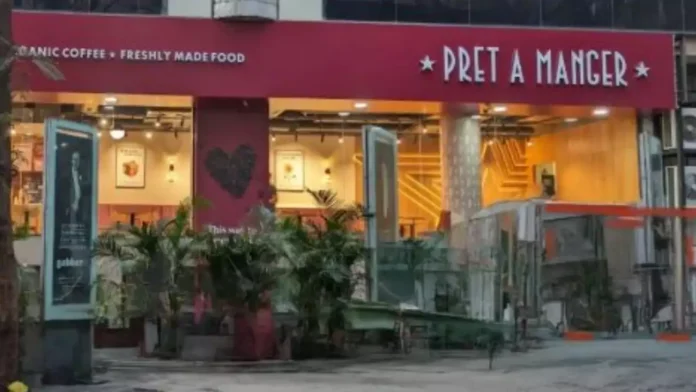
Pret A Manger, the UK-based freshly made food and organic coffee chain, has opened its 10th outlet in Mumbai, as announced by a company official on social media. Positioned at Gabbana House on 15th Road, Khar West, this new location is the fifth Pret A Manger store in the city.
“The star lands in Mumbai’s coolest neighborhood. Pret opened at 15th Road, Gabbana House, Khar West,” said Sumeet Yadav, chief executive officer of Hamleys and Pret India at Reliance Brands Ltd. in a LinkedIn post.
The chain presents a diverse array of offerings, including sandwiches, baguettes, salads, and soups. Alongside these, patrons can enjoy a variety of organic coffee, tea, shakes, and smoothies.
Pret A Manger has collaborated with Reliance Brands, the retail arm of Reliance Industries, to establish its presence in India.
In April, Reliance opened its first Pret A Manger cafe located at Maker Maxity in Mumbai. Spanning 2,567 square feet, the establishment faithfully replicated the distinctive ambiance of the brand’s renowned London shops. Later that month, Pret A Manger opened its second outlet in Mumbai at Phoenix Palladium Mall.
Today, the chain operates stores in several cities, including Mumbai, Gurgaon, and Delhi.
Established in 2007, Reliance Brands operates as a subsidiary of Reliance Retail Ventures Ltd. Its primary objective is to introduce and cultivate global brands within the luxury to premium segments across the fashion and lifestyle industry.
The company has formed long-term exclusive partnerships across various sectors with global and Indian brands, including Ritu Kumar, Bottega Veneta, Tiffany & Co., Valentino, Versace, Rahul Mishra, Armani, Balenciaga, Boss, and Zegna, among others.
Bhupendra Agarwal & Kumar Vaibhav, Co-Founders, Moms Home
Moms Home, a Jaipur-based sustainability-focused startup, has recently secured INR 5 Crores in a Pre-Series A funding round led by Mumbai-based VC firm Mistry Ventures. Founded in 2018 by IIM alumni Kumar Vaibhav and Bhupendra Agarwal, Moms Home Pvt Ltd is riding the wave of conscious consumerism in India. The startup operates two direct-to-consumer (D2C) brands – Moms Home, specializing in sustainable baby essentials, and Footprints, a sustainable apparel and accessories brand. Both brands pride themselves on offering products crafted from eco-friendly materials like cotton, bamboo, and muslin.
So far, Moms Home and Footprints have reached out to more than 2 million consumers across 300 cities in India, as reported by Vaibhav, a seasoned professional with over 14 years of experience in the sustainable FMCG and e-commerce sector. The products from these two brands are not only available on their official websites but also on leading marketplaces such as Amazon, Flipkart, Firstcry, Myntra, Nykaa, Amala Earth, and Hopscotch.
The parent company also plans to enhance its physical presence in brick-and-mortar locations.
Vaibhav is confident that the recent injection of funds will not only empower Moms Home to enhance the presence of its brands through improved distribution and new product introductions but also enable the startup to explore untapped opportunities in sustainable categories.
Talking about the partnership with Mistry Ventures, Vaibhav said, “Moms Home team is truly excited in partnering with Mistry Ventures in our journey to expand and build a strong mother and baby brand that is trustworthy, safe and affordable.”
The startup asserts that it fulfills over 30,000 orders each month and presently boasts an Annual Run Rate (ARR) of INR 20 Crores.
Moms Home aims to cover all the needs of a newborn, offering a diverse range of essentials such as clothing, bedding, nursing supplies, bathing essentials, feeding items, diapers, and more. The brand’s products are crafted from certified organic cotton and other environmentally friendly fibers. According to co-founder Agarwal, the brand currently sells more than 50,000 baby essentials each month.
“Moms Home has established a special connection with new parents who start their parental journey with us. Over the last five years, we have earned the trust of more than 5 Lakh mothers who have chosen our products for their little ones,” he added.
On the other hand, Footprint offers a range of accessories meticulously crafted from a combination of 100% organic cotton and bamboo, as highlighted by Vaibhav. The brand boasts an extensive selection of over 300 Stock Keeping Units (SKUs), spanning diverse sock categories such as business formal, kids, sports, and daily wear. In its ongoing pursuit of innovation, Footprint aims to enhance its product line by introducing personalized and designer socks.
Vaibhav stated that since its establishment, Footprints has successfully distributed more than 2 million pairs of socks through various channels, including retail partnerships, the brand’s official website, and other online platforms.
Talking about the brands, he added, “Sustainability lies at the core of both the brands. It is integrated into every aspect of the production cycle — right from selecting sustainable yarns to dyes and packaging.”
Agarwal emphasized the success of the startup by pointing out the revenue generated from its current customer base.
“Today, 30% of our revenue comes from existing customers and this is proof of our potential. We have been able to build a healthy, robust and sticky customer base,” he added.
Discussing the investment in Moms Home Pvt Ltd, Firoz Mistry of Mistry Ventures expressed, “Moms Home’s sustainable products are designed to serve the unmet needs of new parents who value safe and organic products for their new born. Its strength lies in its ability to scale with positive unit metrics and create a star product in each category. Both brands have several bestseller products across the leading online marketplaces. With a strong and experienced leadership team in place, we are excited to partner with them in their next phase of growth.”
Established in 2018 by Cyrus Mistry, Mistry Ventures is currently headed by Ashish Iyer, serving as the firm’s managing director. The venture capital firm actively supports startups at different stages of their development, contributing to their growth and scaling endeavors. Mistry Ventures has strategically invested in a range of sectors including Direct-to-Consumer (D2C), Software as a Service (SaaS), Agritech, and more.
As per Maximise Market Research, the market value of baby care products in India amounted to $8.29 billion in the year 2020. Projections indicate that the total revenue is anticipated to surge to nearly $24.27 billion by 2027, exhibiting a compound annual growth rate (CAGR) of 14.35%.
The report underscores that today’s parents have a preference for organic products for their infants. This choice is influenced by a heightened awareness of the importance of safe ingredients in baby products. Interestingly, this trend extends beyond urban parents, with individuals in smaller cities also displaying a similar inclination. Furthermore, there is a noticeable shift in consumer attention from price-based consumption to value-based consumption.
This offers a significant opportunity for startups such as Moms Home, SuperBottoms, Mothercare, and Purecloth to broaden their product ranges and address the demands of parents in search of organic and eco-friendly alternatives.
ITC Limited, a prominent player in the Fast-Moving Consumer Goods (FMCG) sector, is harnessing the power of Artificial Intelligence (AI) to enhance its product range by gaining valuable insights into emerging consumer trends. Additionally, the company is strategically integrating technology across its entire product value chain.
Under pilot runs for its dairy business, the company is leveraging AI tools to assess the health of cows and employing technologies to verify the authenticity of products through the provision of detailed product report cards to consumers.
Sanjay Singal, Chief Operating Officer for the Dairy & Beverages cluster of ITC’s Foods, said, “Our consumer data hub is powered by AI engines to segment consumers at scale and understand their needs. ITC’s Sixth Sense which is our sensing engine has a team that listens to social conversations and gathers insights for all our brands. They are using AI tools to generate contextual communication for our brands. There are applications that we are yet to deploy that can provide the farmer with the health of the cows using simple AI tools. The farmer can take a picture of the cow, and scan it and it will provide information on any disease or malnutrition of the cow. We are yet to roll out the application. The company is utilizing digital technologies starting from the source.”
The company delivering fresh milk and dairy products under the Aashirvaad Svasti brand employs thorough digital checks to assess the quality of the milk and detect any potential adulteration.
“Our fresh dairy business is in East India including Bihar, West Bengal and Jharkhand. We do not have organised farms for milk and work with nearly 13,000 farmers from whom we buy milk twice daily. We use technology wherein when the farmer comes to the village procurement centre to sell milk, we use equipment to test the basic features of the milk. We track the transport of the milk live by maintaining a temperature of four degrees throughout the supply chain from the village to the factory. To address the concern of adulteration, we have provided codes and a WhatsApp number on the milk packets wherein once entered the consumer can get the report card on the quality of the milk,” he said.
The Kolkata-based FMCG maker, recognized for its Aashirvaad brand of organic Ghee, is introducing a virtual tour of the farms. This initiative enables consumers to witness the manufacturing process of their products through an engaging online experience.
“We introduced Aashirvaad Svasti’s Organic Ghee and were clear that organic is the way to go. We went across the country to get authentic organic butter and organic milk to make ghee. The consumers are provided with a QR code on the product which when scanned will give a virtual tour of the organic farm. The customers can see the health of the cows, and what the cows are fed. There are no fertilizers used in growing the fodder for the cows and no chemicals used in the cleaning process. The entire process can be seen through the virtual farms,” added Sanjay Singal.
Additionally, the company presents an organic selection of Aashirvaad atta, giving consumers the choice to verify the specific farm from which the batch of wheat was sourced and subsequently transformed into atta.
TURMS, the smart clothing brand, has recently secured INR 1.2 crore from Azhar Iqubal, the CEO of Inshorts, marking a significant milestone in the latest episode of Shark Tank India Season 3. This strategic investment not only underscores the brand’s remarkable success on the entrepreneurial stage but also played a pivotal role in steering the company towards an impressive turnaround, leading to a successful exit.
Renowned for its innovative line of apparel, TURMS specializes in creating clothing with cutting-edge features, including anti-stain, anti-bacterial, anti-fungal, and anti-odor properties. Highlighting their commitment to revolutionizing the fashion industry, the brand’s standout products include 30-day no-wash jeans, resilient white cotton shirts, AC cool tech T-shirts, and seven-day no-smell socks.
Adding a touch of celebrity allure to its promotion, TURMS boasts Indian cricketer MS Dhoni as one of its patrons.
During the pitch on Shark Tank India, the Sharks were captivated by TURMS’ focus on practical innovation. Ashneer Grover, in particular, praised the brand’s “USP proposition,” highlighting the combination of impressive technology and the passionate pitch delivered by TURMS’ Founder, Surender Pal.
Surender Pal, who took over TURMS in 2022, shared the brand’s remarkable turnaround story with the Sharks. Under his leadership, TURMS has experienced significant growth, with the sale of four hundred thousand apparel units to date.
Aman Gupta, BOAT’s Co-Founder and Chief Marketing Officer, led tests on TURMS’ products, with Anupam Mittal, CEO of Shaadi.com, stating, “You will close the markets of the soap industries.” Azhar Iqubal, CEO of Inshorts, expressed his interest, saying, “Your products are very interesting.”
The acquisition of TURMS took place during the challenging Covid period, with Surender revealing details of the deal, including INR 1.5 crores in cash and a 12.5 percent equity stake in the new company.
Seeking a funding of INR 1.2 crore for a two percent equity stake, Surender received a counteroffer from Anupam Mittal, proposing an investment of INR 1.2 crore for a four percent equity stake and a two percent royalty. The deal was ultimately sealed at INR 1.2 crores for a four percent equity stake between Azhar Iqubal and Surender Pal.
Reflecting on the experience in Shark Tank India 3, Surender Pal said, “The sharks were genuinely impressed by the remarkable turnaround we have achieved since acquiring the company, and its current success speaks volumes.”
He added, “Shark Tank India, as a platform, not only provided a spotlight for our innovative garments but also established crucial connections with our target audience.”
Noel Wallace, the Chairman and CEO of Colgate-Palmolive, is bullish and excited about India, anticipating a demand recovery in rural markets.
“In India, we will see the continued return to the rural segment, the vitality of the rural segment, which will bode well for volume as we move forward. We have some strong innovation plans for India, around our core businesses. We are excited to see that obviously be delivered in the market and executed,” Wallace told investors during its earnings call.
“So India, very strong results across the board, 9% organic, continued strong pricing and sequentially better volume in that market. I would likewise say we remain very excited and bullish on the market in India.”
In the realm of oral care net sales, India stands as the third-largest market for this global company. With a firm grip on half of the oral care market in the country, Colgate’s products are distributed to over 1.7 million stores nationwide. Over the past decade, the toothpaste category in India has witnessed a remarkable growth, adding 430 million users—an equivalent number to the combined populations of the United States and Germany.
Nevertheless, oral care consumption in India remains considerably low. Even in comparison to other developing markets like the Philippines and Brazil, India lags behind, with these countries respectively consuming 1.8 times and 3.1 times more oral care products despite their smaller populations.
“The team is doing an exceptional job finding added distribution points to make sure we continue to capitalise on investment strategy. So bullish on India, good results and sequentially right where we would like to see their business today and setting us up for ultimately another strong year in 2024,” Wallace added.
During the quarter ending December, Colgate achieved an 8.1% sales growth, indicating a low single-digit volume increase. Notably, the toothpaste category exhibited double-digit growth, with a low single-digit volume expansion, signifying a reversal from the previous year’s decline in volumes.
Analysts noted that the company continues to work on innovation-led growth. For instance, it relaunched its flagship brand Colgate dental cream with a better formulation, doubled down on the Colgate Strong Teeth relaunch by expanding reach and availability, and also relaunched Colgate Max Fresh with a new proprietary technology.
“Colgate aims to improve performance by increasing the consumption frequency through core products, driving premiumisation with science-based innovation, expanding distribution of personal care portfolio and improving product assortment with the help of technology,” said a report by Antique Stock Broking.
We use cookies to ensure that we give you the best experience on our website. If you continue to use this site we will assume that you are happy with it.