Starbucks, the renowned US-based coffee chain, has marked its entry into Himachal Pradesh with the unveiling of a new drive-through store, as shared by a company official on social media. Positioned along the Shimla-Dharampur highway, this latest addition showcases Starbucks’ commitment to expanding its reach across diverse regions.
“Excited to announce that Starbucks has finally set its foot in the state of Himachal Pradesh with our latest and one of the most anticipated and iconic Drive thru store in the entire region,” expressed Rahul Chaudhary, Business Development – North at Starbucks India, in a LinkedIn post.
Operating 24/7, the new store marks the seventh drive-through location for the coffeehouse chain in India. The first drive-through Starbucks outlet in the country was launched in 2020 at Zirakpur, Punjab, situated on the Ambala Chandigarh Expressway.
“Our new Starbucks drive-thru is not just about convenience; it’s a testament to the spirit of progress and innovation that defines our nation. As we honor our rich history and look toward a bright future, this store represents a fusion of modernity and tradition,” wrote Shantanu Karekar, senior manager at Tata Starbucks on social media.
In India, the Starbucks-branded coffee chain is run through a 50:50 joint venture between Seattle-based Starbucks Coffee Co. and Tata Consumer Products Ltd. Since 2012, Tata Starbucks has successfully launched more than 390 stores spanning 54 cities in India, employing approximately 4,300 individuals.
The company aims to operate 1,000 stores in India by 2028, with a target of opening one new store every three days.
Heritage Foods posted a net profit of INR 27 crore in the third quarter ended December 31, 2023, marking an impressive year-on-year growth of 96.4%. Throughout the quarter, the company recorded a revenue of INR 941.10 crore, demonstrating substantial growth of 19.7%.
Brahmani Nara, Executive Director of Heritage Foods, said, “We continued our strong growth momentum in topline and bottom line in the third quarter of financial year 2023-24, driven by strong volume growth in our valued-added products (VAP) segment. This segment contributed 70 per cent of the incremental volumes.”
“We have been making strong inroads in expanding its distribution network and launching new products which have seen good consumer acceptance,” she added.
During the quarter, there was a 14.29% growth in the company’s average daily milk procurement level, reaching 1.63 million litres per day (MLPD) compared to the same quarter last year.
“The average milk procurement price decreased by INR 0.57 a litre, or 1.31 per cent over the comparable quarter last year, to INR 43.09/ a litre,” she said in a statement on Monday.
“While sales (milk) volumes went up by 2.32 per cent year-on-year to 0.025 MLPD, the average milk selling prices increased by INR 2.71 a litre, showing a growth of 5.18 per cent year-on-year, to INR 55 a litre,” she said.
Meanwhile, the board of directors of the company re-appointed N. Bhuvaneshwari, wife of former Andhra Pradesh Chief Minister N. Chandrababu Naidu, as a whole-time director designated as Vice-Chairperson and Managing Director of the company for a further term of five years.
N. Brahmani, the daughter-in-law of Naidu, has been appointed as whole-time Director designated as Executive Director for a five-year tenure.
Wholesale prices of tur dal have increased by 5% in the last month, despite the arrival of new crops and ongoing imports from Myanmar. According to industry representatives, the supply chain is being affected by reduced acreage and a second consecutive year of decreased production.
In 2023, retail prices for tur/arhar had peaked at INR 200/kg but experienced a decline of 5-10% in December. This reduction was attributed to price control measures, including the facilitation of yellow peas imports, stricter government monitoring of stock limits, and the sale of subsidized Bharat chana dal.
However, this also resulted in a significant drop in prices for whole unprocessed tur beans, coinciding with the commencement of the kharif crop harvest. Many farmers opted to withhold their produce, leading to a decreased availability of tur in the market.
“The availability of tur in the market had reduced when prices hit the bottom as farmers opted to wait for prices to recover,” said Latur-based dal miller Nitin Kalantry. “After dipping to a low of INR 85/kg from the high of INR 120/kg, tur prices are again on the recovery path.”
According to the Indian Pulses and Grains Association (IPGA), tur prices have seen a consecutive four-week surge, driven by the escalating purchases of whole tur by dal millers for processing into dals.
India has been fulfilling its domestic demand for tur dal through imports from Myanmar and Africa. Nevertheless, challenges from the local government in Africa have impeded supplies, while those from Myanmar are reported to be lower than anticipated, according to industry insiders.
Diversified entity ITC Ltd on Monday reported a 6.51% surge in its consolidated net profit for the December 2023 quarter, totaling INR 5,400.51 crore. This notable increase was driven by the resilient performance of the FMCG vertical. According to a regulatory filing by ITC, the company had recorded a consolidated net profit of INR 5,070.09 crore in the October-December period a year ago.
The gross revenue from sales increased by 2.3%, reaching INR 19,337.84 crore during the quarter under review. This marked a rise from INR 18,901.76 crore in the same quarter a year earlier.
In the December quarter, ITC’s revenue from operations reached INR 19,484.50 crore, reflecting a 2.43% increase from INR 19,020.65 crore recorded a year earlier.
“Amidst a challenging macro-economic and operating environment, as stated above, and high base effect in some of its operating segments, the company delivered a resilient performance during the quarter,” said ITC in an earning statement.
The total expenses of the Kolkata-headquartered firm rose by 5.33%, reaching INR 13,453.73 crore.
In the quarter, ITC’s revenue from the ‘total FMCG’ segment, encompassing the cigarettes business as well, increased by 4.47%, reaching INR 13,513.43 crore, compared to INR 12,934.67 crore in Q3 FY23.
The revenue generated from the cigarette business experienced a modest increase of 2.59%, reaching INR 8,295.18 crore in the October-December quarter. In the same quarter of the previous fiscal year, it stood at INR 8,085.72 crore.
Its differentiated variants and premium segment continue to perform well during the quarter.
“The cigarettes business witnessed consolidation on a high base after a period of sustained growth momentum,” said ITC.
ITC’s revenue from the FMCG-others segment was also up 7.61 per cent at INR 5,218.25 crore in Q3 FY24 against INR 4,848.95 crore in the year-ago period.
“The FMCG Businesses delivered resilient performance amidst a slowdown in consumer demand; staples, dairy, beverages, fragrances, personal wash, homecare, agarbattis, classmate notebooks and pens drive growth,” it said.
Competitive intensity remained high in certain categories such as biscuits, snacks, noodles, and popular soaps, including from local and regional players.
ITC’s FMCG-others segment consists of branded packaged foods like staples, snacks, meals, dairy and beverages, confections, apparel, education and stationery products, personal care products, safety matches and incense sticks.
The revenue from ITC’s Hotels segment surged 18 per cent to INR 872.46 crore.
It witnessed strong growth in ARRs (average room rents) and occupancies across properties driven by (packages), MICE (Meetings, Incentives, Conferences and Exhibitions) segments and marquee events like the ICC Cricket World Cup, it added.
“Segment EBITDA margin expanded by 470 bps year-on-year to 36.2 per cent driven mainly by higher RevPAR (revenue per available room) operating leverage and strategic cost management initiatives,” it noted.
ITC’s agribusiness was marginally down to INR 3,273.23 crore in the December quarter of FY24 as it was impacted by restrictions on wheat and rice exports. It was INR 3,305.21 crore in the year-ago quarter.
“The operating environment remained challenging due to various policy interventions of the Government of India to ensure food security and control inflation which limited business opportunities for the agribusiness,” it said.
ITC’s revenue from the ‘paperboards, paper and packaging’ segment fell 9.74 per cent to INR 2,080.91 crore on account of a subdued consumer demand and a relatively muted festive season.
The export markets in the segment remain impacted by low-priced Chinese supplies.
“Margins were impacted largely by a sharp drop in realisations and unprecedented surge in domestic wood costs due to increased demand from competing industries,” it said.
Revenue from other segments, including its information technology services, branded residences etc, rose 10.86 per cent to INR 950.04 crore against INR 856.91 crore in Q3 FY22.
Meanwhile, in a separate filing, ITC informed that its board in a meeting held on Monday declared an interim dividend of INR 6.25 per ordinary share of INR 1 each for the financial year ending on March 31, 2024.
The board also recommended the approval of the appointment of Atul Singh as a Non-Executive Director and Pushpa Subrahmanyam as an Independent Director, both for a period of five years with effect from April 2, 2024.
Shares of ITC on Monday settled at INR 450 apiece on the BSE, down 1.20 per cent from the previous close.
Meesho, an e-commerce company backed by SoftBank, plans to develop a financial services platform and expand its grocery delivery business in the upcoming financial year. This strategic move comes after a dedicated year of efforts to reduce significant losses, aligning with the broader trend in the online commerce industry, where companies are prioritizing profitability amidst increasing competition.
Walmart-owned Flipkart is making significant strides in the fintech arena with the establishment of its own venture, Super.Money, led by senior executive Prakash Sikaria. The company has committed an investment of $15-20 million to propel this new initiative.
“Flipkart is already testing a full-stack buy now-pay later and personal loan platform,” said a person aware of the matter. “It’s scaled quite fast and more lending products will be added this year.”
Meesho aims to initiate a credit marketplace, sourcing borrowers on behalf of its lending partners, which include both banks and non-banking financial companies (NBFCs). The company is set to earn a commission for every disbursal in this arrangement.
“They (Meesho) are experimenting with a lending platform, but there is a serious focus on this internally. It’s still early days,” said a person aware of plans.
According to a spokesperson from Meesho, ventures into financial services and grocery represent just a couple of the diverse initiatives the company is undertaking. The spokesperson highlighted that the startup has identified challenges related to accessing credit lines.
“Initiatives like providing sellers quicker access to payments are driving both financial inclusion and the growth of small businesses,” the spokesperson said.
After downsizing in 2022, the e-commerce company is now contemplating a re-launch of its services, with plans to reintroduce the service in one or two cities starting in April, as mentioned by the sources.
“They may expand, depending on how it goes,” one person said.
A senior fintech executive said, “For ecommerce players with a large user base, offering financial services is understandable, but there are large investments required since it is a regulated space. Also, the quality of the book is important, given the kind of users it caters to.”
Bigger rival Amazon India offers consumer credit and payment services through Amazon Pay. In parallel, the group’s e-commerce arm, Tata Neu, has ventured into lending to consumers, partnering with multiple financiers, including Tata Capital.
The executive emphasized that Meesho is not merely interested in functioning as a lead generator for its lending partners. Instead, the company is focused on developing its own credit underwriting models, decision-making systems, fraud detection, and other related capabilities. The objective is to establish a comprehensive suite of credit products.
The startup’s recent endeavors are perceived as connected to its aspirations of achieving a higher growth rate in the upcoming fiscal year. According to several informed individuals, the company is actively searching for a senior executive to spearhead the lending function. Simultaneously, it is working towards establishing an in-house credit risk and data science team.
Initially concentrating on handling merchant loans, Meesho aims to extend its lending services to consumers, particularly in non-metro areas. The platform predominantly features products with an average selling price below INR 500.
“When you are pitching to large banks and NBFCs for business partnership, you need to give them the right customers and also manage the book so credit losses do not shoot up,” said one person quoted above.
In 2022, Meesho underwent a substantial reduction in its grocery operations as part of an internal reset. Formerly operating the business under the name Farmiso, it rebranded it as Meesho Superstore and seamlessly integrated it into the main app. During this period, the company terminated at least 150 on-contract employees, along with off-roll staff.
“The burn is likely to go up in the low-margin grocery business, with expansion. The extent of aggressiveness will determine the scale,” said a person aware of current plans.
At a Flipkart townhall last week, the group chief executive, Kalyan Krishnamurthy, shared with employees that the company’s grocery business witnessed a substantial 50% year-on-year growth in 2023.
In 2023, the Bengaluru-based company terminated 15% of its workforce across 251 roles, citing the optimization for a “leaner organizational structure to attain sustained profitability.”
In FY23, Meesho achieved a 48% reduction in losses to INR 1,675 crore, while experiencing a remarkable 77% growth in operating revenue, reaching INR 5,735 crore. For the April-September 2023 period, the company reported a 37% year-on-year increase in operating revenue, totaling INR 3,521 crore, coupled with a substantial 90% reduction in losses, amounting to INR 141 crore.
In August last year, Meesho announced its first profits for the month of July. Subsequently, in a media statement released in December, the company affirmed the profitability of the September quarter, although specific numerical details were not disclosed.
On January 25, it was reported that Krishnamurthy informed Flipkart employees that the company was close to achieving profitability.
Tamil Nadu State Marketing Corporation (TASMAC) has announced a price hike in various liquor categories, effective February 1. The state-run liquor giant will increase prices by INR 10 to INR 80, impacting popular choices like beer, brandy, whiskey, and rum.
TASMAC‘s decision means an added expense of INR 10 for a 650 ml beer bottle. For ‘ordinary’ and ‘medium’ range brandy, whiskey, and rum, a 180 ml (quarter) will face a INR 10 increase, while the ‘premium’ range will see a hike of INR 20. The updated schedule suggests that larger quantities of alcoholic beverages will also incur higher prices.
The price surge is attributed to higher sales tax and excise duty, marking the first increase in Indian Made Foreign Liquor (IMFL) prices in two years. This move comes as TASMAC introduces exclusive sales of imported liquor brands at elite outlets.
The ordinary liquor range, constituting 40% of TASMAC sales, will be priced at 130 per quarter bottle, 260 per half bottle, and 520 per full bottle. Meanwhile, the medium range varies between 160 and 640. TASMAC offers a diverse selection, with 43 brands in the ordinary category, 49 in the medium range, and 128 premium brands, alongside 35 beer brands and 13 wine brands.
Consumers in Tamil Nadu will feel the pinch of these price hikes, affecting their budgets and preferences. The decision to raise prices across the board emphasizes TASMAC’s strategy to generate revenue, particularly from higher-end products. This move highlights the potential challenges for consumers in managing their expenses and adjusting their purchasing choices in response to the elevated prices.
TASMAC’s announcement of a liquor price hike in Tamil Nadu from February 1 will impact a wide range of alcoholic beverages. The move, driven by increased sales tax and excise duty, aims to bolster revenue and introduces exclusive sales for imported liquor at select outlets. As consumers brace themselves for the impending changes, the state’s liquor landscape undergoes a significant shift.
UK-based dairy-free yogurt producer The Coconut Collaborative has recently finalized a Series B funding round, securing a noteworthy £1.5 million investment.
The company says it will use the investment – which comes from existing shareholders, including Ground Force Capital – to support its transition from its initial ’start-up’ phase to a scaling phase, using “existing momentum to accelerate growth in the coming years”.
Founded in 2013 by James Averdieck, the creator of Gü desserts, The Coconut Collab has experienced significant growth since its establishment. Averdieck attributes this success in part to the increasing demand from consumers for sustainable dairy-free options.
Averdieck explained, “We take a unique approach within the category: our Coconut Yog is luxuriously thick and creamy, with a sweetness originating solely from the natural sugars found within the coconut and fruits we use. We know that one of the things consumers love about our products is the health benefits, such as how low in sugar they are, combined with the taste and texture.”
“Unlike most of our competitors, we do not add water to our products. Our yogs are made of over 95% coconut, so we do not need to use heavy stabilisers. No nasties and no shortcuts create the creamy and indulgent texture we are known for.”
Sazerac, in collaboration with the renowned American rapper Quavious Keyate Marshall, widely known as Quavo, is set to introduce their latest venture – a new brand of white cognac named White X Cognac.
According to the company, White X is slated to be the first and only white cognac available in the US.
White X offers rich flavours with a “fresh and light nose”, a hint of sweetness and intense notes of white and yellow peaches, vanilla and dried rose petals. The palate features gentle white stone fruit, creamy vanilla and a subtle hint of tannin without bitterness. The finish is smooth and “extremely long for a younger cognac,” said Sazerac.
Global cognac brand director at Sazerac, Jess Scheerhorn, said, “White X challenges the traditional cognac category with its fresh and light taste – it’s a total departure from many pre-conceived perceptions about cognac overall. Quavo’s electrifying style and willingness to break down barriers makes him the perfect fit to help us debut this brand.”
White X is set to launch in early next month, marking its debut with takeovers in Atlanta, US, and various other cities. Exclusive sales will kick off at BlockBar, followed by availability at local retail stores. The product is slated for nationwide release across all markets, reaching consumers nationwide by June 2024.
In a strategic maneuver that highlights its dedication to promoting health and wellness, BlendJet has formally entered the dynamic Indian retail market. The US-based brand is poised to introduce its highly sought-after BlendJet 2 portable blender to customers throughout all states and Union Territories. This marks a significant achievement in the company’s journey as one of the most rapidly expanding multinational direct-to-consumer (D2C) brands.
BlendJet’s entry into the Indian market is propelled by the brand’s confidence in the strength of its supply chain and a focused consumer outreach strategy. With an eye on capitalizing on the health-conscious values deeply ingrained in India’s cultural fabric, the brand anticipates a significant threefold surge in sales volume within the upcoming six months.
Ryan Pamplin, CEO and Co-Founder, BlendJet said, “From Yoga to Ayurveda, India has always been a country that values health and wellness. BlendJet’s commitment to enhancing daily nutrition and lifestyle choices aligns perfectly with this ethos. We are incredibly proud to extend our presence to India and are excited to contribute to their dynamic D2C growth. We expect a revenue surge of nearly $1.5 million with our entry into the Indian market.”
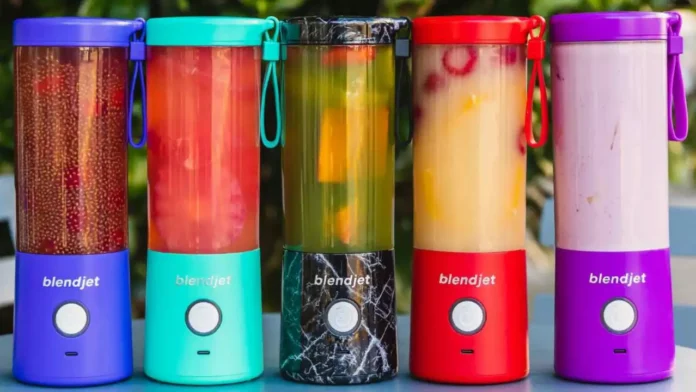
BlendJet 2, the flagship product of this venture, empowers users to effortlessly craft a variety of nutritious options from any corner of the world. Whether perched on a mountaintop or stationed at a kitchen countertop, the compact yet powerful BlendJet 2 simplifies the creation of smoothies, protein shakes, baby food, frozen lattes, milkshakes, salad dressings, chutneys, soups, and more. Featuring a convenient USB-C port for seamless charging and a sought-after self-cleaning capability, the BlendJet 2 is meticulously designed to cater to the demands of on-the-go lifestyles.
Available exclusively in India on BlendJet.in, these portable blenders provide consumers with a wide array of vibrant colors and patterns. Options include Black, Glacier, Royal Blue, Mint, Lavender, Purple, Red, Black Marble, Geode, and Urban Camo. Noteworthy is BlendJet’s upcoming introduction of an exclusive Disney range in the Indian market, bringing an additional layer of excitement to the unique blend of health and innovation it offers to the retail landscape.
Marico Limited, a leading name in the Fast-Moving Consumer Goods (FMCG) industry, reported a robust financial performance on Monday. The company posted a notable 15.9% increase in its consolidated net profit, reaching INR 386 crore for the third quarter (Q3) ending on December 31, 2023. This marks a significant uptick from the INR 333 crore net profit recorded during the same period in the preceding fiscal year, as indicated in the company’s filing with the Bombay Stock Exchange (BSE).
Nevertheless, the revenue from operations experienced a decline of 1.94%, falling to INR 2,422 crore in the current quarter from INR 2,470 crore reported a year ago.
As per the regulatory filing, the total expenses for the company in the December quarter amounted to INR 1,970 crore, reflecting a decrease of 4.7%.
Saugata Gupta, MD & CEO of Marico Limited, said, “We have delivered a competitive performance in a volatile operating environment. In the domestic business, we witnessed signs of improvement in the core portfolios and expect the steps we have initiated to fundamentally improve business prospects of the GT channel to aid the same.”
Gupta further said, “The portfolio diversification through Foods and Premium Personal Care continues to progress well. The international business has been resilient amid transient headwinds and we anticipate a healthy growth momentum ahead. We are on course to deliver our highest ever operating margin this year and expect to maintain a resilient margin profile in the quarters ahead.”
In the Q3 FY24 results update, Marico highlighted the continued robust growth of its foods segment, registering an 18% YoY increase in value. Saffola Oats maintained its leadership position, and Honey and Soya Chunks exhibited growth as anticipated. Positive traction was observed in Peanut Butter, Mayo, and Munchiez. Furthermore, True Elements and Plix are making notable strides in their respective categories.
Parachute Rigids achieved a 3% increase in volume growth, with the transition from loose to branded products gaining momentum. The 4-year Compound Annual Growth Rate (CAGR) for volume growth stood at 3%.
The company said, “During the quarter, the franchise gained ~40 bps in market share on MAT basis. We expect volume growth to continue its gradually improving trajectory as input costs exhibit an upward bias amid stable consumer pricing.”
Furthermore, it was mentioned that value-added hair oils saw a 3% growth in value, even in the face of slower rural demand. The 4-year Compound Annual Growth Rate (CAGR) for its value growth stood at 6%.
Marico’s Saffola edible oils recorded a mid-single-digit decline in volume, mainly due to a high base and prolonged sluggishness in trade sentiment, resulting in lower year-on-year inventory levels, despite healthy offtakes. The revenue decline was in the mid-twenties on a year-on-year basis, reflecting pricing corrections over the past 12 months that were yet to be factored into the base.
During the quarter, the premium personal care category sustained a strong double-digit growth trajectory. Its digital-first portfolio has clocked an exit ARR of over INR 400 crore in Q3. The composite share of foods and premium personal care was at 20 per cent of domestic revenues in Q3.
In the Q3 results update, Marico’s international business achieved mid-single digit constant currency growth, with a temporary slowdown in Bangladesh due to transient macroeconomic challenges. However, other regions demonstrated resilient performance during the same period.
We use cookies to ensure that we give you the best experience on our website. If you continue to use this site we will assume that you are happy with it.