Saturday, February 7, 2026
Home Blog Page 563

Amrut Distilleries attracts investor interest as Indian single malt whiskey sales soar

0
Amrut single malt whiskies

Amrut Distilleries has attracted investment interest from numerous parties; however, it has not considered altering its shareholding structure, especially as the Indian single malt whiskey business is experiencing growth due to a premiumisation trend in the country.

Rakshit N. Jagdale, the managing director of Amrut Distillers, disclosed that the company has garnered interest from numerous investors lately, though he didn’t provide specific details. Currently, the company has no plans to go public on the stock market, but its focus remains on expanding exports and capturing a larger market share.

Jagdale added that currently, single malt whisky contributes approximately 25% to 26% of the annual turnover of INR 500 crore. He anticipates that the share of this premium category will rise to 35-40% of the total turnover within the next five years.

Continue Exploring: Premiumization trend to fuel India’s soaring liquor industry, Crisil Report reveals

According to preliminary estimates from the Confederation of Indian Alcoholic Beverage Companies (CIABC), Indian single malts captured approximately 53% of total sales in 2023. Out of the roughly 675,000 cases (each containing nine liters) of single malts sold in India last year, Indian producers accounted for about 345,000 cases, while Scottish and other producers made up the remaining 330,000 cases.

As domestic single malts gain popularity among consumers, global giants are also introducing local brands. For instance, Pernod Ricard launched Longitude 77 and Diageo introduced Godawan, among others.

Nevertheless, Jagdale remains undeterred by the entry of global giants into this market. He believes this will only stimulate industry growth, viewing it as a positive development.

“The entry of both Diageo and Pernod into the Indian single malt whisky market speaks volumes about the potential of this category,” he commented. “We view this positively and anticipate robust growth in the Indian single malt category. What we’ve observed is a shift in consumer preference towards quality over quantity in alcohol consumption.”

Continue Exploring: Indian single malt whiskies outshine global brands in sales, achieving a landmark 53% market share in 2023

This indicates the growing demand for Indian single malt whiskey and the necessity to meet this demand. The increasing popularity of Indian single malt is a positive trend for domestic companies like ours, which have been offering unique products and serving the market in this category for two decades,” Jagdale stated. He further added that the entry of global companies presents an opportunity for local firms.

“The category is growing and will keep growing on a global scale. Since Indian single malt whisky has been commended for its quality, we can now compete with Scotch, Irish and even Japanese whisky’, the official said.

Jagdale also mentioned that there is ample room for the single malt business to expand, with the Indian market for single malt growing at a rate of 12% year on year.

Continue Exploring: Rising tide of Indian single malts disrupts Pernod and Diageo in booming spirits market

Jagdale stated that India’s increasing wealth and preference for premium and quality products are expected to further bolster the growth of the category.

Rising income levels could lead to a rise in sales. The growth potential for major alcoholic beverage companies in India is remarkable. There has been an upsurge in both the export and import of alcoholic beverage products. Presently, our annual exports of single malt whisky amount to INR 35 crore, and this figure is expected to increase further.

According to ICRA, a credit rating agency, the Indian alcoholic beverages industry is poised for improved margins and higher sales in the fiscal year 2025.

ICRA predicts that several indigenous alcoholic beverage (alcobev) companies will see revenue increase of 8–10% in FY2025. A rise in volume of approximately 3-5% and a growing inclination towards premium products are expected to propel an 11–13% gain in revenue for Indian produced foreign spirits (IMFL) producers.

Amrut, the maker of the acclaimed single malt, has earned global recognition and awards for its signature product. This achievement has motivated other Indian brands to aim for increased competition and expansion.

In 2022, Indian and Scotch brands directly competed, with the former selling around 281,000 cases, indicating a 2.4 percent growth in sales. In contrast, the latter sold 296,000 cases, showing a notable 35 percent rise in sales, according to the data.

Amrut stole the limelight in 2022’s top-selling offerings, surpassing Glenlivet with two of its products, closely followed by Paul John. Leading the pack was Amrut Fusion with 99,000 cases sold, while Amrut Amalgam followed closely with 94,000 cases.

However, the alcohol industry in India faces challenges due to varying state tax rates and weather-related disruptions.

Continue Exploring: Indigenous spirits shine: India’s liquor exports soar, set to break $1 Billion barrier

In contrast to Scottish single malt, India’s environment presents a unique challenge for desi single malt: the angel’s share. This term refers to the alcohol that evaporates while being matured and aged in wooden casks before being distilled into whisky. When spirits age in casks kept in dark cellars, the industry tradition goes that “angels come to sip their share of alcohol.” In the negotiations for a free-trade deal, this disagreement has turned into a point of contention between India and the UK.

Nevertheless, Amrut believes that you ought to work with what you have and aiming for the best possible result. They also mentioned the various state taxes that exist, even in US markets.

The Indian Alcobev market is subject to government regulation, which means it is a heavily regulated and taxed sector. It offers chances as well as problems, according to the company. It further stated that better business ease will result from some states updating their excise laws.

Regarding the FTA, Jagdale commented that the India–UK FTA will change the alcobev landscape in our country. The prices of products bottled at the origin will decrease, but the Indian single malt category, which boasts quality on par with Scotch, is prepared for this shift.

Amrut is also currently increasing its distillery capacity with a capital expenditure of around INR 10 crore.

Continue Exploring: Amrut unveils exclusive Bagheera and Portonova whiskies in Gurgaon market

Advertisement

China lifts hefty tariffs on Australian wine, ending three-year trade dispute

0
wine
Wine

China has lifted hefty tariffs on Australian wine, as announced by its Ministry of Commerce.

The decision ends three years of punitive taxes that have inflicted severe damage on certain winemaking regions in Australia.

After months of speculation, it was suggested in a November review that the anti-dumping and anti-subsidy tariffs might be lifted, indicating a reduction in trade tensions between the two nations.

Earlier this month, Treasury Wine Estates announced that they had received an interim draft of proposals, fueling rumors that a change was imminent.

The owner of the Penfolds brand welcomed the news and laid out its intentions to promptly resume operations in China.

Tim Ford, our CEO, stated, “The removal of tariffs on Australian wine exports to China is wonderful news and a reason for celebration across the Australian wine industry, as well as among our partners and customers in China.”

“It demonstrates the ongoing stabilisation of relationship between both countries and the longstanding partnerships upheld between Australian businesses and our Chinese counterparts.”

Treasury’s strategy involves reinstating distribution channels for Penfolds’ entry-level Australian portfolio, which includes brands such as Penfold’s Max’s, Koonunga Hill, and One by Penfolds.

Addressing analysts after the company’s financial year 2023 results last August, Ford mentioned that “prudent” shipping flexibility had been incorporated into the second half of FY24 in anticipation of potential changes in Beijing.

The company will now redirect a portion of its Penfolds Bin and Icon wines from other countries and reinstate distribution for its “Australian-sourced priority portfolio” in China. This portfolio includes Rawson’s Retreat, a brand that was reportedly rebranded as a South African wine due to the tariffs.

In 2022, the prominent winemaker expanded the ‘multi-regionality’ of its Penfolds flagship brand by introducing a version sourced from China, thereby circumventing the trade barriers.

Treasury stated that despite the imposition of tariffs, it has upheld its dedication to the Chinese market. This commitment is demonstrated through the retention of a robust and experienced onshore team comprising over 120 individuals, sustained efforts to cultivate strong industry and customer relationships, ongoing investments in brand promotion, and the introduction and expansion of a multi-origin portfolio.

Valued at over AUD1bn (US$690m) annually at its highest point, the abrupt loss of the Chinese export market in late 2020 left some winemakers with full tanks during the harvest season.

In Wine Australia’s recent export report, released in February, the increasing shipments to Hong Kong stood out as a positive note in an otherwise challenging data set. While Australia’s total value and volume declined by 2% and 3% respectively, Hong Kong experienced a significant growth with a 74% increase in value and a 28% rise in volume.

Meanwhile, some businesses have been more hesitant about a swift return to trading.

Mark Lewis, the proprietor of Cape Landing in Margaret River, had said, “Once bitten, twice shy,” at the Wine Australia trade tasting held in London earlier this year. “I think that the key lesson for Australia is not to overly rely on the Chinese market, as its unpredictability has been showed.”

When the five-month review was announced last year, Sean Cunial, regional managing director for Asia at Accolade Wines, expressed optimism, stating, “I am hopeful about the opportunities for our business, the suppliers we collaborate with across Australia, and the industry as a whole, considering the historical demand for Australian wine among Chinese consumers.”

However, he added, “We are aware that the Chinese market has experienced significant shifts since the tariffs were imposed, with growing competition from wines of other countries.”

Giles Cooke MW, managing director of Alliance Wine, commented that the news was welcome “considering the broader challenges of oversupply and challenging market conditions.” He also mentioned that he had already observed tentative interest from Chinese importers.

However, he added, “Much has changed since the tariffs were implemented, and the relationship between Australian wine businesses and China will undoubtedly be more cautious in the future.”

“Mature, sensible business practices will be highly appreciated, but Australia should not lose sight of focusing on the long-term sustainability of its wine industry,” he remarked.

“One of the results of this focus is undoubtedly the decrease in the overall grape crush, the establishment of solid foundations for the market, and an increased emphasis on obtaining genuine, long-term premiums for the quality of its finest wines,” he noted.

Advertisement

India’s finest whiskies take center stage at exclusive tasting event hosted by Indian Embassy in Beijing

0
Whisky brands

Earlier this month, the Indian embassy in Beijing, China, organized a whisky tasting event. During the event, attendees were treated to a selection of seven distinct Indian whisky brands, each paired with traditional Indian delicacies. The official X handle of India in China shared highlights of the event on their social media and uploaded images capturing the gathering.

“The Indian Embassy in Beijing hosted an amazing Indian Whisky Tasting Event on March 5th, which included seven outstanding whiskies like Amrut, Paul John, & Indri. A step towards introducing the world to more of India’s finest!” the tweet from India in China stated.

They said,”The event, inaugurated by Ambassador Mr. Pradeep Kumar Rawat, welcomed whisky experts and enthusiasts from China to taste seven exceptional Indian whiskies.” The tasting followed by a supper of Indian cuisine that went nicely with the whiskies.

In the shared images, Mr. Pradeep Kumar Rawat can be observed addressing the event. Additionally, other photos capture individuals sampling various types of whiskies.

This post was published on March 27. Since its release, the original tweet has garnered over 5,000 views. The post has also received a significant number of likes and comments. Many individuals have engaged in the comments section to express their reactions.

One person commented, “With Indian whiskey comes the quintessential chakhana! That’s how you know this was an Indian event.”

Continue Exploring: Kadamba single-malt whisky shines on global stage, named ‘Emerging Brand of the Year’ by Ambrosia Magazine

Another person remarked, “Great. You should have also included GianChand Single Malt Whisky.”

A third individual commented, “China has a long history of liquor and wine, older than Europe.”

Another person chimed in, “Love this! Now that’s the diplomacy I can get behind.”

Continue Exploring: Kadamba Whisky wins prestigious title of ‘Best Indian Single-Malt’ at Icons of Whisky awards

Advertisement

Alcohol prices to increase in Assam as excise department announces new rates from April 1

0
Liquor
Liquor

In an effort to boost revenue and regulate alcohol usage, the Assam Excise Department has announced an increase in liquor prices, which would take effect from April 1, 2024.

The increase in prices will impact all categories of alcoholic beverages, including Indian-made foreign liquor, beer, wine, and ready-to-drink beverages.

According to the new regulations, consumers can anticipate a minimum increase in beer prices ranging from INR 33 to INR 43 per 650 ml bottle.

Likewise, prices for domestically produced spirits will experience a fluctuating increase depending on the brand category, with minimum prices set to reach INR 530 for a standard 750 ml bottle.

Continue Exploring: Tasmac unveils new budget-friendly brandy ‘Veeran’, plans to introduce 12 more affordable liquor brands

The ramifications of the price modification go beyond civilian transactions to encompass purchases through Canteen Store Depots (CSD) and wholesale warehouses serving paramilitary forces.

Nevertheless, the tax rates for these outlets will be slightly reduced in comparison to civilian transactions.

In these sectors, the price of beer is expected to rise by at least INR 16 to INR 20 per 650 ml bottle. Meanwhile, the cost of India-produced spirits could increase to as much as INR 262 for a 750 ml bottle.

The Assam Excise Department’s decision comes as part of efforts to standardize alcohol pricing policies and regulate consumption patterns.

Continue Exploring: Telangana plans to curb home delivery of liquor, authorities set to enforce stricter regulations

Advertisement

Chrome Hospitality unveils ‘Lyla’ in Mumbai’s BKC, adding to its concept restaurant portfolio

0
Lyla
Lyla

After a successful foray into the boutique hospitality sector with Bhumi Pednekar last year, and making a mark in the concept restaurant scene with Mumbai’s renowned Gigi, Chrome Asia Hospitality is thrilled to announce its latest venture – Lyla.

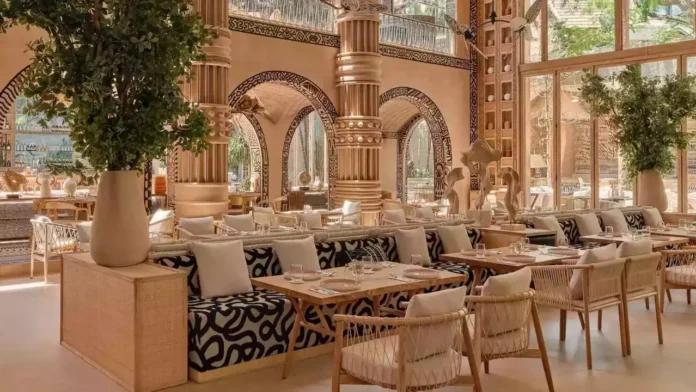
Spanning 4,500 sq. ft., Lyla emerges as a stylish yet laid-back dining destination that seamlessly transforms into a lively cocktail bar as night falls. Inspired by the vibrant ambiance of Central America infused with a California spirit, the venue boasts a fusion of indigenous Indian, Afro-Latin, and Spanish design elements, complemented by abundant natural materials and vibrant splashes of color.

“We’re excited to introduce another F&B concept in BKC, a neighborhood we’re deeply familiar with and have extensive experience in. Lyla has been a labor of love for our team, and we’re eager for guests to enjoy delicious Mexican cuisine, cocktails, and the unique ambiance, filling the void for a distinctive all-day bar in the area. This marks the next phase in our journey with concept restaurants, and we’re looking forward to unveiling more in the coming months,” shared Pawan Shahri, Founder of Chrome Asia Hospitality.

Continue Exploring: VRO Hospitality raises $10 million in bridge funding round, plans extensive growth

With Gigi, Chrome Asia Hospitality continues its journey towards leading the concept restaurant sector, aiming to open 12 outlets by 2025 in this segment.

After introducing some of Mumbai’s most sought-after dining destinations, Chrome Asia Hospitality has experienced a profitable journey, showcasing a significant 3X growth. Continuously strengthening its position, Chrome Hospitality aims to set new benchmarks in the hospitality industry.

Established in 2019, Chrome Asia Hospitality, founded by Pawan Shahri, Dhaval Udeshi, and Nikita Shahri, is a full-scale hospitality enterprise focused on creating experience-driven restaurants across the country.

Continue Exploring: V&RO Hospitality and Mouni Roy unveil Badmaash in Lower Parel, promising a memorable fusion dining experience!

Advertisement

Top jewellery retailers hold back on lab-grown diamonds citing low consumer demand

0
Gems & Jewellery
(Representative Image)

Major jewellery retailers like Kalyan Jewellers, Tanishq, Malabar Gold & Diamonds, Joyalukkas, and Senco Gold are refraining from incorporating lab-grown diamonds (LGDs) into their collections due to low consumer demand and a reluctance to blend them with natural stones at their displays.

However, the excitement surrounding these stones, which are considerably cheaper than natural diamonds and virtually indistinguishable from them, is growing. This is evidenced by increased sales in markets like the US and the allocation of government stimulus funds in India.

Major retailers continue to believe that the local market is not prepared to embrace LGDs in the same way as the US. Artificial diamonds are commonly viewed as fashion jewellery rather than an investment with resale value.

Continue Exploring: Titan’s CaratLane jewellery line to make US debut in FY25

Ramesh Kalyanaraman, the executive director of Kalyan Jewellers, stated that there has been minimal interest and the future of lab-grown diamonds remains uncertain. “Until demand and supply match up, we currently have no plans to venture into this,” he commented.

“Customers aren’t inquiring about LGDs in our stores. We haven’t seen any significant demand,” stated Suvankar Sen, the CEO of Senco, a publicly listed company.

Each of these leading brands operates between 150 to 200 stores. Furthermore, prominent retailers are hesitant to stock LGD jewellery alongside natural diamonds due to concerns about confusing their customers.

“If at all we enter this segment, which may not happen soon, it will likely be under an independent brand and at separate stores,” stated Sen. John McCain.

Kalyanaraman also highlighted the fluctuating international and domestic prices of these lab-grown stones, indicating that the chain would prioritize stable value propositions. Other major jewellers share this sentiment and are unlikely to venture into this category for the next four to five years.

According to provisional data from the Gem Jewellery Export Promotion Council for the current fiscal year (up to February), gross exports of polished LGDs decreased by 18.5% year-on-year to $1,278 million. In comparison, shipments of cut and polished natural diamonds for the same period saw a more significant decline of 28%. The global demand for LGDs is increasing due to economic challenges resulting from the Ukraine conflict, rising interest rates affecting purchasing power, and G7 sanctions on Russian diamonds.

Domestically, there is a substantial price difference. At the wholesale level, a carat of LGD is priced between INR 20,000-25,000. For retail, this could increase by anywhere from 30% to 100%. In contrast, one carat of natural diamond retails for INR 3-5.5 lakh.

Continue Exploring: Senco breaks new ground as first Indian jewellery brand to join ONDC network

“Despite this price difference, we’re seeing minimal demand from our customers,” commented Sen from Senco.

Joyalukkas CEO Baby George had the same opinion. “We need to wait and observe how the category progresses,” he stated. “As of right now, we have no plans to sell LGDs in our stores.”

Indian customers do look for value for money, but they also desire the prestige associated with fine jewellery made with natural diamonds, highlighted Rajiv Popley, director of Mumbai-based Popley & Sons. “With LGDs, that prestige is lacking,” he noted.

However, synthetic diamond manufacturers and retailers argue that the landscape is evolving.

Pooja Sheth Madhavan, the founder and managing director of Limelight Diamonds, commented, “Consumer confidence in India is increasing, and more than 50 LGD jewellery outlets have opened in just the past six months in major cities. We currently operate 10 stores in India. Our brand sales in FY24 saw a threefold increase compared to FY23.”

She mentioned that in 2023, 36% of engagement rings in the US were set with lab-grown diamonds, up from 17% in 2022.

The segment is also receiving support from the government. The 2023 Budget recognizes lab-grown diamonds as an emerging sector and provides incentives such as a research grant and reduced customs duty on seeds, aiming to reduce production costs.

Popley also highlighted the relatively low consumer awareness in the market regarding LGDs. “In the upcoming years, LGDs may evolve into a distinct category, which could benefit the overall gems and jewellery market,” he commented.

Continue Exploring: Jewellery consumption set for 10-12% value growth in FY24, driven by soaring gold prices: ICRA

Advertisement

Wendy’s partners with PAR Technology to boost customer engagement through AI-powered loyalty program

0
Wendy's
Wendy's (Representative Image)

Restaurant chain Wendy’s is leveraging PAR Technology’s AI-based platform to enhance its customer engagement.

The fast-food hamburger chain plans to implement PAR’s loyalty and offer solution, PAR Punchh, across its 6,500 locations throughout the US and Canada.

By utilizing the AI-driven Punchh technology and PAR Technology’s enterprise support, Wendy’s plans to enrich its loyalty program with gamified experiences.

The platform will also assist Wendy’s in providing tailored discounts and exclusive promotions based on specific consumer preferences.

Continue Exploring: Wendy’s reports strong Q4 2023 with nearly 14% rise in net income, reaching $46.9 Million

The technology company stated that the open architecture of PAR Punchh will facilitate seamless integration with Wendy’s existing app and online ordering system.

PAR Technology CEO Savneet Singh commented, “Loyalty is not just a feature; it’s an outcome that drives greater customer lifetime value. We believe that combining our technology with our experienced team of loyalty strategists not only provides brands with the tools to foster guest loyalty but also positions us alongside them to achieve tangible results.”

In January 2024, American restaurant company Bob Evans chose PAR Technology’s PAR Punchh to improve its customer interaction approach.

In December 2023, food delivery platform DoorDash collaborated with ParTech to establish a seamless ordering experience.

Continue Exploring: Wendy’s appoints former PepsiCo executive Kirk Tanner as new CEO

DoorDash will integrate with PAR’s Brink point-of-sale software and MENU Link, a marketplace order management solution within the PAR MENU ecosystem, facilitating omnichannel ordering.

The collaboration will further expand PAR’s ecosystem with over 500 integrations and improve digital ordering and delivery operations in the United States.

Continue Exploring: Wendy’s unveils exciting ‘Flavour Fresh’ range for Indian palates

Advertisement

Ocado Retail records 10.6% revenue growth to $815.5m in Q1 FY24

0
Ocado Retail
Ocado Retail

Ocado Retail, a collaboration between the Ocado Group and Marks & Spencer, reported a 10.6% rise in revenue for the first quarter of fiscal 2024 (Q1 FY24), climbing to £645.3m ($815.5m) from £583.7m in Q1 FY23.

The growth is credited to a substantial surge in the volume of items sold and a rise in average weekly orders.

The company’s total products sold in the 13 weeks leading up to March 3, 2024, increased by 8.1% year over year to 242.1 million from 223.9 million in the same quarter the previous year.

The average weekly orders also rose by 8.4%, going from 382,000 to 414,000, pointing to strong growth in active customers. By the end of the quarter, customer numbers grew by 6.4% to reach 1.02 million.

Continue Exploring: Instacart and AWG strengthen partnership to offer same-day delivery to thousands of independent grocery stores

Ocado Retail saw a modest increase of 2.1% in its average basket value, rising from £122.94 in Q1 FY23 to £125.47 in Q1 FY24.

The average basket size stayed consistent year-on-year at 45 items.

Ocado Retail CEO Hannah Gibson stated, “We’ve had a solid beginning to the year, continuing the momentum we set in 2023 with the advancement of our Perfect Execution programme.

“We are improving the products and services we provide to our clients, emphasising unmatched variety, unrivalled quality, and continuously good value.

“In the first quarter, we increased our efforts by introducing Makers’ Market and expanding our product line, which included robust growth in our core M&S grocery items. With the help of our unique approach, we were able to highlight amazing small businesses, expand the Ocado own-brand range, raise product and slot availability and cut prices on an extra 1,700 products during our most recent Big Price Drop campaign.

The retailer reaffirmed the guidance given on 29 February 2024, in line with Ocado Group’s FY23 results.

Ocado Retail expects a mid to high single-digit revenue growth and an underlying EBITDA (earnings before interest, taxes, depreciation, and amortization) margin of 2.5%, excluding Hatfield fees of £33m per year.

In March 2024, M&S and Ocado had a dispute over a £190 million ($240 million) final payment linked to Ocado Retail.

Continue Exploring: UK grocery price inflation falls to 4.5%, lowest since February 2022

Advertisement

Supermarket chain Aldi to open 35 new stores across the UK in 2024

0
Aldi
Aldi

Supermarket chain Aldi is expanding its presence across the UK, with plans to open 35 new stores in 2024.

The retailer’s expansion makes its low prices available to more UK customers, with the opening of its 1,000th UK store in Woking in 2023.

In March 2024, Aldi is set to introduce new stores in Preston and Derby, followed by additional openings in Derbyshire, Buckinghamshire, and Bristol later in the year.

The expansion aligns with the company’s overarching goal of reaching 1,500 stores in the UK. In 2024, it plans to invest £550 million to expand its presence in the UK market.

Continue Exploring: Aldi to expand discount grocery chain across US as high food prices squeeze American budgets

Each of the new stores is expected to generate approximately 40 new job opportunities.

Aldi’s Managing Director for National Real Estate in the UK, Jonathan Neale, said, “Having attracted more fresh consumers than any other supermarket in the last 12 months, we’ve become even more determined in our commitment to expanding our presence throughout the country.”

“We aim to ensure that high-quality food is within reach for everyone, and customers are aware that they consistently receive greater value for their money when shopping at Aldi.”

Aldi, now the fourth-largest supermarket in the UK, is increasing starting pay for store assistants to £12.40 per hour, effective from 1 June 2024.

Store assistants located within the M25 London orbital motorway will be compensated at a rate of £13.65 per hour.

The retailer also maintains its provision of paid breaks, which amounts to £900 annually for the average store colleague.

Aldi recently disclosed plans to increase its footprint in London, focusing on prime areas for new shop openings.

Continue Exploring: Aldi takes on Domino’s with launch of new pizza delivery service in the UK

Advertisement

Malabar Gold & Diamonds debuts in Latur, marking its 24th outlet in Maharashtra

0
Malabar Gold & Diamonds

Malabar Gold & Diamonds, a prestigious name in India’s jewellery retail sector, has launched its newest retail masterpiece in Latur, Maharashtra. Located at Sawe Wadi, M G Road, this spacious 4500 sq. ft. store signifies the brand’s successful debut in Latur, marking its 24th outlet in Maharashtra and the 36th in the Western region. Committed to providing exceptional jewellery shopping experiences, the luxurious store presents a wide range of designs and collections.

The virtual opening of the store, led by M P Ahammed, Chairman of Malabar Group, was attended by distinguished guests, including Shrimati Vaishali Vilasrao Deshmukh, who presided over the ribbon-cutting ceremony.

Sharing his excitement, M P Ahammed remarked, “We are delighted to inaugurate our inaugural store in Latur. This signifies the start of a promising bond with the residents of Latur and reaffirms our dedication to Maharashtra.”

Continue Exploring: Malabar Gold & Diamonds to expand with ten new stores, aiming for 350 by March

The newly opened store showcases expansive interiors and a captivating atmosphere, welcoming customers to explore finely crafted designs in gold, diamond, polki, gemstones, platinum, and beyond. With carefully curated collections catering to various tastes and preferences, every customer is sure to discover the ideal piece. Highlighting exceptional creations from exclusive brands such as Mine Diamond Jewellery, Era Uncut Diamond Jewellery, and Ethnix Handcrafted Jewellery, the store aspires to be the premier destination for distinctive designs.

Malabar Gold & Diamonds is well-known for its dedication to transparency and equitable pricing. Keeping true to its Fair Price Promise, the brand ensures that customers can purchase their chosen jewellery at fair making charges. Furthermore, the brand’s One India One Gold Rate initiative ensures consistent gold pricing across all its stores throughout the country.

Continuing to reinforce its commitment to customers, Malabar Gold & Diamonds provides a variety of assurances through its 10 pledges. These encompass transparent pricing, lifetime free maintenance, guaranteed value for old gold jewellery, adherence to global standards, buyback guarantee, complimentary jewellery insurance, responsible sourcing, and equitable labor practices.

The grand launch of Malabar Gold & Diamonds’ first-ever store in Latur represents more than just a new retail location; it symbolizes a commitment to exceptional quality, trust, and unmatched service for the residents of Latur and beyond.

Continue Exploring: Malabar Gold, Titan, and 4 other Indian brands secure spots in global top 100 luxury goods makers list

Advertisement