Tata CLiQ, the leading luxury lifestyle platform in India, has broadened its pre-owned category by partnering with Ziniosa. This latest addition enhances the platform’s offerings, which now include Pre-Owned Timeless Icons such as luxury handbags from top global brands.
With the vision of making distinctive and rare pre-owned items readily accessible to customers nationwide, the platform is set to team up with diverse partners to offer products spanning various categories. Through the inclusion of Ziniosa, the digital store will grant customers the chance to browse and purchase pre-owned luxury handbags from top-tier brands.
“We’re excited to expand our range of Pre-Owned Timeless Icons by welcoming Ziniosa to the platform. This launch not only enriches our selection but also underscores our dedication to sustainability and ethical fashion. By considering pre-owned luxury, customers can enjoy exquisite designer bags while also supporting ecologically sustainable shopping practices. The positive response we’ve received for this category on the platform motivates us to expand and diversify our offerings further, aligning with the evolving needs of our customers as we remain at the forefront of pre-owned luxury,” stated Gopal Asthana, CEO of Tata CLiQ.
Ziniosa distinguishes itself through its dedication to eco-friendly alternatives and making luxury fashion accessible to all. As India’s pre-owned luxury market gains momentum, it leads the charge in reshaping consumers’ perceptions of sustainable fashion.
“We’re thrilled to introduce Ziniosa on Tata CLiQ Luxury. The global demand for pre-owned luxury handbags is substantial, and it’s steadily rising in India. Through this collaboration, we’re extending our reach, ensuring our wide range of pre-owned luxury handbags is accessible to people nationwide,” remarked Varun Ramani, Co-founder of Ziniosa. Adding to this sentiment, Ashri Jaiswal, Co-founder of Ziniosa, emphasized, “Customer satisfaction is paramount at Ziniosa. Each product undergoes rigorous quality and authentication checks before listing, and we provide an authenticity certificate with every order. We eagerly anticipate a fruitful partnership.”
Ziniosa brings forth an essence of refinement and sustainability by showcasing timeless designer bags crafted by the world’s most coveted luxury brands.
United Breweries Ltd, a renowned beer manufacturer, has reported a surge in net profit to INR 80.15 crore for the January-March quarter of 2023-24, marking a more than five-fold increase from the corresponding period last year. This performance contrasts with the net profit of INR 13.05 crore reported during the April-March quarter of 2022-23, as stated in an exchange filing.
Revenue from operations increased by 17 percent to INR 4,788.68 crore in the final quarter of FY24, compared to INR 4,081.01 crore in the same quarter of the previous year.
Total expenses climbed to INR 4,705.38 crore in the quarter under review, up from INR 4,079.32 crore in the corresponding period of the previous year.
The net profit for the complete fiscal year that ended on March 31, 2024, increased by 33 percent to INR 412.59 crore, compared to INR 308.10 crore in the preceding year.
The filing stated that total income increased by 10.49 percent to INR 18,453.27 crore in FY24, compared to INR 16,700.52 crore in the previous year.
As per the filing, the company’s board also proposed a final dividend of INR 10 per share (1,000 percent) of the face value of INR 1 for the 2023-24 financial year. Subject to shareholders’ approval, the dividend is scheduled to be disbursed on or before August 30, 2024.
United Breweries shares concluded Tuesday’s trading session at Rs 2,001.75 per share on the BSE, marking a 0.96 percent increase.
“In Q4, volume surged by 10.9 percent, primarily propelled by the South and East regions,” stated United Breweries in a statement.
The premium segment experienced a 21 percent growth during the quarter, driven by robust performance of Kingfisher Ultra and Kingfisher Ultra Max, leading to continued expansion in premium volume for the company.
The company asserted, “We remain committed to investing in our brands and capabilities alongside revenue management and cost-saving measures. Our capital expenditures for the year totaled INR 190 crore, primarily directed towards supply chain enhancements to accommodate future expansion.”
“Despite observing some inflationary softening starting from Q2, volatility is expected to persist. However, we maintain optimism regarding the industry’s long-term growth potential, fueled by rising disposable income, favorable demographics, and the trend towards premiumization,” it added.
Bangalore Watch Company, a six-year-old indigenous startup, aims to establish an Indian luxury watch brand of Swiss quality.
Banking on the burgeoning discretionary spending of Indian consumers and their growing preference for domestic brands, Nirupesh Joshi, Co-Founder and creative director of Bangalore Watch Company, expressed the company’s ambition to achieve an annual production of 5,000 watches within the next three years.
Joshi stated, “We aspired for high-quality watches from India that met Swiss standards. Furthermore, we aimed to break the established design rules common in Indian watchmaking.”
Founded by the couple duo, the brand presently manufactures approximately 1,000 watches annually. Bangalore Watch Company’s average prices hover around the INR 1 lakh mark.
According to Joshi, the Indian wristwatch market, which is valued at over INR 13,500 crore, is expanding at a compound annual growth rate (CAGR) of 10–12%. Classifications like affordable luxury are expanding at a rate higher than the market as a whole, at 14%. About 3-5 lakh watches are sold annually in India’s affordable luxury market, which presents a huge opportunity for companies like Bangalore Watch Company.
“There’s a niche group of consumers who already possess Swiss watches like Omega and Rolex in their collection but are now seeking something that sparks conversation. These consumers will turn to Bangalore Watch Company.”
The remarks on growth prospects coincide with the company’s recent introduction of its Apogee series wristwatch, which underwent testing and successfully endured the conditions of outer space.
Currently, the brand retails in over 30 countries through its direct-to-consumer (D2C) website.
In regards to growth strategies, Joshi revealed that the brand will inaugurate two exclusive brand outlets in the upcoming months and intends to expand its retail presence with additional outlets over the next three years.
Moreover, in order to facilitate its retail expansion, the bootstrapped retailer is seeking to secure initial funding.
India’s toy exports dipped marginally to USD 152.34 million in 2023-24 from USD 153.89 million in the previous financial year, as reported by the economic think tank GTRI. Despite the implementation of mandatory quality control orders, India’s toy exports failed to experience substantial growth, according to the Global Trade Research Initiative (GTRI).
While the domestic measures primarily targeted bolstering the local industry and ensuring safety, they did not notably bolster India’s toy exports, according to the report.
The report indicated a modest increase in exports from USD 129.6 million to USD 177 million from FY’2020 to FY’2022. However, by FY’2024, exports declined to USD 152.3 million.
However, imports surged to USD 64.92 million in 2023-24 from USD 62.37 million in 2022-23.
Ajay Srivastava, the founder of GTRI, remarked that while the Quality Control Orders (QCO) effectively curbed substandard imports from China, they did not translate into increased exports from India.
“India has undertaken significant measures since 2020 to restrict the influx of substandard toy imports, especially from China, and to bolster the domestic toy industry,” he said. “However, India needs to adopt a broader approach for the development of the sector.”
The report suggests a holistic strategy aimed at fostering the growth of India’s toy industry and increasing exports.
He recommended initiatives such as cultivating a strong domestic ecosystem, enticing global toy brands to establish manufacturing operations in India, drawing lessons from China, and localizing the production of essential inputs.
Srivastava emphasized the importance of investing in research and development to stimulate innovation in toy design and functionality, thus positioning Indian toys competitively worldwide. He also highlighted the need to enhance collaborations between toy manufacturers and design institutes to consistently introduce innovative products.
The report suggested the establishment of specialized toy manufacturing hubs to cut costs and improve efficiency, alongside modernizing traditional Indian toys while preserving their cultural significance to craft distinctive products.
It proposed supporting small and medium enterprises in utilizing digital marketing and advocating for Indian toys at international fairs to establish global connections.
Additionally, it suggested that India extend invitations to international toy manufacturers, including companies like Hasbro, Mattel, Lego, Spin Master, and MGA Entertainment, currently operating in China, to explore the possibility of establishing production facilities in India.
This initiative could potentially redirect a portion of the global toy production market to India.
Moreover, it suggested decreasing reliance on imports by enhancing local production capacities for essential toy-making materials and components, including glass eyes for dolls, beads, imitation stones, various plastics, electric motors, and remote control devices.
According to GTRI, this measure will lower costs and bolster the self-reliance of the Indian toy sector.
Srivastava pointed out that imports of inputs used in toy manufacturing surpass imports of finished toys. “For instance, in FY’2024, we imported glass eyes for dolls or other toys, beads, and imitation stones worth USD 137.2 million.”
He emphasized the necessity for India to devise distinct strategies for various categories of toys, such as plush toys like stuffed animals (with a global trade value of about USD 7 billion); educational toys (with a global trade value of about USD 6 billion); construction toys like LEGO (USD 10 billion); action figures and dolls (USD 10 billion); electronics (USD 15 billion); board games and puzzles (USD 9 billion); and outdoor and sports toys (USD 5 billion).
In 2022, the global market imported toys valued at about USD 60.3 billion.
Leading this market, China exported toys valued at USD 48.3 billion, capturing an 80 percent share of global exports.
Other notable contributors to the global toy export market comprise the Czech Republic with exports totaling USD 3.2 billion, the European Union with USD 2.7 billion, Vietnam with USD 1.7 billion, and Hong Kong with USD 1.1 billion.
On the flip side, India’s contribution to the worldwide toy export sector is meager, amounting to just USD 167 million. This figure accounts for merely 0.3 percent of global exports, positioning it at the 27th spot, as per the report.
In terms of imports, India falls even further behind, securing the 61st position, with toy imports totaling USD 60 million.
The United States emerges as the top importer of toys, single-handedly acquiring toys valued at USD 22.2 billion. It is trailed by the European Union at USD 9 billion, Japan at USD 2.8 billion, and Canada at USD 1.6 billion.
India hiked import duties on toys starting from February 2020. The basic customs duty saw a surge from 20 percent to 60 percent, further escalating to 70 percent by July 2021.
Enforced since January 2021, the QCO (Quality Control Order) stipulates that all toys distributed in India, regardless of their origin—domestically manufactured or imported—must adhere to designated Indian safety standards.
ABCL plans to invest over INR 80 Crore in acquiring and refurbishing the brewery. With a capacity to produce 2 Lakh cases of beer per month, this acquisition will increase American Brew Crafts Pvt Ltd’s owned capacity installation to 8 Lakh Cases per month. This includes their renowned Flying Monkey, Blockbuster, and Karjura range of beers.
This strategic step signifies a major milestone for ABCL, fostering the company’s expansion in East & Northeast India and reinforcing its dedication to providing top-tier craft beers to beer enthusiasts across the country.
The acquisition seamlessly fits into ABCL’s growth and innovation vision, propelling the company ahead in the ever-evolving craft beer industry. ABCL maintains quality and consistency through small-batch production, where each batch undergoes thorough research and is meticulously crafted using premium malts and hops for exceptional flavor. With this addition, ABCL now operates three cutting-edge breweries, leveraging the latest German Technology, situated in Andhra Pradesh, Telangana, and Odisha. This setup ensures the delivery of top-notch brews and sustains a consistent supply across all operational regions.
Nagendra Tayi, Director and Chief Executive Officer of American Brew Crafts Pvt Ltd, expressed, “We are excited to fortify our presence by welcoming Denzong Brewery into the American Brew Crafts family. This acquisition will bolster our production capacity, meeting the rising consumer demand in the region. It’s a pivotal step in expanding our footprint in the East and Northeastern parts of the country. Our commitment lies in fostering the beer culture in India and offering diverse options to beer enthusiasts. With our seasoned team of brew masters ensuring consistency in taste and flavor across batches, we aim to delight beer connoisseurs and ensure they have a memorable experience. Additionally, our innovative and visually appealing packaging has received commendations from both customers and consumers.”
The Beer Cafe has launched its fifth location in Noida at Binge Central, coinciding with the chain’s 12th anniversary celebrations.
Rahul Singh, the Founder and CEO of The Beer Cafe, expressed, “We are pleased to open our fifth location in the fast-evolving city of Noida. Our ongoing goal has been to transform the beer-drinking landscape in India and position ourselves as the ultimate destination for exceptional brews. This beer haven offers a distinctive and enjoyable experience for both professionals and leisure enthusiasts alike. As we mark our 12th anniversary, we eagerly look forward to achieving many more milestones in the years to come.”
The Beer Cafe at Binge Central in Noida exudes a vibrant and inviting atmosphere, characterized by its green, grey, black, and white color palette. The incorporation of mosaic tiles and neon green highlights adds a touch of elegance and modern flair, harmonizing seamlessly with wooden and metallic features. Cement-textured walls further enhance the contemporary and down-to-earth vibe, rendering it a unique and welcoming destination.
Stepping into The Beer Cafe at Binge Central, guests immerse themselves in a world of diverse flavors, with over 50 beer varieties to choose from. The fusion menu offers a tantalizing blend of global and local cuisine, perfectly complementing the array of brews. Whether indulging in local favorites or exploring international selections, patrons are sure to find a beer to suit their palate.
Changes in state liquor policies are leading to an unprecedented shortage of popular brands such as Royal Stag, Budweiser, and Old Monk. This shortage is exacerbated by the code of conduct for the general election, causing disruptions in the supply chain and delays in label registrations and license renewals.
In Delhi, liquor stores are promoting lesser-known whisky brands such as ‘Party Special’, ‘Russian Nights’, and ‘O Darling’, which collectively sold 55,000 cases, 30,000 cases, and 20,000 cases respectively in April. Similarly, in Andhra Pradesh, whisky brands like Royal Palace recorded sales of 2 million cases, while Daaru House and Old Timer Blue each sold 1.2 million cases in the last fiscal year. Meanwhile, in Telangana, mainstream brands are restricting supplies due to payment delays, prompting a rise in local brands.
“Although the model code of conduct is intended solely for new policy announcements, the reality is that in certain states, it’s being cited as grounds to impede or prolong routine approval processes. License approvals are experiencing excessive delays in states like Delhi, routine production shift approvals are being withheld in Telangana, and payment cycles from corporations are being delayed, among other issues,” stated Vinod Giri, Director General of the industry body Confederation of Indian Alcoholic Beverage Companies.
“We acknowledge that some delays may stem from staff shortages due to election duties, but this explanation doesn’t suffice for areas where elections have concluded or are weeks away. It appears that bureaucratic apathy, compounded by election-related disruptions, is significantly impacting the industry’s supply chains,” commented Giri.
In November 2021, the Delhi government opted to withdraw from the liquor vending business, transferring it to private companies. However, a year later, it reverted to the previous policy. Pernod Ricard, the world’s second-largest spirits firm and the largest distiller in Delhi, faced restrictions on selling in the state as its license was not renewed by authorities. This led to a vacuum in the whisky segment, particularly affecting mass-premium brands.
“For customers, the current focus is on accessibility rather than choice. Additionally, these lesser-known smaller brands provide retailers with margins more than double ours, making it profitable for them to promote them. Although there’s a noticeable disparity between our supply and demand in these states, we rely entirely on excise officials to address such malpractices at the retail or wholesale level,” stated a senior official from a major liquor producer. “In certain states, we are avoiding from stocking up deliberately because any shift in the state government could potentially result in payment disputes or delays.”
This scenario is not novel for the alcobev sector. States such as Tamil Nadu and Kerala, which regulate liquor retailing, have long promoted local lesser-known brands, compelling top brands to either reduce supply or redirect attention to other regions. What sets this situation apart is that these states, where the government controls liquor sales, represent more than a fifth of India’s total alcobev industry.
The period from March to July marks the peak season for breweries, constituting 40-45% of annual beer sales. Telangana stands out as the largest beer consumer, whereas Delhi plays a pivotal role in brand building, particularly in bars and pubs.
In South Asia, kulfi holds a special place as a delectable frozen treat, lovingly crafted by local street vendors in small batches. It’s the perfect way to beat the heat and bond with loved ones on a sunny day. Crafted slowly with fresh milk and classic flavors like saffron, rosewater, and pistachio, kulfi boasts a rich, creamy texture that evokes a sense of home for South Asians everywhere.
Mansoor Ahmed, a first-generation American, is embarking on a mission to introduce his unique take on this traditional delight to American consumers. With the introduction of Heritage Kulfi, his range of premium kulfi ice cream featuring authentic South Asian flavors, he’s aiming to captivate American audiences.
Having grown up in New York, Ahmed enjoyed the best of both worlds: the flavorful heritage of South Asian cuisine, passed down by his Pakistani immigrant parents, and beloved American treats like ice cream. This fusion sparked his passion for blending these culinary worlds and paying homage to his family’s cultural ingredients in an innovative manner. Rather than resorting to flavor extracts, he opted for traditional recipes and cooking techniques, meticulously infusing whole Assam black tea leaves and sourcing top-tier, premium saffron threads carefully handpicked from crocus flowers.
The outcome? Heritage Kulfi delivers an opulent and contemplative twist on traditional ice cream, featuring flavors, textures, and fragrances that transport you directly to South Asia: Saffron, Rosewater, Pistachio, Cardamom Chai, Alphonso Mango, Coconut, Vanilla Bean, Malai Sweet Cream, and Almond Blossom. Each distinct ingredient takes the spotlight, showcasing its unique character. While initially appearing straightforward, every spoonful unveils the intricate flavors resulting from Ahmed’s meticulous sourcing and treatment of each exceptional element. For instance, the Rosewater flavor harkens back to the cherished childhood favorite falooda, now elevated with a fragrant, sophisticated, and delicate rose essence, coupled with its stunning pink hue. And only the finest Alphonso mangoes, hailed as the “King of Mangos,” meet the criteria for Heritage Kulfi, imparting each scoop with the essence of the euphoric peak summer season when these prized “liquid gold” mangoes grace the markets for a fleeting moment.
Every facet of the manufacturing process receives meticulous attention to detail. The comapny’s packaging holds certification for sustainably sourced materials by the Sustainable Forestry Initiative. Collaborating with local farms, the company ensures optimal flavor, freshness of milk and cream, and minimizes shipping impact. All Heritage Kulfi ice creams are crafted without eggs, meeting halal, kosher, gluten-free, non-GMO standards, and sweetened solely with organic cane sugar.
“Kulfi holds a special place in the cherished memories of many South Asians, evoking a sense of home that’s not always readily available here in the U.S.,” explains Mansoor Ahmed, the founder and CEO of Heritage Kulfi. “My aim was to reconnect with my heritage while also catering to flavor enthusiasts keen on delving into international culinary experiences. I’m incredibly proud of what we’ve accomplished and genuinely enjoy witnessing the delight on people’s faces when they savor Heritage Kulfi for the first time.”
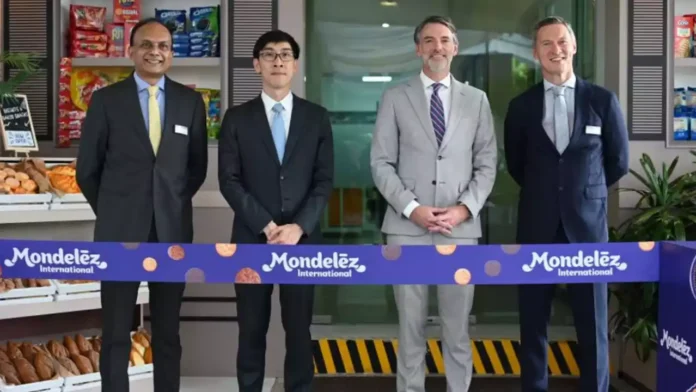
Confectionery giant Mondelez International has launched the first-ever certified gluten-free chocolate chip cookie under its Chips Ahoy! brand.
Set to debut on store shelves this May, the introduction of the Chips Ahoy! Gluten-Free cookie signifies a significant expansion within the brand’s product offerings.
Drawing upon years of development, Mondelēz has crafted a cookie that not only adheres to the rigorous criteria of gluten-free certification but also ensures the iconic taste and texture that has cemented Chips Ahoy! as a beloved household favorite throughout America.
Jainette Quinones, the brand manager for Chips Ahoy! Innovation, expressed, “Our goal in developing our first Chips Ahoy! Gluten-free cookie wasn’t just to make a good gluten-free option, but to craft a remarkable cookie that happens to be gluten-free. I’m thrilled to announce that our innovation team has achieved that goal – the new Chips Ahoy! Gluten-Free cookie is undeniably delicious and accessible to all.”
The introduction of the new variant closely follows Mondelēz’s recent success with its revamped Chips Ahoy! Original recipe, known as “MMMproved.”
Typsy Beauty, a pioneering Indian cosmetics brand, has unveiled its flagship store at IGI Airport in New Delhi. This milestone marks a pivotal moment for the brand as it strives to redefine the standards of the beauty industry.
Tipsy Beauty presents a diverse array of makeup products crafted to encourage customers to celebrate their distinctive beauty. With meticulously formulated formulas and delightful packaging, every facet of the brand embodies its commitment to delivering an extraordinary journey in beauty.
Located at Terminal 3 of IGI Airport, the latest flagship store serves as a gateway to a realm where customers can indulge in beauty and glamour. Tipsy Beauty offers an exclusive range of makeup products, from everyday essentials to statement-making items. Stepping into the Tipsy Beauty flagship store, visitors are greeted by a space that radiates warmth, creativity, and inspiration. The welcoming ambiance of the store invites guests to explore new products and experiment with different looks.
With its recent debut at IGI Airport, Tipsy Beauty has not only extended its reach but also redefined the landscape of beauty retail in India. Positioned to be a prime destination for beauty aficionados, the brand presents a comprehensive makeup collection for eyes, face, and lips. In honor of the grand inauguration, the brand is extending a special 10 percent discount on its products.
We use cookies to ensure that we give you the best experience on our website. If you continue to use this site we will assume that you are happy with it.