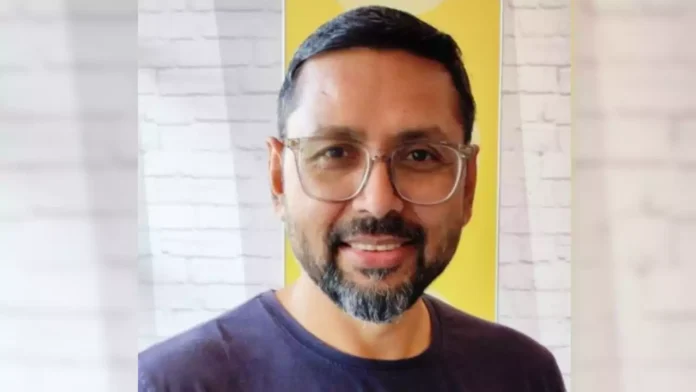
Garima Luthra, Pranav Arora, and Varun Vohra, Co-Founders, Vaaree
Vaaree, a home furnishing startup, has raised INR 20.78 crore ($2.5 million) in Pre-Series A funding, led by Bengaluru-based venture capital firm Capier Investments.
The round also saw participation from Peak XV’s Surge Ventures, known for backing Indian startups such as Ethereal Machines, InCore, Mindgrove, and ZeroK, among others.
Capier Investments contributed INR 12.47 crore, while Peak XV’s Surge Ventures invested INR 8.31 crore in the round.
According to its filings, the company’s board of directors approved a resolution in March to issue 3,063 Pre-Series A cumulative compulsorily convertible preference shares, with a face value of INR 10 each, aiming to raise INR 20.78 crore.
Entrackr was the first to report on this development.
Established in 2022 by Garima Luthra, Pranav Arora, and Varun Vohra, Vaaree is an omnichannel home decor startup providing a wide array of products, including kitchenware, home decor items, bedding, and furnishings.
Last year, the Bengaluru-based startup secured $4 million in a funding round spearheaded by Peak XV’s Surge, with involvement from PeerCapital, All In Capital, and Better Capital.
Back then, the company stated it would use the funds to ramp up its hiring efforts and enhance the user experience on its online platform.
The company has also received funding from angel investors such as CRED cofounder and CEO Kunal Shah, Sugar Cosmetics cofounder and CEO Vineeta Singh, and Mamaearth cofounder Gazal Alagh, among others.
According to Research Markets data, India’s home decor market is projected to expand at a CAGR of 4.14%, reaching a valuation of $40.98 billion by 2028.
It’s no surprise that several new players are emerging in the sector, attracting significant investor interest.
Livspace, a home renovation and interiors platform, joined the unicorn club in 2022 by securing $180 million in its Series F round, led by private equity group KKR. Currently, it is preparing to relocate its headquarters from Singapore to India, with an IPO on the horizon.
Last year, HomeLane, a startup specializing in home interior solutions, secured INR 75 crore from its existing investors.
India’s coffee exports increased by 12.22% in 2023-24, reaching $1.28 billion, driven by a surge in global demand for Robusta coffee, according to data from the commerce ministry.
In the 2022-23 fiscal year, the country exported coffee valued at $1.14 billion.
India ranks as the third-largest producer and exporter of coffee in Asia, cultivating both Arabica and Robusta varieties.
Arabica coffee beans have less caffeine than Robusta beans. Arabica has a sweeter as well as smoother taste, whereas Robusta is usually more bitter and harsh on the palate.
In volume terms, India’s coffee shipments increased by 13.35% to 125,631 tonnes during the January-March period of 2023-24, compared to 110,830 tonnes exported in the same period in 2023.
Italy, Russia, the UAE, Germany, and Turkey stand as key coffee export destinations for India.
Walmart-backed Flipkart has secured Google as a minority investor for its latest funding round, led by the US-based retail giant. Flipkart has highlighted that the terms of Google’s investment are subject to regulatory approvals and mutual agreement between the two parties.
The e-commerce giant refrained from disclosing the funding amount or the valuation at which Google is investing.
Flipkart said, “Google’s suggested investment and its Cloud collaboration will help in expanding Flipkart’s operations while advancing the modernization of its digital infrastructure to better serve customers across the nation.”
This development comes soon after Flipkart’s Indian marketplace entity received an infusion of INR 1,421 Cr (around $170 Mn) from its Singapore parent in April 2024, just a month following a separate INR 924 Cr ($111 Mn) infusion.
Both of these investments are reportedly tranches of Flipkart’s substantial $1 billion round, with Walmart pledging $600 million. This investment is purportedly at a 5%-10% premium compared to Flipkart’s valuation of $33 billion during its last fundraising round.
Currently, it remains uncertain whether Google’s investment in Flipkart will finalize this round. Flipkart has not disclosed any other investors in its press statement.
The Google investment aligns with a significant shift at Flipkart.
Recently, Flipkart has diversified its revenue sources through its foray into fintech, offering UPI payments, personal loans, and insurance broking. Within the first month of launching its UPI payments service, Flipkart recorded 5 million UPI transactions totaling INR 197.24 crore in March 2024. However, Flipkart is just one of the numerous new entrants in the UPI market over the past year, necessitating capital to acquire and retain users.
Apart from fintech, the e-commerce titan is aiming to venture into quick commerce and compete with Zomato’s Blinkit, Swiggy’s Instamart, and Zepto. The service is said to be set for launch in a dozen cities before June 2024. The potential benefits of quick commerce have been demonstrated by Blinkit’s growth in FY24, but the sector entails significant capital and operating expenses.
Grocery stands as a crucial foundation of quick commerce, and there are promising indications for Flipkart in this regard. Flipkart’s current grocery segment experienced a 1.6X year-on-year (YoY) growth in FY24.
For Flipkart to maximize the benefits of its eagerly awaited public listing, profitability in its new business ventures is essential. Internally, the company is reportedly deliberating on the optimal strategy for redomiciling to India ahead of the IPO.
Earlier this month, Kathryn McLay, President and CEO of Walmart International, asserted that the upscale trend in the ecommerce sector is “boosting the stature of the Flipkart business.” Although McLay refrained from dismissing speculations regarding the IPO, she remained noncommittal about the timing of a prospective public offering.
For Flipkart, demonstrating a clear path to profitability is essential, particularly given its lofty valuation and the anticipation surrounding one of India’s largest public offerings for a tech firm. In January 2024, group CEO Kalyan Krishnamurthy reportedly informed employees that Flipkart is nearing profitability, attributing this progress to a substantial decrease in monthly cash outflow. He is said to have highlighted the travel business as a key growth driver for Flipkart.
Diversifying its offerings, Blinkit, Zomato‘s quick commerce platform, has introduced a fresh category featuring sports and fitness essentials. This includes premium brands like Adidas, Boldfit, Cosco, Yonex, boAt, and The Whole Truth.
The new service is currently active on the Blinkit app, serving customers in specific cities such as Delhi-NCR, Mumbai, Kolkata, Chennai, Pune, Jaipur, Kanpur, Ludhiana, Chandigarh, Vadodara, Meerut, and more.
Highlighted prominently on the Blinkit app, the Sports Essentials section boasts a diverse array of products spanning six categories: outdoor and indoor sports and games, swimming, yoga and gym, health supplements, clothing and accessories, and energy and hydration drinks. Prices for these essentials vary between INR 50 and INR 3,000.
Blinkit has additionally overhauled the splash screen of its smartphone application to align with the latest release, aiming to captivate users’ attention.
The introduction of a sports vertical marks another stride Blinkit has made into the ecommerce arena, signaling the company’s endeavor to boost average order value and gross volumes.
In Q4FY24, Blinkit saw a remarkable 97% year-on-year increase in gross order value, reaching INR 4,027 Cr, with over 65.3 Mn orders processed during the quarter. Notably, the average order value for Blinkit decreased to INR 617 in Q4 from INR 635 in Q3 FY24.
Initially established as an online grocery delivery platform under the name Grofers, Blinkit has diversified its offerings since its acquisition by Zomato in 2022. Notably, it has expanded its product range to include non-grocery items, with a focus on incorporating high-value products into its catalog.
Earlier this year, Blinkit initiated rapid delivery of electronics, such as Samsung and Apple smartphones, within 10 minutes across Delhi-NCR, Mumbai, Bengaluru, and various other cities.
In April, Blinkit announced 10-minute delivery service for eyewear products sourced from Lenskart in select cities. Additionally, the company has begun selling PlayStation 5 consoles on its platform.
Coinciding with the onset of summer this year, Blinkit expanded its offerings to include air coolers and appliances like fans, along with third-party AC remotes.
Blinkit has undergone significant evolution from its origins as a grocery delivery service.
Last year, it announced that it would offer home repair and other handyman services, putting it in direct competition with Urban Company. However, the execution of this plan is still pending.
Its primary competitors, Zepto and Swiggy’s Instamart, have similarly broadened their services to meet the increased demand for swift delivery of everyday essentials, encompassing packaged food and beverages.
Furthermore, competition is expected to heat up as Walmart-backed Flipkart gears up to introduce quick commerce services in Delhi, Mumbai, and Bengaluru. At the same time, BBnow, owned by Tata Digital, is also poised to make a significant investment in the sector in 2024, adding to the competitive landscape.
Significantly, India’s quick commerce sector experienced an impressive 77% year-on-year growth, averaging a gross merchandise value (GMV) of $2.8 billion in 2023. This stands in stark contrast to the e-commerce market, which has been growing at an average rate of 13-14%.
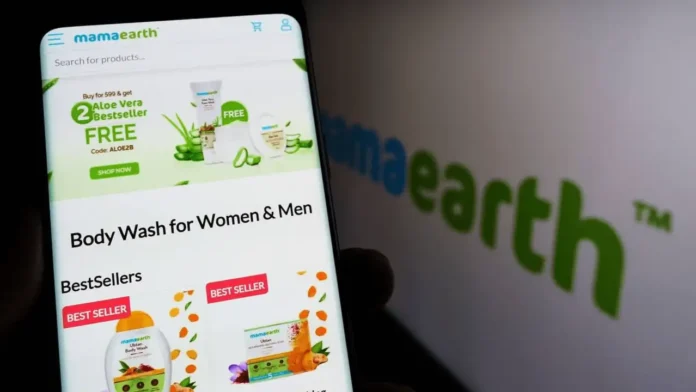
Honasa Consumer Ltd, the parent company of Mamaearth, saw its shares climb 3.25% on the BSE to INR 431.70 during intra-day trading on May 24, up from the previous close of INR 418.10.
The company’s market capitalization surged to $1.68 billion (INR 13,979.79 crore) from the previous $1.58 billion recorded last Saturday (May 18).
Honasa’s significant surge in shares follows a day after the company announced improved financials for both the fourth quarter of the fiscal year 2023-24 (Q4 FY24) and the entire fiscal year.
FY24 marked the first full year of profitability for the listed beauty major, reporting a net profit of INR 110.5 crore, a significant turnaround from the INR 150.96 crore loss incurred in FY23. Similarly, the operating revenue for the entire fiscal surged by 30% to INR 1,919.6 crore in the year ended March 2024, up from FY23’s INR 1,492 crore.
In the fourth quarter, its net profit increased by 17% sequentially to INR 30.47 crore, up from the previous quarter’s INR 25.9 crore.
The positive increase in Honasa’s profits was also mirrored in the sentiment of brokerage firms towards the startup. JM Financials upheld a ‘BUY’ rating for the stock and set a price target of INR 505, indicating a 17% upside from the stock’s current position.
Kotak Institutional Equities assigned Honasa an “Add” rating with a price target of INR 450, while Emkay set the shares’ price target at INR 500.
These brokerage firms anticipate that the company will leverage its house of brands strategy going forward.
Kotak emphasized that while the growth of its flagship brand Mamaearth slowed to 6-7% in FY24, the younger brands showed significant momentum, contributing positively to the overall performance.
“Honasa is positioned to replicate Mamaearth’s success with some of its other brands, which should support overall revenue performance, facilitate cost savings across product lines, and drive profitability,” JM Financials remarked.
During the quarter, the company announced that Derma Co achieved an annual recurring revenue (ARR) of INR 500 Crore and is projected to reach an ARR of INR 1,000 Crore within the next 3-5 years.
The same level of growth is expected for Honasa Consumer Ltd’s other brands, Aqualogica and Dr. Sheth’s, with anticipated ARR of INR 500 Cr each, along with BBlunt, poised to achieve INR 250 Cr within the same timeframe.
It’s worth noting that ICICI Securities, which began covering Honasa during the quarter, foresees these brands achieving a compound annual growth rate of 45% from FY24 to FY26. In April, they also assigned a ‘BUY’ rating to the company and set a price target of INR 550.
Bugatti, the European footwear and accessories brand under the umbrella of the multinational shoe company AstorMueller, has unveiled its first retail outlet in Bengaluru, as announced in a social media post by a company representative.
Sandip Kanti Baksi, Chief Operating Officer of AstorMueller India, expressed his enthusiasm in a LinkedIn post, stating, “We are thrilled to extend a warm welcome to you at Bugatti’s inaugural Bengaluru store.”
Located within the Phoenix Mall of Asia in Yelahanka, the new store joins a lineup of esteemed footwear brands including Bata, Aldo, Birkenstock, Crocs, Fizzy Goblet, Hush Puppies, and Bric’s.
Bugatti stores provide a wide range of footwear including boots, heels, sandals, sneakers, as well as fashion accessories like backpacks, belts, wallets, and shoe care products.
In June 2023, AstorMueller introduced Bugatti to the Indian market. Presently, Bugatti boasts six stores across the nation, located in Hyderabad, New Delhi, Gurgaon, Pune, Indore, and Bengaluru. Additionally, Bugatti products are available through various multi-brand retailers including Centro, Regal Shoes, and Folio.
Since its establishment in Germany in 1928, AstorMueller has grown into one of Europe’s largest shoe-making companies, with operations spanning 38 countries globally. The company possesses various brands, including the lifestyle brand Bagatt and the sustainable shoe brand Elwin. Moreover, it holds exclusive licensing agreements for esteemed shoe brands such as Bugatti and Daniel Hechter.
Vandana Pai, Lavina Ramnanio, Ashwini Pai, Co-Founders, Van Lavino
In the heart of Hyderabad, where tradition meets innovation, lies Van Lavino, a homegrown café patisserie that has captured the essence of Indian culinary culture with a dash of global flair. Founded in 2016 by Ashwini Pai and her visionary trio of co-founders, Van Lavino started with a simple yet ambitious vision: to bring the world of desserts to Hyderabad, a city steeped in tradition yet hungry for new culinary experiences.
As Ashwini fondly reflects upon the extraordinary voyage, she reminisces about the humble beginnings and the pivotal junctures that metamorphosed Van Lavino into the culinary juggernaut it stands as today. “We wanted to introduce Hyderabad to desserts from around the world,” she explains. “But as we became the landmark for world desserts, soon we realized that desserts alone weren’t enough. We needed to offer a complete culinary experience, blending savory delights with our signature desserts.” Ashwini declares.
Eight years on, Van Lavino stands tall with three bustling locations across the city, each beloved for its artisanal breads and irresistible desserts like the incomparable Belgian chocolate éclairs. But what sets Van Lavino apart isn’t just its delectable treats; it’s the constant reinvention and innovation driven by an unparalleled deep understanding of consumer preferences.
In a candid conversation with Snackfax, Ashwini delves into the ever-evolving landscape of the food landscape, resolute in her commitment to satiating the insatiable hunger for new experiences among consumers. “Consumers crave new experiences,” she asserts confidently. “That is why we are constantly reinventing ourselves, introducing novel flavours & concepts to keep our consumers engaged. We are so in tune with our consumers reactions that in every two months, without fail, we have a new launch—a flavor from different part of the world,” she proclaims.
However, navigating the modern food scene isn’t without its challenges. With the meteoric rise of social media and shifting sands of consumer preferences, the pressure to stay relevant is ever-present. “The screen generation wants more than just great food,” Ashwini notes astutely. They seek an immersive experience, from the ambience of the café to the presentation of the dishes, she elaborates.
“For them, taking the ideal food photo is everything; they spend hours perfecting lighting and compositions until the dish looks Instagram-worthy. They’re surprisingly patient for this culinary extravaganza. This is the start of what we refer to as an experience. It’s more than just the food; it’s also about the setting, the presentation, and the level of service they get. Those days of having a fantastic product and some marketing were long gone. Currently, the key is to deliver that excellent product in the ideal situation at the ideal moment, she says with a polished elegance.”
With this, Van Lavino is also skillfully navigating an era of information overload. With multiple campaigns running concurrently and a myriad of other distractions vying for attention, the challenge lies in constantly reinventing not only products but also content creation for this generation. “Every brand’s approach is—Catch them young,” she quips with confidence.
Ashwini also astutely highlights how pandemic has altered perspectives, leading to a greater awareness of health and wellness. Now people are more conscious of their sugar intake and are moving away from chemical-laden products. “This shift has prompted us to rethink our offerings, focusing on natural alternatives like honey or jaggery, and reducing portion sizes. While we hope for long-term brand loyalty to resurface in the next 5 to 7 years, we understand the need to remain impeccably adaptable,” she reflects. As the specter of the pandemic looms large, Van Lavino remains steadfast in its commitment to culinary excellence, adapting to the shifting paradigms of consumer preferences with grace and aplomb.
Yet, amidst these challenges, Van Lavino has found its niche as an affordable luxury brand accessible to all. “We call ourselves a place of affordable luxury. We believe in offering quality without compromise,” Ashwini affirms. “And we want to be a place that has something for everyone. So, our pricing is competitive, but our commitment to excellence remains unwavering.”
Remarkably, in the past year alone, the brand has expanded its footprint with the opening of 2 new outlets and a total of 3 outlets, demonstrating a remarkable 20% growth rate. Gazing into the future, Van Lavino harbors unparalleled plans for expansion, ambitiously aiming to disseminate its unparalleled culinary magic beyond the confines of Hyderabad’s borders. “We want to be a landmark wherever we go,” Ashwini says with a smile. “Whether it’s NCR or beyond, our goal is to cater to diverse palates and create memorable experiences for all.”
However, her approach is measured and deliberate. “I believe in ‘slow and steady wins the race’ philosophy. While we are eager to expand within Hyderabad, our focus is on maintaining our commitment to fresh, high-quality food,” Van Lavino’s strategy involves establishing 5 to 10 stores in each city where they operate, ensuring attention to detail and fostering strong partnerships.
Van Lavino founders’ visionary quest extends beyond horizons, aiming to grace three states with a constellation of 25 cafes within a mere 18 months. Their blueprint? A tantalizingly lucrative and enviably sustainable business model poised to unfurl its wings across the entire nation.
Van Lavino is getting ready to celebrate Mother’s Day in style as it draws near, fully embracing the essence of gratitude and affection that defines the brand. “Following the pandemic, we’ve observed a resurgence in gratitude for family bonds,” Ashwini says. “Our outlets are buzzing with activity as people flock to treat their mothers to something sweet.”
Teasing their plans, Ashwini hints at a special event for moms and their children, alongside the launch of a unique cake where candles are blown out through a straw—a surprise sure to delight customers. With each endeavor, Van Lavino continues to embody its ethos of creating moments that matter.
Arrow, the leading menswear brand under Arvind Fashions Limited, has unveiled its exclusive brand outlet in Kolhapur, Maharashtra. This upscale establishment marks a noteworthy expansion of Arrow’s retail footprint in Western India, bringing a fresh infusion of style and sophistication to the fashion-savvy community of the city.
Strategically positioned, Arrow’s newest retail hub spans 1227 square feet, providing an immersive experience designed to ignite the fashion journey of potential customers. Embracing a dedication to redefine retail standards, the store embodies Arrow’s forward-thinking creative vision, emphasizing enriched brand narratives and immersive engagement avenues for its esteemed clientele.
Anand Aiyer, CEO of Arrow, expressed his enthusiasm about the launch, stating, “We’re excited to introduce our newest store in Kolhapur. This venue serves as an ideal platform for Arrow to present its premium menswear assortment, catering to the varied style preferences of today’s discerning gentlemen. With our rich legacy spanning over a century and a half, we persist in our dedication to outfitting individuals with both elegance and ease.”
The inaugural lineup showcased at the Kolhapur outlet encapsulates Arrow’s unwavering commitment to innovation and fine craftsmanship. Dubbed “Sun, Style & T-Shirts: Embrace the Summer,” it features a meticulously curated array of flawlessly tailored menswear, including the versatile Perfect Polos tailored to suit every occasion. Showcasing distinctive choices such as the Interlock Polo, Sporty Collection, Mercerized Polo, The New York Collection, and the luxurious 1851 collection, each piece epitomizes Arrow’s timeless sophistication and unparalleled commitment to quality.
Spanning across 200 exclusive stores and reaching over 1000 multi-brand outlets in 109 Indian cities, Arrow remains the favored option among Indian professionals. Renowned for its heritage, impeccable style, and dedication to innovation, Arrow upholds its esteemed status as a trusted brand in the nation.
Senco Gold, a jewellery retailer, reported a decrease in its quarter-on-quarter net profit to INR 32 crore in Q4FY24 from INR 109.3 crore in Q3, as per regulatory filings.
The company’s Q4 revenue from operations amounted to INR 1,137 crore, compared to an income of INR 1,652 crore in the December quarter.
However, compared to the January-March quarter of 2023, the retailer’s profit in Q4 jumped by 23.6%, while its revenue from operations increased by 39.7%.
“Gold prices have risen significantly throughout the year due to global uncertainty, the conflict in Israel and the Middle East, and increased purchases by central banks worldwide. In this environment of rising prices, we achieved a total revenue growth of 28.5% and retail revenue growth of 25%, including a same-store sales growth (SSSG) of 19%—one of the highest in the industry. This growth was driven by the maturity of existing showrooms, increased wedding sales, higher old gold exchange at 32%, and rising gold prices,” commented Suvankar Sen, Managing Director and CEO of Senco Gold.
Sen further mentioned that the company increased its showroom portfolio to 159, with a net addition of 23 showrooms, including 6 FOFO showrooms, throughout the year.
“We’ve invested over INR 38.23 crore for new store capital expenditure as well as capacity building, aligned with our pan-India strategy,” he said.
Annually, Senco closed the fiscal year 2023-24 with sales of INR 5,241 crore, marking a 28.5% increase over 2022-23. Its annual profit rose to INR 181 crore.
Page Industries, the licensee of Jockey International‘s products in India, posted profits and revenues below expectations, citing elevated inventory expenses and subdued market demand as contributing factors.
The company reported an inventory cost of 364.6 million rupees, a significant shift from the negative 1.83 billion rupees in inventory value a year ago.
Total expenses decreased by only 0.5%, while raw material costs dropped by 12.6%.
Persistent inflation has led consumers to opt for cheaper alternatives, impacting the company’s top-line as well.
According to data from LSEG, the Bengaluru-headquartered company, known for licensing the Speedo swimwear brand in India, saw its revenue from operations climb by 3.2% to 9.95 billion rupees. However, it fell short of analysts’ average predictions of 10.98 billion rupees.
The company stated that despite experiencing a temporary uptick during the festive season in the previous quarter, the retail sector continued to grapple with subdued demand throughout the fourth quarter.
The company also noted an increase in competitive intensity from both organized and unorganized sectors.
However, the company anticipates “significant” growth in the athleisure market over the next decade.
Peer company Arvind Fashions reported a more than two-fold increase in profit, driven by steady demand for its diverse premium clothing portfolio, which includes both casual and formal wear.
Page Industries’ stock has dropped 10.6% in the March quarter and is down 7.6% year-to-date. It closed 2.1% lower on Thursday following the results.
We use cookies to ensure that we give you the best experience on our website. If you continue to use this site we will assume that you are happy with it.