Friday, December 19, 2025
Home Blog Page 43

Mars Cosmetics Bets Big on Skincare & Haircare; Rishabh Sethia Targets ₹1,000 Crore in 3 Years with ₹15 Crore Investment, 70 Kiosks and 700+ SKUs

0

Mars Cosmetics, best known for its fast-growing presence in colour cosmetics, is preparing to widen its portfolio into skincare, haircare and wellness, with a revenue target of Rs 1,000 crore within three years.

Rishabh Sethia, director of Mars Cosmetics, confirmed that the company will launch a new skincare-focused brand in the next six months. The brand will debut online, via e-commerce and quick commerce platforms, before expanding into offline retail once it establishes traction. “Our colour cosmetics portfolio has grown strongly, but the opportunity in skincare and haircare is far larger. That is the direction we are heading,” Sethia said.

The company has earmarked Rs 10–15 crore for this expansion, which includes the launch of its new brand and the establishment of an in-house R&D laboratory, expected to go live around the same time. The lab will enable Mars to develop proprietary formulations and strengthen product innovation across categories.

Mars currently offers 650–700 SKUs across eyes, lips, face, nails and accessories. In offline kiosks, its range has grown from 10 SKUs last year to over 40 today, with a target of 70 by year-end. The company plans to increase its kiosk network from 40 to 70 during this fiscal, with an additional investment of Rs 2–2.5 crore.

On the distribution front, Mars reaches 10,000–13,000 general trade outlets every month, with Kerala alone contributing Rs 60–65 lakh in sales monthly. Online and offline channels contribute almost equally, with online accounting for 55 per cent of sales and quick commerce driving 25–30 per cent of that share.

Mars closed FY25 with revenue of Rs 280–300 crore and is projecting Rs 425–440 crore in FY26. The bootstrapped company, which operates at an EBITDA margin of 8–10 per cent, has no plans to raise external capital.

Advertisement

63% Indians Fear Rising Food Bills: PwC Survey Reveals Households Bulk-Buying, Chasing Discounts While 84% Demand Safer, Healthier Options

0

India’s grocery baskets are being reshaped by a mix of rising food costs, health consciousness, and sustainability concerns, according to PwC India’s Voice of the Consumer 2025 survey.

Nearly 63 percent of respondents admitted they are anxious about climbing food bills and are adjusting their shopping behaviour to cope. Bulk buying, hopping between neighbourhood stores, and aggressively seeking discounts have become common strategies for stretching household budgets.

Yet affordability is only part of the story. Food safety remains a dominant priority for 84 percent of consumers, with clean labels, credible certifications and transparent sourcing emerging as key triggers for brand trust. Health is another major influence: almost 30 percent of respondents said they would switch brands if offered a healthier option, even in the face of price pressures.

Technology is also shaping consumption. The survey found that 8 in 10 Indians are now using healthcare apps or wearable devices to track diet and fitness. Many expressed openness to AI-driven personalised nutrition plans, signalling a gradual but significant shift towards tech-enabled wellness.

At the same time, tradition continues to anchor food choices. Nearly 74 percent of consumers said their eating habits are tied to cultural practices and long-standing culinary heritage, reflecting a balance between modern wellness tools and ancestral diets.

Sustainability is steadily gaining ground in decision-making. Close to half of consumers prefer eco-friendly packaging, while 73 percent are willing to pay more if it directly supports healthier land use and farming practices.

PwC India partner Ravi Kapoor said the findings highlight a “dual challenge” for the industry. “Consumers are under pressure from inflation, but they are equally demanding when it comes to nutrition, safety and sustainability. Brands that align with these priorities will be the ones to capture future growth.”

Advertisement

Swiggy’s Instamart Expands Beyond Grocery with 50,000 SKUs, Targets Festive Windfall; CEO Majety Says Blinkit and Zepto Slowdown Not the Reason for Growth

0

Swiggy founder and group CEO Sriharsha Majety has pushed back against the perception that Instamart’s rise in quick commerce is merely a result of rivals slowing down. Speaking to ET, Majety said the platform’s improved market position comes from its sharper consumer insights, wider assortment, and stronger festive preparation, not just weaker competition.

“Capital is not the reason we will win,” Majety said. “It comes down to who understands the consumer better and who has the right assortment.”

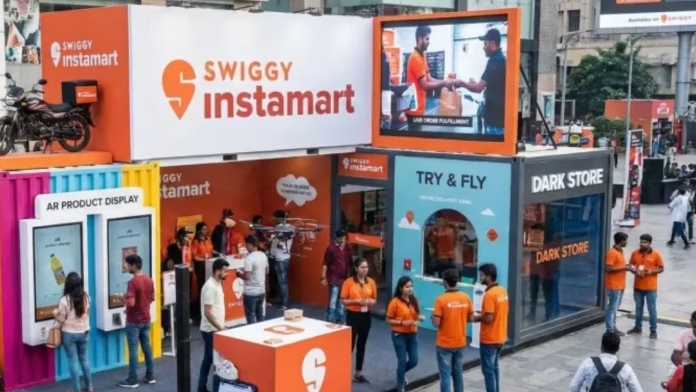
Instamart is preparing for its first festive season sale, scheduled for September 19–28, where it will roll out discounts of 50–90 percent across 50,000 non-grocery products. The move comes after a year of rapid category expansion, adding everything from beauty and skincare to home and kitchen essentials alongside its grocery backbone. Revised GST rates are also expected to give the platform an added boost.

Swiggy has guided that Instamart will reach contribution margin breakeven between Q3 FY26 and Q1 FY27. The firm reported a loss of Rs 1,197 crore in April–June, double the figure from a year earlier, as heavy spending in the space continues. Instamart added only 41 new dark stores in the June quarter compared with 316 in the previous quarter, signaling a shift from aggressive expansion to operational efficiency.

Instamart CEO Amitesh Jha, who joined from Flipkart last year, said brands and sellers are seeing “growth they haven’t seen in a decade” on the quick commerce channel. He added that the company has already built capacity to manage festive demand without inflating supply chain costs.

With rivals Blinkit and Zepto also jostling for festive share, Swiggy is betting that Instamart’s consumer-first strategy and broader catalog will help it stand out in India’s most competitive shopping season.

Advertisement

MRP Chaos After GST Cuts: Finance Ministry Weighs Industry Plea as ₹10,000-Crore FMCG Inventory Faces Input Tax Credit Crunch

0

The finance ministry, along with the Department of Consumer Affairs, is reviewing how companies should implement price changes following the sweeping GST rate cuts announced under GST 2.0. Industry bodies have warned that immediate repricing of all products, particularly unsold stocks, poses significant operational and financial challenges.

According to a Business Standard report, the government is considering allowing companies to factor in higher input costs already paid on inventory before mandating revised MRPs. This relief, if cleared, could be available until December 31, giving manufacturers and distributors breathing space to adjust. Officials are also studying how the directive should apply to sachet-based products like shampoos or sauces priced at Re 1 or Rs 5, where repackaging and repricing are virtually impossible. Goods already sold below the post-cut levels due to heavy discounts may also be exempt from further price corrections.

Tax experts point out that while consumers must benefit from lower rates, businesses are facing what they call a “double challenge.” Vivek Jalan, partner at Tax Connect Advisory Services, told the paper: “On one side, input tax credit on unsold stock has gone up, while refunds under the inverted duty structure are not permitted. Some flexibility in repricing will ease the transition burden.”

Separately, the ministry is examining the distortions created by moving several goods from the 12 percent slab to 5 percent without realigning duties on raw materials. This has triggered fresh inverted duty issues in FMCG and packaging sectors.

While the new structure of 5 percent and 18 percent slabs has been welcomed as a simplification, policymakers are now balancing consumer expectations of immediate price cuts with industry concerns over losses on existing stock.

Advertisement

WeHouse Gets Rs 25 Crore Funding to Reinvent Homebuilding; Investors Include Anthill Ventures, Pinnupreddy Jaya Aditya Reddy, Gaurav Marya

0

Hyderabad-based home construction startup WeHouse, formerly known as Hocomoco, has secured Rs 25 crore in Series A funding, a mix of debt and equity. The round saw participation from Anthill Ventures alongside prominent investors such as Pinnupreddy Jaya Aditya Reddy, film producer Suresh Babu Daggubati, Mohnish Yerra of Leaders for India, and Gaurav Marya of Franchise India Holdings.

The company said the fresh capital will be channelled into scaling operations, strengthening its technology stack, and entering new markets. Launches in Coimbatore and Ahmedabad are scheduled this month, adding to its existing footprint in four cities.

Founded in 2017 by Sripad Nandiraj and Rohan Reddy, WeHouse positions itself as a full-stack construction partner, integrating everything from government approvals and architectural design to project execution, interiors, and remote monitoring. According to the company, it has already delivered over 400 projects and currently holds an order book worth Rs 150 crore.

Speaking on the fundraise, CEO Sripad Nandiraj highlighted inefficiencies in India’s homebuilding sector, which is still plagued by delays, cost escalations, and fragmented vendors. “Our model is built on transparency, milestone-linked execution, and real-time visibility for homeowners. This investment gives us the firepower to deepen our technology and reinforce on-ground quality systems as we scale to new cities,” he said.

COO Rohan Reddy added that the company plans to use the funding to expand its workforce, strengthen process efficiencies, and maintain consistent delivery standards across geographies.

With the Indian real estate and home construction sector projected to reach USD 1 trillion by 2030, tech-driven platforms like WeHouse are aiming to formalize and digitize one of the country’s most unorganized markets, promising homeowners more accountability and control in building their dream homes.

Advertisement

‘Why Wait for Diwali’: Pepperfry Pushes Early Festive Sales With Pan-India Free Shipping, Heavy Discounts and Cashback Bonanza

0

Furniture and home décor marketplace Pepperfry has rolled out a nationwide campaign urging Indian households to break the habit of delaying purchases until the Diwali season. The initiative, titled “Why Wait for Diwali”, is designed to spread out the festive shopping rush while giving customers early access to deep discounts and special rewards.

Under the campaign, Pepperfry is offering discounts of up to 70 percent across its furniture and décor categories, including sofas, beds, dining sets, and accessories. Shoppers can also claim 25 percent cashback, free shipping across India, and an additional Rs 20,000 cashback for purchases made through Pepperfry Studios, the company’s offline experience centers.

The campaign leans on humorous and relatable advertising films that capture the frenzy of last-minute Diwali shopping. By portraying the stock-outs, crowded stores, and stressful decision-making associated with festival week buying, Pepperfry positions early shopping as the smarter alternative.

Archana K., head of brand marketing at Pepperfry, said the campaign reflects an effort to shift consumer behaviour. “In India, families have grown up with the idea of waiting for Diwali to upgrade their homes. But waiting also means missing out on choice, dealing with delivery delays, and shopping in a rush. With these offers already live, we want customers to enjoy the celebrations stress-free while giving their homes a head start.”

With over 200 Pepperfry Studios across the country and a strong e-commerce presence, the brand is betting that a mix of digital and offline promotions will help drive early demand. The company expects the campaign to not only reduce peak-season logistical pressure but also reinforce its positioning as a value-driven and customer-first platform for home makeovers.

Advertisement

Filter Coffee Goes National: Kochi’s Adhira & Appa Coffee to Brew 50 Outlets by March 2026 with Investments Ranging from Rs 15 Lakh to Rs 3 Crore

0

Kochi-based filter coffee chain Adhira & Appa Coffee (A&A) has announced an aggressive national rollout, targeting 50 new outlets across India by the end of this financial year. After debuting in Kochi earlier this year, the brand is now preparing to enter Hyderabad and Nashik, with expansion plans stretching across both metropolitan hubs and Tier-2 markets.

The company’s strategy hinges on a multi-format store model, designed to appeal to a wide range of consumers and investors. Investments will vary from Rs 15 lakh for mini kiosks to Rs 30 lakh for express kiosks, while larger formats include Rs 60 lakh flagship stores, Rs 90 lakh signature outlets, and Rs 1–3 crore master franchise models. The flexible rollout is intended to scale quickly while giving franchise partners options aligned with their budgets.

The response from our Kochi launch exceeded expectations, reaffirming that our blend of heritage recipes, innovation, and local artistry resonates deeply with consumers,” said Karan Mendon, co-founder and COO of A&A Coffee. He added that the brand aims to preserve the authenticity of South Indian filter coffee while modernizing the café experience for younger audiences nationwide.

Founded with a mission to bring traditional filter coffee to the mainstream in a contemporary format, A&A Coffee is positioning itself as an affordable yet aspirational brand. By focusing on compact store formats and Tier-2 city penetration, the company hopes to tap into India’s growing café culture beyond metros.

With its latest announcement, A&A joins the growing list of regional café startups pushing for national scale, competing with both established chains and boutique players. If execution matches ambition, the Kochi startup could emerge as a serious challenger in India’s Rs 25,000 crore café and coffee retail market.

Advertisement

Amul Clarifies: No ₹3–4 Cut in Pouch Milk, Only UHT Packs to Get Cheaper as GST Slashed from 5% to Nil from Sept 22

0

Amul has ruled out any reduction in the price of packaged pouch milk from September 22, clarifying that the product has always been exempt from Goods and Services Tax (GST). The statement comes amid widespread reports suggesting a possible cut of ₹3 to ₹4 per litre following the government’s announcement of the new GST 2.0 framework.

Jayen Mehta, Managing Director of Gujarat Co-operative Milk Marketing Federation (GCMMF), which markets Amul, said pouch milk prices remain unchanged as they continue to attract zero GST. “There is no change proposed in prices of fresh pouch milk. It has always been taxed at zero percent. Only long-life UHT milk will see a reduction due to the GST cut,” Mehta told ANI.

The relief will apply exclusively to UHT (Ultra-High Temperature) milk, which previously attracted 5 percent GST. From September 22, it will be fully exempt, making it cheaper for consumers. UHT milk, processed at temperatures above 135°C and packed aseptically, can be stored without refrigeration for several months, making it a convenient option for urban households and institutional buyers.

On September 3, Finance Minister Nirmala Sitharaman announced sweeping tax reforms under the “Next-Gen GST Reform,” aimed at easing the cost of living and spurring economic growth. The 56th GST Council meeting rationalised tax slabs into two tiers—5 percent and 18 percent—by merging the existing 12 percent and 28 percent brackets. The government expects the move to significantly benefit households, farmers, businesses, and the healthcare sector.

For India’s largest dairy cooperative, the clarification is timely. With milk prices closely linked to household budgets and inflation debates, Amul’s statement underscores that while GST 2.0 will bring relief on select products, daily essentials like pouch milk will remain unaffected.

Advertisement

From Cloud Kitchen to Global Kitchens: Shivani Sharma’s Maison Gourmestan Prepares Millet-Led Expansion into Dubai’s $16.5B Market

0

Dubai’s growing appetite for clean and conscious food is set to get a new champion. Shivani Sharma, founder of Maison Gourmestan, is preparing to introduce her millet-focused gourmet brand to the Middle East, beginning with Dubai. Known for her ability to reimagine traditional grains with a global touch, Sharma has already built a strong following in India among celebrity clients and health-conscious urban consumers.

A graduate of Le Cordon Bleu London, Sharma first gained traction with a cloud kitchen before formally launching Maison Gourmestan. Her philosophy has been simple yet powerful: spotlight locally grown ingredients sourced from mindful farmers and elevate them with refined culinary techniques. This approach has made millets, once considered niche, into coveted staples for a new generation of consumers seeking both nutrition and taste.

In Dubai, Maison Gourmestan plans to experiment with multiple formats, including quick-service restaurants, food trucks, and a fresh line of FMCG products. Sharma says the intent is to transform packaged foods by removing the dependence on preservatives and delivering freshness without sacrificing convenience. The brand will debut with a millet batter, followed by a series of new launches designed to position millet-based products as everyday kitchen essentials.

The expansion comes at a time when the UAE’s health and wellness food market is booming. According to Data Bridge Market Research, the segment was valued at USD 16.51 billion in 2024, with a projected CAGR of 11.74 percent through 2032. Globally, the whole millet market is estimated at USD 38.9 billion, while packaged millet foods account for around USD 42 million. Rising demand for nutrient-dense and sustainable foods provides a strong tailwind for Maison Gourmestan’s entry.

“Dubai is ready for a new kind of gourmet that blends indulgence with responsibility,” Sharma said, expressing confidence that her millet-first vision will resonate with Middle Eastern consumers.

Advertisement

Delhi HC Relief for IndiaMart in Fake Drug Case as Global Pharma Giants Cry Foul Over Unapproved Listings

0

The Delhi High Court has temporarily restrained the Central Drugs Standard Control Organisation (CDSCO) from pursuing criminal proceedings against IndiaMart, following allegations that the online marketplace listed unapproved medicines for sale. The matter will now return for hearing on September 17.

Justice Saurabh Banerjee observed that since the case had been heard earlier by another bench, it should be referred back to the same court. “Till then, no action should be taken,” he directed, according to people aware of the proceedings.

The case stems from complaints that IndiaMart hosted listings for drugs such as Crysvita, Oxbryta and Jynneos, which have not been cleared for sale in India. Japanese drugmaker Kyowa Kirin raised concerns about Crysvita, used in rare bone disorders, while the Intelligence Bureau flagged listings of Pfizer’s Oxbryta, a sickle cell disease treatment, and Bavarian Nordic’s Mpox vaccine Jynneos.

IndiaMart argued that it functions only as an intermediary connecting buyers and sellers, and therefore cannot be held liable under the Drugs and Cosmetics Act. Its lawyers cited Section 79 of the Information Technology Act, 2000, which provides “safe harbour” protection to intermediaries provided they act with due diligence and comply with government directives.

Regulators, however, contend that IndiaMart’s processes fall short of due diligence standards. Officials point out that sellers on the platform are not required to mandatorily submit GST or PAN details, making it possible for unverified parties to list products. Despite IndiaMart removing flagged listings, new entries for unapproved medicines reportedly resurface.

The CDSCO, which has intensified crackdowns on spurious drugs in recent years, initiated criminal proceedings after what it described as unsatisfactory responses to its notices. The High Court’s interim relief gives IndiaMart breathing space, but the broader debate on intermediary liability in India’s e-commerce sector is far from settled.

Advertisement