Home Blog Page 2

Kelly Slater’s Freaks of Nature Enters Functional Hydration with “Inside-Out” Sun Care

0

Performance skincare brand Freaks of Nature, co-founded by surfing legend Kelly Slater, has expanded into ingestible wellness with the launch of its Skin Support Electrolyte, marking its entry into the fast-growing functional beverage space.

The move signals a strategic shift from topical skincare to “inside-out” skin protection, targeting consumers who want hydration products that go beyond basic electrolyte replenishment. Positioned at the intersection of sports performance and beauty-from-within, the product is designed to support skin health under environmental stress such as sun exposure, heat, and endurance activity.

Unlike traditional electrolyte drinks that focus primarily on hydration minerals, the formula incorporates a blend of antioxidants and botanical extracts aimed at internal photoprotection. Key ingredients include Polypodium Leucotomos (linked to improved UV tolerance), red orange extract, and astaxanthin, all working to combat oxidative stress caused by sun exposure. The product also taps into the emerging gut-skin axis, adding prebiotic fiber and ginger root to support microbiome health and skin resilience.

Further differentiating itself, the electrolyte mix includes hyaluronic acid and vitamin C to promote cellular hydration and collagen support—extending its appeal beyond athletes to wellness-focused consumers. The product is zero sugar, vegan-friendly, and free from artificial additives, aligning with clean-label expectations.

Priced at around $55 for a 30-serving pack, the electrolyte powder is being sold via direct-to-consumer channels and select performance retailers, positioning it as a premium daily ritual rather than a functional supplement.

The launch is backed by Squared Circles, the brand’s incubator, which recently raised funding led by L Catterton. With this expansion, Freaks of Nature is aiming to bridge two high-growth markets—the electrolyte hydration segment and the beauty-from-within category—by redefining how consumers think about sun care and performance nutrition.

As the lines between skincare, nutrition, and fitness continue to blur, the brand’s latest move underscores a broader industry trend: wellness products are evolving into multi-functional ecosystems that deliver benefits both externally and internally.

Advertisement

Urban Company Shares Jump 9% as SBI Mutual Fund Buys ₹632 Crore Stake

0

Shares of Urban Company surged nearly 9% after SBI Mutual Fund acquired shares worth ₹632 crore through block deals, boosting investor sentiment following recent weakness in the stock.

The buying activity coincided with the expiry of the mandatory pre-IPO lock-in period, triggering significant stake sales by early investors. Entities including DF International Partners II, ABG Capital, and Wellington Hadley Harbor Aiv Master Investors (Cayman) III collectively offloaded shares worth ₹734 crore, representing around 4.6% of the company’s equity. Notably, DF International Partners II and Wellington Hadley Harbor exited their entire holdings.

Despite the sharp rally, Urban Company’s stock performance has remained under pressure. The shares are down 16% year-to-date and have declined over the past month, trading only modestly above their IPO price of ₹103, after debuting at a strong premium in September 2025.

On the financial front, the company reported a net loss of ₹21 crore in the December quarter, compared to a profit in the year-ago period, as continued investments in its high-frequency services vertical—particularly housekeeping—impacted profitability. However, revenue from operations grew 33% year-on-year to ₹383 crore, while net transaction value rose 36%, indicating sustained demand and business expansion.

The recent block deal activity highlights a typical post-lock-in reshuffling of shareholding, where early investors exit and institutional players step in. SBI Mutual Fund’s entry at scale suggests long-term confidence in Urban Company’s growth trajectory, even as the company navigates profitability challenges amid aggressive expansion.

Advertisement

“Is Coffee the New Cocoa?” Price Rally May Reverse as Demand Softens

0

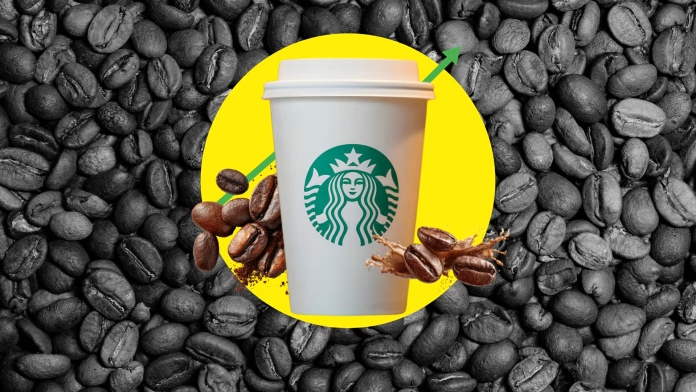
A growing number of industry experts believe coffee prices could mirror the sharp rise-and-fall trajectory seen in cocoa, with expectations building for a potential price correction in the coming months.

At the annual convention of the National Coffee Association in Tampa, analysts highlighted parallels between the two commodities. Cocoa prices had surged to record highs in 2024 due to supply constraints, only to plunge over 70% as consumers cut back on expensive chocolate and manufacturers adjusted formulations.

A similar pattern is now emerging in coffee markets. Prices for premium arabica beans rose sharply in 2025 due to adverse weather in key producing regions and trade disruptions, including tariff-related distortions. However, expectations of a strong recovery in production—particularly in Brazil—are now putting downward pressure on prices.

Market analysts suggest coffee could fall significantly from current levels. Some forecasts indicate prices may drop to around $2 per pound or lower, compared to recent levels near $2.93, as high prices begin to dampen demand.

Consumer behavior is already shifting. Surveys show that over 60% of consumers are cutting back on coffee spending, either by reducing café visits or switching to cheaper options. While overall coffee consumption remains stable, demand for premium arabica varieties is weakening, with more consumers turning to lower-cost robusta beans.

Industry players are also adapting. Coffee merchants report a shift in market share toward robusta, while brands are adjusting product mixes to maintain affordability. Unlike cocoa, however, coffee demand has not collapsed entirely—analysts expect consumption to recover modestly in 2026 as prices ease.

That said, not all experts are convinced coffee will replicate cocoa’s dramatic crash. Factors such as gradual selling by well-capitalized Brazilian farmers and structural differences in demand could limit the extent of the decline.

Still, the broader takeaway is clear: after a tariff-driven rally and supply shocks, coffee markets may be entering a correction phase, with pricing increasingly dictated by consumer sensitivity and shifting global supply dynamics.

Advertisement

Unilever Weighs Food Business Spin-Off to Double Down on Beauty and Wellness

0

Consumer goods giant Unilever is exploring a potential separation of its food business, as it looks to sharpen focus on faster-growing segments like beauty, personal care, and wellbeing.

According to sources, the company is in early-stage discussions with advisors to evaluate options that could include spinning off all or part of its food portfolio. While no final decision has been made, any move is unlikely before 2027 and could value the food division at tens of billions of dollars.

A separation would allow Unilever to concentrate on high-margin brands such as Dove and Axe, aligning with CEO Fernando Fernandez’s strategy to pivot toward beauty-led growth. Analysts note that the company has already been actively streamlining its portfolio, signalling a clear shift in long-term priorities.

Unilever’s food division includes well-known global brands like Hellmann’s, Knorr, Maille, and Marmite, with Hellmann’s and Knorr alone contributing a significant share of total food sales.

The potential move follows a series of portfolio reshaping efforts by the company. In 2025, Unilever spun off its ice cream business into a separate entity, Magnum Ice Cream Co., while continuing to divest smaller and non-core food brands over the years.

The strategic rethink comes amid broader challenges in the global food sector, including slowing consumer demand, rising competition from private labels, and shifting consumption patterns driven by health trends. As a result, large FMCG players are increasingly prioritising categories with stronger growth and pricing power.

While Unilever may ultimately retain parts of its food portfolio or pursue a partial spin-off, the ongoing review underscores a clear direction: a leaner business model built around beauty, personal care, and wellness-led growth.

Advertisement

Hemp “Spirits” and Functional Energy Lead U.S. Retail Distribution Push

0

The third week of March 2026 is seeing a wave of distribution activity across the U.S., with emerging beverage brands expanding into new retail channels, geographies, and formats—from hemp-derived THC drinks entering spirits networks to functional energy brands scaling nationally.

One of the most notable moves comes from Woodstock Goods, which has partnered with Craft & Art Wine & Spirits to bring its hemp-derived THC beverages into a professional alcohol distribution ecosystem. The partnership enables Woodstock to expand beyond its existing markets into high-growth states like Texas, Florida, and the Carolinas, marking a significant step in legitimising “sessionable” THC drinks within the broader spirits category. Its products blend low-dose THC with adaptogens and nootropics, targeting mood-based consumption occasions such as relaxation and social uplift.

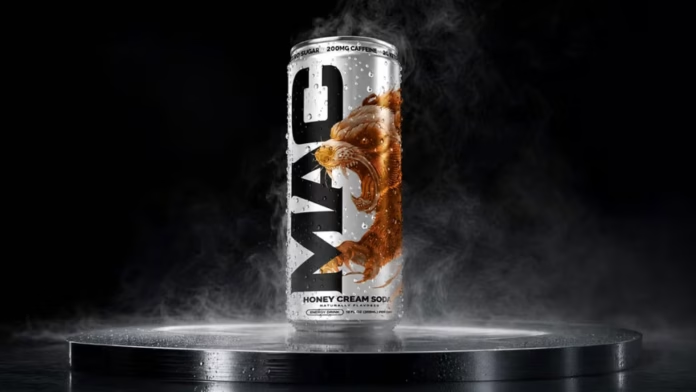
Meanwhile, Target is strengthening its wellness beverage portfolio with two major additions. Functional drink brand LEVL has launched in over 350 East Coast stores, while Bizzy Cold Brew is rolling out its new Double Espresso Shots to around 1,000 locations nationwide. These compact, portable formats are designed for flexible consumption—whether sipped, shot, or mixed—catering to on-the-go consumers.

In the natural retail segment, Juno Energy has partnered with Sprouts Farmers Market to expand its presence across the chain’s stores, aligning with Sprouts’ focus on clean-label and organic energy alternatives. At the same time, Drink Weird is accelerating its regional expansion in California through a distribution tie-up with Heimark Distributing, strengthening its footprint in inland and desert markets.

Together, these moves highlight a broader industry shift: retailers and distributors are increasingly backing functional, alternative, and lifestyle-driven beverages, from THC-infused drinks to clean energy formats. As consumer preferences evolve, distribution—more than product innovation alone—is emerging as the key battleground for scaling the next generation of beverage brands.

Advertisement

Little Spoon Enters Infant Formula Market with “Radical Transparency” Play

0

D2C baby nutrition brand Little Spoon has officially entered the $4 billion U.S. infant formula market, launching its Organic Grass-Fed Whole Milk Infant Formula on March 17, 2026. The move marks a major expansion for the company, which is positioning itself as a trust-first, transparency-led alternative in a category still recovering from safety concerns and recalls.

At the core of the launch is what Little Spoon calls a “new gold standard” for safety and disclosure. The brand is the first in the U.S. to provide batch-level testing data, allowing parents to verify the safety of the exact product they purchase. Each batch is independently tested for over 500 contaminants, including heavy metals and pesticide residues, while also exceeding global benchmarks with stricter voluntary testing for pathogens linked to infant health risks.

The formula itself is built around grass-fed whole milk sourced from New Zealand, with dual certification under USDA Organic and EU Organic standards. Designed to mimic the nutritional profile of breast milk, it features a 60:40 whey-to-casein ratio for easier digestion and excludes common additives such as corn syrup, palm oil, soy, and GMOs. Functional additions like plant-based DHA, ARA, and prebiotics further align the product with evolving parental preferences around clean-label nutrition.

The launch comes at a pivotal time for the infant formula industry, where consumer trust remains fragile following supply shortages and safety controversies. By emphasizing full transparency, third-party validation, and cleaner formulations, Little Spoon is aiming to redefine how parents evaluate infant nutrition brands.

Strategically, the rollout also aligns with the company’s broader omnichannel ambitions. After crossing $150 million in revenue as a digital-first brand, Little Spoon is expanding into physical retail through curated partnerships, including a planned rollout into select stores later this year.

With this move, Little Spoon is not just entering a new category—it is attempting to reshape industry norms around safety, sourcing, and accountability, betting that transparency will become the defining differentiator in the next phase of infant nutrition.

Advertisement

Early Summer Heat Triggers Surge in Quick Commerce and D2C Demand

0

An early onset of summer across India is accelerating demand for seasonal essentials, prompting brands and platforms to ramp up inventory, supply chains, and operations ahead of a prolonged high-consumption period.

Quick commerce platforms such as Flipkart Minutes, Amazon Fresh, and others are already witnessing sharp spikes in demand for cooling products, beverages, and impulse-driven categories. According to industry estimates, sales of items like ice creams, lassi, buttermilk, and ice cubes are expected to grow multiple times in the coming weeks, driven by rising temperatures.

Early indicators point to strong consumer traction, with platforms reporting a 3x surge in swimming essentials and ice cube trays, alongside a 2x rise in products like caps and summer accessories. Premium and healthier ice cream variants are also gaining share, accounting for nearly 15% of category sales, with overall growth trending at around 30% year-on-year.

For quick service brands like Boba Bhai, the seasonal shift is already visible. The company has recorded a 25% increase in beverage-led orders, with drinks now forming nearly half of total delivery orders—a figure expected to rise further during peak summer. The brand anticipates overall demand to grow by 30–35% in the coming months.

Meanwhile, ice cream and beverage manufacturers are scaling production aggressively. Brands like Hocco have more than doubled capacity and are expanding manufacturing infrastructure to meet anticipated demand, which could see up to 100% year-on-year growth during the season.

However, the surge comes with operational challenges. Rising input costs—particularly a 50% spike in plastic prices—and supply constraints linked to LPG shortages are putting pressure on packaging and production. Despite this, companies remain optimistic, with most accelerating procurement and logistics planning to avoid disruptions.

The broader trend underscores how quick commerce is becoming the default channel for impulse, weather-driven purchases, while D2C brands continue to benefit from rising demand for convenience and instant gratification—making this summer a critical growth window for India’s consumer ecosystem.

Advertisement

Ferrero Acquires BOLD Snacks to Enter South America’s “Better-For-You” Segment

0

Ferrero Group has signed an agreement to acquire BOLD Snacks, marking its entry into the fast-growing health and wellness snack category in South America and expanding its global functional foods portfolio.

Founded in 2018 by Gabriel Ferreira, BOLD Snacks has rapidly emerged as one of Brazil’s leading premium protein snack brands, known for its digital-first strategy, high-protein bars, and expansion into whey-based products. The acquisition includes the company’s manufacturing facility and headquarters in Divinópolis, along with a workforce of around 300 employees who will join Ferrero’s existing operations in Brazil.

The move aligns with Ferrero’s broader strategy to build a global “better-for-you” portfolio, complementing its traditional confectionery business. BOLD Snacks will join a growing lineup of functional brands under Ferrero, including Power Crunch, FULFIL Nutrition, and Eat Natural, as the company diversifies into high-growth nutrition segments.

Brazil represents a strategic market for this expansion, with the healthy snacks category projected to grow steadily in the coming years, driven by rising middle-class consumption and increasing demand for protein-rich, functional foods. The acquisition also complements Ferrero’s earlier move to strengthen its regional footprint through Dori Alimentos, enabling a balance between mass-market and premium offerings.

In addition to product expansion, Ferrero is expected to leverage BOLD’s direct-to-consumer capabilities and digital expertise, potentially applying similar strategies across its Latin American operations.

The transaction is subject to regulatory approvals and is expected to close in the coming months, reinforcing Ferrero’s shift toward becoming a diversified global snacking powerhouse beyond traditional indulgence categories.

Advertisement

Zoff Foods Raises $2 Million from JM Financial PE to Expand Ecommerce and Retail Presence

0

Digital-first packaged spices brand Zoff Foods has secured $2 million in fresh funding from JM Financial Private Equity, highlighting continued investor interest in direct-to-consumer (D2C) food brands.

This marks the second investment by JM Financial Private Equity in Asquare Foods and Beverages, which owns Zoff Foods. The firm had earlier invested ₹40 crore in August 2024.

Funding to Support Expansion

According to Akash Agrawalla, the latest funding will be used to strengthen the company’s ecommerce presence while also expanding its offline retail distribution network.

The investment reflects a broader trend of premiumisation in everyday food categories, including spices, as consumers increasingly shift toward branded and packaged products.

Building a National Spices Brand

Founded in 2018 in Raipur by brothers Akash and Ashish Agrawalla, Zoff Foods produces a range of ground, blended, and whole spices under its brand name “Zone of Fresh Foods.”

Investors see a major opportunity in the segment due to the lack of a dominant nationwide spices brand, as the category has historically been highly regional and fragmented.

Vinit Rai noted that consumer behaviour in the spices category is evolving rapidly, driven in part by the rise of quick commerce and increasing demand for premium packaged food products.

Rising Interest in Spices Brands

India’s spices market has also been witnessing increased consolidation activity. Large FMCG companies such as ITC Limited, Dabur, and Emami have recently acquired stakes in smaller regional spice brands to strengthen their presence in the competitive market.

Despite interest from larger corporations, Zoff Foods has indicated that it is not currently planning to sell a stake in the business.

A Rapidly Growing Market

According to projections by IMARC Group, the Indian spices market is expected to grow from ₹2.2 lakh crore in 2025 to ₹5.2 lakh crore by 2034, reflecting a compound annual growth rate (CAGR) of around 10.14 percent between 2026 and 2034.

The shift from unorganised loose spices to branded packaged products and ready-to-cook blends is expected to drive much of this growth.

Financial Performance

Zoff Foods reported ₹103 crore in revenue for FY25, up from ₹93 crore in FY24, according to filings with the Registrar of Companies.

With fresh funding and a growing focus on both online and offline distribution, the company aims to strengthen its position in India’s rapidly evolving packaged spices market.

Advertisement

Brown-Forman Plans New Premium Spirit Launches in India Amid Luxury Liquor Boom

0

US spirits giant Brown-Forman, best known for producing Jack Daniel’s, is planning to introduce several premium alcohol brands in India over the next two to three years, as it looks to strengthen its presence in one of the world’s fastest-growing spirits markets.

The company intends to bring labels such as El Jimador, Herradura, and Benriach to the Indian market, expanding its premium portfolio to cater to rising demand for high-end spirits.

India Emerging as a Key Growth Market

According to Gaurav Sabharwal, Managing Director of Brown-Forman India, the company sees India as a future priority market as consumer aspirations and purchasing power continue to grow.

He noted that while demand for premium products existed earlier, limited accessibility and affordability restricted growth. Today, rising incomes and better availability have aligned with consumer aspirations, making the market more attractive for global liquor brands.

Industry data suggests the opportunity could be substantial. Market insights firm IWSR forecasts that India could become the world’s largest spirits market by volume by 2032, surpassing China, with 15–20 million new consumers entering the category each year.

Expanding the Brand Portfolio

Brown-Forman currently sells around 10 brands in India, including Woodford Reserve, Gin Mare, and Glendronach. Globally, however, the company manages more than 40 brands, indicating significant room for portfolio expansion in the country.

The company plans to introduce three to four additional brands in the near term as it builds a stronger presence in India’s premium spirits segment.

Growth Despite Global Headwinds

Brown-Forman India reported 21% sales growth to ₹2.1 billion in the financial year ending March 2025. Globally, however, the company saw net sales decline 5% to $4 billion in the year ending April 2025, reflecting softer consumer spending in key markets such as the United States.

India, therefore, represents a strategic opportunity for long-term expansion as premium consumption rises among affluent urban consumers.

Regulatory Challenges Remain

Despite strong growth prospects, India’s alcohol industry remains one of the most regulated markets globally. Companies must navigate high taxes, advertising restrictions, and complex state-level regulations, which often make nationwide expansion challenging.

Sabharwal noted that building a diversified brand portfolio and broader distribution network is essential for global players looking to succeed in the Indian market.

Premiumization Driving the Category

The company’s expansion strategy aligns with a broader trend of premiumization in India’s alcohol market, where consumers are increasingly willing to spend on higher-quality imported spirits.

With rising disposable incomes and changing consumption patterns, global liquor brands are betting that India could become one of the most important growth engines for premium spirits over the next decade.

Advertisement