Saturday, December 20, 2025
Home Blog Page 147

Lotte’s ₹2,500 Crore India Gamble: Pepero Launch, Havmor Expansion & a $300M Investment Plan

0
Image of pepero

New Delhi: South Korean giant Lotte Wellfood is doubling down on India with a bold expansion strategy, bringing its global bestsellers to Indian consumers while aggressively scaling up production and investment. The company, best known for its Choco Pie, is set to launch its wildly popular Pepero chocolate-coated biscuit sticks in India this July.

The move comes as Lotte sees massive potential in India’s snacking and frozen dessert markets. With a ₹500 crore investment already poured into its new Havmor ice cream plant in Pune, the company has an even bigger vision—an additional $300 million (₹2,500 crore) investment plan over the next five years to expand its supply chain, boost manufacturing, and capture a bigger slice of India’s growing snack market.

Pepero’s Big Debut in India

Pepero, which dominates Korea’s snack shelves, will be produced outside Korea for the first time at Lotte’s Haryana facility. The brand is banking on India’s surging K-food and K-pop obsession to drive sales.

“It is the number one branded confectionery snack in Korea, and we will be launching and introducing it to Indian consumers in July,” said Paul Yi, CEO of Lotte Wellfood.

Continue Exploring: The End of a Retail Era: Neville Noronha Checks Out, Anshul Asawa Checks In

Currently, Choco Pie is Lotte’s flagship product in India, but the company is eager to diversify. “We are actively exploring other snack categories,” Yi added, hinting at a much broader play in India’s ₹16,000 crore organized snack market.

₹500 Crore Ice Cream Factory & Expansion Plans

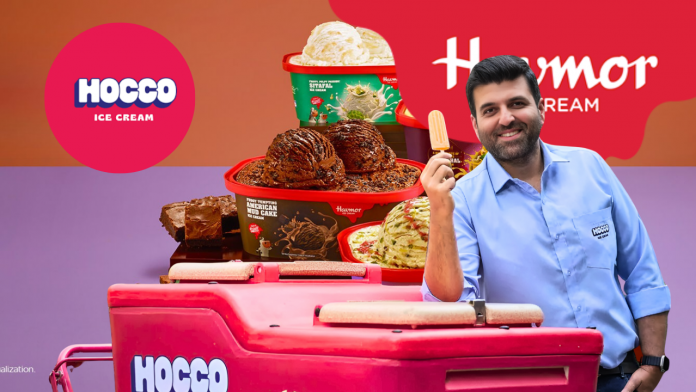
Lotte’s Havmor ice cream business is another key focus. In 2017, Lotte acquired Havmor, and since then, it has been working to scale production and distribution across India. The new Pune plant, with an initial annual capacity of 50 million liters, is designed to double production to 100 million liters in the coming years.

Lotte is also pushing Havmor beyond its traditional stronghold in Gujarat, expanding its reach to Bengaluru, Chennai, and other major cities.

“We see tremendous opportunity in India’s ice cream market. Compared to China’s $23 billion industry, India’s is still small, but as the consumer base grows, we expect massive expansion,” Yi noted.

Continue Exploring: NONSTOP launches first flagship store in Mumbai, offering mobility and wellness solutions

The $300M Bet on India’s Future

With its three-to-five-year roadmap, Lotte is planning an additional $300 million (₹2,500 crore) investment to scale up manufacturing and logistics. “As we revisit our plans, they will evolve, and my guess is the investment will only go up,” Yi said.

The company is also exploring exports from India, particularly to the Middle East and Africa, while keeping its primary focus on dominating the Indian market.

Currently, Havmor generates $200 million in revenue and holds a 5% share of India’s branded ice cream market, but Lotte aims to significantly grow this figure in the coming years.

Merger and Future Roadmap

Last year, Lotte announced the merger of Lotte India and Havmor Ice Cream into a single entity, streamlining operations for greater efficiency. The process is on track to be completed by March 2025, according to Yi.

With Pepero’s India debut, Havmor’s aggressive expansion, and a multi-billion-rupee investment pipeline, Lotte is making it clear—it’s here to stay, and it’s ready to take on India’s biggest food brands.

Advertisement

How Two College Friends Built Topcan Beverages to Reinvent Cocktail Mixing

0
Image of topcan
How Two College Friends Built Topcan Beverages to Reinvent Cocktail Mixing

For Ronak Jaiswal and Nishchay Kaura, the idea for Topcan Beverages wasn’t born in a boardroom—it started in college, over the shared frustration of making a decent cocktail. Mixing drinks was fun, but the process was always too complicated. Measuring ingredients, shaking, and stirring took away from the experience.

“We just wanted a quick, great-tasting cocktail without all the hassle,” Ronak recalls. “It felt like there had to be a better way.”

Continue Exploring: The End of a Retail Era: Neville Noronha Checks Out, Anshul Asawa Checks In

That thought turned into an obsession. Why wasn’t there an easy, portable way to enjoy cocktails without compromising on customization?

A Simple Yet Revolutionary Idea

While the beverage industry offered everything from ready-to-drink cocktails to cocktail mixers, there wasn’t a product that allowed drinkers to personalize their drinks on the go. That’s where Topcan Beverages came in.

Their breakthrough? A 250ML can that left 80ML of space for consumers to add their own choice of alcohol.

With a fully removable lid, users could pour in their preferred spirit, shake the can, and enjoy a freshly mixed cocktail—no bartending skills required.

“We didn’t want to create just another canned cocktail. We wanted something that let people experiment while keeping things simple,” Nishchay explains.

To make the experience even better, they added a soft, resealable plastic lid, turning the can into a portable cocktail shaker.

Continue Exploring: NONSTOP launches first flagship store in Mumbai, offering mobility and wellness solutions

“The resealable lid changed everything,” says Ronak. “You could mix your drink, take it anywhere, and not worry about spills.”

A Lineup of Flavors That Hits Every Note

Flavors could make or break the concept, so the duo carefully crafted their lineup to offer a mix of classic and uniquely Indian options:

• Sex on the Beach

• Cosmopolitan

• Goldrush

• Green Mango Litchi

• Kala Khatta

“We wanted to offer something familiar but also bring a local twist,” Ronak says. The response to their Indian-inspired flavors, especially Kala Khatta, has been overwhelming. “It reminds people of their childhood, and they love experimenting with different spirits,” Nishchay adds.

More Than Just a Drink—A New Way to Experience Cocktails

Topcan Beverages isn’t just about convenience; it’s about giving consumers control over their drinks. By blending customization, ease, and great flavors, Ronak and Nishchay have created something that fits perfectly into today’s fast-paced lifestyle.

What started as a simple college frustration has now become a full-fledged business—one that’s changing the way people think about cocktails.

Advertisement

Zomato Limited Renames Itself ‘Eternal Limited’: Deepinder Goyal’s Bold Move Signals a New Era

0
Image of zomato
Zomato Limited Renames Itself ‘Eternal Limited’: Deepinder Goyal’s Bold Move Signals a New Era

In a major corporate shift, Zomato Limited—India’s leading food delivery giant—has announced its decision to rebrand as ‘Eternal Limited.’ The move, approved by the company’s board on February 6, 2025, reflects Zomato’s ambitions beyond food delivery and aligns with its expanding business portfolio.

Corporate Rebrand, But the App Stays ‘Zomato’

Despite the name change at the corporate level, the Zomato app will continue to operate under its existing brand. CEO Deepinder Goyal emphasized that this decision is not just a rebranding exercise but a mission statement that defines the company’s long-term vision.

“This isn’t just about renaming the company,” Goyal explained in a letter to the Bombay Stock Exchange (BSE). “It’s a reflection of our evolution. While Zomato remains a household name, our corporate identity needs to represent something bigger.”

Continue Exploring: The End of a Retail Era: Neville Noronha Checks Out, Anshul Asawa Checks In

Why ‘Eternal’? The Growing Empire Behind the Name Change

Zomato has rapidly diversified in recent years. Beyond its ₹1.3 lakh crore ($16 billion) food delivery business, the company has aggressively expanded into new verticals:

• Blinkit – Zomato’s ₹18,000 crore quick-commerce subsidiary, delivering groceries and essentials within minutes.

• Hyperpure – A restaurant supply chain business fueling the backend of India’s food industry.

• Zomato District – A loyalty program designed to enhance user engagement and retention.

Goyal revealed that internally, the company had already started using ‘Eternal’ after acquiring Blinkit. “We needed a way to differentiate between the company and the Zomato brand. Now, with Blinkit becoming a key growth driver, the time has come to make it official.”

Continue Exploring: NONSTOP launches first flagship store in Mumbai, offering mobility and wellness solutions

‘Eternal’—A Name That Inspires and Intimidates

Goyal acknowledged that ‘Eternal’ is a bold and daunting name.

“To be honest, it scares me to my core. It’s an expectation we must live up to. True endurance isn’t about making grand declarations of invincibility—it’s about adapting and evolving continuously. The moment we assume we’ll last forever just because we say so, we start our downfall.”

What’s Next? Regulatory Approvals & Stock Ticker Update

Before ‘Eternal Limited’ becomes official, the name change must receive:

1. Shareholder approval

2. Final clearance from India’s Ministry of Corporate Affairs

Once approved, the company will update its corporate website from zomato.com to eternal.com, and its stock ticker will change accordingly.

A Strategic Gamble or a Masterstroke?

This move marks one of the most significant rebrands in India’s tech ecosystem. While some may see it as a strategic masterstroke, others might question whether the Zomato name—built over years of trust and recognition—should have been retained at the corporate level.

With Blinkit’s rapid rise and Zomato’s multi-business ecosystem, the shift to Eternal Limited signals a company that no longer wants to be defined by just one business. Whether it’s a gamble or a visionary step, one thing is clear—Deepinder Goyal isn’t afraid to take big swings.

Advertisement

How Salad Days Became India’s No.1 Healthy Food Brand—And Why Investors Are Lining Up

0
Image of salad food
How Salad Days Became India’s No.1 Healthy Food Brand—And Why Investors Are Lining Up

In a recent interview with Ashu Agrawal of Snackfax, Varun Madan, the founder of Salad Days, shared the inspiring journey of his brand, which has grown to become a leader in the healthy food space in India. From its humble beginnings in 2014 to expanding across multiple cities with over 25 cloud kitchens, Salad Days has reshaped the way Indians perceive and consume nutritious meals.

From Crunching Numbers to Crunching Greens: How Salad Days Was Born

Varun Madan, an engineer from NSIT Delhi and an MBA graduate from XLRI Jamshedpur, started his career in corporate strategy and M&A at Wipro. However, his passion for food and health led him to launch Salad Days in February 2014. At the time, the idea of salads as a full meal was virtually non-existent in India. The market associated healthy food with bland, unsatisfying meals, and the only widely available “healthy” option was Subway.

Madan saw a gap in the market and decided to fill it with fresh, nutritious, and tasty salads. But building a business around this concept came with its own challenges. “Back then, there was no demand for salads as meals. We had to educate customers, create the category, and solve major supply chain issues,” he explained.

Turning Over a New Leaf: Conquering Early Challenges

The biggest hurdle was sourcing fresh ingredients, particularly iceberg lettuce and other greens, in large volumes. To ensure consistent quality, Madan took the unusual step of setting up his own farm. Over the years, this farm evolved from a small kitchen garden to a 17-acre operation and now stands at a focused 3-acre facility used for community-building activities like strawberry picking.

The business also had to navigate the early days of online food delivery in India. When Zomato and Swiggy entered the scene in 2014-15, Salad Days was already operating, making it one of the first brands to adopt the cloud kitchen model seriously.

Growing the Green Empire: Scaling Up the Right Way

For years, Salad Days focused on perfecting its operations in Delhi-NCR, running a handful of cloud kitchens while fine-tuning its processes. However, three years ago, with increasing customer demand and a growing market for healthy food, Madan decided it was time to scale.

From just four kitchens, the brand expanded to 10, then 23, and eventually 25 across Delhi, Bangalore, and Mumbai. This expansion was entirely bootstrapped, with Salad Days remaining profitable throughout—a rare achievement in the food tech space.

“We have been growing ourselves, and we have been profitable while bootstrapped. That gave us the liberty to choose our investors carefully,” Madan noted, highlighting his strategic approach to fundraising.

Smart Money, Smarter Growth: The Investor Playbook

With the latest round of funding, Madan aims to strengthen Salad Days internally before further expansion. “Scaling up internally is just as important as external growth. We want to invest in talent acquisition, technology, and better operational controls,” he said.

Over the next year, the company plans to open 15-20 more cloud kitchens, focusing on deepening its presence in existing markets before entering new cities. Profitability remains a top priority, and every new location will be chosen based on data-driven decision-making rather than aggressive expansion for the sake of numbers.

Beyond Bowls: Reinventing Healthy Eating One Bite at a Time

While the core of Salad Days will always be healthy meals, the company is looking at expanding its menu strategically. Madan is particularly interested in snacking options, an area he sees as a “low-hanging fruit” for growth.

The brand already introduces seasonal and local specialties, such as its well-loved Kanji, and will continue experimenting with innovative, nutritious offerings. However, the fundamental philosophy remains unchanged: “We are not a diet food brand. We don’t want customers to think of us only when they’re on a health kick. We want to make healthy eating a lifestyle choice—something they order as frequently as pizza or biryani.”

The Road Ahead: Bigger, Better, and Always Fresh

With profitability, strategic funding, and a clear vision for the future, Salad Days is well-positioned for its next phase of growth. As Madan put it, “We’ve done things our way, patiently and sustainably, and now we’re ready to take things to the next level.”

For Indian consumers looking for convenient, delicious, and genuinely healthy food, Salad Days continues to set the benchmark—and it’s only just getting started.

Advertisement

Ananya Birla Enters the Beauty Industry: A Bold Step into a Booming Market

0
Image of Ananya Birla
Ananya Birla Enters the Beauty Industry: A Bold Step into a Booming Market

Ananya Birla, the 30-year-old entrepreneur and daughter of billionaire Kumar Mangalam Birla, is making a dynamic foray into the beauty and cosmetics industry. On Wednesday, she announced the launch of her latest venture, marking a significant expansion of her business footprint into one of the fastest-growing consumer sectors.

A New Chapter in Ananya’s Entrepreneurial Journey

Having already made a mark with Svatantra Microfin one of India’s largest microlending firms Ananya is now gearing up to introduce a range of beauty and personal care brands by 2025. The move aligns with the evolving landscape of India’s beauty industry, where demand for high-quality, homegrown products is at an all-time high.

“The Indian consumer is more aware than ever, with greater exposure to global trends and a growing expectation for high-performance, authentic products,” said Ananya Birla. “This venture is about meeting those expectations with world-class offerings designed specifically for our market.”

The Market Opportunity: A Multi-Billion-Dollar Industry on the Rise

The Indian beauty and personal care market is on an impressive growth trajectory, projected to expand at an annual rate of 10-11% and reach USD 34 billion by 2028. The surge is driven by rising disposable incomes, deeper e-commerce penetration, and evolving consumer preferences. With this backdrop, Ananya’s entry into the segment is both timely and strategic.

The venture will roll out products across multiple categories, including makeup and fragrances, through a phased launch. While the brand name and investment specifics remain undisclosed, the focus will be on delivering international-quality products with distinctive packaging that celebrates individuality. A global footprint is also on the horizon, signaling ambitions beyond the domestic market.

Beyond Business: Innovation and Impact

This isn’t Ananya’s first foray into disruptive entrepreneurship. She recently introduced a beta version of a homegrown AI platform and remains a strong advocate for mental health awareness. Additionally, she is a singer-songwriter with a global fanbase, bringing a unique blend of creativity and business acumen to her ventures.

Her track record with Svatantra Microfin speaks volumes about her commitment to impact-driven enterprises. The firm has touched over 5 crore lives across 20 states, empowering individuals through financial inclusion. Now, with her latest venture, she aims to redefine beauty and personal care in India, just as she has transformed the microlending space.

A Disruptor in the Making

With her deep understanding of consumer behavior, innovation-driven approach, and global outlook, Ananya Birla is poised to make a significant mark in the beauty industry. As she takes this bold step into a rapidly expanding sector, all eyes will be on how her new venture shapes the future of beauty in India and possibly, beyond.

Advertisement

Nua Secures INR 35 Crore in Pre-Series C Round, Eyes Expansion and Innovation

0
Image of Ravi Ramachandran
Nua Secures INR 35 Crore in Pre-Series C Round, Eyes Expansion and Innovation

Mumbai-based women’s wellness and hygiene brand Nua has secured INR 35 crore in a pre-Series C funding round, marking a significant milestone in its growth journey. The funding was led by Mirabilis Investment Trust, with participation from industry stalwarts including Samir Singh, EVP for Asia at Colgate Palmolive and former Chair of Unilever SE Asia, and Shuchi Kothari, Head of DSP Family Office and SRF Limited.

Scaling Retail Presence and Product Innovation

The fresh capital injection is set to accelerate Nua’s ambitious plans to expand its retail presence and diversify its product portfolio across multiple key channels, including marketplaces, quick commerce, and offline retail. This latest round brings the company’s total funding to USD 21.5 million, backed by a roster of notable investors, including Lightbox VC, Kae Capital, Bollywood actress Deepika Padukone, and former Unilever Global President Vindi Banga.

Ravi Ramachandran, CEO and Co-founder of Nua, shared his enthusiasm for the company’s remarkable growth, stating, “The past 12 months have been exceptional for Nua. Not only have we turned profitable, but we have also grown over 2.5x in revenue. We reached an important milestone by becoming profitable in Q2, crossed INR 100 crore net revenue ARR in Q3, and are now on track to reach INR 150 crore net revenue ARR in the next quarter. The capital raised in the current round will accelerate our journey to achieving the growth milestones we have set for ourselves.”

A Journey of Innovation in Women’s Wellness

Founded in 2017 by Ravi Ramachandran, Nua has been at the forefront of transforming women’s wellness in India. What started as an innovative brand offering toxic-free sanitary pads has evolved into a holistic provider of personalized and comprehensive wellness solutions for women. Today, Nua’s expanding portfolio includes period panties, intimate hygiene products, cramp-care solutions, post-partum care products, and skincare solutions designed for cyclical acne.

Over the past year, Nua has significantly enhanced its product line-up, launching extra-long night pads, disposable period panties, menstrual cups, and post-partum care essentials. These products are now widely accessible via Nua’s website and leading e-commerce platforms, including Zepto, Amazon, and Flipkart.

Investors Back Nua’s Vision for Menstrual Health Transformation

Speaking on the investment, Srinivas Seshadri, Head of Investments at Mirabilis Investment Trust, remarked, “We look forward to a great journey with Nua in reshaping the menstrual health landscape in our country. The team has demonstrated exceptional growth and a clear path to sustained profitability while serving a greater purpose normalizing conversations around menstrual health, offering holistic solutions, and empowering women with better choices. Nua’s broad product portfolio and strong presence across channels position it well to serve a growing tribe of women seeking exceptional performance, value, and convenience.”

Paving the Way for Future Growth

As Nua continues to disrupt the women’s wellness space, this latest funding round is a testament to its strong market positioning, innovative product strategy, and commitment to women’s health. With profitability in sight and ambitious expansion plans underway, the company is poised to redefine how women’s wellness products are perceived and consumed in India.

With a clear vision, robust backing, and an expanding consumer base, Nua is on track to set new benchmarks in the industry. If the current trajectory continues, the brand is well-positioned to become a dominant force in the evolving landscape of women’s hygiene and wellness solutions.

Advertisement

Swiggy’s Q3 FY25: Strong Growth Meets Profitability Challenges Amid Rising Competition

0
Image of zomato
Swiggy’s Q3 FY25: Strong Growth Meets Profitability Challenges Amid Rising Competition

Swiggy, India’s leading food and grocery delivery platform, has reported its Q3 FY25 results, showcasing significant growth across its business segments. However, intensifying competition in the quick commerce space has resulted in widening losses, sending Swiggy’s shares down 7% on Thursday’s trade.

Swiggy’s Q3 Performance: Growth vs. Profitability Pressure

Swiggy’s revenue for the December quarter stood at Rs 3,993 crore, close to analysts’ consensus estimate of Rs 4,020 crore. However, its reported loss of Rs 799 crore was significantly higher than the estimated Rs 620 crore, raising concerns among investors and market analysts.

Despite the revenue growth, Swiggy’s aggressive expansion strategy, particularly in the quick commerce segment, has put pressure on profitability. Analysts from Nuvama pointed out that Instamart’s adjusted EBITDA margin declined by 420 basis points (bps) quarter-on-quarter (QoQ), while its contribution margin (CM) dropped by 270 bps QoQ. This decline was attributed to the addition of new dark stores, which expanded rapidly in the second half of the quarter and continued into January 2025.

Quick Commerce Expansion: A Double-Edged Sword

Swiggy’s Instamart business, which saw a rapid rise in scale with 88% year-on-year (YoY) growth, continues to be a major focus. However, the aggressive expansion of dark stores has increased operational costs, impacting near-term profitability. MOFSL noted that while the food delivery segment remains a stable duopoly, the quick commerce sector’s profitability expectations have been rebased due to rising competition and aggressive growth strategies.

Despite these short-term concerns, MOFSL remains optimistic about the long-term potential. It highlighted that Swiggy’s implied EV/GMV FY27e multiple for quick commerce is 0.7x, which is not overly demanding. An increase in Average Order Value (AOV) and take rates, along with a potential stock price correction, could make Swiggy an attractive investment opportunity.

Swiggy’s Stock Performance and Future Outlook

Swiggy’s stock tumbled 7.43% on Thursday, hitting a low of Rs 387, marking a 25% decline in 2025 so far. Analysts predict continued pressure on profitability in the coming years. According to MOFSL’s estimates, Swiggy’s PAT margin is expected to be -19.5% in FY25, -11.4% in FY26, and -5.4% in FY27, largely due to its aggressive quick commerce expansion.

Despite the ongoing challenges, some analysts see potential upside. ICICI Securities maintained a ‘Buy’ rating on Swiggy, with a three-stage DCF-based target price of Rs 740. It noted that Instamart’s contribution margin declined 270 bps QoQ, compared to an 80 bps decline for Blinkit, Swiggy’s key competitor. However, the pre-contribution expenses per square foot in Instamart have increased by 8.6% QoQ, in line with its aggressive city expansion from 54 to 84 cities.

Looking Ahead: Can Swiggy Balance Growth and Profitability?

Swiggy’s strong 38% YoY increase in B2C gross order value (GOV) and growing Instamart user base of 9 million highlight its ability to attract more customers. However, the company now faces the challenge of balancing growth with sustainable profitability.

While dark store expansion remains a strategic move to strengthen its foothold in the quick commerce space, investors will be watching closely to see if Swiggy can improve its margins while maintaining its ambitious growth trajectory. With a DCF-based valuation of Rs 460, MOFSL suggests a 10% potential upside from CMP, but remains neutral on the stock for now.

Swiggy’s future will depend on its ability to optimize costs, enhance efficiency, and sustain revenue growth while navigating an increasingly competitive landscape. As the quick commerce battle intensifies, Swiggy’s execution in the coming quarters will be critical to shaping its long-term success.

Advertisement

Mealawe Raises $1 Million to Expand Across 14 Cities, Aiming for 1 Million Monthly Meal Deliveries

0
Image of mealawe
Mealawe Raises $1 Million to Expand Across 14 Cities, Aiming for 1 Million Monthly Meal Deliveries

Mealawe’s Growth Story: Bringing Homemade Food to More Cities

Foodtech startup Mealawe has secured $1 million in funding through a mix of Foreign Direct Investment (FDI), a network of Shark Tank founders, and angel investors associated with global giants such as Goldman Sachs and Oracle. This fresh injection of capital marks a significant milestone for the company as it gears up for rapid expansion.

Continue Exploring: The End of a Retail Era: Neville Noronha Checks Out, Anshul Asawa Checks In

With this funding, Mealawe is set to scale its operations to 14 cities over the next 10-12 months, with an ambitious goal of delivering 1 million meals per month. Currently, the startup operates in Pune, Bengaluru, Mumbai, and Kota, offering home-style meals prepared by a network of skilled home chefs.

What Does Mealawe Do?

Founded in October 2022 by Rupesh Kumar, alongside co-founders Pratap Haldar and Nikhil Jain, Mealawe started with a mission to connect home chefs with customers, providing nutritious, homemade-style meals while fostering entrepreneurship among women.

As the company scales, it is integrating home chefs and women from the workforce into a structured kitchen model, ensuring that while operations grow, the essence of homemade food remains intact. The approach not only enhances meal quality but also creates economic opportunities for individuals looking to monetize their culinary skills.

The startup has seen rapid adoption, delivering over 30,000 meals per month, showcasing a growing demand for its platform.

Sourcing Kitchen Essentials Directly from Farmers

Beyond just meal delivery, Mealawe is deeply committed to quality. The company directly sources organic kitchen essentials, such as Bilona Ghee, Wood-Pressed Oils, and Organic Masalas, by partnering with farmers. This farm-to-kitchen approach ensures fresher, healthier meals while also promoting sustainable agricultural practices.

Expanding into Corporate Cafeteria Solutions

Recognizing a growing need in the corporate sector, Mealawe has developed a corporate cafeteria management platform that allows businesses to provide high-quality meals to employees without operational complexities.

For smaller businesses that lack physical cafeteria spaces, the company has also introduced a virtual cafeteria solution, making meal access seamless for employees. With work-life balance becoming increasingly important, Mealawe is tapping into a segment that demands nutritious, convenient, and cost-effective food solutions.

Strengthening Women-Led Kitchens & Scaling Operations

With the new capital, Mealawe plans to scale its operations by expanding women-led kitchens, reinforcing corporate cafeteria services, and strengthening its partnerships for high-quality organic ingredient sourcing.

“Our mission is to bridge the gap in aily food access for corporate employees, students, senior citizens, and more. By focusing on organic ingredients, women-led kitchen setups, and innovative corporate solutions, we are building a sustainable ecosystem that benefits both customers and home chefs,” said Rupesh Kumar, Founder of Mealawe.

Continue Exploring: NONSTOP launches first flagship store in Mumbai, offering mobility and wellness solutions

A Promising Future for Mealawe

With strong financial backing, a scalable business model, and a growing customer base, Mealawe is poised to disrupt the food-tech space. By blending homemade quality with tech-driven efficiency, the company is not just delivering meals—it is redefining how people access daily nutrition. If this growth trajectory continues, Mealawe could soon become a household name in the homemade food delivery industry.

Advertisement

Fitspire Secures $1 Million in Bridge Round Ahead of Series A Funding

0
Image of fitspire
Fitspire Secures $1 Million in Bridge Round Ahead of Series A Funding

In a significant milestone for India’s booming health and nutrition sector, Delhi-based startup Fitspire has successfully raised $1 million in a bridge funding round, pushing its valuation beyond Rs 100 crore. The investment, secured ahead of its anticipated Series A funding, marks a crucial step in the company’s ambitious expansion plans.

Investment and Future Growth

The latest funding round saw participation from prominent investors, including Anant Agarwal, the promoter of McDonald’s India (North and East), MM Agrawal Group (MMG), and angel investors from AKG Financials. This financial backing is set to propel Fitspire’s market presence, enhance brand visibility, and diversify revenue streams while strengthening its growing ecosystem.

Previously, Fitspire had garnered support from esteemed investors such as the Jaipuria family office, LC Nueva Capital’s Sohil and Ashish Chand, Redcliffe Group’s Dheeraj Jain, Fluid Ventures’ Amit Singhal, Next 5 Ventures Oman’s Ivor Braganza, and international singer Sukhbir Singh. The continued trust of investors underscores the company’s strong performance and potential.

Continue Exploring: The End of a Retail Era: Neville Noronha Checks Out, Anshul Asawa Checks In

A Vision for Health and Nutrition

Founded in 2020 by Vipen Jain, Nidhi Jain, and Hinah Sawhney, Fitspire has positioned itself as a key player in India’s growing health and nutrition market. The company specializes in a variety of health and wellness products, with a strong focus on protein-based nutrition. Over the past year, consumer demand for healthier alternatives has surged, and Fitspire has capitalized on this trend, reporting a remarkable 150% increase in sales.

The fresh infusion of capital will be utilized to scale operations across multiple domains, including launching new product lines, strengthening quick commerce channels, boosting offline business, and exploring international market opportunities.

Expanding the Product Line

As part of its expansion strategy, Fitspire is set to introduce an exciting range of protein-rich products under its “House of Protein” portfolio. This new lineup will feature shakes, cookies, chips, spreads, and bakery items, catering to the increasing demand for nutritious and convenient food options.

India’s nutrition market, currently valued at $11.85 billion, is projected to grow to $28.70 billion by 2032. Fitspire aims to secure a 2% share of this rapidly expanding market, reinforcing its commitment to providing quality nutrition solutions to Indian consumers.

Strategic Partnerships for Wider Reach

To ensure wider accessibility and convenience, Fitspire has established partnerships with leading vending machine providers such as Vendiman and Grubox. These collaborations will enable the placement of Fitspire’s products in high-footfall locations, including airports, offices, and other public spaces.

Additionally, Fitspire has forged alliances with key platforms like Supply Port, Buyceps, Coco Mart, and Bon Voyage. These partnerships will enhance its distribution network, making Fitspire’s health-focused products more readily available to consumers across the country.

Looking Ahead

With strong financial backing, a rapidly growing product portfolio, and a robust distribution strategy, Fitspire is well on its way to becoming a dominant force in the health and nutrition industry. As consumer preferences continue to shift towards healthier alternatives, the company is poised to capture a significant share of the market.

Continue Exploring: NONSTOP launches first flagship store in Mumbai, offering mobility and wellness solutions

Fitspire’s journey so far has been marked by innovation, strategic expansion, and an unwavering commitment to quality nutrition. With the recent funding boost, it is set to make even greater strides in revolutionizing the way India consumes health and wellness products.

Advertisement

The Hidden Struggles of India’s Food Industry: Ashwini Pai Jhabakh on Trust, Talent & Tough Choices

0
Image of ashwani pai
The Hidden Struggles of India’s Food Industry: Ashwini Pai Jhabakh on Trust, Talent & Tough Choices

India’s food and beverage (F&B) industry is evolving rapidly, driven by changing consumer preferences, a demand for higher quality ingredients, and the push for more transparency. But beneath the surface, businesses are grappling with critical challenges that threaten long-term growth—high workforce turnover, unreliable supply chains, regulatory roadblocks, and a deep-seated trust deficit among consumers.

In a recent conversation with Ashu Agrawal, founder of Snackfax, I explored these pressing issues and what it will take to build a more resilient and credible food industry. While transparency in sourcing was a key concern, we also delved into the struggles of retaining talent, ensuring ingredient quality, and navigating complex regulations—all of which play an equally crucial role in shaping the future of the sector.

The Organic Label Dilemma: Can We Really Trust It?

One of the biggest hurdles in the organic food sector is the credibility of certifications. While India has regulatory bodies like the National Programme for Organic Production (NPOP) and PGS-India, their implementation remains inconsistent. Fake certifications are rampant, and many so-called organic products fail to meet strict quality standards.

Unlike markets in the US and EU, where organic labels undergo rigorous auditing and verification, India’s system still has loopholes that allow misleading claims. Consumers are rightfully skeptical—trust in food brands cannot be built through labels alone.

For brands that truly want to make an impact, transparency is non-negotiable. This means opening up supply chains, sourcing directly from verified organic farms, and making lab test results easily accessible to consumers. People are willing to pay a premium for quality, but only if they trust what they’re getting.

Finding Quality Ingredients: A Tough Nut to Crack

Beyond organic certifications, sourcing high-quality ingredients remains a challenge for food businesses in India. Running a café or patisserie, for example, means navigating fluctuating prices, supply chain disruptions, and quality inconsistencies.

India produces some of the world’s finest raw ingredients, but ensuring a steady supply of premium-quality products requires a well-structured ecosystem—something that is still developing. Importing ingredients is an alternative, but high import duties and regulatory barriers make this an expensive proposition for many businesses.

If India is to establish itself as a true leader in the global organic and premium food space, we need better infrastructure to support sustainable farming, efficient logistics, and quality control mechanisms.

Why F&B Struggles to Keep Its Workforce

The F&B industry faces a serious talent retention problem. Many employees see these jobs as temporary, leading to high turnover rates, particularly in entry-level roles. Workers often leave for a slight pay increase elsewhere, making it difficult for businesses to maintain consistency in operations and service quality.

This isn’t just an F&B issue—industries like construction face similar workforce instability. But in food service, where consistency is key to customer trust, the problem becomes even more pressing.

Continue Exploring: NONSTOP launches first flagship store in Mumbai, offering mobility and wellness solutions

To address this, we need structured training programs, clear career growth opportunities, and incentives that make F&B an attractive long-term career choice. Initiatives like the Food Institute in Bihar are a step in the right direction, but a larger, nationwide effort is required to professionalize the industry.

The Regulatory Maze: Simplifying GST & Business Policies

Regulatory complexities continue to pose a challenge for food businesses. While recent GST reforms have attempted to simplify tax codes, the industry still needs more targeted policies—especially when it comes to sustainability, waste management, and cold storage logistics.

Continue Exploring: The End of a Retail Era: Neville Noronha Checks Out, Anshul Asawa Checks In

Take the taxation of warehousing and storage, for example. A lower GST rate on cold storage facilities could certainly help businesses, but efficiency is the real concern. Personally, I’d rather pay a higher tax if it guarantees assured quality, seamless insurance, and a smooth legal process. For businesses, time is money—and the less time spent navigating bureaucracy, the better.

A possible solution? The government could create a Special Purpose Vehicle (SPV) dedicated to food industry regulation in key markets like Delhi, Mumbai, and Hyderabad. This could help standardize best practices and drive sustainability-focused policies.

What’s Next? A Food Industry Consumers Can Trust

The future of India’s food industry depends on three things: trust, transparency, and sustainability. Consumers today are more informed than ever and are willing to pay a premium for high-quality, ethically sourced products. However, the industry must take responsibility for ensuring authenticity, while the government must create an environment that promotes transparency rather than hindering it with red tape.

By strengthening organic certification processes, investing in sustainable supply chains, improving workforce retention, and refining regulatory policies, India’s F&B sector can move toward a more credible and globally competitive future.

At the end of the day, food is deeply personal—it’s what we put into our bodies every day. Consumers deserve to know exactly what they’re eating, and it’s time the industry steps up to deliver on that promise.

Advertisement