Home Blog Page 143

Comparing Online Casinos with Modern Technology for Higher Player Engagement

0

Online casinos have become increasingly popular in recent years, providing a convenient and engaging platform for players to enjoy their favorite casino games from the comfort of their own homes. With the advancement of modern technology, online casinos have been able to offer a more immersive and interactive gaming experience, attracting a larger audience of players from around the world. In this article, we will explore the ways in which online casinos have utilized modern technology to enhance player engagement and compare them to traditional brick-and-mortar casinos.
One of the key advantages of online casinos is the accessibility they offer to players. With just a few clicks of a button, players can access a wide range of casino games from their smartphones, tablets, or computers, without the need to travel to a physical casino. This convenience has made online casinos a popular choice for players who may not have easy access to a traditional casino or prefer to play from the comfort of their own homes.
In addition to accessibility, online casinos have also leveraged modern technology to provide a more engaging and interactive gaming experience. Many online casinos now offer live dealer games, where players can interact with real-life dealers in real-time through live video streams. This adds a level of authenticity and excitement to the gaming experience that is similar to playing Casino games at a traditional brick-and-mortar casino.
Furthermore, online casinos have also incorporated virtual reality (VR) technology to create a more immersive gaming experience for players. With VR headsets, players can step into a virtual casino environment and interact with other players and dealers as if they were physically present. This technology has the potential to revolutionize the online casino industry, providing a level of realism and engagement that was previously only possible in physical casinos.
Another key feature of online casinos that enhances player engagement is the use of gamification. Many online casinos now offer loyalty programs, challenges, and rewards systems that incentivize players to keep playing and engage with the platform. By incorporating elements of video game design, such as leveling up, unlocking achievements, and earning rewards, online casinos are able to create a more dynamic and engaging gaming experience that keeps players coming back for more.
On the other hand, traditional brick-and-mortar casinos have their own unique advantages that appeal to a different segment of players. The atmosphere and social aspect of physical casinos can be appealing to many players who enjoy the experience of interacting with others and the thrill of being in a bustling casino environment. Additionally, some players may prefer the tactile experience of playing with physical chips and cards, rather than using a digital interface.
In conclusion, online casinos have leveraged modern technology to provide a more immersive, interactive, and engaging gaming experience for players. With features such as live dealer games, virtual reality technology, and gamification, online casinos have been able to attract a larger audience of players and compete with traditional brick-and-mortar casinos. While physical casinos offer their own unique advantages, it is clear that online casinos have a lot to offer in terms of player engagement and convenience. As technology continues to advance, the online casino industry is likely to evolve even further, providing players with new and innovative ways to enjoy their favorite casino games.

Key Points to Consider:

  • Accessibility: Online casinos offer convenient access to a wide range of casino games from any device with an internet connection.
  • Engagement: Modern technology, such as live dealer games, virtual reality, and gamification, enhances player engagement and provides a more immersive gaming experience.
  • Comparison: Online casinos compete with traditional brick-and-mortar casinos by offering unique advantages in terms of convenience and player engagement.
  • Future Trends: As technology continues to advance, the online casino industry is likely to evolve further, providing players with new and innovative ways to enjoy their favorite casino games.

Advertisement

Advanced Strategies for Online Casinos on Mobile Devices in a Mobile-First World

0

In today’s digital age, mobile devices have become an integral part of our daily lives. From communication to entertainment, mobile phones and tablets have revolutionized the way we interact with the world around us. This shift towards mobile-first technology has also had a significant impact on the online casino industry.

With more and more players preferring to access their favorite casino games on the go, online casinos are constantly evolving to meet the needs of mobile users. In this article, we will explore advanced strategies that online casinos can implement to enhance the mobile gaming experience and stay ahead of the competition in a mobile-first world.

1. Responsive Design: One of the most important strategies for online casinos in a mobile-first world is to ensure that their website is optimized for mobile devices. This means using responsive design techniques to create a seamless and user-friendly experience across all screen sizes. A responsive website will automatically adjust its layout and content to fit the screen of the device being used, whether it’s a smartphone, tablet, or desktop computer.

2. Mobile Apps: In addition to a responsive website, many online casinos are also developing mobile apps to provide a more immersive and convenient gaming experience. A well-designed mobile app can offer features such as push notifications, personalized recommendations, and easy access to favorite games. By investing in a mobile app, online casinos can increase user engagement and loyalty.

3. Mobile Payment Options: Another important aspect of mobile gaming is ensuring secure and convenient payment options for players. Online casinos should offer a variety of payment methods that are optimized for mobile devices, such as e-wallets, mobile billing, and cryptocurrencies. By providing multiple payment options, casinos can cater to a wider audience and make it easier for players to deposit and withdraw funds.

4. Gamification: Gamification is a popular trend in the online casino industry that involves incorporating game-like elements into the gaming experience. This can include challenges, quests, leaderboards, and rewards for completing certain tasks. By adding gamification elements to their mobile games, online casinos can enhance player engagement and retention.

5. Personalization: Personalization is key to providing a tailored gaming experience for mobile users. Online casinos can use data analytics and AI algorithms to track player behavior and preferences, then use this information to offer personalized recommendations and promotions. By delivering a customized experience, casinos can improve player satisfaction and loyalty.

6. Social Integration: Social media has become an integral part of our daily lives, and online casinos can leverage this trend by integrating social features into their mobile games. This can include social sharing, multiplayer games, and in-game chat functionality. By making gaming more social, casinos can create a sense of community and connection among players.

7. VR and AR Technology: Virtual and augmented reality technologies are poised to revolutionize the online casino industry. By offering VR and AR games on mobile devices, casinos can provide a more immersive and interactive gaming experience. Players can explore virtual worlds, interact with other players, and enjoy realistic graphics and animations. Investing in VR and AR technology can help online casinos stay at the forefront of innovation.

In conclusion, online casinos in a mobile-first world must embrace advanced strategies to enhance the gaming experience for mobile users https://gdayscasino-au.com/. By implementing responsive design, developing mobile apps, offering secure payment options, incorporating gamification and personalization, integrating social features, and leveraging VR and AR technology, casinos can attract and retain players in an increasingly competitive market. By staying ahead of the curve and adapting to the evolving demands of mobile users, online casinos can thrive in the digital age.

Advertisement

Advanced Strategies for Online Casinos on Mobile Devices in a Mobile-First World

0

In today’s digital age, mobile devices have become an integral part of our daily lives. From communication to entertainment, mobile phones and tablets have revolutionized the way we interact with the world around us. This shift towards mobile-first technology has also had a significant impact on the online casino industry.

With more and more players preferring to access their favorite casino games on the go, online casinos are constantly evolving to meet the needs of mobile users. In this article, we will explore advanced strategies that online casinos can implement to enhance the mobile gaming experience and stay ahead of the competition in a mobile-first world.

1. Responsive Design: One of the most important strategies for online casinos in a mobile-first world is to ensure that their website is optimized for mobile devices. This means using responsive design techniques to create a seamless and user-friendly experience across all screen sizes. A responsive website will automatically adjust its layout and content to fit the screen of the device being used, whether it’s a smartphone, tablet, or desktop computer.

2. Mobile Apps: In addition to a responsive website, many online casinos are also developing mobile apps to provide a more immersive and convenient gaming experience. A well-designed mobile app can offer features such as push notifications, personalized recommendations, and easy access to favorite games. By investing in a mobile app, online casinos can increase user engagement and loyalty.

3. Mobile Payment Options: Another important aspect of mobile gaming is ensuring secure and convenient payment options for players. Online casinos should offer a variety of payment methods that are optimized for mobile devices, such as e-wallets, mobile billing, and cryptocurrencies. By providing multiple payment options, casinos can cater to a wider audience and make it easier for players to deposit and withdraw funds.

4. Gamification: Gamification is a popular trend in the online casino industry that involves incorporating game-like elements into the gaming experience. This can include challenges, quests, leaderboards, and rewards for completing certain tasks. By adding gamification elements to their mobile games, online casinos can enhance player engagement and retention.

5. Personalization: Personalization is key to providing a tailored gaming experience for mobile users. Online casinos can use data analytics and AI algorithms to track player behavior and preferences, then use this information to offer personalized recommendations and promotions. By delivering a customized experience, casinos can improve player satisfaction and loyalty.

6. Social Integration: Social media has become an integral part of our daily lives, and online casinos can leverage this trend by integrating social features into their mobile games. This can include social sharing, multiplayer games, and in-game chat functionality. By making gaming more social, casinos can create a sense of community and connection among players.

7. VR and AR Technology: Virtual and augmented reality technologies are poised to revolutionize the online casino industry. By offering VR and AR games on mobile devices, casinos can provide a more immersive and interactive gaming experience. Players can explore virtual worlds, interact with other players, and enjoy realistic graphics and animations. Investing in VR and AR technology can help online casinos stay at the forefront of innovation.

In conclusion, online casinos in a mobile-first world must embrace advanced strategies to enhance the gaming experience for mobile users https://gdayscasino-au.com/. By implementing responsive design, developing mobile apps, offering secure payment options, incorporating gamification and personalization, integrating social features, and leveraging VR and AR technology, casinos can attract and retain players in an increasingly competitive market. By staying ahead of the curve and adapting to the evolving demands of mobile users, online casinos can thrive in the digital age.

Advertisement

Porsche: Precision Crafted Performance

0

Porsche is known for its perfect balance between luxury and sportiness. The brand focuses on precision engineering and driving control.

Porsche vehicles are praised for exceptional handling and responsiveness. They perform equally well on everyday roads and race tracks.

This combination makes Porsche a symbol of refined performance and technical excellence.

Advertisement

Сексуальная Совместимость: Ключ к Долгим и Счастливым Отношениям

0

Сексуальная совместимость – это одна из наиболее значимых, но одновременно и недостаточно обсуждаемых тем в контексте романтических отношений. По статистике, более 60% пар испытывают трудности в интимной жизни, что зачастую приводит к разрывам. Как вы думаете, о чем можно узнать, чтобы избежать этого? В этой статье мы погрузимся в удивительный мир сексуальной совместимости и дадим ряд советов, которые помогут вам наладить отношения и укрепить связь с партнером. Узнайте, каким образом сексуальная гармония может изменить ваши отношения, как общие ценности и предпочтения влияют на сексуальную жизнь и почему открытое общение имеет решающее значение.

Понимание сексуальной совместимости

Сексуальная совместимость — это не просто наличие физического влечения или одинаковых предпочтений в постели. Это намного глубже и включает в себя эмоциональные, психологические и социальные аспекты взаимопонимания. Сексуальная гармония между партнёрами может значительно улучшить общее качество жизни в отношениях и способствовать более крепкой связи.

В отношениях важно не только получить удовольствие от физической близости, но и чувствовать эмоциональное соединение. Понимание этой многогранности может стать первым шагом к созданию долгосрочных, счастливых отношений.

Фактор эмоциональной совместимости

Эмоциональная совместимость — это способность партнёрoв открыто выражать чувства и поддерживать друг друга. Когда оба партнера чувствуют себя в безопасности, это позволяет более свободно исследовать свою сексуальность. Выражение уязвимости может быть источником значительного удовольствия в интимной жизни. Например:

  • Открыто обсуждайте свои желания и фантазии.
  • Поддерживайте друг друга в трудные времена и радуйтесь совместным успехам.
  • Практикуйте активное слушание, чтобы важные темы не оставались замятой.

Формирование доверия и понимания между партнёрами означает, что оба могут чувствовать себя свободно и раскованно в постели.

Физическая совместимость

Физическая совместимость стоит на втором плане по важности. Это касается не только влечения, но и здоровья партнеров. Уважение к телесным границам и согласие – это ключевые аспекты. Помните, что каждый человек уникален, и физические предпочтения могут отличаться. Вот несколько советов:

  • Узнайте предпочтения друг друга в сексе и учитывайте их.
  • Проводите время вместе для полноценного изучения тел друг друга.
  • Обсуждайте комфортные и неудобные моменты, чтобы избежать недопонимания.

Важность физического влечения сложно переоценить. Оно может быть первым толчком в развитии отношений, но долговечность требует последующего сопровождения на других уровнях.

Открытое общение как основа

Открытое обсуждение сексуальной жизни имеет огромную важность. Оно помогает избавиться от страха и неуверенности, позволяя каждому партнеру высказать свои ожидания. Таким образом, вы можете работать вместе над улучшением своих интимных моментов.

Как начать разговор о сексе

1. Выберите подходящее время и место. Избегайте обсуждений в состоянии усталости или стресса.

2. Начните с выражения своих чувств. Например, «мне важно обсудить наши интимные моменты, так как я стремлюсь, чтобы мы оба были счастливы».

3. Задавайте открытые вопросы, позволяющие партнеру делиться мнением и ожиданиями.

Постоянные обсуждения помогут предотвращать недопонимания и недовольство, что весьма важно для долгосрочных отношений.

Разновидности сексуальных предпочтений

Каждый человек уникален, и это касается не только личностей, но и сексуальных предпочтений. Некоторые пары могут обнаружить, что у них совсем разные ожидания, и это нормально. Важно исследовать:

  • Эксперименты в сексе: пробуйте новые позы, ролевые игры или другие формы интимных отношений.
  • gubkin-top.club/agestart/22/25

  • Разные темпы: не все могут заниматься сексом одинаково, кто-то предпочитает быстрые фрагменты, а кто-то медленные, полные нежности.

Обсуждение и согласие на эксперименты помогут вам лучше понять друг друга и сделают вашу интимную жизнь более насыщенной.

Постоянное развитие и адаптация

Сексуальные предпочтения и желания могут меняться со временем. Поддержка партнёра в желаниях — это также важный аспект, который может значительно укрепить отношения. Рассмотрите возможность:

  • Проигрывать свои фантазии или желания с вашим партнером.
  • Чтение книг или посещение обучающих курсов, связанных с сексом.
  • Обсуждение ваших ожиданий и результатов экспериментов — что понравилось, а что нет.

Такой подход поможет вам адаптироваться к изменяющимся предпочтениям и сохранить качественное взаимодействие в интимном плане.

Уважение и согласие

Эти две вещи должны быть основополагающими в любой сексуальной жизни. Наличие согласия – это обязательное условие. Что это значит в контексте сексуальной совместимости?

Значение согласия

1. Оба партнера должны чувствовать себя комфортно и уверенно.

2. Согласие должно быть свободным и, что немаловажно, постоянным. Оно может быть отозвано в любой момент.

3. Не стоит использовать манипуляции или принуждение, чтобы добиться сексуальной близости.

Ваша задача – создать такую атмосферу, при которой оба партнёра будут готовы общаться и открываться друг другу.

Интимное время как способ укрепления связи

Регулярное интимное время можно рассматривать как эффективный способ поддерживать близость. Это важно не только для удовлетворения потребностей на физическом уровне, но и для укрепления эмоционального статуса.

Советы по организации интимного досуга

  • Запланируйте романтические вечера или ночи только для двоих.
  • Не пренебрегайте важностью атмосферы: создание уюта через свечи, музыку или ароматические масла может существенно изменить восприятие момента.
  • Выделите время для обсуждения, чего вы хотите друг от друга, и экспериментируйте с новыми вещами.

Нестандартный подход к интимной жизни может не просто разжечь страсть, но и укрепить связь.

Поддержка общего роста и развития

Нельзя забывать также и о личностном росте партнёров. Пара, в которой оба человека стремятся развиваться, имеет больше шансов на долгосрочные отношения.

Как поддерживать общий рост

  • Инвестируйте в личные увлечения и интересы, а также поддерживайте интересы партнёрa.
  • Разговаривайте о целях и мечтах, чтобы понимать, как они влияют на вашу интимную жизнь.
  • Применяйте временные рамки для обсуждения ваших успехов и сложностей, чтобы знать, как действовать дальше.

Такая поддержка будет способствовать созданию более гармоничных отношений.

Сексуальная совместимость — это целый процесс самопознания и оценки, который требует от нас постоянного общения и внимания к потребностям друг друга. Создание глубоких и устойчивых отношений основано не только на физической привлекательности, но и на эмоциональной близости, понимании и уважении. Применяйте эти советы, и ваша интимная жизнь станет более насыщенной, а отношения — крепче.

Advertisement

The Founding of YouTube A Short History

0

YouTube is one of the most influential platforms in modern media, but its origin story is surprisingly simple: a small team wanted an easier way to share video online. In the early 2000s, uploading and sending video files was slow, formats were inconsistent, and most websites weren’t built for smooth playback. YouTube’s founders focused on removing those barriers—making video sharing as easy as sending a link.

Who Founded YouTube?

YouTube was founded by three former PayPal employees: Chad Hurley, Steve Chen, and Jawed Karim. They combined product thinking, engineering skills, and a clear user goal: create a website where anyone could upload a video and watch it instantly in a browser.

  • Chad Hurley — product/design focus and early CEO role
  • Steve Chen — engineering and infrastructure
  • Jawed Karim — engineering and early concept support

The Problem YouTube Solved

At the time, sharing video often meant emailing huge files or dealing with complicated players and downloads. YouTube made video:

  1. Uploadable by non-experts (simple interface)
  2. Streamable in the browser (no special setup)
  3. Sharable through links and embedding on other sites

Early Growth and the First Video

YouTube launched publicly in 2005. One of the most famous early moments was the first uploaded video, “Me at the zoo,” featuring co-founder Jawed Karim. The clip was short and casual—exactly the kind of everyday content that proved the platform’s big idea: ordinary people could publish video without needing a studio.

Key Milestones Timeline

Year/Date
Milestone
Why It Mattered
2005YouTube is founded and launchesIntroduced easy browser-based video sharing
2005“Me at the zoo” is uploadedBecame a symbol of user-generated video culture
2006Google acquires YouTubeProvided resources to scale hosting and global reach

Why Google Bought YouTube

By 2006, YouTube’s traffic was exploding. Video hosting is expensive—bandwidth and storage costs rise fast when millions of people watch content daily. Google’s acquisition gave YouTube the infrastructure and advertising ecosystem to grow into a sustainable business.

What YouTube’s Founding Changed

YouTube didn’t just create a popular website; it reshaped how people learn, entertain themselves, and build careers online. Its founding helped accelerate:

  • Creator-driven media and influencer culture
  • How-to education and free tutorials at massive scale
  • Music discovery, commentary, and global community trends

From a small startup idea to a global video powerhouse, YouTube’s founding is a classic example of a simple product solving a real problem—and changing the internet in the process.

Advertisement

Cadence’s Retail Blitz: The Hydration Challenger Races Past 6,000 Stores

0

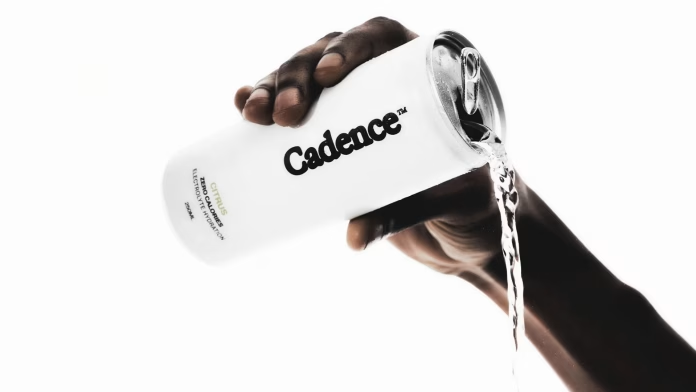
Cadence, the fast-rising hydration startup founded by entrepreneurs Ross MacKay and George Heaton, has officially crossed the 6,000 retail store milestone less than six months after its aggressive retail expansion began. The latest breakthrough came through a nationwide rollout into CVS Pharmacy refrigerators, marking another major step in the brand’s transformation from niche D2C startup to mainstream hydration contender.

The speed of Cadence’s retail growth has positioned it as one of the fastest-scaling players in the “modern hydration” category, a segment currently experiencing explosive momentum as consumers shift away from traditional sugary sports drinks toward cleaner, performance-focused alternatives.

What makes Cadence particularly notable is the caliber of its founding team. Ross MacKay previously built plant-based food disruptor Daring into one of the most recognizable challenger brands in the alternative protein space, while George Heaton is best known as the founder of Represent, the globally influential streetwear label with deep roots in fitness and performance culture.

Together, the duo has combined sports nutrition functionality with premium lifestyle branding — a formula increasingly proving successful across modern consumer categories.

Cadence’s 2026 strategy has centered around what industry observers are calling a “speed-to-shelf” expansion model. Rather than scaling slowly through regional retail tests, the company aggressively pursued simultaneous distribution across mass retail, specialty fitness channels, and convenience-focused pharmacy networks.

The biggest milestone came with the brand’s rollout into CVS Pharmacy, placing Cadence products directly inside high-traffic refrigerated sections across more than 6,000 locations nationwide. The move significantly broadens the brand’s accessibility, especially among consumers making impulse hydration purchases during daily routines rather than specifically shopping within sports nutrition aisles.

Earlier in the year, Cadence also secured major placements inside:

  • Target,
  • Walmart,
  • GNC,
  • and The Vitamin Shoppe.

This multi-channel strategy allows the company to compete across both lifestyle and performance-oriented retail environments simultaneously.

Target and Walmart provide mainstream scale and household visibility, while GNC and Vitamin Shoppe reinforce Cadence’s credibility within serious athletic and supplementation communities. The balancing act is strategic: maintaining “high-performance” authenticity while achieving mass-market accessibility.

The company is now targeting 8,000 retail doors by the end of Q4 2026, a pace that would place it among the fastest-growing hydration brands in recent years.

Product positioning has played a major role in the company’s rapid traction.

Unlike traditional sports drinks built around sugar-heavy replenishment, Cadence emphasizes what it describes as “precision hydration.” Each 355ml can contains:

  • 500mg sodium,
  • 190mg potassium,
  • and 30mg magnesium,

creating a formula designed specifically for endurance athletes, high-intensity training, and extended recovery periods.

The beverages are also entirely sugar-free and calorie-free, relying on Reb M stevia for sweetness instead of artificial sweeteners or syrups.

This formulation aligns closely with the current “performance optimization” movement dominating younger fitness communities. Consumers are increasingly prioritizing hydration products that feel functional without carrying the excessive sugar loads traditionally associated with legacy sports drinks like Gatorade or Powerade.

Equally important to Cadence’s success is its branding.

George Heaton’s design background has heavily influenced the product’s minimalist “premium utility” aesthetic, helping the brand resonate strongly with culturally influential fitness subcultures such as:

  • Hyrox,
  • CrossFit,
  • endurance racing,
  • and performance lifestyle communities.

The packaging intentionally avoids the loud, hyper-aggressive visual identity common in older sports nutrition brands. Instead, Cadence presents itself more like a premium fashion or wellness product — a strategy increasingly common among modern functional beverage startups targeting Gen Z and millennial consumers.

The company has also benefited from strong founder-led storytelling and community-driven growth. Before entering large-scale retail, Cadence built organic awareness among marathon runners, hybrid athletes, and creators within the fitness ecosystem. That early credibility appears to have accelerated retailer interest, creating demand pull rather than relying solely on paid marketing.

High-profile support from investors such as Steven Bartlett has further amplified the brand’s visibility, particularly among digitally native consumers already familiar with founder-led challenger brands.

Industry analysts increasingly view Cadence as part of a larger structural shift within hydration itself.

Hydration is no longer being marketed purely as thirst relief or sports recovery. It is evolving into a daily “performance ritual” tied to:

  • energy,
  • productivity,
  • recovery,
  • focus,
  • and lifestyle identity.

That broader cultural repositioning has opened the door for premium hydration startups to compete directly against legacy beverage giants despite significantly smaller marketing budgets.

The CVS rollout is especially important because it moves Cadence closer to everyday consumption occasions. Rather than existing only in fitness-centric environments, the brand is now entering convenience-driven purchasing behavior — a critical step for any beverage company seeking long-term scale.

Ultimately, Cadence’s rapid rise reflects how modern challenger brands are increasingly built not just on product functionality, but on community, aesthetics, and cultural positioning. In less than a year, the company has evolved from a startup hydration experiment into one of the most closely watched brands in the next generation of performance beverages.

Advertisement

Zevia’s Breakout Quarter: Profitability Momentum Meets the “Cardi B” Era

0

Zevia PBC, the zero-sugar soda company built around naturally sweetened beverages, delivered one of the strongest quarters in its history as the brand continues its transformation from niche wellness product to mainstream beverage contender. Reporting its Q1 2026 earnings on May 6, the company posted record net sales of $46.1 million, marking a 21.2% year-over-year increase and signaling that its multi-year restructuring strategy is finally beginning to compound.

The results represent a major milestone for CEO Amy Taylor, the former Red Bull North America executive who took over the business during a period of operational instability and slowing growth. Since then, Taylor has focused on rebuilding Zevia’s retail presence, simplifying the company’s cost structure, and repositioning the brand as a culturally relevant lifestyle beverage rather than a purely “health-focused” soda alternative.

The strongest signal from the quarter was that Zevia’s growth is now being driven primarily by volume rather than pricing. Net sales growth was fueled by a 20.4% increase in volumes, suggesting that consumer demand for zero-sugar, naturally sweetened soda continues to accelerate despite broader inflationary pressures affecting the beverage industry.

The company also reported a dramatic improvement in profitability metrics. Net losses narrowed to $2.4 million, compared to a loss of $6.4 million during the same period last year. More importantly, adjusted EBITDA turned positive at $0.9 million — marking the company’s first meaningful EBITDA-positive quarter in recent history and reinforcing investor confidence that Zevia’s turnaround strategy is entering a more sustainable phase.

While the top-line momentum was impressive, Zevia still faced margin pressure from rising commodity and logistics costs. Gross margin slipped slightly to 48.4%, down from 50.1% a year earlier, primarily due to higher aluminum pricing and fuel-related expenses. However, management successfully offset much of that pressure through aggressive operational optimization and tighter marketing efficiency.

One of the most important drivers behind the quarter was Zevia’s evolving distribution strategy under Taylor’s leadership. The company has increasingly prioritized high-velocity retail channels capable of rapidly scaling household penetration.

The biggest contributor was the “Club Channel,” particularly a successful national rotation at Costco. The placement significantly expanded Zevia’s consumer reach and introduced the brand to a broader mainstream audience beyond its traditional wellness-focused demographic.

At the same time, Zevia continued strengthening its shelf presence across major grocery and mass retail accounts including Kroger and other large-format chains. E-commerce also remained a strong contributor, with the company reporting double-digit digital growth as Zevia continues to perform strongly within the “Better-for-You” beverage category on Amazon.

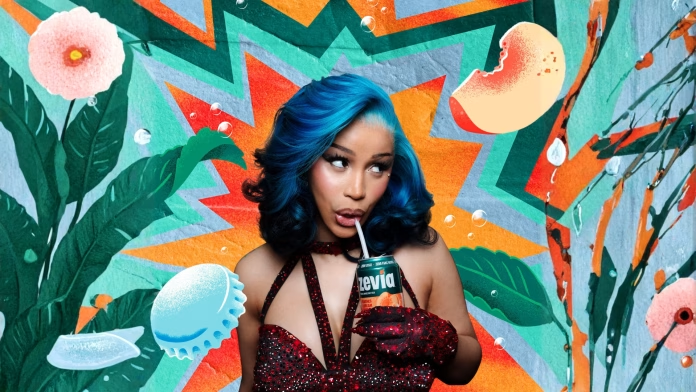
However, the quarter’s most visible growth catalyst was undoubtedly the company’s new partnership with rapper and cultural icon Cardi B. The two-year collaboration represents one of the most aggressive marketing pivots in Zevia’s history and reflects the company’s attempt to fundamentally reshape consumer perception around zero-sugar soda.

Historically, Zevia’s branding leaned heavily into “health-conscious” consumers, often attracting shoppers focused on wellness, fitness, or clean-label ingredients. While effective in building early loyalty, that positioning limited the company’s mainstream cultural reach.

The Cardi B partnership changes that narrative entirely.

Within its first week, the campaign reportedly generated over 152 million media impressions, helping Zevia tap into a younger, more culturally engaged consumer base. The collaboration is designed to “age down” the brand and reposition zero-sugar soda as an aspirational lifestyle choice rather than simply a dietary substitute.

Simultaneously, the company is rolling out a broader visual refresh aimed at modernizing packaging and improving shelf standout. The redesign is intended to make Zevia feel more emotionally relevant within the increasingly competitive “modern soda” category, where brands like Olipop and Poppi are aggressively competing for younger consumers through aesthetics, storytelling, and functional positioning.

Industry analysts increasingly view Zevia as part of a much larger structural shift within the global beverage market. Traditional soda consumption patterns are evolving rapidly as consumers seek:

  • lower sugar,
  • cleaner labels,
  • functional ingredients,
  • and more transparent formulations.

Stevia-based beverages, once considered niche alternatives, are now becoming increasingly mainstream as shoppers grow more skeptical of artificial sweeteners and high-calorie soft drinks.

What makes Zevia’s current moment especially important is that the company appears to be balancing growth with operational discipline — something many emerging beverage brands struggle to achieve. Selling and marketing expenses dropped significantly as a percentage of net sales, falling from 40% to 31.5%, highlighting the effectiveness of the company’s broader productivity initiatives around warehousing, logistics, and retail execution.

Ultimately, Zevia’s Q1 performance signals that the company may finally be moving beyond its identity as a specialty wellness soda brand. Under Amy Taylor’s leadership, the business is increasingly positioning itself as a legitimate long-term challenger within the mainstream beverage industry — one aiming to build a “third lane” in soda culture alongside legacy giants Coca-Cola and PepsiCo.

Advertisement

NAD4Me Bets on “Cellular Energy” as Longevity Drinks Enter the Mainstream

0

NAD4Me, a new entrant in the rapidly expanding longevity beverage market, has officially launched its line of caffeine-free cellular energy drinks, bringing one of the wellness industry’s most discussed molecules into a ready-to-drink consumer format. Founded by beverage veteran and food scientist Waldemar Schlemmer, the company is positioning itself at the intersection of functional hydration, preventative health, and modern “bio-optimization” culture.

The launch reflects a major shift currently reshaping the global beverage industry. Consumers are increasingly moving away from traditional stimulant-heavy energy drinks and toward products that promise long-term wellness, metabolic support, and sustained mental clarity. Instead of relying on caffeine spikes and sugar-driven stimulation, NAD4Me is marketing itself as a “cellular restoration” beverage designed to support energy production at the mitochondrial level.

At the center of the brand’s positioning is NAD+ (Nicotinamide Adenine Dinucleotide), a coenzyme widely associated with cellular repair, metabolism, and healthy aging. Over the last few years, NAD+ therapies have gained massive popularity across longevity clinics, wellness influencers, and biohacking communities, often appearing in the form of expensive IV drips or supplement protocols. NAD4Me’s core proposition is simple: turn that premium wellness concept into an accessible, shelf-stable beverage.

The biggest technical challenge for the category has always been stability. NAD+ molecules are notoriously fragile and degrade quickly when exposed to heat, light, or oxidation. According to the company, NAD4Me solves this issue through a proprietary nanocapsulation process that protects the active ingredients and allows the drinks to remain shelf-stable without compromising efficacy.

This technological positioning is central to the brand’s credibility. In a market increasingly crowded with “functional” beverage claims, scientific defensibility has become one of the most valuable differentiators. By emphasizing food science and ingredient stabilization, NAD4Me is attempting to separate itself from trend-driven wellness drinks that rely heavily on branding but lack meaningful formulation depth.

The beverages are also intentionally caffeine-free, a strategic decision that directly challenges the traditional energy drink industry. Instead of “borrowing energy” through stimulants, the company frames its products as supporting the body’s natural energy systems. This message strongly aligns with the growing “sober-curious” and wellness-first consumer movement, particularly among younger professionals seeking focus and productivity without anxiety, crashes, or sleep disruption.

Beyond NAD+, the formulation includes a blend of ingredients commonly associated with cognitive support and metabolic function:

  • L-Tryptophan,
  • Trigonelline,
  • Ergothioneine,
  • Inositol,
  • and Vitamins C, B3, B5, and B12.

Together, the formula is designed to position the beverage somewhere between an energy drink, a nootropic stack, and a recovery supplement.

The company launched with three flagship varieties:

  • Minty Lime Spark,
  • Tropical Wave,
  • and Cellular Water.

Minty Lime Spark targets consumers seeking a sharper, more refreshing sensory profile, while Tropical Wave is positioned as a broader mainstream flavor play aimed at lifestyle-oriented wellness consumers. Cellular Water, meanwhile, takes a minimalist approach focused on hydration and “clean functionality,” avoiding added sugars and artificial sweeteners entirely.

Pricing places NAD4Me firmly within the premium functional beverage category. The products retail at roughly $4 per can, with multi-pack bundles priced around $49.99. While significantly more expensive than traditional energy drinks, the pricing reflects the brand’s attempt to compete with high-end wellness supplements and recovery products rather than mass-market soda.

Industry analysts view NAD4Me as part of a much larger “proactive longevity” movement now entering mainstream consumer markets. The global NAD+ market is projected to surpass $12 billion by 2033, fueled by growing awareness around aging, metabolic health, and preventative wellness. At the same time, the broader functional beverage industry continues to evolve beyond simple hydration into increasingly specialized niches such as cognitive enhancement, stress management, gut health, and recovery optimization.

The timing may also be particularly favorable due to the rise of the “GLP-1 era.” As weight management medications and metabolic health conversations reshape consumer behavior, shoppers are becoming far more ingredient-conscious and increasingly skeptical of traditional high-sugar, high-caffeine beverage formats. Functional stacking — combining multiple wellness benefits into a single daily ritual — is rapidly becoming one of the strongest growth drivers across premium CPG.

For NAD4Me, the long-term opportunity extends far beyond wellness enthusiasts and biohackers. The company is effectively attempting to normalize longevity-focused nutrition as an everyday consumer habit rather than an elite clinical service. If its stabilization technology proves scalable and scientifically credible, the brand could emerge as one of the first serious contenders in the emerging “cellular beverage” category.

Ultimately, NAD4Me’s launch represents more than just another functional drink debut. It signals the continued transformation of the beverage aisle itself — from a category once dominated by sugar and stimulation into one increasingly defined by optimization, recovery, and long-term health performance.

Advertisement

Fashinza Enters Its “FactoryOS” Era as Pawan Gupta Exits for AI

0

Fashinza, one of India’s most closely watched B2B fashion-tech startups, is entering a major new chapter following the departure of co-founder and CEO Pawan Gupta. The Accel-backed company confirmed that Gupta has officially stepped down from his leadership role to launch a new venture focused entirely on Artificial Intelligence, marking one of the most significant founder transitions in India’s startup ecosystem this year.

The move leaves Abhishek Sharma as the sole remaining original founder and the new CEO of the Gurugram-based supply chain platform. While leadership changes often signal instability in high-growth startups, insiders suggest this transition had been gradually unfolding behind the scenes since late 2025, when Gupta reportedly became non-operational in the business.

Gupta’s exit reflects a broader trend currently reshaping the global startup ecosystem: the migration of top founders and operators toward the AI sector. According to Gupta, the rapid acceleration of generative AI and automation convinced him that the next two decades of technological innovation would be fundamentally shaped by artificial intelligence. The opportunity to build something “AI-native” became too compelling to ignore.

At the same time, Fashinza itself has undergone a dramatic transformation since its early years. Initially positioned as a software-led platform simplifying apparel sourcing and manufacturing, the company has increasingly evolved into a deeply operational business centered around factories, logistics, and physical supply chains. That transition appears to have played a major role in Gupta’s decision to move on.

In many ways, Fashinza’s journey mirrors the evolution of several Indian B2B startups that began as “asset-light marketplaces” before eventually moving deeper into infrastructure ownership. Over the last two years, the company has aggressively expanded its manufacturing footprint, integrating technology directly into production clusters across India, Bangladesh, and China.

The clearest signal of this shift came in April 2026 when Fashinza acquired manufacturing player Qckin, strengthening its push toward vertical integration. The acquisition highlighted the company’s larger ambition of controlling more of the design-to-delivery cycle for global fashion brands seeking faster and more efficient production timelines.

Under Abhishek Sharma’s leadership, Fashinza is now doubling down on what insiders describe as its “FactoryOS” strategy — embedding software, workflow automation, and data systems directly into manufacturing operations rather than functioning purely as a sourcing intermediary.

This operational pivot represents a significant strategic evolution for the company. Instead of simply connecting brands with suppliers, Fashinza is positioning itself as a technology-enabled manufacturing infrastructure platform capable of managing the complexities of global apparel production at scale.

Despite the leadership transition, the company’s financial position remains relatively stable compared to many venture-backed startups navigating today’s funding environment. Fashinza has raised more than $120 million from major investors including Accel, WestBridge Capital, and Prosus, giving it one of the strongest institutional backings in India’s B2B commerce sector.

Financially, the company also appears to be moving closer toward operational sustainability. According to filings referenced in U.S. disclosures, Fashinza reported consolidated revenue of approximately ₹200 crore in FY25 and posted a reported profit of ₹1 crore during the same period — a notable milestone for a business operating in a traditionally margin-heavy manufacturing ecosystem.

The transition also reflects a deeper phenomenon often described in startup circles as the “Founder-Market Fit Lifecycle.” Early-stage founders who thrive during the “zero-to-one” phase of company building are often strongest in product design, software development, and rapid experimentation. However, as companies mature into operationally intensive businesses, the required leadership skill set changes dramatically.

For Fashinza, the challenge is no longer simply building software. It now involves:

  • factory operations,
  • manufacturing quality control,
  • labor management,
  • sourcing complexity,
  • and global logistics coordination.

That evolution naturally favors operators with deep execution capabilities over product-first founders.

Gupta’s departure therefore appears less like a breakdown and more like a strategic divergence driven by changing company dynamics and personal ambition. By leaving during Fashinza’s operational stabilization phase, he joins a growing wave of second-generation Indian entrepreneurs pivoting into AI after building successful commerce and fintech startups.

Across India’s startup ecosystem, former founders and senior operators from companies like Swiggy, BharatPe, and Udaan are increasingly redirecting their attention toward generative AI infrastructure, workflow automation, and enterprise intelligence tools. Gupta’s move places him directly within that emerging founder cohort.

For Fashinza itself, the road ahead is becoming increasingly clear. The company is no longer positioning itself merely as a “fashion-tech startup.” It is evolving into a manufacturing operating system designed to power global apparel supply chains through a blend of physical infrastructure and embedded technology.

If successful, that shift could fundamentally redefine how Indian manufacturing platforms compete on the global stage — not just through low-cost labor, but through speed, software integration, and production intelligence.

Advertisement