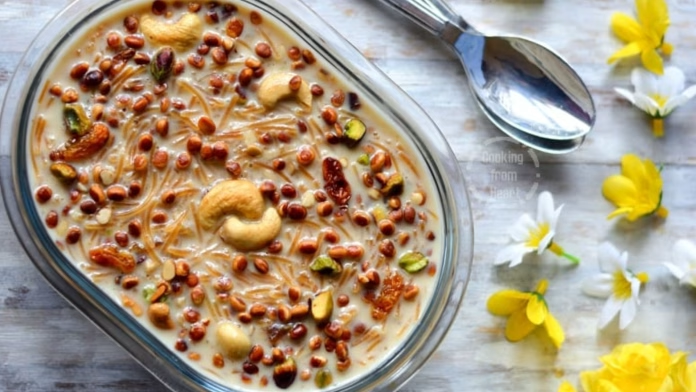
Sheer Khurma is a traditional dessert that is popular in many countries, including India, Pakistan, and Afghanistan. This rich and creamy dessert is typically made with milk, vermicelli, sugar, and a variety of nuts and spices.
This creamy vermicelli pudding is prepared during major muslim festivals like Eid, Ramadan etc. Originated in the Kingdom of Persia, this dish has gained popularity all over the world and is now a full fledged festive vibe all around and is very very simple to create.
So, here’s a recipe to indulge in this sweet and creamy Persian delight:
Ingredients:
1 liter full-fat milk
1/2 cup vermicelli (thin)
1/2 cup sugar
1/4 cup almonds (blanched and sliced)
1/4 cup pistachios (sliced)
1/4 cup raisins
1/2 tsp cardamom powder
1/2 tsp rose water
1 tbsp ghee
Instructions:
Heat the ghee in a pan and add the vermicelli. Fry for 1-2 minutes until it turns light brown.
Add the milk to the pan and bring it to a boil.
Reduce the heat to low and simmer for 20-25 minutes, stirring occasionally.
Add the sugar, almonds, pistachios, raisins, cardamom powder, and rose water to the pan. Mix well and simmer for another 5 minutes.
Serve the Sheer Khurma hot or chilled and garnish with additional nuts if desired.
Enjoy the rich and creamy delight of Sheer Khurma and savor every bite of this indulgent dessert!
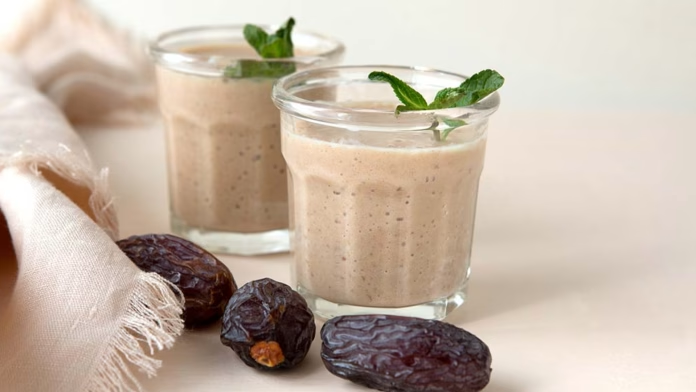
Are you looking for a healthy and delicious way to satisfy your sweet tooth? Look no further than a date shake! Made with natural sweeteners and packed with essential nutrients, a date shake is a tasty treat that can be enjoyed any time of day.
It is not an unpopular fact that dates are extremely healthy foods that not only elevate the health benefit but also enhance the taste and act as a natural sweetener in any recipe. This shake is packed with nutrients like fiber, potassium, and magnesium. These nutrients are important for maintaining good health, supporting a healthy immune system, and promoting good digestion.
On the top of it this sake is low in fats and provide a quick burst of energy. This makes them a great option for a pre-workout snack or a mid-day pick-me-up.
Not only that, it provides calcium which helps in maintaining good bone and teeth health. Drinking a date shake can be a delicious and convenient way to get more calcium in your diet.
It is also rich in antioxidants and helps in reducing inflammation which can be beneficial for those with chronic conditions such as arthritis or asthma.
So, here’s a simple recipe for a delicious date shake:
Ingredients:
1 cup unsweetened almond milk
1/2 cup pitted dates
1/2 tsp vanilla extract
1/2 tsp ground cinnamon
1 cup ice cubes
Instructions:
Soak the pitted dates in hot water for 5-10 minutes to soften them.
Drain the dates and place them in a blender.
Add the almond milk, vanilla extract, and ground cinnamon to the blender.
Blend the ingredients until the dates are completely pureed.
Add the ice cubes to the blender and blend again until the mixture is smooth and creamy.
Pour the date shake into a glass and enjoy!
You can also customize this recipe by adding other ingredients such as a scoop of protein powder, a tablespoon of almond butter, or a dash of nutmeg for added flavor. Enjoy your delicious and healthy date shake!
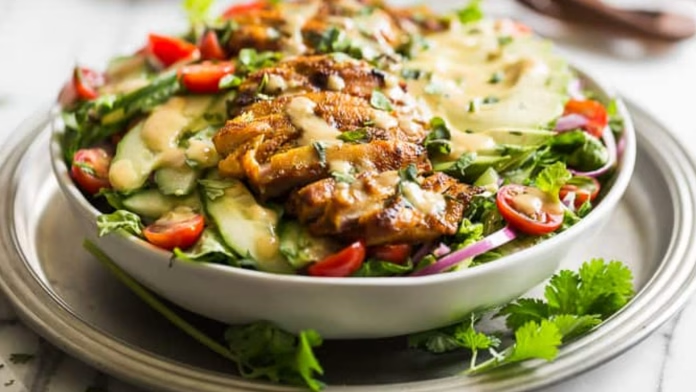
Chicken shawarma is a Middle Eastern dish that is known for its juicy, flavorful meat that is traditionally served in a wrap or pita. However, if you’re looking for a healthier and lighter option, try a Chicken Shawarma Salad. This salad combines all the delicious flavors of shawarma with fresh vegetables and a tangy dressing.
This salad is packed with proteins and low in calories and also is a rich source of vitamins and minerals like vitamin B6, iron, and zinc, which are important for maintaining good health. It is also high in fiber which helps in digestion.
It is also low in saturated fats and rich in antioxidants which can help to protect the body against oxidative stress and reduce the risk of chronic diseases.
Here’s how you can make it at home:
Ingredients:
1 pound boneless, skinless chicken breast, cut into strips
2 tablespoons olive oil
1 teaspoon cumin powder
1 teaspoon paprika
1/2 teaspoon coriander powder
1/2 teaspoon garlic powder
1/2 teaspoon salt
1/4 teaspoon black pepper
4 cups mixed greens
1 cucumber, sliced
1 red onion, thinly sliced
1 tomato, diced
1/2 cup chopped parsley
1/2 cup chopped mint
1/4 cup chopped cilantro
For the dressing:
1/4 cup plain yogurt
1/4 cup tahini
1/4 cup lemon juice
2 garlic cloves, minced
Salt to taste
Instructions:
In a large mixing bowl, whisk together the olive oil, cumin powder, paprika, coriander powder, garlic powder, salt, and black pepper.
Add the chicken strips to the marinade and mix well to coat. Cover and refrigerate for at least 30 minutes or up to 2 hours.
Preheat the oven to 425°F. Line a baking sheet with parchment paper and arrange the marinated chicken strips in a single layer.
Bake the chicken for 15-20 minutes or until cooked through and golden brown.
While the chicken is baking, prepare the salad by mixing together the mixed greens, cucumber, red onion, tomato, parsley, mint, and cilantro in a large bowl.
In a separate bowl, whisk together the yogurt, tahini, lemon juice, minced garlic, and salt until smooth.
Once the chicken is done, remove it from the oven and let it cool for a few minutes.
Add the chicken to the salad and toss well.
Drizzle the yogurt-tahini dressing over the salad and serve immediately.
This Chicken Shawarma Salad is a delicious and satisfying meal that is perfect for lunch or dinner. It’s a healthy and flavorful way to enjoy the classic flavors of shawarma in a fresh and nutritious salad.
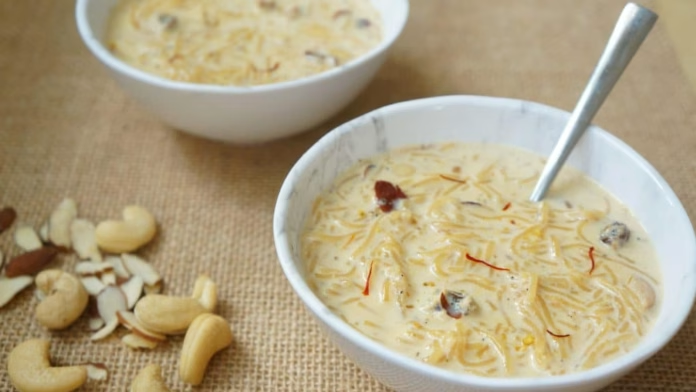
Seviyan Kheer, also known as Vermicelli Kheer, is a popular Indian sweet dish made with vermicelli, milk, and sugar. The dish is widely served during festivities, special occasions and religious festivals throughout India. It is also a popular choice for breakfast or as a snack. Seviyan Kheer is a delicious dessert that is easy to make and is sure to please the whole family.
To make Seviyan Kheer, you will need the following ingredients:
– 2 cups of thin vermicelli
– 4 cups of full-fat milk
– 1/2 cup of sugar
– 1/2 teaspoon of cardamom powder
– Cashew nuts and raisins for garnish (optional)
Instructions:
1. Heat a heavy-bottomed pan on medium heat and add the vermicelli. Roast the vermicelli for 3-4 minutes, stirring constantly, until it is golden brown.
2. Once the vermicelli is roasted, add the milk and cook for 8-10 minutes or until the vermicelli is cooked.
3. Add the sugar and cardamom powder, stirring constantly for two minutes.
4. Cook for another 5 minutes or until the kheer thickens.
5. Remove the kheer from the heat and let it cool down.
6. Garnish with cashew nuts and raisins (optional).
7. Serve the Seviyan Kheer warm or cold.
Seviyan Kheer is a popular Indian dessert that is sure to please your family and friends. This easy-to-make sweet dish is the perfect way to end any meal. The combination of vermicelli, milk, sugar, and cardamom powder create a delicious dessert that is sure to satisfy any sweet tooth. The addition of cashew nuts and raisins adds a delightful crunch to the dish. Enjoy this delicious treat anytime you want a sweet treat!
Yu Foods is a consumer foods brand that entered the Indian market in October 2021. The brand specializes in creating instant meal solutions that are both delicious and convenient. Yu’s initial launch included a range of instant meal bowls that were designed to be quick and easy to prepare, making them ideal for busy individuals and families.
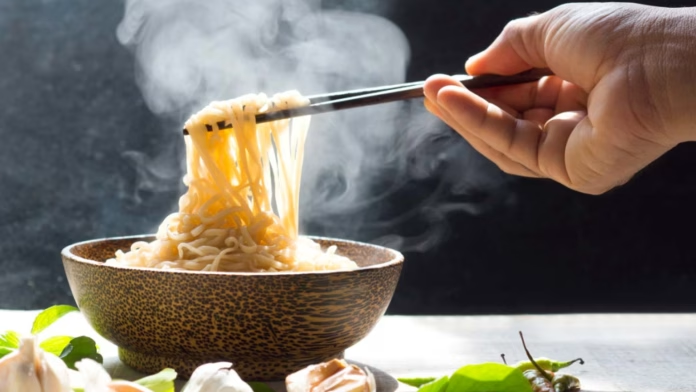
With the success of its initial launch, Yu is now expanding its product line by introducing Instant Hakka Noodles. The noodles are made with steamed noodles, chef-curated sauce, cut veggies/chicken, and chili oil, and can be prepared in just five minutes. The product is designed to cater to the growing demand for quick and easy-to-prepare meals that are both nutritious and flavorful.
Bharat Bhalla, Founder of Yu Foods,said, “We are happy to introduce Instant Hakka Noodles for the first time in India, that will allow people to enjoy restaurant style stir fry noodles in the comfort of their homes in a matter of minutes.”
The launch of the new product is an exclusive partnership with Blinkit, an online platform that connects customers with the best food and beverage brands in India. The product will be available exclusively on the Blinkit platform until March 12th, 2023, after which it will be available in other online and offline stores. This exclusivity period is designed to give Yu Foods a competitive edge in the market, allowing the brand to build a loyal customer base on the Blinkit platform.
To celebrate the exclusive launch, Yu Foods collaborated with Blinkit to host a joint event called “Yutopia” at a premier Gurgaon Club. The event was attended by over 150 guests, including media houses, bloggers, and influencers, as well as loyal customers of Yu Foods. Yutopia was designed to showcase the brand’s commitment to quality and innovation, and to give customers an opportunity to taste the new product and provide feedback.
The new products are chef-crafted using only natural, recognizable ingredients, and contain zero preservatives and no MSG. This makes them a healthier option for consumers who are looking for nutritious and delicious meal solutions. Yu Foods has sold over 3 million bowls in the past 15 months, making it one of the fastest-growing D2C (direct-to-consumer) brands in the country. The launch of Instant Hakka Noodles is a testament to the brand’s commitment to innovation and customer satisfaction, and it is sure to be a hit with busy consumers who are looking for a quick and easy meal solution.
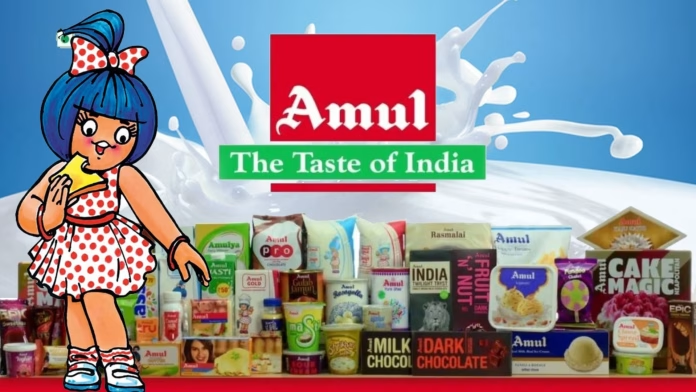
Amul, a brand that is synonymous with dairy products in India, is now looking to expand its product offerings beyond the dairy sector. By doing so, they aim to become a complete food and beverage company. This is a strategic move, as it enables them to diversify their revenue streams and cater to a wider customer base.
With this expansion, Amul will be competing with some of the biggest names in the food and beverage industry in India, such as Nestle, Britannia, Coca-Cola, and ITC. Nestle and ITC have recently announced their intentions to boost growth through manufacturing and innovation, while Britannia has formed a joint venture with a French cheese maker to produce and sell cheese products in India.
Jayen Mehta, Managing Director, said, “Dairy remains our core, but we have a robust pipeline of growth; we want to straddle all food category consumers use in the kitchen, and we are going about it with speed, scale, and larger investments.
The maker of Amul cheese, milk, ice cream, and butter has identified categories such as non-dairy beverages, snacks, pulses, cookies, edible oil, organic foods, and frozen foods to accelerate with “speed and scale.”
Amul’s foray into the non-dairy market is a natural progression for the brand, as they already have a strong presence in the dairy sector. They have a reputation for providing high-quality dairy products, and customers trust their brand. By expanding their portfolio, they hope to leverage this trust and provide customers with a wider range of options.
Amul’s decision to expand its product range beyond dairy is a strategic move that allows them to diversify their revenue streams and cater to a wider customer base. However, this expansion also puts them in direct competition with some of the biggest names in the Indian food and beverage industry.
The spice industry is an essential part of the Indian food culture and is also a vital sector of the country’s economy. The industry has a long history, dating back to the ancient times when India was a major exporter of spices to different parts of the world. Today, India is the world’s largest producer, consumer, and exporter of spices, with an estimated production of over 4 million tonnes of spices annually.
The ready-made masala or ready-to-cook spice industry is a sub-sector of the larger spice industry, which includes packaged spices, ready-to-eat foods, and spice mixes. The sector has been experiencing significant growth over the years, driven by the changing lifestyles and food habits of the Indian population.
Mohit Malhotra, CEO, Dabur India, said, “The branded spice market is growing at a double-digit rate because of factors such as a rise in consumption, a shift from unbranded to branded products, and a growing preference for regional flavours across states.” “As the market is dominated by regional players, it holds significant potential for growth in the future.”
Anil Chugh, President, Food Business, Wipro Consumer Care and Lighting, said, “The attraction in the spice category comes from it being a big category growing at 10 to 12 per cent.” “We recognise that spices are core to Indian cooking, and the mix changes from region to region with strong regional preferences. There is a huge opportunity in this space for shifting consumers from an unorganised to organised market by offering authentic, pure, and trusted spice mixes.”
Harish Bijoor, Marketing Expert,said, “The packaged masala market is viewed as having large volumes, being customisable, therefore, there is great excitement in the space.”
“Such consolidations will improve the industry as bigger companies bring quality, standardisation, and trust with them. Also, the industry has mostly seen regional players, and it gets difficult for those brands to expand their business to other geographies. So, a great strategy would be for one parent company to own nine different brands and have different plays in different markets.”
“Any major company entering the packaged goods market is aware that in order to go up the value chain and achieve higher profits, they must offer differentiated products. Players like Wipro and Dabur are margin conscious, so the opportunity to increase margins and expand horizontally is appealing to them,”
The entry of new players like Dabur and Wipro Consumer Care and Lighting into the market is a testament to the sector’s potential. These companies are looking to leverage the sector’s growth prospects by offering innovative and high-quality products that cater to the changing tastes of the Indian consumers.
Dabur, for instance, has been expanding its portfolio of food products, which includes packaged fruit juices, honey, and chyawanprash, among others. The acquisition of Badshah Masala is part of the company’s strategy to enter the branded spices market and tap into the huge potential that the sector offers.
Similarly, Wipro Consumer Care and Lighting has been actively expanding its food business by acquiring local food brands like Yardley, Chandrika, and Santoor. The acquisition of Nirapara is a significant step towards the company’s goal of becoming a major player in the spice, snack food, and ready-to-cook markets.
The Indian spice market is highly fragmented, with numerous small and medium-sized players operating in the unorganized sector. According to reports, the unorganized sector accounts for about 77% of the spice market in India, offering ample opportunities for organized players to gain market share.
The presence of a large unorganized sector also means that there is a significant untapped market that can be converted into potential customers for the organized sector. This is an attractive proposition for companies like Wipro Consumer Care, who believe that they can switch consumers from the unorganized to the organized sector and gain market share.
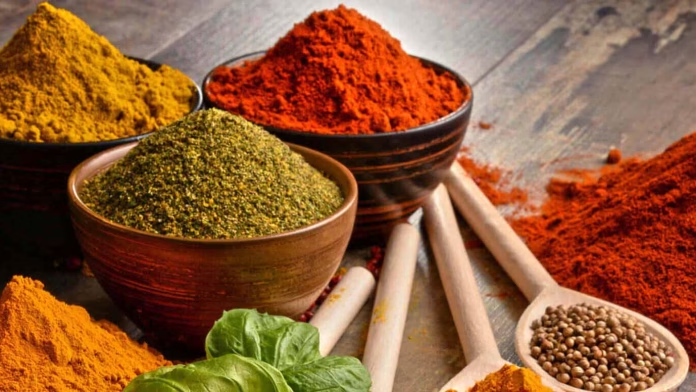
The market for packaged masalas is diverse and offers a wide range of products catering to different tastes and preferences. Dry masalas, wet masalas, garam masalas, and other varieties are available in the market, providing significant opportunities for new players to enter the sector.
As per estimates, the branded spice market in India is worth more than INR 25,000 crore, with an additional INR 25,000 crore in the unbranded market. The spice category as a whole is valued at INR 72,000 crore in India, indicating the immense potential that the sector holds.
The ready-made masala or ready-to-cook spice industry is a rapidly growing sub-sector of the Indian spice industry, with significant potential for expansion. The entry of new players like Dabur and Wipro Consumer Care and Lighting is a testament to the sector’s growth prospects, and these companies are likely to play a significant role in shaping the future of the industry in the years to come.
Mathematics is an essential subject that plays a crucial role in our daily lives. Not only does it help us to understand and solve real-world problems, but it also enhances our critical thinking skills, logical reasoning, and problem-solving abilities. It is, therefore, crucial to encourage children to develop an interest in math from an early age.
While math skills can be improved through consistent practice and hard work, the role of nutrition in cognitive development cannot be overstated. A balanced and nutritious diet can enhance brain function and cognitive abilities, which can translate into improved math skills.
Here is a list of foods that may help boost brain function and cognitive abilities, including those related to math skills. However, it’s important to note that a well-rounded and balanced diet, combined with adequate physical activity and rest, is crucial for overall health and development. Here are some foods that are believed to promote brain health and may potentially help your kid get better at math:
Berries: Berries are rich in antioxidants and polyphenols, which are known to protect brain cells from damage and inflammation. Blueberries, in particular, have been shown to improve cognitive function, memory, and decision-making skills in children and adults. Add berries to your child’s breakfast cereal, yogurt, or smoothie, or serve them as a snack.
Nuts and seeds: Nuts and seeds are high in healthy fats, protein, and fiber, which help keep the brain energized and focused. They also contain vitamin E, which has been linked to better cognitive function and memory. Almonds, walnuts, pumpkin seeds, and chia seeds are good options to include in your child’s diet.
Whole grains: Whole grains provide a steady supply of glucose to the brain, which is the primary source of energy for the brain. They also contain B vitamins and iron, which help support cognitive function and improve focus and attention. Some good sources of whole grains include whole wheat bread, brown rice, quinoa, and oatmeal.
Fish: Fatty fish such as salmon, sardines, and tuna are rich in omega-3 fatty acids, which are essential for brain development and function. Omega-3s have been shown to improve memory, learning, and cognitive performance in children and adults. Serve fish at least twice a week to ensure your child is getting enough of these important nutrients.
Eggs: Eggs are a good source of choline, a nutrient that helps with brain development and cognitive function. Choline is also important for the production of acetylcholine, a neurotransmitter that is essential for memory and learning. Serve eggs for breakfast or as a snack, or add them to salads or sandwiches.
Leafy greens: Leafy greens such as spinach, kale, and collard greens are rich in vitamins and minerals that support brain health, including vitamin K, folate, and iron. These nutrients help improve cognitive function, memory, and attention. Serve leafy greens in salads, stir-fries, or smoothies.
Avocado: Avocado is a good source of healthy fats, vitamin E, and potassium, which help support brain health and cognitive function. Avocado can be served as a spread on toast or used as a base for dips and sauces.
Dark chocolate: Dark chocolate contains flavonoids, which have been shown to improve cognitive function and memory. Choose dark chocolate with at least 70% cocoa content and serve in moderation as a treat.
Yogurt: Yogurt contains probiotics, which help support a healthy gut microbiome. A healthy gut microbiome has been linked to improved cognitive function and mood. Serve plain yogurt with fresh fruit or use as a base for smoothies.
Water: Staying hydrated is important for brain function and cognitive performance. Encourage your child to drink plenty of water throughout the day to ensure they stay alert and focused.
In addition to these foods, it’s important to ensure that your child is getting enough sleep and physical activity. Exercise has been shown to improve cognitive function and memory, while lack of sleep can impair cognitive performance and attention. Encourage your child to engage in physical activity and establish a consistent sleep routine to support their overall health and well-being.
Craft beer has been steadily gaining popularity in India, with microbreweries emerging as a key player in the market. These small-scale breweries are known for offering fresh, locally brewed beer in a variety of styles and flavors, catering to the diverse tastes of Indian consumers. From fruity IPAs to robust stouts, microbreweries are known for their ability to experiment with new and unique flavor combinations, giving beer enthusiasts an opportunity to sample something different every time they visit.
However, the outbreak of the COVID-19 pandemic in early 2020 presented a major challenge for the microbrewery industry, which relies heavily on in-person dining and social gatherings. Many microbreweries were forced to pivot to home delivery services to survive, while others shut down altogether. Despite these setbacks, the popularity of craft beer remained strong, and the industry has continued to grow.
Chetan Kapoor, Deputy General Manager of the hotel, said, “Many people like microbreweries where they can see how the drink is made, rather than having it bottled. We also brought in special brew masters from Europe to help us with the process to make sure that we have the best (beer).”
Now, as the world begins to emerge from the pandemic, food and beverage enthusiasts are looking for new experiences and options, and microbreweries are stepping up to meet the demand. New breweries are opening up across the country, not just in established beer-loving cities like Pune and Bengaluru, but also in other urban centers, offering consumers more choices than ever before.
One such example is the Royal Brewery Bistro, located in Delhi’s Hotel The Royal Plaza. The brewery offers a range of fresh draughts, including a lager, a stout, and two types of witbier – German and Belgian. The limited variety of beers ensures that each batch is brewed to perfection, using only the highest quality ingredients. The restaurant also uses German and Austrian hops and imported yeast from Germany to brew their beer, giving it a distinct and unique flavor.
In addition to beer, the Royal Brewery Bistro also offers a selection of spirits, including whisky, vodka, gin, and rum, as well as a carefully curated food menu designed to complement the drinks. Diners can choose from a range of starters, including kasundi fish tikka, tandoori chicken, and hara bhara kebab, as well as main courses such as glazed chicken breast with sherry shallots and a crunchy sweet potato and cheese burger.
Overall, the growing popularity of craft beer and microbreweries in India is a testament to the country’s evolving food and beverage culture. As consumers become more adventurous in their tastes and seek out new experiences, microbreweries are poised to play an increasingly important role in the industry, offering fresh, locally brewed beer and innovative flavor combinations that are sure to appeal to beer lovers everywhere.
Adani Wilmar’s Fortune brand has recently launched a new range of regionally customized pulses that cater to the hyperlocal tastes of customers in Northern and Eastern India. This new range includes nine different types of pulses, such as Arhar Dal, Moong Dal, and Rajma Chitra, among others. These pulses are unpolished and sortex-cleaned, making them not only tasty but also rich in protein.
The launch of this new range is in line with Adani Wilmar’s commitment to delivering high-quality and affordable kitchen essentials to Indian consumers. The company is one of the largest food FMCG companies in India and is known for offering a wide range of products that cater to different customer groups.
Mr. Vineeth Viswambharan, Associate Vice President, Marketing & Sales, Adani Wilmar, said, “Our focus is on expanding regional relevance and consumer affinity towards Fortune across India through products adapted to match hyperlocal tastes. It is a step towards gaining the consumer’s trust in our food products and go beyond Fortune’s edible oils. We aim to establish Fortune as a reliable brand for the entire basket of staple foods by providing premium quality, value-for-money products to our customers.”
Adani Wilmar Limited (AWL) offers a diverse range of products that includes edible oil, wheat flour, rice, pulses, and sugar. These products are available under a wide range of brands, catering to different customer groups across a broad price spectrum. AWL’s commitment to quality is reflected in its state-of-the-art manufacturing facilities that employ the latest technologies to ensure that all products are of the highest quality.
The new range of regionally customized pulses from Adani Wilmar’s Fortune brand is available in 500g and 1kg consumer packs, making it convenient for customers to purchase and use them in their daily cooking. These pulses are available on major e-commerce platforms and stores in the targeted regions, making them easily accessible to customers.
Adani Wilmar’s Fortune brand has introduced a new range of regionally customized pulses that cater to the hyperlocal tastes of customers in Northern and Eastern India. This launch is in line with the company’s commitment to delivering high-quality and affordable kitchen essentials to Indian consumers. The new range of pulses is available in convenient consumer packs and is easily accessible on major e-commerce platforms and stores in the targeted regions.
We use cookies to ensure that we give you the best experience on our website. If you continue to use this site we will assume that you are happy with it.