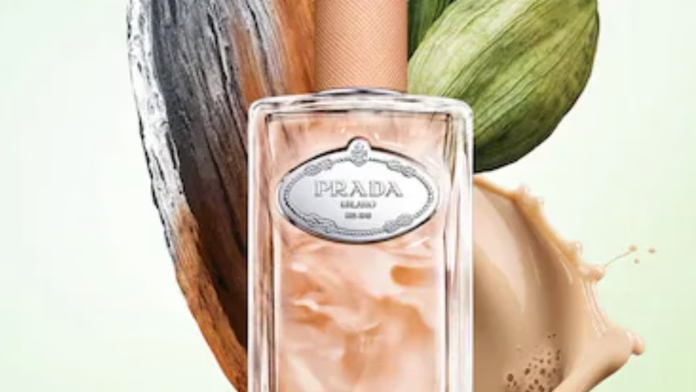
Prada is once again borrowing from India, and this time the inspiration comes straight out of a teacup. After last year’s controversy around Kolhapuri chappals, the Italian luxury house has unveiled Infusion de Santal Chai Eau de Parfum, a unisex fragrance that draws on the everyday ritual of chai. The launch has already sparked chatter, curiosity and more than a little eye rolling.
According to Prada, the scent blends sandalwood with cardamom, aiming to recreate the warmth and familiarity of Indian tea culture. Chai, for millions, is not a trend or an aesthetic. It is a pause between meetings, a conversation starter, a habit formed at street corners and kitchen counters. Translating that into a luxury perfume priced far beyond the daily cup has raised obvious questions about who gets to profit from cultural symbols and how.
This is not Prada’s first brush with Indian craftsmanship. Its Kolhapuri inspired footwear last year drew criticism for failing to credit or meaningfully engage with the artisans behind the design. The brand eventually acknowledged the roots, but the episode left a lingering discomfort. With the chai inspired fragrance, the conversation has resurfaced, this time focused on cultural extraction rather than design plagiarism.
At the same time, there is no denying the commercial logic. Global luxury has been increasingly obsessed with Indian motifs, flavours and rituals, especially as India’s consumer market grows louder and richer. Chai offers an instantly recognisable hook, even for buyers who have never set foot in an Indian city.
What remains unclear is whether such products deepen understanding or simply repackage familiarity for profit. A bottle of Infusion de Santal Chai may smell comforting, but for many Indians, chai is comfort precisely because it is ordinary and shared. When that ordinariness is turned into a high priced luxury object, it invites admiration, criticism and debate in equal measure.