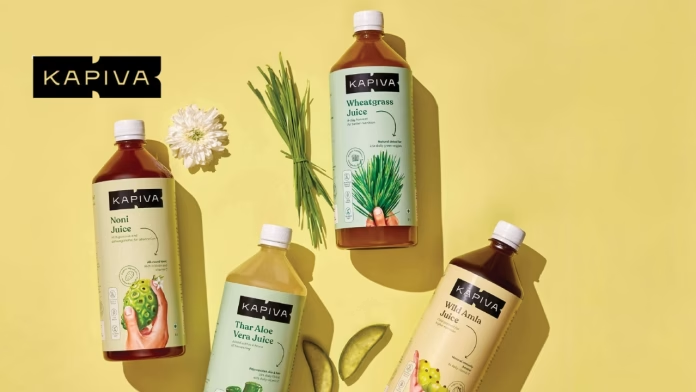
Ayurveda-led wellness brand Kapiva posted a strong expansion in scale in FY25, riding a surge in demand for preventive health and plant-based nutrition, even as higher investments in marketing and operations continued to weigh on profitability.
The direct-to-consumer company reported revenue from operations of ₹342 crore for the year ended March 31, 2025, reflecting a year-on-year growth of about 50% from ₹228 crore in FY24, according to financial disclosures. Including non-operating income of nearly ₹7 crore, Kapiva’s total income for the year stood close to ₹349 crore.
The topline growth was driven entirely by product sales, supported by deeper penetration across online platforms and marketplaces, along with rising consumer interest in Ayurveda-backed solutions for everyday health management. Kapiva’s portfolio spans categories such as digestion, immunity, diabetes care, liver health, hormonal balance, energy, and sports nutrition, positioning the brand at the intersection of traditional formulations and modern consumption patterns.
FY25, however, also saw a sharp escalation in costs as the company pushed aggressively on brand visibility and customer acquisition. Advertising and promotional expenses climbed 53% year-on-year to ₹188 crore, making marketing the single largest expense line and accounting for roughly 45% of total costs. Overall expenditure rose 44% to ₹418 crore, compared with ₹290 crore in the previous year.
Input costs moved in tandem with scale. The cost of materials consumed increased 43% to ₹97 crore, forming around 23% of total expenses. Employee benefit expenses rose 28% to ₹59 crore, reflecting team expansion, while transportation and logistics costs stood at ₹22 crore. Legal and professional fees nearly doubled to ₹16 crore, adding further pressure on the cost structure.
As a result, Kapiva reported a net loss of ₹69 crore in FY25, widening from ₹56 crore a year earlier. Founded in 2015, the company continues to prioritise growth and market share in India’s rapidly evolving wellness and nutrition segment, even as it works towards improving operating leverage over the medium term.