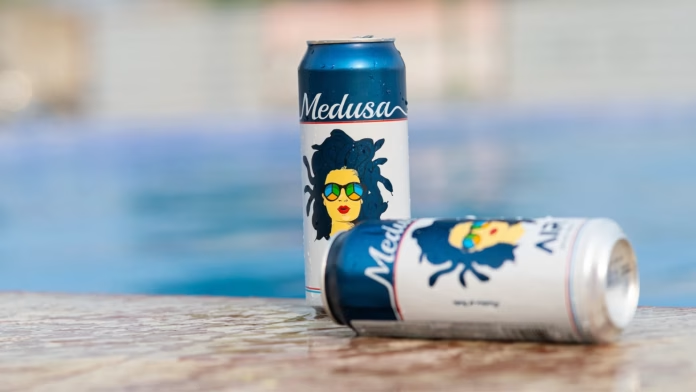
Medusa Beverages has launched a strategic drive into Gulf Cooperation Council markets, naming the United Arab Emirates and Saudi Arabia among its early targets. The company says the move could contribute roughly 5–10% to consolidated revenue by fiscal 2028, signalling a major international push for the Indian brewer.
GCC rollout and immediate plans
The company will begin by exporting product from India to the region and plans to shift to local brewing over time. That staggered approach is designed to test demand while minimising initial capital outlay.
Medusa has highlighted the UAE and Saudi Arabia as priority markets within the GCC. Distribution will likely focus on hospitality, retail and outlets frequented by expatriate communities, where premium beer consumption is most concentrated.
Asset-light production model
Medusa’s expansion leans on an asset-light framework that prioritises flexibility. By outsourcing some production and leveraging contract brewing before building local capacity, the brewer aims to scale quickly without heavy upfront investment.
Executives argue this model preserves headroom in manufacturing and helps the company respond to demand spikes without being saddled by fixed costs. Local brewing, when introduced, would cut logistics costs and improve shelf-life control.
Domestic strategy: premiumisation at home
At the same time, Medusa continues to sharpen its home-market focus on premium offerings. The firm sees higher-margin craft and premium-label beers as the engine for margin expansion in India.
That domestic premiumisation push is intended to underpin broader international ambitions, creating brand equity that can be exported into new markets.
Industry implications
Medusa’s Gulf expansion could intensify competition in a region where demand for specialised and premium beers is growing among affluent and expatriate consumers. For regional distributors and incumbent brands, a new Indian entrant presents both distribution challenges and opportunities to broaden category offerings.
If Medusa successfully transitions from exports to local brewing, it could shorten supply chains and put price pressure on competitors. The move also signals rising confidence among Indian craft brewers to pursue cross-border growth rather than concentrate solely on domestic expansion.
Risks and uncertainties
Political and regulatory complexity in the GCC remains a chief uncertainty. Alcohol rules vary widely across the region, and changes in licensing regimes or import duties could affect market access and margins.
Execution risks include building reliable local manufacturing partnerships and establishing distribution in markets with established players. Currency swings, logistics costs and slower-than-expected consumer uptake could push back the timeline for the projected 5–10% revenue contribution.
Medusa frames the Gulf push as part of a multi-year growth plan that extends beyond fiscal 2026. The company will start small, learn local market dynamics and scale where returns justify deeper investment.