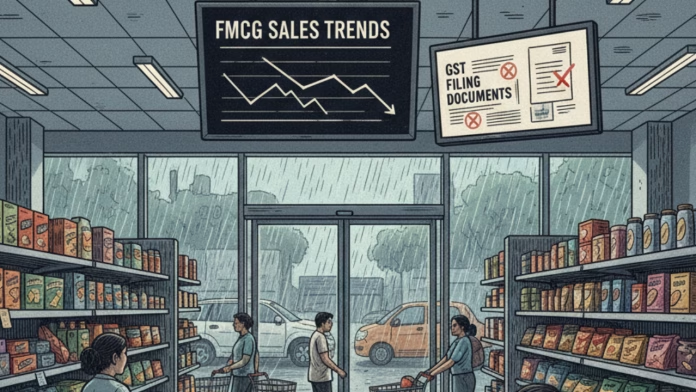
India’s fast-moving consumer goods (FMCG) sector faced a turbulent September quarter as erratic monsoons and the rollout of revised GST slabs weighed on sales for global majors across categories. Companies ranging from Hindustan Unilever and Reckitt to PepsiCo, Coca-Cola, and Heineken reported muted growth or temporary declines, even as they maintained confidence in India’s long-term consumption potential.
Unilever’s chief executive Fernando Fernandez said the company saw short-term disruption due to GST adjustments but believes the reform will benefit nearly 40% of its product portfolio by making prices about 10% lower. He added that India remains among the company’s strongest growth markets in the medium term.
At Reckitt, net revenue growth was affected by the GST transition, although its flagship hygiene brand Dettol continued to post volume-led gains. Chief financial officer Shannon Eisenhardt told investors that the third-quarter impact from GST phasing was in the “low to mid-single digits,” with India’s like-for-like growth staying marginally positive.
Beer maker Heineken, which controls United Breweries, cited heavy rains in several states for a mid-single-digit decline in volumes during the quarter. The unusual monsoon, which hit beverage consumption in both on-trade and off-trade channels, also dented sales for soft drink giants Coca-Cola and PepsiCo.
Despite these challenges, FMCG executives remain upbeat. Coca-Cola CEO James Quincey said India continues to represent “huge potential for long-term volume growth,” supported by a young consumer base and expanding rural penetration, though at lower price points compared with mature markets.
Industry analysts say the September quarter marks a temporary correction rather than a trend reversal. With rural demand improving, inflation easing, and logistics stabilizing post-GST, FMCG players are expected to regain momentum in the coming months, reinforcing India’s status as one of the most dynamic consumer markets globally.