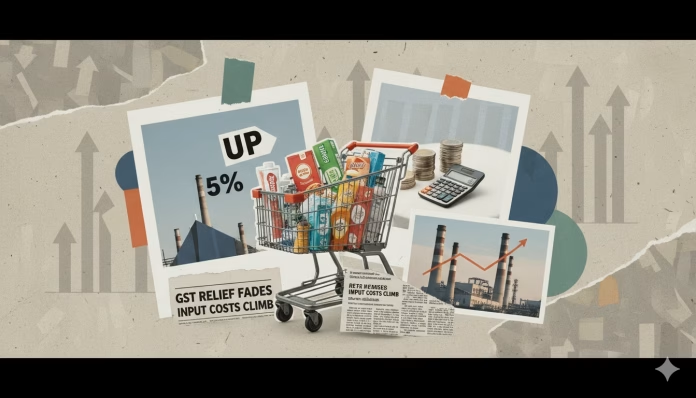
India’s fast-moving consumer goods (FMCG) companies have begun raising prices by up to 5%, as higher commodity costs and a weakening rupee put pressure on margins after months of restraint following GST rate cuts.
Distributors say revised price tags are already visible on select packs of everyday staples — including detergents, hair oils, chocolates, noodles and breakfast cereals — that have started reaching retail shelves this quarter.
After GST reductions across several consumer categories last September, companies had swiftly passed on the tax benefits to avoid scrutiny under anti-profiteering regulations. That move temporarily limited their ability to adjust pricing despite rising costs.

Dabur, HUL signal hikes
Dabur CEO Mohit Malhotra said the company has implemented around a 2% price increase in the ongoing fourth quarter, and the hikes are likely to remain in place into the next financial year.
“We had to postpone price hikes due to the anti-profiteering issue,” he noted.
Hindustan Unilever Limited is also increasing prices across its home care portfolio, which includes brands such as Surf Excel, Rin, Vim and Domex. CFO Niranjan Gupta recently indicated that some packs with revised pricing have already entered the market, with further increases expected.

Rising input costs bite
Commodity pressures have intensified in recent months. Crude oil prices have firmed up, pushing up costs of related derivatives such as sulphur and n-paraffins — key inputs in soaps, shampoos and detergents. Coconut oil prices have nearly doubled over the past year, adding to the burden for personal care brands.
The depreciating rupee has further amplified cost pressures. The currency touched an all-time intraday low of ₹92.02 against the US dollar on January 30, raising the cost of imported inputs.
Aditya Bagri, group director at breakfast cereals maker Bagrry’s, said imported ingredients such as oats and almonds have become significantly more expensive due to currency weakness. The company is exploring marginal price increases on select packs this quarter.
Tea prices have also seen an uptick, according to Tata Consumer Products Managing Director Sunil D’Souza, who noted that pricing decisions will remain flexible depending on commodity trends in the coming months.
Margins under pressure
A recent report by Systematix Group noted that while FMCG companies posted around 9% year-on-year revenue growth in Q3 FY26, margin expansion remained constrained. Sales volumes rose about 6% on average, supported by GST-led price reductions in categories such as biscuits, noodles and snacks.
However, with input costs rising and currency pressures persisting, companies are now shifting focus to protecting profitability.
As GST-driven pricing benefits taper off, the sector appears to be entering a phase of calibrated price hikes aimed at balancing consumer demand with margin stability.