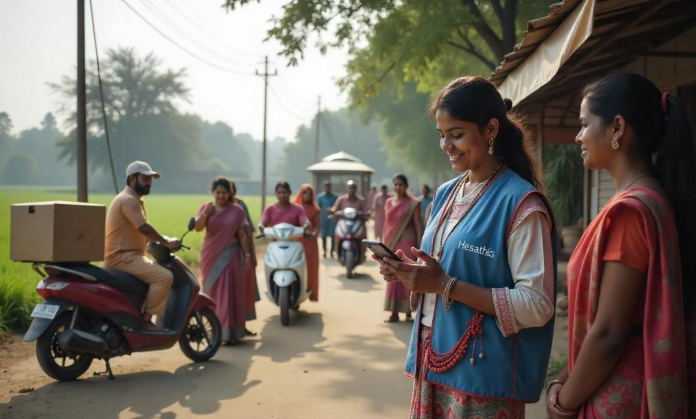
People invariably pontificate about e-commerce in metros. But the only inward revolution? It’s happening in the untapped, brown spaces out there: those with no malls, no next-day deliveries, and often no internet connection— until now.
Introducing India’s newest growth engine: assisted e-commerce. All over India, from Odisha to Uttar Pradesh, digital saathis locally called “Hesaathis” are helping rural villagers discover, compare, and transact online. No smartphone skills? No problem. The Hesaathis assist with digital payments, track and facilitate deliveries, and even assist with after-sales service, much like hired personal e-shopping agents.
Startups like Rozana are leading the charge. With an investment of over ₹180 crore accumulated, and a growing army of 18,000 partners, they are delivering FMCG, essentials, and digital conveniences to over 4 lakh rural households. They don’t view these deliveries as merely deliveries, rather as a digital trust-building activity.
And this isn’t just a B2C transaction. VilCart is quietly reinventing the rural B2B ecosystem—it connects 1 lakh kiranas in 30,000 villages with brands and warehouses through its own logistics stack. Personally, I am invested in VilCart’s proposition; its revenue has eclipsed ₹1,200 crore in FY25. There are others like ElasticRun, Shiprocket, and StoreKing building the stacked-backend for small businesses with an ambitious rural reach.
Then there is ONDC. Its open commerce infrastructure is now slowly settling into these ecosystems—shattering monopolies of platforms and allowing the smallest seller or buyer to behave like a pro.
What’s driving all this? UPI, affordable smartphones, improved logistics, and aspirations in a new rural India. The tier‑3 and tier‑4 towns are no longer on the fringes—they are buying, stocking, and expanding.
The impact is not just economic—it is also cultural. Rural women are becoming micro-entrepreneurs. Small town businesses are becoming digital-first. And entire communities are moving from being passive consumers to active participants.
India’s next great wave of e-commerce will not come from a Silicon Valley-like disruption—but from dusty lanes, noisy mandis, and WhatsApp groups.
And this time, everyone gets to check out.