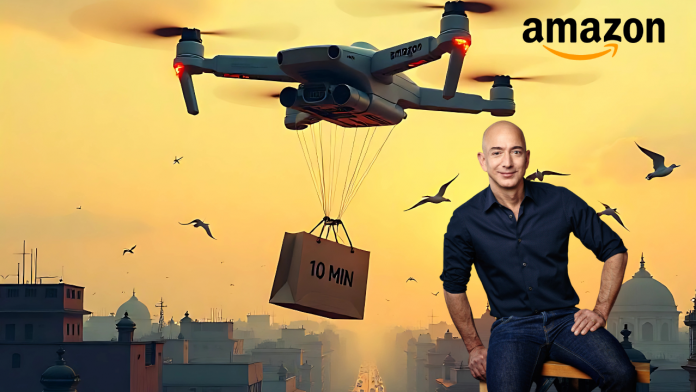
After dipping its toes in Bengaluru, Amazon has quietly expanded its lightning-fast delivery service, Amazon Now, to parts of Delhi — a clear sign that the global giant is ready to get serious about India’s breakneck-speed quick commerce market.
The service, which promises deliveries of essentials like groceries, snacks, hygiene products, and even meat in under 10 minutes, was first spotted in select Bengaluru neighbourhoods earlier this year. Now, it’s popped up in several pockets of West Delhi, with Amazon staying tight-lipped about a full rollout date — but not about its intentions.
“This isn’t a test run,” said Abhinav Singh, VP of operations for Amazon India and Australia, brushing off any suggestion that Amazon Now is just another pilot. “We’re not limiting this to one city or another — this is a long game.”
Behind the scenes, Amazon is pumping serious money into the engine that’ll make this possible — including a fresh Rs 2,000 crore ($233 million) investment announced last month. A big part of that is being funneled into expanding dark stores — compact fulfillment hubs peppered across high-demand areas. According to Economic Times, Amazon aims to have as many as 300 of these stores up and running across Bengaluru, Delhi-NCR, and Mumbai by the end of the year.
Continue Exploring: Lahori Beverages Nears ₹450 Crore Fundraise as Valuation Soars to ₹2,500 Crore – A New Challenger in India’s Booming Drinks Market
In comparison, Flipkart Minutes — its closest direct rival — has far more aggressive plans: up to 800 dark stores nationwide. But Amazon seems less concerned with speed-to-scale and more focused on building sustainable muscle.
“We’re seeing strong early traction from Prime members in Delhi and Bengaluru,” said Akshay Sahi, who heads Prime, deliveries, and returns at Amazon India. “This isn’t just about fast delivery — it’s about reliability, quality, and consistency.”
Still, Amazon’s arrival comes into a brutal battleground. Players like Zepto, Swiggy Instamart, and Blinkit (owned by Zomato) are already entrenched, offering deep discounts and faster-than-fast delivery windows to lure in customers. But Singh believes the race is far from over.
“India’s e-commerce story is still just getting started,” he said. “There’s plenty of room to grow — we don’t need anyone else to lose for us to win.”
Consulting firm Kearney backs that optimism. Its June report pegs quick commerce as a Rs 1.5–1.7 lakh crore market by 2027 — triple its current size — driven by urban demand, especially from higher-income households in cities with over half a million people.
That said, the road ahead isn’t paved with profit just yet. Most players are still bleeding cash, relying on low delivery fees and discount-fueled customer loyalty. HSBC estimates the industry would need 60 million users, ordering twice a week and paying ₹20–25 per delivery, just to scratch $30 billion in value.
For now, though, Amazon’s message is clear: it’s not here to experiment — it’s here to play.