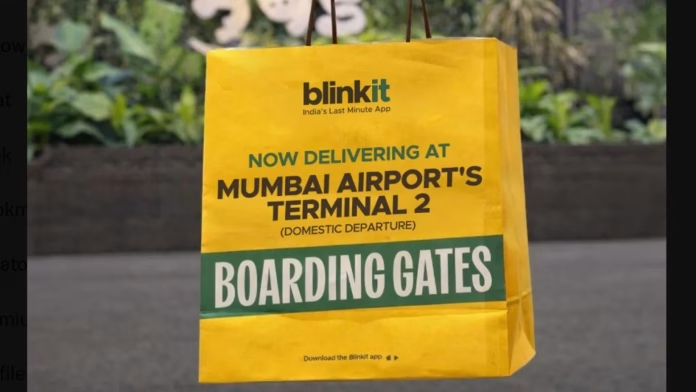
Blinkit has introduced its services at Chhatrapati Shivaji Maharaj International Airport, marking a notable expansion of quick commerce into airport infrastructure. The service is currently available at Terminal 2 for domestic departures, allowing passengers to order essential items such as phone chargers, books, and gifts directly through the Blinkit app and receive them within the terminal before boarding. The initiative has been rolled out in partnership with Adani Airports, which manages the airport, and represents a new use case for rapid delivery models in high traffic transit environments.
The service operates through a dedicated team stationed within the terminal, ensuring that orders are fulfilled and delivered to designated pick up points without requiring passengers to exit or navigate traditional retail outlets. This “in terminal” logistics model is being positioned as a first of its kind globally, highlighting how quick commerce platforms are evolving beyond residential delivery into on demand consumption zones such as airports. By offering access to over 2,500 products, Blinkit is aiming to address last minute travel needs, enhancing convenience for passengers who may have forgotten essentials or prefer not to carry certain items.
From a strategic perspective, the move aligns with Blinkit’s broader ambition to expand its presence across high density, high urgency environments where speed and accessibility are critical. Airports represent a unique opportunity in this context, given the time sensitivity of passengers and the premium placed on convenience. By embedding its service within the airport ecosystem, Blinkit is effectively extending its value proposition beyond everyday grocery and essentials delivery into travel related consumption.
The launch also comes amid the company’s aggressive expansion of its dark store network, which forms the backbone of its quick commerce operations. Blinkit is targeting a scale up to around 3,000 micro warehouses by March 2027, compared to approximately 2,027 stores as of the end of December. This infrastructure growth is expected to support faster delivery timelines, wider assortment availability, and entry into new micro markets, reinforcing its leadership position in the segment.
In terms of market dynamics, Blinkit continues to maintain a dominant position within India’s quick commerce space, with an estimated market share exceeding 50 percent. It competes with players such as Zepto, Swiggy Instamart, BB Now, and Flipkart Minutes. The airport expansion could serve as a differentiator, allowing Blinkit to tap into a new consumption context that remains largely untapped by competitors.
The development follows recent organizational changes at parent company Eternal, where founder Deepinder Goyal stepped down as managing director and chief executive officer. Leadership transitioned to Albinder Dhindsa, who continues to oversee the quick commerce business. Notably, Blinkit’s net order value has now surpassed that of the group’s food delivery segment, indicating the increasing importance of quick commerce within the overall business portfolio.
Overall, Blinkit’s entry into Mumbai Airport reflects the ongoing evolution of quick commerce from a convenience driven urban service to a broader on demand infrastructure layer. By integrating with travel hubs and expanding its operational network, the company is positioning itself to capture new consumption occasions while reinforcing its leadership in a rapidly growing and competitive market.