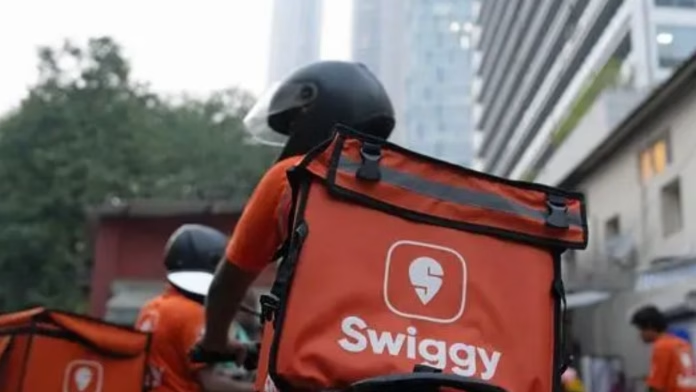
India’s debate on platform labour has entered a new phase after Swiggy called for the retirement of the term “gig worker”, proposing instead a new classification it describes as “flexible employment”. The suggestion was made at the World Economic Forum in Davos in January 2026 by Rohit Kapoor, chief executive of Swiggy’s food marketplace business, and has since triggered a wider discussion on worker rights, regulation and accountability in the digital economy.
Speaking to global policymakers and industry leaders, Kapoor argued that delivery partners should be recognised as part of a distinct employment category, positioned alongside salaried jobs and entrepreneurship. According to Swiggy, this framework better reflects the nature of platform work, where individuals choose their hours, move between apps and enter or exit the workforce with ease.
The proposal comes at a sensitive moment. Across markets, the gig economy has increasingly been linked with income volatility and limited social protection. In India, platform labour is under sharper scrutiny as the government evaluates implementation of the Social Security Code and other labour reforms.
While companies say flexible employment preserves autonomy and choice, labour experts caution that the change may carry legal consequences. Recognising delivery partners as employees would trigger obligations such as provident fund contributions, paid leave and statutory insurance. A new label, critics argue, could help platforms distance themselves from these responsibilities without materially changing working conditions.
On the ground, delivery work often looks less fluid than advertised. Earnings tend to peak during high demand slots, pushing workers to stay logged in for long hours. Industry surveys suggest many partners work 10 to 12 hours a day, six days a week, a pattern closer to full-time employment than casual work. Income stability remains uncertain as incentive structures change and platform density increases.
Safety nets also remain limited. Insurance coverage is typically restricted to active delivery hours, with no paid leave or income support during illness or downtime. Career progression beyond delivery roles is rare.
Swiggy’s call for a third employment pillar highlights a broader policy challenge. As platform businesses scale, regulators must decide whether flexibility can coexist with minimum protections. The debate is likely to intensify as other companies adopt similar language, shifting focus from terminology to the substance of worker welfare.