Home Blog

Start following Kiara Advani’s simple yet powerful morning ritual for glowing skin

Have you ever stopped to marvel at Kiara Advani’s radiant and flawless skin? In the exquisite glamour that is Bollywood, Kiara Advani stands out not just for her acting genius but also for her luminous and healthy skin. Amidst the overwhelming myriad of options surfaced by the beauty industry, this simple yet transformative ritual is not only a fad, but the cornerstone of her radiance.


The secret might be simpler than you think. It’s not a gruelling workout or a 10-step skincare routine; it’s a simple cup of warm water, with a slice of lemon in it. Kiara’s morning habit of indulging in warm water infused with the zest of fresh lemons has become a conscious choice rooted in her approach to holistic well-being. The actress recommends this refreshing elixir not only for its skin-enhancing benefits but also for the multiple benefits it has in improving your overall health and vitality.  

 

Hansa Yogendra, Director of The Yoga Institute in one of her videos on the health benefits of lemons mentioned, “Drinking one glass of lemon water every day in the morning will benefit you for a lifetime”.  Her claim can further be supported by a research published in the Journal of Science and Technology which reveals that “It is a healthy appetiser and helps to treat diseases with digestive aids. Lemon does not disclose any adverse effects, according to literature, but it is used all over the world as a traditional medicine”. Vitamin C, which is abundantly present in lemons, fights toxins and increases collagen production in the body, both of which help in treating acne as well as tightening the skin and reducing fine lines and wrinkles. While lemons are famously known for their Vitamin C component, not many people are aware of their Potassium-rich skin, which is an important mineral for nervous stimulation as well as maintaining blood pressure. Here are a few more benefits of adding lemon water to your everyday diet:- 

  • Immediately soothes muscle cramps
  • Peptin in lemons makes us feel fuller, thereby, helping in weight loss
  • Boosts immunity by stimulating the production of White Blood Cells in the body
  • Removal of kidney stones 
  • The lemon peel when infused in water for 30 minutes, activates its bioactive compounds which boost immunity and prevent our bodies from cellular damage
  • It also helps in the release of digestive enzymes which help in better absorption of nutrients

 

This simple kitchen hack has proudly made its way into the celebrity wellness circuit. Not only Kiara Advani but also Alia Bhatt, Deepika Padukone, Kriti Sanon, and Malaika Arora have this one drink in common at the break of dawn.

Here are 3 ways, you can incorporate the lemon water glow into your morning routine:- 

  1. Warm ginger lemon tea- Boil a glass of water with crushed ginger. When its done, squeeze a lemon into your glass and have it warm. To enjoy it in place of your morning tea, you may add a teaspoon of honey to it.

2. Ginger lemon shot – Take an inch of ginger root, and one squeezed lemon. Add enough water to blend it (3-4 tablespoons) in a blender, and have it as a morning shot.

3. Lemon-infused detox water- Cut up slices of one lemon and add it to your water bottle. Have 1-2 glasses of lemon water in the morning, and keep having the rest throughout the day. 

While lemon water offers a myriad of health benefits, it’s crucial to exercise moderation. One lemon a day is a healthy limit, and people with gastroesophageal reflux disease should be cautious about excessive lemon juice intake. As with any dietary rituals, balance is key to ensuring you enjoy the advantages without overdoing it. 
Nomio Raises $4M to Scale Broccoli-Derived Performance Shots

0

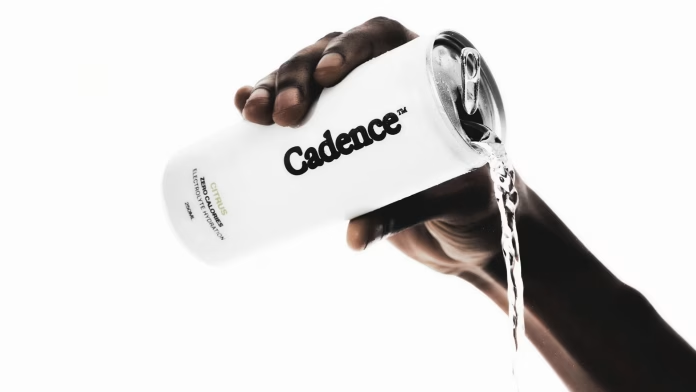
Nomio has secured $4 million in fresh funding, led by Collaborative Fund, as it scales from a niche performance product used by elite athletes into a broader commercial offering. The Stockholm-based startup is pioneering a new category within sports nutrition by commercializing Isothiocyanates (ITCs)—a bioactive compound derived from broccoli sprouts—positioning itself at the intersection of biotechnology and high-performance wellness.

Unlike traditional performance shots that rely on caffeine or nitrates, Nomio’s formulation is built around cellular resilience and recovery. Its core innovation lies in stabilizing ITCs, which have been shown to help the body manage lactic acid buildup during intense exercise, reduce oxidative stress by activating the Nrf2 pathway, and accelerate recovery metrics such as muscle soreness and heart rate variability. This “science-first” approach allows Nomio to differentiate itself as a technical performance tool rather than a generic wellness drink.

The brand’s early traction has been driven by organic adoption among elite athletes, including Cole Hocker and Andreas Almgren, as well as professional cycling teams where marginal gains in recovery can significantly impact performance. This grassroots credibility has helped Nomio build a strong foundation without heavy marketing spend, reinforcing its positioning as a performance-driven, athlete-validated product.

Nomio’s rise also aligns with the broader boom in hyper-functional wellness shots, a category expected to reach $1.5 billion globally by 2027. As competitors focus on energy, immunity, or productivity, Nomio is carving out a distinct niche in endurance and recovery optimization, targeting serious athletes rather than mass-market consumers—at least in its current phase.

From a strategic standpoint, the company’s biggest advantage lies in its proprietary stabilization process for ITCs, which creates a meaningful barrier to entry in a crowded supplement market. By owning the underlying science and extraction technology, Nomio is effectively building an IP-driven moat, similar to how performance brands differentiate through proprietary materials or formulations.

With this funding, Nomio is expected to expand beyond the Nordic region into key markets like the US and UK, moving from an “insider secret” to a mainstream performance product. If successful, it could redefine how athletes—and eventually everyday consumers—approach recovery, shifting the focus from stimulants to cellular-level optimization.

Advertisement

Triptii Dimri Becomes Victoria’s Secret’s First Indian Ambassador, Marking a New Chapter for Global Fashion Representation

0

India’s branding and retail landscape in April 2026 is undergoing a clear transformation, with culture, content, and commerce converging at an unprecedented pace. A defining highlight of this shift is Triptii Dimri becoming the first Indian ambassador for Victoria’s Secret, signaling not just a milestone for representation but also the growing strategic importance of India in global fashion narratives.

Brands are increasingly moving beyond traditional celebrity endorsements toward content-led partnerships. For example, Ananya Panday’s role as the “Voice of Limca” reflects a social-first strategy designed to engage Gen Z through continuous storytelling rather than one-off campaigns. Similarly, Tiger Shroff’s association with Slovic highlights how brands are using influencers to make aspirational lifestyles—like home fitness—more accessible and relatable.

At the same time, fandom-driven marketing is emerging as a powerful growth lever. KITKAT India’s collaboration with One Piece demonstrates how brands are tapping into highly engaged communities through collectible packaging and digital storytelling. This approach transforms consumers into active participants, amplifying reach organically through social sharing.

On the retail front, India’s luxury map is expanding beyond traditional metros. The launch of Off-White’s flagship store at Phoenix Mall of Asia underscores Bengaluru’s emergence as a key destination for premium and streetwear consumption, driven by a young, globally exposed consumer base.

Meanwhile, the marketing ecosystem itself is evolving. The acquisition of Agenseed by One Hand Clap reflects a shift toward full-stack capabilities, where agencies combine creative storytelling with influencer distribution to deliver measurable outcomes. In parallel, sports collaborations like Birla Estates’s partnership with Gujarat Titans are becoming more immersive, focusing on fan experiences rather than passive sponsorship visibility.

Together, these developments highlight a broader shift in India’s marketing playbook—from mass advertising to culture-first, community-driven, and omnichannel engagement strategies. Brands are no longer just selling products; they are building ecosystems that blend storytelling, experience, and accessibility to stay relevant in an increasingly competitive market.

Advertisement

Alpino Health Foods Crosses ₹100 Cr, Targets ₹500 Cr as India’s Protein Snacking Boom Accelerates

0

Alpino Health Foods has officially crossed the ₹100 crore revenue milestone in FY26, marking a breakout moment for one of India’s fastest-scaling D2C nutrition brands. What makes this growth particularly notable is the velocity—2.5x year-on-year expansion and a 5x jump in just two years, from ₹20 crore in FY24. The company is now setting its sights on an ambitious ₹500 crore revenue target within the next two years, positioning itself as a serious contender in India’s rapidly premiumizing health food market.

At the core of Alpino’s rise is a strong alignment with changing consumer behavior. The Indian breakfast and snacking category is shifting from carb-heavy, traditional options toward protein-rich, functional foods, especially among urban millennials and Gen Z consumers. Alpino capitalized early on this trend with its peanut butter range, turning what was once a niche gym product into a mainstream pantry staple.

A major catalyst in this journey has been the brand’s omnichannel expansion. While it initially scaled through Amazon and D2C, Alpino has aggressively moved into quick commerce platforms like Blinkit, Zepto, and Swiggy Instamart, where it benefits from impulse-driven purchases and repeat consumption. Products such as high-protein peanut butter and muesli have become top-up essentials, particularly for morning routines—an ideal use case for 10–15 minute delivery.

Simultaneously, the brand has built strong offline depth, now present in 6,000+ retail outlets, including chains like Reliance Retail and Nature’s Basket. This dual-channel strategy ensures Alpino captures both planned purchases (modern trade) and instant demand (quick commerce)—a critical advantage in today’s fragmented retail landscape.

Another key growth lever has been brand trust and positioning, amplified by Shilpa Shetty joining as both investor and brand ambassador. Unlike traditional celebrity endorsements, this “co-owner” model has given Alpino stronger credibility in the wellness space, helping it compete with established players like Dr. Oetker and Pintola. In categories like health food—where trust is paramount—this alignment has significantly reduced consumer acquisition friction.

Looking ahead, Alpino is evolving from a single-category peanut butter brand into a full-stack nutrition platform. Its expansion into protein isolates, oats, and muesli signals an attempt to capture the entire “daypart” consumption cycle—from breakfast to snacks to fitness nutrition. Importantly, the brand continues to emphasize its clean-label promise—no hydrogenated oils, no refined sugar, and no stabilizers—which resonates strongly with ingredient-conscious consumers.

From a financial perspective, Alpino’s biggest challenge as it scales toward ₹500 crore will be balancing margins with accessibility. Clean-label products inherently carry higher input costs, and expanding into Tier-2 and Tier-3 markets—where price sensitivity is higher—will require careful pricing and supply chain optimization. However, its growing scale, distribution efficiency, and strong repeat consumption could help offset these pressures.

Strategically, Alpino represents a broader shift in India’s FMCG ecosystem: the rise of functional, premium, and digitally native food brands that are redefining everyday consumption habits. By combining product innovation, omnichannel distribution, and celebrity-backed trust, Alpino Health Foods is positioning itself not just as a peanut butter company, but as a category leader in India’s protein-first lifestyle movement.

Advertisement

Açaí Theory Raises ₹4 Cr to Build India’s “Healthy Indulgence” QSR

0

Açaí Theory has secured ₹4 crore in pre-seed funding, led by All In Capital and TDV Partners, signaling rising investor conviction in India’s “healthy indulgence” food category. Founded in 2025 by Rishav Ranjan and Akash Kyal, the Bengaluru-based startup is attempting to carve out a new niche in India’s QSR ecosystem—one that blends nutrition, convenience, and taste rather than forcing a trade-off between them.

The origin story reflects a classic “exposure gap” insight. Ranjan, having experienced the popularity of açaí bowls in Dubai, identified a whitespace in India where nutrient-dense, premium yet convenient food formats were largely missing. Since launching its flagship outlet in Bengaluru in October 2025, the brand has already served 10,000+ bowls, offering early validation that Indian urban consumers are willing to pay for functional, feel-good food—especially when it is positioned as indulgent rather than restrictive.

At the heart of Açaí Theory’s model is its assembly-only QSR format. Unlike traditional kitchens, there is no on-site cooking, which dramatically simplifies operations. Products like açaí bowls, smoothies, and superfood snacks are assembled using pre-prepared bases and toppings, enabling faster service, lower manpower requirements, and tighter quality control. This model is particularly well-suited for scaling, as it reduces variability—a major challenge in food businesses.

To support this, the company plans to set up a central kitchen, which will standardize its proprietary açaí base and toppings. This ensures that every outlet delivers consistent taste and texture, a key factor in building brand trust in the food category. It also allows for better inventory planning and cost efficiencies, especially when dealing with imported ingredients like Brazilian açaí berries.

The funding will primarily be used to expand within Bengaluru, with a target of 8–10 outlets over the next 15–18 months. The company is following a cluster-led expansion strategy, focusing on density within a single city before moving outward—similar to successful QSR and café chains. This approach helps optimize logistics, marketing efficiency, and brand recall.

A notable differentiator is Açaí Theory’s push toward AI-led operations. The brand is integrating technology to forecast demand, manage inventory, and digitize SOPs, effectively making the business “plug-and-play” for future franchising. This is a forward-looking move, as scalability in QSR often hinges on how easily operations can be replicated without compromising quality.

The investor lineup further strengthens the brand’s strategic direction, with participation from leaders like Rinshul Chandra, bringing deep expertise in food delivery and consumer behavior. This aligns with Açaí Theory’s ambition to tap into the growing demand for healthy options on platforms like Zomato and Swiggy, where “healthy” and “protein-rich” searches are seeing rapid growth.

Zooming out, Açaí Theory is riding a broader macro trend: the shift toward “convenient wellness.” Urban consumers—especially in the 18–35 demographic—are increasingly seeking food that supports fitness and lifestyle goals but still feels indulgent. This has led to the rise of categories like smoothie bowls, protein snacks, and clean-label QSR formats globally, and India is now entering that phase.

In essence, Açaí Theory is not just building a food brand—it is building a format innovation in Indian QSR. By combining assembly efficiency, centralized production, and tech-enabled operations, it is positioning itself to scale rapidly in a category that is still largely underpenetrated but primed for growth.

Advertisement

Clarity Labs Raises ₹4 Cr to Simplify Skincare with “Outcome-Driven” Approach

0

Clarity Labs has secured ₹4 crore in seed funding, led by Artha Venture Fund, at a ₹20 crore pre-money valuation, marking an early but strategic bet on a new thesis in India’s overcrowded skincare market: simplification over sophistication. Founded in November 2025 by Karan Dokras, the startup is tackling a key behavioral gap—while Indian consumers experiment with multiple skincare products, long-term regimen adherence remains extremely low.

Clarity Labs’ core insight is sharp: the problem isn’t lack of products, but over-complexity. Instead of building another multi-step skincare brand, the company is embedding treatment into existing daily habits, starting with the most universal one—bathing. Its flagship product line, “The BAR”, launched in March 2026, reimagines the humble soap as a functional treatment format. Each bar is designed to address a specific concern—anti-acne, de-tan, muscle recovery, and sensitive skin—effectively merging hygiene with dermatological outcomes.

This “embedded treatment” model positions Clarity differently from incumbents like Chemist at Play or DERMATOUCH, which still rely heavily on multi-product routines. By contrast, Clarity is betting on habit-stacking—if a product fits seamlessly into a daily ritual, repeat usage (and therefore results) becomes far more likely. This is a powerful lever in a category where repeat purchase drives lifetime value.

The company’s roadmap reflects an intent to own the broader “wash” category, not just soaps. With the fresh capital, Clarity plans to expand into face wash, body wash, and hair wash, maintaining the same philosophy of functional, no-frills formulations. This creates a cohesive ecosystem where consumers can address multiple concerns without increasing routine complexity—a key differentiator in a market facing “skincare fatigue.”

On the distribution front, Clarity is already live on D2C channels and marketplaces like Amazon and Flipkart, with plans to enter quick commerce platforms such as Blinkit and Zepto by Q3 2026. This is a strategic move, as personal care is increasingly becoming an impulse + convenience-driven category, especially in urban markets. Additionally, the brand is preparing to pilot offline presence in premium pharmacies and modern retail, leveraging Artha’s network.

From an investor perspective, the appeal lies in Clarity’s operational discipline and repeat-led growth potential. Artha Venture Fund highlighted the startup’s focus on unit economics and procurement efficiency, which is critical in a category often plagued by high customer acquisition costs and heavy marketing burn. By contrast, Clarity’s model—built on utility and daily usage—has the potential to generate organic retention rather than paid churn cycles.

Zooming out, Clarity Labs is tapping into a broader shift in India’s ₹1.2 lakh crore personal care market: the move from aspirational beauty to functional hygiene. Consumers are increasingly prioritizing efficacy, transparency, and ease of use over elaborate routines and influencer-driven experimentation. In that sense, Clarity is less of a “beauty brand” and more of a behavioral design company, rethinking how products fit into everyday life.

If executed well, this approach could unlock a durable moat. While competitors compete on ingredients, claims, or branding, Clarity is competing on habit integration and consistency—a far harder advantage to replicate.

Advertisement

Juice Runners Raises $2M Seed to Scale Artist-Led Spirits

0

Juice Runners, the ready-to-drink cocktail brand founded by hip-hop duo Run The Jewels (Killer Mike and El-P), has secured $2 million in seed funding, marking its transition from a self-funded passion project to a scalable national spirits brand. Unlike many celebrity-backed alcohol ventures that rely heavily on licensing deals, Juice Runners stands out for its artist-owned, ground-up approach, with the founders initially bootstrapping the brand using proceeds from merchandise sales.

The funding comes at a critical inflection point. Having validated its concept with a successful pilot phase in 2025, the company is now gearing up for national distribution and portfolio expansion—two areas that require deep operational expertise in the highly regulated U.S. alcohol market. To execute this, Juice Runners has brought in a seasoned leadership team, including CEO Joe Malcoun to drive capital strategy, COO Kate Brankin to oversee product and supply chain, and CBO Leif Huckman to build out the on-trade channel (bars and restaurants). This signals a clear shift toward professionalization without diluting the brand’s cultural DNA.

At the product level, Juice Runners is evolving from a single-SKU brand into a multi-product portfolio. Its flagship Paloma Remix, a 5.9% ABV mezcal-based canned cocktail, established early traction by appealing to consumers seeking craft-quality flavors in a convenient format. Building on this, the company is preparing to launch “Sea Legs,” a rum-based RTD cocktail, later in 2026. Additionally, it is entering the premium spirits space with a limited-edition bottled rum collaboration with St. Lucia Distillers, developed alongside renowned spirits expert Fred Minnick. This dual strategy—mass RTD plus premium collector offerings—positions the brand to capture both high-volume retail demand and niche enthusiast credibility.

Strategically, Juice Runners is leaning into what can be called an “anti-celebrity” playbook. Instead of relying solely on star power, the founders have invested in grassroots brand building, engaging directly with bartenders, appearing at industry events like Tales of the Cocktail, and integrating the brand into their music tours. This has helped them build authentic credibility within the craft cocktail community, a segment that is often skeptical of celebrity-driven products.

From a market perspective, the timing is favorable. The global RTD cocktail category is witnessing strong growth, driven by consumers seeking premiumization, convenience, and lower-effort indulgence. Within this, mezcal-based and rum-based cocktails represent emerging flavor trends, giving Juice Runners a differentiated positioning compared to the more saturated vodka-seltzer segment.

Financially, the $2 million seed round is relatively modest, but that aligns with the brand’s capital-efficient philosophy. Rather than scaling through heavy marketing burn, Juice Runners is focusing on organic demand, cultural relevance, and disciplined expansion, which could translate into stronger long-term unit economics.

In essence, Juice Runners is not just building another RTD beverage—it is crafting a culture-first spirits platform. By combining artist ownership, operational expertise, and a dual-channel strategy (on-trade + retail), the brand is positioning itself to carve out a unique niche in an increasingly crowded but rapidly growing category.

Advertisement

Medusa Beer Targets 50% Growth Amid Supply Chain Pressures due to west Asian crisis

Medusa Beverages is projecting an ambitious 50 percent growth in FY26 despite navigating significant global and domestic disruptions. The company is focusing on scaling volumes, expanding footprint, and  accelerating premiumisation. Founder and CEO Avneet Singh outlined a strategy aimed at long term market share gains despite  near-term cost pressures..

One of the major challenges is the shortage of packaging material emerged due to gas shortage impacting domestic production of glass bottles and aluminium cans. 

With manufacturing units operating at reduced capacity, Medusa  has been compelled to source cans from international markets such as Thailand, significantly increasing procurement costs and adding pressure on margins. 

These challenges have been  compounded by volatility in global commodity markets and rising freight costs, making cost planning more uncertain. As a result, the company has seen an overall production cost increase of 9 to 10 percent,  with  packaging materials, cartons, and labeling witnessing sharp price hikes.

In response, Medusa  has revised its near term expectations, lowering its Q1 revenue target from ₹80 crore to ₹60 crore. While the company has  sought price revisions from state excise authorities, management indicated  it is prepared to absorb the cost impact if approvals are delayed, prioritizing product availability and market continuity. The shift to imported packaging has also altered working capital requirements, with upfront payments replacing  traditional credit cycles and reducing financial flexibility.

Despite these headwinds, Medusa remains optimistic about strong underlying demand.  The company aims to  cross 2 million cases in volume this year, up from around 13.5 lakh cases previously. 

According to Singh, growth is being driven by  geographic expansion beyond core markets such as Delhi, Uttar Pradesh, Chhattisgarh, and Uttarakhand. 

The brand has also entered Karnataka, while preparations are underway for expansion into  Kerala, Goa, and Jharkhand. 

The company is also  exploring international opportunities in GCC markets including the UAE and Saudi Arabia, which are expected to contribute a growing share of revenue in the coming years.

Seasonality is another growth factor for Medusa. With climate forecasts pointing to an intense summer driven by the El Niño effect, Medusa plans to increase production up to 2 lakh cases. This seasonal demand is expected to offset some of the cost pressures currently affecting the business.

At a product and channel level, the company is also focusing on premiumisation, particularly through its draft beer offerings. In Delhi, Medusa has launched premium draft offerings such as Medusa AIR across select high end outlets, where early traction has been encouraging.

The draft format is strategically important as it reduces reliance on packaging, helps mitigate cost inflation and enhances  consumer experience. The company plans to expand its presence from 25 outlets to around 100, supported by imported dispensing systems that reinforce its premium positioning.

Management views the current challenges as temporary, estimating that supply chain constraints  and pricing pressures could normalize within a 90 day window, subject to improving global  conditions. In the interim, Medusa is prioritizing supply security, distribution expansion, and brand visibility, even at the cost of short term profitability.

Overall, the company’s strategy reflects a calculated approach to navigate volatility while positioning for long term growth. By absorbing  cost  and pushing ahead with aggressive expansion and premiumisation, the company aims to to turn a period of external disruption into an opportunity to strengthen its footprint across India’s evolving alco beverage market.

Advertisement

PAC Cosmetics Crosses ₹100 Crore, Proves the Power of a Profitable, Bootstrapped Beauty Brand

0

In an industry often dominated by venture-funded growth and aggressive customer acquisition spends, PAC Cosmetics has emerged as a notable outlier, crossing the ₹100 crore revenue milestone in FY26 while remaining fully bootstrapped and profitable. The Mumbai-based brand reported a steady 30 percent year-on-year growth, underscoring a disciplined, product-led scaling strategy that contrasts sharply with the high-burn models commonly seen across the Indian D2C beauty ecosystem.

Founded in 2006 by Bonish Jain, PAC has steadily evolved from a niche, professional-grade makeup brand used primarily by artists into a mass-premium label with strong consumer recall. Unlike many new-age brands that prioritize rapid scale through external funding, PAC has consciously avoided raising private equity, choosing instead to build through internal accruals and reinvested profits. This approach has allowed the company to maintain EBITDA margins in the range of 20 to 25 percent, a benchmark that remains rare in the highly competitive beauty segment.

The brand’s financial performance reflects a focus on sustainable growth rather than short-term scale. With FY26 revenues surpassing ₹100 crore, PAC is projecting a further 20 to 25 percent growth in FY27, indicating continued momentum without compromising profitability. This balance between growth and margin discipline positions the company as a compelling case study in long-term brand building within India’s evolving beauty market.

A key driver of PAC’s success has been its emphasis on product innovation grounded in real-world usability. Under the leadership of Vaishnavi Jain, the brand has shifted toward what it describes as “intuitive makeup,” focusing on products that deliver professional-grade results while being easy to use in everyday conditions. This philosophy has translated into a series of differentiated launches in FY26, including a 4-in-1 magnetic makeup brush designed for portability and minimalism, a high-performance Studio HD liquid concealer tailored for humid climates, and an Aqua Foam primer that emphasizes lightweight, breathable application. These innovations highlight PAC’s ability to bridge the gap between professional artistry and consumer convenience.

From a distribution standpoint, PAC has built a well-balanced omnichannel presence. The company operates on a near 50:50 split between online and offline sales, with digital channels including its own D2C platform and major marketplaces complemented by a strong physical retail footprint spanning over 140 locations. This hybrid approach ensures accessibility while also enabling experiential discovery, which remains critical in the beauty category.

On the supply side, PAC has adopted a globally integrated manufacturing strategy, partnering with more than 60 laboratories across markets such as the United States, South Korea, Germany, and China. This allows the brand to maintain international formulation standards while retaining its identity as an Indian company. The combination of global sourcing and local market understanding has been instrumental in delivering consistent product quality across categories.

Looking ahead, PAC is preparing to extend its footprint beyond India, with regulatory filings underway for entry into markets such as Dubai, Nepal, and Sri Lanka by late 2026. This marks the beginning of its international expansion phase, leveraging its established product credibility and competitive pricing in the ₹600 to ₹1,200 range.

At a strategic level, PAC’s differentiation lies in its “professional-to-personal” positioning. By retaining the performance standards expected by makeup artists—such as high pigment payoff and long wear—while simplifying application for everyday users, the brand has successfully avoided being confined to a niche segment. This dual appeal has enabled it to build a loyal customer base without relying heavily on influencer-driven marketing or discount-led growth.

As competition intensifies with the entry of heavily funded domestic and global players, PAC’s trajectory demonstrates that disciplined execution, strong product-market fit, and community trust can create a durable competitive advantage. Its journey reinforces the idea that in the beauty industry, sustained profitability and brand authenticity can be as powerful as capital in driving long-term success.

Advertisement

Charlotte Tilbury Debuts India Flagship Store with Nykaa, Marking Premium Retail Expansion

0

Global luxury beauty brand Charlotte Tilbury has officially launched its first flagship store in India at Nexus Select Citywalk, signalling a significant milestone in its expansion within one of the world’s fastest-growing beauty markets. The store, located in Saket, New Delhi, represents the brand’s transition from a strong omnichannel presence to a deeper investment in experiential retail in the country.

The flagship will be fully operated and managed by Nykaa, which has served as Charlotte Tilbury’s exclusive India partner since its market entry in 2020. Under this arrangement, Nykaa will oversee end-to-end operations including retail execution, staffing and training, merchandising, supply chain management, marketing, brand positioning, and omnichannel integration. This model reflects Nykaa’s evolving role from distributor to strategic retail partner for global beauty brands entering India.

The launch underscores the strength of the long-standing partnership between the two companies, with Nykaa leveraging its robust physical and digital ecosystem to scale premium international brands. Charlotte Tilbury products are already available across 57 Nykaa stores as well as on its digital platforms, providing a strong foundation for the brand’s offline expansion. The flagship store now adds a high-touch, immersive dimension to that presence, aimed at enhancing consumer engagement and brand loyalty.

Designed as a “Beauty Wonderland,” the store offers the brand’s complete portfolio across makeup, skincare, and fragrance categories. It introduces several experiential elements, including personalized makeup consultations, artist-led masterclasses, and interactive installations that bring the brand’s signature aesthetic to life. Notably, the launch also marks the debut of Charlotte Tilbury’s fragrance line in India, expanding its category footprint in the market.

Speaking on the occasion, founder Charlotte Tilbury described the opening as a major milestone, highlighting India’s importance as a high-growth, dynamic beauty market. The move aligns with broader global strategies among luxury beauty brands to invest in flagship experiences that go beyond transactional retail and instead focus on storytelling, personalization, and community building.

From Nykaa’s perspective, the flagship reinforces its “House of Brands” strategy, where it not only distributes but also builds and operates exclusive brand environments for global partners. According to Anchit Nayar, the store represents a natural progression in the partnership, combining Nykaa’s local market expertise with Charlotte Tilbury’s global brand equity to create a differentiated retail experience.

The expansion momentum is set to continue, with a second standalone Charlotte Tilbury store already planned at Mall of India, expected to open in May 2026. This indicates a phased rollout strategy focused on high-footfall urban locations, targeting affluent and aspirational consumers in metro markets.

The launch also comes at a time when Nykaa is witnessing strong growth across its beauty and fashion segments, reflecting increasing consumer demand for premium and luxury products in India. As the beauty market continues to evolve, driven by Gen Z and millennial consumers, such flagship experiences are likely to play a crucial role in shaping brand perception and driving higher lifetime value.

Overall, the debut of Charlotte Tilbury’s flagship store in India highlights a broader shift in the beauty retail landscape, where global brands are doubling down on immersive, partner-led retail formats to capture share in high-growth emerging markets.

Advertisement

Vibhor Jain Takes Charge as CEO and MD of ONDC, Signals Focus on Open Digital Infrastructure

0

Open Network for Digital Commerce has formally elevated Vibhor Jain to the role of Managing Director and Chief Executive Officer, effective April 7, 2026, marking a key leadership transition for India’s ambitious open commerce initiative. Jain, who previously served as Chief Operating Officer and later stepped in as acting CEO following the exit of Thampy Koshy in April 2025, now assumes full-time leadership at a critical phase of the network’s evolution.

His appointment comes as ONDC continues to position itself as a transformative layer in India’s digital economy, enabling buyers and sellers to transact across interoperable platforms rather than being confined within closed ecosystems. Outlining his strategic direction, Jain emphasized the importance of building capabilities that only an open network can deliver, highlighting that the focus will remain on enabling use cases that traditional, vertically integrated platforms may not prioritize due to structural or incentive limitations.

Jain has articulated a clear intent to deepen ONDC’s impact across a broad spectrum of stakeholders, including small retailers, farmers, artisans, gig workers, and first-time digital participants. This inclusive approach aligns with the network’s founding vision of democratizing digital commerce by lowering entry barriers and expanding access beyond large, centralized marketplaces. He also pointed to the strength of the leadership bench, with key appointments such as Rohit Lohia as Chief Business Officer and Manoj Thakur as Chief Technology Officer, reinforcing operational and technological capabilities as the platform scales.

From a financial standpoint, ONDC has demonstrated strong topline momentum. The organization reported a 127 percent year-on-year increase in revenue to ₹33.41 crore for FY25, compared to ₹14.7 crore in the previous fiscal year. At the same time, its net loss narrowed to ₹147.13 crore from ₹195.6 crore, indicating early signs of improved cost management even as the network continues to invest in expansion and ecosystem development. While profitability remains a longer-term objective, the dual trend of revenue growth and controlled losses suggests a gradual move toward financial sustainability.

Operationally, ONDC has achieved significant scale since its inception. Between January 2023 and August 2025, the network facilitated approximately 288 million orders and onboarded over 167,500 retail sellers. However, in a shift toward a more strategic disclosure approach, ONDC discontinued the regular publication of monthly transaction data in August 2025. The last available figures indicate that more than 83 million retail orders were processed between April 2024 and August 2025, underscoring steady adoption across categories.

Looking ahead, one of the key areas of focus will be the implementation of network infrastructure development and service fees, a move that has been under consideration since late 2024 but delayed multiple times to allow ecosystem participants to prepare. The introduction of these fees is expected to play a crucial role in building a sustainable economic model for the network. In parallel, ONDC is expanding into financial services, with plans to introduce fees for mutual fund and credit transactions conducted through its platform, signaling a diversification beyond core commerce use cases.

Jain’s leadership comes at a pivotal juncture where ONDC must transition from rapid onboarding and experimentation to creating consistent value for all participants in the network. His emphasis on interoperability, inclusivity, and long-term ecosystem development reflects a strategic shift toward strengthening the foundational infrastructure rather than competing directly with established ecommerce players.

Overall, the appointment reinforces ONDC’s commitment to its core philosophy of open digital networks, with Jain expected to steer the platform through its next phase of growth by balancing scale, sustainability, and stakeholder value creation in India’s evolving digital commerce landscape.

Advertisement