


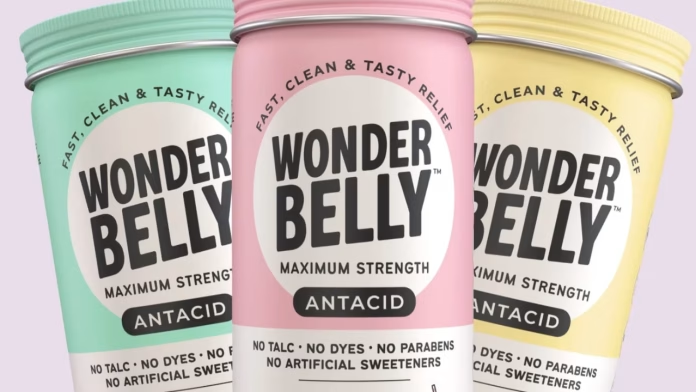
Procter & Gamble has acquired clean digestive health brand Wonderbelly in a deal whose financial details have not been disclosed, according to a LinkedIn post shared by the company. The acquisition marks P&G’s latest move to strengthen its presence in the fast-growing over-the-counter wellness and digestive care segment, where consumer demand is increasingly shifting toward cleaner formulations and transparent ingredient labels.
Founded in 2023 by brothers Lucas Kraft and Noah Kraft, Wonderbelly entered the market with a clear proposition: modern, clean-label alternatives to legacy digestive remedies such as antacids and gas relief products. In a category long dominated by brightly coloured, synthetic-heavy formulations, the brand differentiated itself through products that are non-GMO and free from dyes, artificial sweeteners, and titanium dioxide, an additive that has drawn regulatory and consumer scrutiny globally.
Despite being a relatively young company, Wonderbelly scaled rapidly across major US retail channels. Its digestive health products are stocked at large-format and pharmacy retailers including Walmart, Target, CVS, and Kroger, giving the brand nationwide visibility within a short period of time. The retail footprint, combined with its focus on everyday digestive concerns, helped position Wonderbelly as a credible challenger in the OTC space.
The startup had attracted backing from a roster of consumer and growth-focused investors, including Loft Growth Partners, Silas Capital, Elizabeth Street Ventures, AF Ventures, and L Catterton, among others. The participation of established consumer investors underscored confidence in the brand’s positioning and its ability to disrupt a traditionally conservative category.
For Procter & Gamble, the acquisition aligns with its broader strategy of expanding into premium and wellness-oriented segments within personal health care. By bringing Wonderbelly into its portfolio, P&G gains access to a younger brand with modern aesthetics, clean formulations, and strong retail traction, at a time when shoppers are increasingly questioning ingredient safety and efficacy.
While neither company has shared integration plans, the deal signals continued consolidation in the digestive health market, as global FMCG players look to acquire innovation rather than build it from scratch.