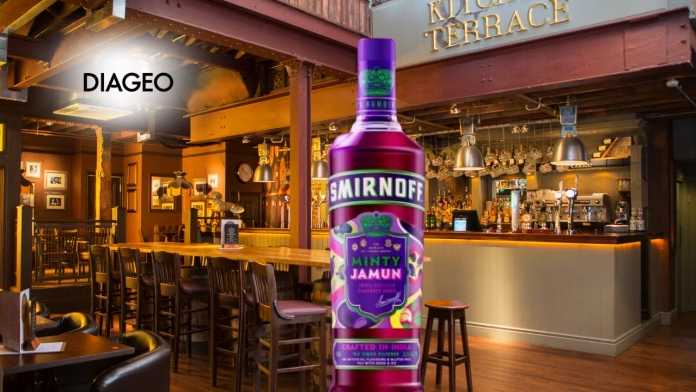
India has emerged as one of Smirnoff’s five largest global markets, underscoring the growing importance of the country within Diageo’s international spirits portfolio. The milestone has been driven largely by strong consumer response to locally developed flavoured variants, most notably Minty Jamun, which has reshaped the growth trajectory of the Smirnoff brand in India.
Speaking to analysts after the company’s latest quarterly results, Diageo India Chief Executive Praveen Someshwar said flavour-led innovation tailored to Indian tastes has played a decisive role in expanding the brand’s footprint. He noted that Minty Jamun has not only accelerated volumes for Smirnoff but has also lifted performance across Diageo’s broader whites portfolio, validating the company’s India-first product strategy.
The update came alongside Diageo India’s October to December performance, which the company described as steady despite regulatory and pricing pressures in key states. Excluding Maharashtra, where policy changes have disrupted parts of the liquor market, the company’s prestige and above portfolio posted volume growth of around 6 percent during the quarter, while net sales value rose 14 percent. Adjusting for a one-off retail pipeline build-up in Andhra Pradesh in the previous year, volumes in this segment were largely stable.
Someshwar pointed out that pressure in Maharashtra has been most pronounced in lower-priced categories, following the introduction of locally produced spirits at more affordable price points. This, he said, has intensified competition at the bottom end of the market while supporting a healthier national price mix, which stood at roughly 10 percent for the quarter.
To protect share, Diageo India has increased focus on sharper pricing, smaller pack formats and in-market activation for mass brands such as McDowell’s and Royal Challenge. Looking ahead, the company remains cautiously positive on demand trends, citing early signs of improving consumer spending and seasonal uplift. Diageo also expects potential benefits from the India UK free trade agreement to begin reflecting in financials later in the year, once existing inventory cycles normalise.