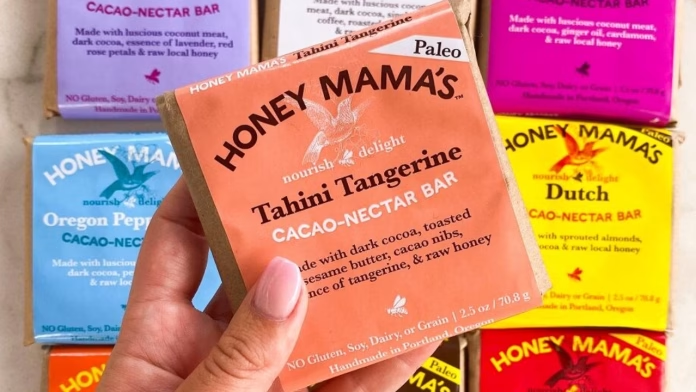
Honey Mama’s, a US-based maker of refrigerated chocolate treats, has raised $4 million in a fresh funding round led by Bochi Investments, as the brand prepares to accelerate its national expansion and scale up operations.
The company plans to deploy the capital toward increasing production capacity, widening its retail presence and developing new products, according to chief executive officer Jared Schwartz. The funding comes at a time when demand for clean-label, better-for-you indulgence products continues to grow across the natural and mainstream grocery channels.
Founded in 2013 by Christy Goldsby, Honey Mama’s began as a small operation at the Portland State Farmers Market. The brand built early traction with its honey-sweetened, cacao-based products that require refrigeration and avoid refined sugar and artificial ingredients. Over the past decade, it has developed a loyal following in the natural foods segment, particularly across the US West Coast.
The new capital will support Honey Mama’s push into larger national retailers. The company is rolling out its products across Albertsons stores nationwide and is also expanding distribution with Costco, marking a significant step up from its earlier regional footprint. Scaling manufacturing has become a priority as volumes increase and supply chain complexity grows with wider distribution.
Schwartz said the funding will allow the company to invest in infrastructure while maintaining the quality standards that have defined the brand since its early days. Product development is also a key focus, with Honey Mama’s planning to introduce new flavours and formats aimed at attracting a broader consumer base without straying from its core positioning.
Bochi Investments’ involvement adds another high-profile consumer investor to the company’s cap table. The firm has backed a number of fast-growing food and beverage brands, including Mid-Day Squares, Ancient Crunch, GNGR Labs, Ketone-IQ and Purely Elizabeth. Its investment underscores continued investor interest in brands that sit at the intersection of indulgence and health, even as funding conditions remain selective across the consumer sector.