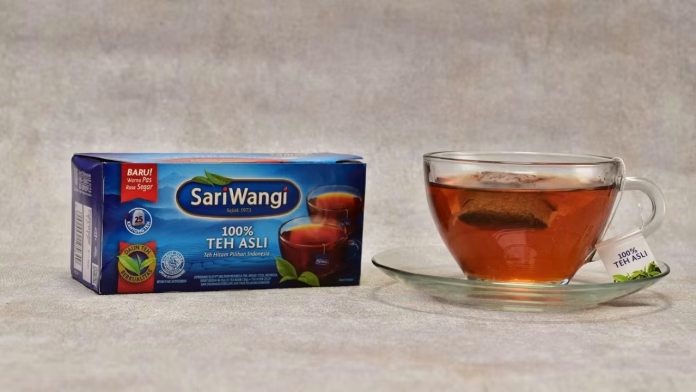
Unilever Indonesia has agreed to sell its entire tea business, including the widely recognised SariWangi brand, to Djarum Group in a transaction valued at IDR 1.5 trillion, marking the company’s exit from Indonesia’s packaged tea market.
The deal will see PT Savoria Kreasi Rasa, a subsidiary of Djarum Group, acquire the SariWangi brand and related operations from PT Unilever Indonesia Tbk. The agreement was signed in early January and is expected to be completed by March 2, 2026, subject to regulatory approvals and customary closing conditions. The transaction values the business at roughly USD 89 million.
SariWangi has been a household name in Indonesia for decades and played a key role in introducing tea bags to a market long dominated by loose-leaf tea. Founded in 1973, the brand was acquired by Unilever in 1989 and subsequently scaled into one of the country’s most familiar tea labels with nationwide distribution.
Unilever’s decision to divest the business reflects a broader strategic shift. The tea segment accounted for less than 3 percent of Unilever Indonesia’s total revenue and net profit, according to company disclosures. With growth in packaged tea slowing, the category no longer aligned with the company’s focus on higher-margin and faster-growing segments such as beauty, personal care, home care, health and wellbeing.
This is the second major portfolio move by Unilever Indonesia in recent months. In late 2025, the company exited the ice cream category following the sale of its Wall’s business, signalling a deliberate move away from food and refreshment categories in the country.
For Djarum Group, the acquisition strengthens its presence in consumer staples. By taking over SariWangi, the group gains immediate scale in the tea bag segment, a brand with more than five decades of consumer recognition, and an established distribution network across Indonesia.
Industry observers view the valuation as in line with a mature category. The deal underscores a wider trend in Southeast Asia, where multinational FMCG companies are narrowing their portfolios, while local conglomerates step in to take ownership of legacy brands with stable cash flows.