


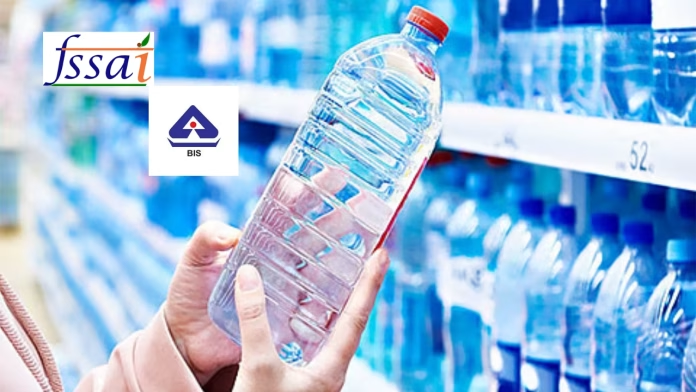
India’s packaged drinking water industry is set for a regulatory reset from January 1, as the Food Safety and Standards Authority of India rolls out a revised quality control framework that replaces mandatory Bureau of Indian Standards certification with a more rigorous, testing-led compliance regime.
Under the new rules, manufacturers of packaged drinking water and mineral water will be regulated entirely through FSSAI licensing and periodic laboratory testing. The change removes the earlier requirement of holding a separate BIS certification, a move that is expected to simplify approvals but significantly raise the bar on quality monitoring. Companies will now be required to conduct frequent microbiological and chemical tests through approved laboratories, with stricter reporting and enforcement timelines.
The impact is expected to be particularly visible in Tamil Nadu, one of the country’s largest packaged water markets. The state has close to 1,600 licensed units, and industry estimates suggest that nearly 40 percent had already stopped renewing BIS certificates in anticipation of the new framework. Chennai alone accounts for nearly three crore litres of the state’s estimated daily consumption of five crore litres, underlining the scale of oversight required.
While manufacturers welcome the removal of dual certification, many acknowledge that compliance costs are likely to rise. Regular testing, documentation and third party audits are expected to increase operating expenses, particularly for small and mid-sized players. Failure to meet standards could invite penalties, suspension of licences or prosecution under food safety laws.
Consumer organisations have broadly supported the move, calling it a step toward stronger public health safeguards. However, they have flagged capacity constraints, urging the government to expand the number of accredited laboratories and ensure timely inspections to prevent delays and curb unlicensed operations.
Although BIS certification is no longer compulsory, officials say manufacturers can continue to seek it voluntarily for brand credibility. The bureau will also continue surveillance to prevent misuse of the ISI mark.
With packaged drinking water classified as a high-risk food category, regulators say intensive testing will remain central to enforcement. The revised rules signal a shift from paperwork-driven approvals to outcome-based monitoring, a transition that is expected to reshape compliance practices across the sector in the months ahead.