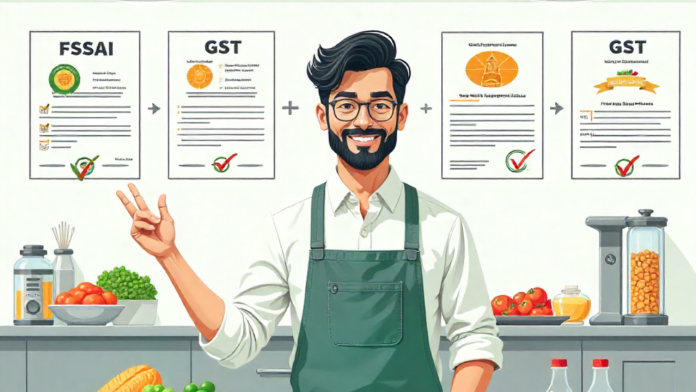
Starting a food business in India—whether it’s a restaurant, cloud kitchen, bakery, or packaged food brand—sounds exciting, but it comes with legal responsibilities. Before you serve your first meal or sell your first packet, you need the right licenses. Not having them can result in heavy fines or even closure. So, what are the mandatory licenses for a food business in India? Let’s break it down.
1. FSSAI License (Food Safety and Standards Authority of India)
The most important license for any food business is the FSSAI license. It ensures that your food meets safety and hygiene standards.
- Who needs it? Every food business operator—restaurants, hotels, cloud kitchens, caterers, street vendors, and packaged food manufacturers.
- Types:
- FSSAI Registration (turnover below ₹12 lakh)
- State License (turnover ₹12 lakh–₹20 crore)
- Central License (turnover above ₹20 crore or businesses operating in multiple states)
Without an FSSAI number, you cannot legally sell food.
2. GST Registration
If your annual turnover exceeds ₹40 lakh (₹20 lakh for services) or you sell via Swiggy, Zomato, or Amazon, GST registration is mandatory. It allows you to collect and pay Goods and Services Tax and issue GST invoices.
3. Shop and Establishment License
Issued by the local municipal corporation, this license is required for all shops, hotels, and restaurants to legally operate within city limits. It covers employee rights, working hours, and basic compliance.
4. Trade License from Municipality
A trade license ensures that your food business complies with local safety, hygiene, and structural guidelines. Restaurants, bakeries, and food stalls must apply through the local municipal authority.
5. Fire and Safety License
For restaurants, cafes, and hotels, a Fire Safety Certificate from the Fire Department is mandatory. It ensures that the premises follow fire safety measures and equipment installation.
6. Health and Trade License
This license, issued by the Municipal Health Department, certifies that your food establishment follows hygiene and sanitation standards.
7. Liquor License (If Applicable)
If your restaurant or hotel plans to serve alcohol, a liquor license from the State Excise Department is mandatory. This comes with strict rules and high compliance.
8. Environmental Clearance (For Large Units)
Food factories, processing plants, or large restaurants may require pollution clearance from the State Pollution Control Board to manage waste and emissions.
9. Additional Licenses (Case Specific)
- Music License if you play recorded music in your restaurant.
- Weights and Measures Certificate for packaged food businesses.
- NOC from Society/Building Owner if you’re running from rented premises.
The Bottom Line
Running a food business in India is more than just cooking delicious meals—it’s about being compliant. At the very least, FSSAI registration, GST, and a local trade license are non-negotiable. Skipping these can lead to penalties, but getting them builds trust with customers, platforms, and investors.